By Rashad Ali
Sometime around the beginning of the millennium, the Palestinian-American literary critic Edward Said appeared at an event in London. During the Q&A, he was asked about a military option to liberate Palestinian territory under Israeli occupation. Said replied: “No Salahadin is going to come to liberate Palestine.” Negotiating peace and aiming for a two state solution was the only solution, he argued — at that time, at least.
This casual reference to the famous 12th century military leader, Salah al-Din al-Ayyubi (aka “Saladin”), shows how deeply etched he is in the minds of Muslims and Arabs, and how easily he is invoked, especially in the context of the Holy Land. After a century of sectarian crusader rule of Jerusalem, it was Saladin who reconquered the Holy Land, securing his enduring heroic image, not only in the Middle East but in European literature, too. Dante, drawing on his reputation as a benign and just ruler, awards him a position of honour in limbo, the highest possible place for a “pagan.”
In order to reconquer Jerusalem, Saladin had to rally and unite a range of Muslim leaders and fighters, which he did through the use of a fatwa obligating jihad. “Fatwa” has become a contentious word due to high profile cases such as the Salman Rushdie affair, but it is simply a religious ruling in response to a question or issue, from how to pray to launching war. Saladin’s edict made it a religious and moral duty to fight to liberate land occupied by the crusaders.
900 years later, we are seeing a new wave of fatwas encouraging jihad in the Holy Land. They are not, as we have come to expect in recent years, from extremist groups like Al-Qaeda, but from mainstream institutions, major scholarly bodies, and Islamic scholars internationally. Furthermore, the rulings are resonating widely, not only with Palestinian-specific militia groups and Islamists, and not restricted to one particular sect or school of thought. This unity and clarity of rulings has major implications for the future of conflict in the Middle East and beyond. Muslim scholars from around the world are arguing that it is not only permitted, but obligatory, to fight against Israel in the light of the ongoing genocide, a call that is unlikely to go unheeded, and could redraw the frontlines of the battles being fought today.
“We will liberate the Mosque where God transported his servant during the night”, Saladin is reported to have said before his military campaign to Jerusalem, referring to Al-Aqsa mosque. As the place of Mohammad’s miraculous ascent to heaven, this small patch of land in the Middle East has a particularly precious place in the minds of Muslims. But it is the ongoing and extreme violence happening in Gaza that has sharpened the parallels with Salahadin’s victory almost a millennium ago and prompted ever more public demands for action. As Said’s reply shows, for Middle Easterners, including Christians like Said, Israeli settlements and the frequent incursions into al-Aqsa mosque have been redolent of the Crusader occupation. But not in living memory has there been such a determined and brutal attempt to completely clear the Gaza Strip of its Muslim and Christian population.
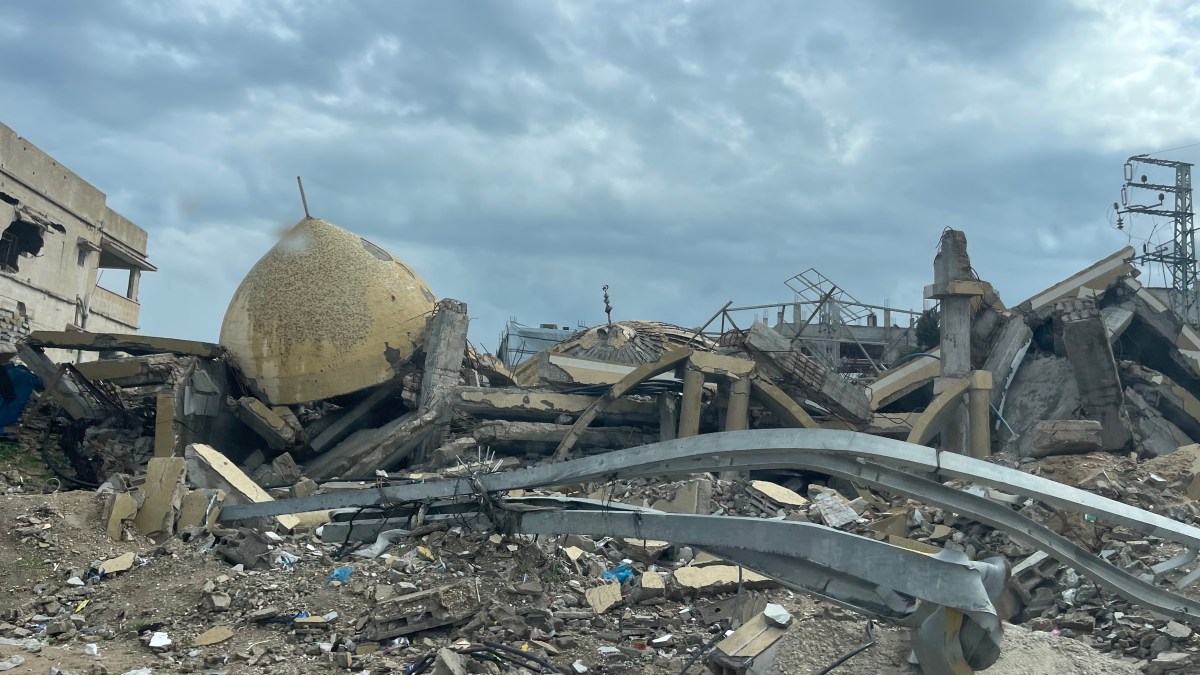
The violence on and since October 7th 2023 has horrified the whole world, intensifying with each passing month, leaving all of Gaza left in ruins. Then came the news of ceasefire, in January 2025, with prisoner swaps and the temporary cessation of violence. But this fragile agreement did not last, and familiar images of dead children, medics and journalists are once again filling social media feeds. This breaking of the ceasefire and the brutality with which it was done finally tipped many scholars over into ruling that jihad was not only permissible, but obligatory.
There are many contexts in which jihad is discussed. In the case of military jihad, legal jurists debate legitimacy of military actions by armies and individuals, based on the need to defend the Muslim polity or on behalf of Muslim political leadership. In Saladin’s time, as documented by his biographer Anne-Marie Eddé, jihad had more than one role in society: it was used to repel the enemy in the sake of God and to unify Muslims. And once again, we are seeing a rare show of unity around religious war in the Holy Land.
—
Ali Qaradaghi is the head of the International Union of Muslim Scholars, a body of mainstream Muslim scholarship which spans a spectrum from conservative to moderate Islamist, such as those aligned to the Muslim Brotherhood. He issued an edict stating that since Israel had violated the ceasefire, no peace is possible and, when a state wars against Muslims, there is a religious duty for all those able in the region to unite to repel the enemies. This was, according to his ruling, an “individual duty” (fard ayn), as central to religious practice as the obligatory prayers, or fasting during Ramadan, or making the pilgrimage to Mecca. “Abandoning Gaza during its annihilation is a grave sin,” he wrote.
Qaradaghi is a giant of Muslim scholarship so his ruling triggered immediate responses and heated discussion. Those more closely aligned to governments in the region pushed back. Egypt’s State Mufti, Nazir Mohammed Ayyad, stated that the fatwa was “irresponsible”, that such institutions lacked “authority”, and that Jihad could only be called for by the appropriate authorities — i.e. states and state sanctioned bodies. He went further in a rhetorical ploy, saying that as a principle basic to Islam, only those on the frontlines could make such a call. If you weren’t fighting, the implication was, you had no right to comment.
Significantly, this response was widely rejected by scholars around the world. One salafi scholar, writing online, said this was a flagrant transgression against Islam, which is clear that when Muslims are attacked they have the right to defend themselves. He went further, claiming that if this was the real belief of the Mufti, it would take him out of the fold of Islam (he later retreated from the full implication of this statement, saying he did not mean excommunication of any individual on this subject). Many other Muslim scholars also pointed out that the stipulation that only a fighter could call for jihad had no precedent.
Abdullah Jifri, a Yemeni scholar (though now based in Egypt) from the Sha’fi school of Sunni Islam, responded to both sides on this debate, affirming the general ruling but with caveats. When Muslims are attacked by an enemy, everyone in the territory is duty-bound to join the Jihad, he agreed, but this should be tempered by practical considerations. For example, if a major power entered and occupied territory belonging to Muslims, anyone attempting to repel such an enemy would fail and inevitably lead to the loss of Muslim life. In such a scenario Muslim men should not join the fight as it would be futile and destroy Muslim lives. Jifri cited many precedents from Muslim scholarship, including an explicit statement from Ibn Mulaqqin, the 14th century Muslim scholar of Shafi rite and hadīth tradition.
The debate is not restricted to the Arab world. In Pakistan, the leadership of the two largest religious sects co-issued rulings on the matter, aligning themselves unambiguously with Qaradaghi. Taqi Uthmani, former Supreme Court Justice and a leading Mufti of Deobandi scholarship joined Mufti Muneeb, a leading scholar from the rival Barelvi school, for a joint statement calling on all Muslim states to support jihad to defend the Muslims of Palestine.
The influence of these two leaders and scholars extends beyond Pakistan’s borders to the entire Indian subcontinent. Their clear position on Palestine, calling for jihad, has succeeded in achieving unity among Muslim sects in the region not seen since the Soviet invasion of Afghanistan in 1979. Palestinian Islamist Abdullah Azzam issued a fatwa in 1984 declaring jihad to be obligatory against the Soviet invasion which caused over a million Afghan deaths (some estimates are far higher, coming in at 3 million). Many Muslims traveled from around the world for the war.
From the austere, puritanical “Ahl-e-hadis” movement, to the Islamist political party aligned with the Muslim Brotherhood, Jamat-e-Islami (founded by the globally popular Islamist thinker, Sayyid Abul Ala Mawdudi), Muslims in the Indian subcontinent are once again uniting behind the banner of jihad, but this time the enemy is Israel rather than the Soviets. And once again, it is not limited to Muslims in one specific region. In South-East Asia, too, Muslim scholars are mobilising for Palestine.
The Majlis ul-Ulama is the scholarly assembly of Indonesia, formed of two large mainstream Sunni networks, the Muhammadiyya and Nahdatul Ulama groups. Indonesia has long been feted for its “eclectic, tolerant and pluralistic” brand of Islam, as Ziauddin Sardar put it. Their scholars have a similar reputation for moderate positions. Yet the majlis, too, has issued a fatwa supporting Qaradaghi’s ruling on jihad in Palestine. It was the duty of all Muslims to support jihad generally, they wrote, but a particular duty of those Muslims directly involved in the region—i.e. those living in countries bordering Palestinian territory, to fight. Their statement demonstrates how radical the centre ground has become over this issue.
—
Theological arguments over religious edicts are often arcane, disputing interpretations or translations of single words. The scholars in question, including Qaradaghi himself, have built their reputation on multi-volume analysis of such questions. But this issue has ramifications far beyond the ivory tower. The fact that these people are working in state-sanctioned and supported roles, that they are, for the most part, not extreme figures but on the contrary, see Islam as part of a wider world of scholarship and debate, make their interventions on this question of legitimate violence far more serious.
The organization that Qaradaghi heads, the IUMS, has members around the world, as its names suggests. The European Fatwa Council, for example, is affiliated, and so are many other international institutions as well as individual scholars, including those in financial institutions giving guidance on Islamic finance and banking. That is to say, the IUMS includes scholars that are involved in day to day decisions concerning Muslims lives all over the world. Any ruling issued by the head of such a body is going to have a massive impact on many millions of rulings via the huge membership and reputation it has.
When Abduallah Azzam issued his famous 1984 fatwa declaring jihad against the Soviets to be obligatory, it was endorsed by the Mufti and chief religious scholar of the Kingdom of Saudi Arabia, Shaykh Bin Baz. The support worldwide led to an international movement of travel of Muslims to Afghanistan to fight. Azzam thereby left an indelible mark not just on the Afghanistan Jihad, but also on his most famous follower, Osama Bin Laden, which was to affect the course of global jihad. A single fatwa, in other words, has the power to rally Muslims worldwide. This could be what we are seeing in Qaradaghi’s ruling.
Azzam himself felt that he had failed to rally the troops to fight for the Palestinian cause, in the wake of the failure of the Arab armies to defeat Israel on the battlefield. Perhaps, though, his actions did rally the troops — eventually. His fatwa, after all, provided a precedent for issuing calls for jihad against a modern state power occupying a Muslim country. This recent slew of fatwas, then, could be seen as the culmination of what he put in motion in 1984.
As Shiraz Maher’s book Salafi-Jihadism: The History of an Idea explains, the combination of international aggression, warfare, repression and genocide, combined with the religious responses to these political situations in the form of characters such as Azzam and Bin Laden, created the optimum circumstances for the creation and development of an international Jihadist movement. The current moment echoes many of the features of that time: international volatility, long-running wars in Muslim countries, repression at home and hypocrisy on the international stage. It would therefore be foolhardy to dismiss the significance of these edicts as merely the abstract discussion of scholars. In the 1980s, Muslims united and defeated a superpower. Whether this could happen against better armed and better supported Israel is another question, but it seems inevitable that there is far more violence to come.
Addendum:
There is a growing consensus among scholars and legal specialists in describing the current situation as “intolarable” and as a “genocide”. This now includes organisations such as B’tselem and other Israeli human rights organisations.
In the UK, Lord Sumption, a former Supreme Court Judge, in a sober analysis for the New Statesman, explains the massive number of casualties and the disproportionate deaths of civilians versus military casualties, coupled with statements of intent, mean “a court would most likely regard that as genocide”.
Olmert the former Israeli PM, has described the situation as a “war of devastation, indiscriminate, limitless, cruel and criminal killing of civilans”.
Kaja Kallas the EU foreign policy chief has stated “all options are on the table” and that the “killing of civilians seeking aid in Gaza is indefensible”.
These statements when compared to stances taken by US and UK governments, show a polarization in the public space. They serve to illustrate the parallel radicalization process, that within mainstream Muslim, and Islamist circles, which views all military options are also legitimate. This will often be expressed within their own cultural, legal, and ethical frameworks of thinking, including Islamic religious edicts as above.
It serves to remind us how Bosnia, Syria, and other genocides have served as both polarizing and radicalizing factors. The absence of action to prevent the killings iin Gaza – a duty by international legal convention and basic human decency – creates a polarization. While much of the world looks on at the horror, and people literally see their friends, family members often, people they know and love, and entire communities they strongly identify with, being killed indiscriminately while the perpetrators and their allies enjoy impunity. In fact Western States including the US, continue to arm the perpetrators, rather than stop them; this further undermines any notion of international norms, rule of law, and any confidence in state institutions and apparatus as legitimate means of stopping such atrocities. The logic then turns only to non-State actors – radical actions, and escalation seems the only option left on the table, thus providing a moral legitimacy to radical ideology.
 P U L S E