Ten Months of the Muslim Brotherhood

Sarah Eltantawi sums up a disappointing ten months in Egypt. This was published at Fair Observer.

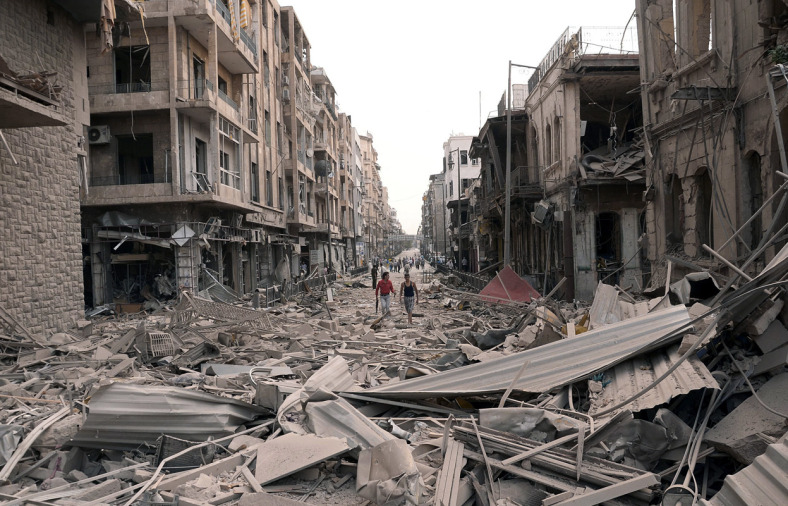
As I write this, a Coptic cathedral in Cairo’s Qalioubiyya has been attacked by masked gunmen during a funeral for victims of an earlier sectarian clash. If you had told me one year ago that I would be writing such a sentence about Egypt, I would probably not have believed you. It is not that there hasn’t been a long and worsening problem with sectarian attacks in Egypt – we only need to remember the horrific attack on the church in Alexandria on New Year’s Eve, 2010-2011, which foreshadowed the revolution to put this serious problem in perspective. But masked gunmen firing automatic rifles during a funeral? These were the problems, for example, of post-invasion Iraq, or a Pakistan which has been bedeviled for years now by a steadily failing state.

The Egyptian Government’s Performance

The unelected public prosecutor’s recent issuance of an arrest warrant for the country’s most famous satirist, Bassem Youssef, known as Egypt’s “Jon Stewart” (of the popular American television show “The Daily Show”) for allegedly insulting Mohammed Morsi and insulting Islam is another recent ominous event, not least because there appeared to be little attempt to distinguish the two offenses. What has happened to bring Egypt to this point, just under ten months after the Muslim Brotherhood took power?

Before commencing a short review of the Muslim Brotherhood’s performance thus far, a word on the analytic frame employed to analyze the government’s performance. In what follows, I will list a number of important issues facing Egypt, and give a short synopsis of the progress that has been made or the lack thereof. There are observers of Egypt who would not find such an exercise useful in the first place. Their contention is that it is unrealistic to expect a transitional government to have accomplished much, especially under worsening economic conditions and in the context of a polarized country with a recalcitrant and unfocused opposition.

This is how I felt for the first six months. And while it remains utterly unrealistic to expect the government to have solved the massive problems facing Egypt, it is certainly fair enough to note what the government has been focusing on, what the government has been neglecting, and certain patterns of their actions.
Continue reading “Ten Months of the Muslim Brotherhood”

A Subtle Shift

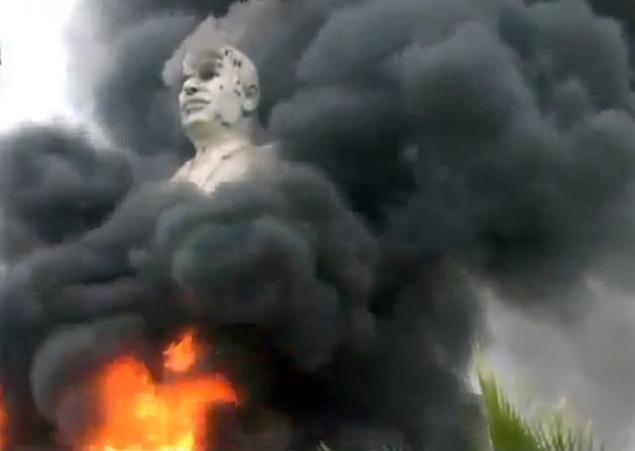
Hafez al-Assad burns in liberated Raqqa. AP photo

This was published in the National.

From the very start, some commentators convinced themselves that the Syrian popular revolution was plotted, funded and armed by the West. From Seamus Milne to John Pilger, from Glenn Greenwald to George Galloway, they described the West supplying oppositionist ‘jihadist elements.’ Former leftist icon Tariq Ali spoke on Russia Today of “Russia and China resisting attempts by the West to take Syria over.” Russia is resupplying the Assad regime with the materiel with which to slaughter the Syrian people, making Ali’s performance on Russia’s satellite as unedifying, and as distant from reality, as that of a commentator telling Fox News that Palestinian resistance is simply an Iranian attempt to take over Israel.

These journalists have staked their positions against the evidence. They have done so by forcing Syrian realities, breaking the edges of these jigsaw pieces, to fit their prior geopolitical concerns (their opposition to concurrent Israeli-American and Saudi enmities towards Iran) or ideological stances (that, following Iraqi and Palestinian models, the West must always be the troublemaker in the Arab world).

But Syria is neither Palestine nor Iraq; Syrian events are moved primarily by internal dynamics – namely the violence of the regime and the agency of the rising Syrian people. The conspiratorial leftist perspective misses this, first by vastly overestimating Western influence on current events (a failure to accurately diagnose the historical moment) and, secondly, by misunderstanding how unenthusiastic the West is for any rapid democratic or revolutionary change in Syria.

Continue reading “A Subtle Shift”

The Silence and the Roar

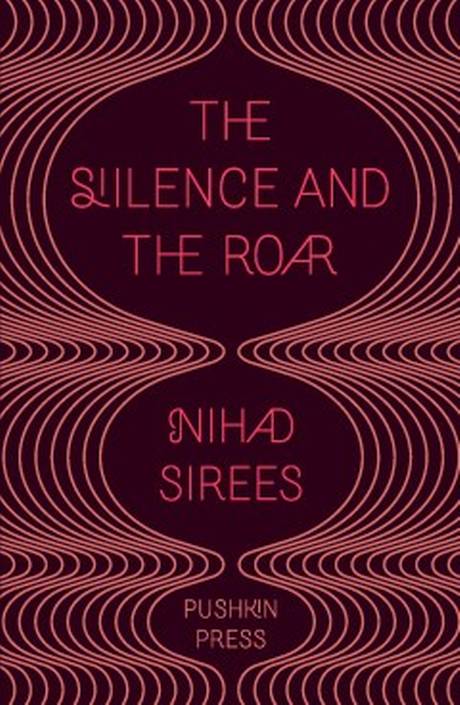
sireesA version of this review was published at the Independent.

“The Silence and the Roar” by Syrian novelist and screenwriter Nihad Sirees was written in 2004, long before the roar of revolutionary crowds, and the countervailing roar of gunfire and warplanes, filled Syrian skies.

The pre-revolutionary roar of the title is that of the (capitalised) Leader speaking, and of the crowd celebrating the Leader speaking, and of those being beaten because they aren’t celebrating loudly enough; a roar relentlessly repeated by radios and televisions throughout the city, accompanying the protagonist almost everywhere he goes.

Counterposed to the roar there are two forms of silence: of imprisonment and of the grave. The first holds an ironic allure, for “the most beautiful thing in the entire universe is the silence that allows us to hear soft and distant sounds.”

The narrator is Fathi Sheen, a writer fallen out of favour with the regime, silenced only to the extent that he doesn’t write any more. He’s very pleasant company, amusing and straightforward, his digressions into Aristotle and Hannah Arendt notwithstanding. Over the course of a day Fathi struggles against the flow of celebrant crowds and regime thugs to visit first his mother and then his lover. He’s been content thus far to continue not to write in return for being left alone, but it becomes clear as the hours pass that the Leader’s friends plan to drive a different sort of bargain. The novella is in part a parable of the artist surviving under dictatorship. How does he make space for creation between silent and roaring states of mind? How does he avoid the regime’s Faustian temptations? More generally, how should one resist?

One answer for Fathi and his lover Lama, as for Winston Smith and his Julia, is through sex, which they find to be “a form of speech, indeed, a form of shouting in the face of the silence.”

Continue reading “The Silence and the Roar”

The Iraqi Christ

Blasim
Blasim

A slightly edited version of this review was published at the Guardian.

Hassan Blasim, author of the acclaimed debut collection “The Madman of Freedom Square”, returns with fourteen more stories of profane lyricism, skewed symbolism and macabre romanticism. The qualities which distinguished the “Madman” are all here again in the opening pages of “The Iraqi Christ”: the sly self-referentiality of the frame – a story-telling competition hosted by a Baghdad radio station – the black comedy, the unexpected twists, and the sharp, disturbing images (a man “with no arms and a beard that almost reached his waist… deep in thought, like a decrepit Greek statue.”)

Like the “Madman”, this collection contains tales of war and migration, but these are more abstract, more difficult than the first, if possible stranger still. Treating casual cruelty, rape and murder, and common insanity, these sour cries from a land of generalised trauma don’t make easy bedtime reading. The processing of trauma, or the impossibility of such processing, is the collection’s central theme. Not only are stories dedicated to the dead, they are also narrated by the dead, concerned with death and the echoes of death in the souls of the living.

The subject matter is not exclusively Iraqi. Europe’s forests – with echoes of Grimm – loom as large as Baghdad’s broken streets. The title story, grimly ironic, is about a Christian soldier possessing uncanny powers of prediction who sacrifices himself so his mother may live. An extremist leader marches through with Purge The Earth of Devils tatooed on his forehead. Elsewhere, a narrator falls into a hole alongside a flesh-eating jinn who used to teach poetry in Baghdad. Another helps his brother bury a stranger alive. Characters slip into criminal perversity unwittingly, almost by accident, as spontaneously as the poisonous trees which, in “Sarsara’s Tree”, sprout from a bereaved woman’s gaze.

Blasim’s work is so unusual it’s hard to place. “A Thousand and One Knives”, as the title suggests, owes something to the heritage of the Nights and the ancient fantastic tradition of Arabic writing, now revived by the pains of Arab modernity, particularly in post-invasion Iraq. But “The Iraqi Christ” also seems to belong with the literature of Latin America, likewise struggling with contesting cultures, political violence and overbearing religion.

Continue reading “The Iraqi Christ”

For the Law of the Powerful over the Weak

Gunfire, torture until death, rape on a mass scale, artillery, aerial bombardment, targetting of hospitals, bakeries and petrol lines, and now scud missiles. A boy in Aleppo describes the effects of the latter.

Seize the Time: The Eighth Defendant

Black Panther founder Bobby Seale is raising money for a biographical film which will tell the story of his life, the Panthers, and the wider anti-racism struggle in America in the 60s and 70s. It sounds like a very worthwhile project. Full details, and how to donate, can be found here.

Negotiations?

We Will Not Die We Will Remain Here by Wissam al-Jazairy

This was published at The National.

On January19th  Syrian foreign minister Walid al-Moallem gave an apparently conciliatory interview to state TV. “I tell the young men who carried arms to change and reform, take part in the dialogue for a new Syria and you will be a partner in building it. Why carry arms?” In the southern and eastern suburbs of Damascus his voice was drowned out by the continuing roar of the regime’s rocket, artillery and air strikes.

The UN and parts of the media have also called for negotiations. Until late January this year, however, the Syrian National Coalition – the widely-recognised opposition umbrella group – opposed the notion absolutely. But then SNC leader Moaz al-Khatib announced that he would talk directly to regime representatives (not Bashaar al-Assad himself) on condition that the regime releases 160, 000 detainees and renews the expired passports of exiled Syrians.

In the context of Moallem’s media offensive (and in the absence of concerted international financial or military support for either the SNC or the revolutionary militias) al-Khatib’s announcement calls the regime’s bluff. It doesn’t, of course, mean that negotiations are about to be launched. For a start, the regime only intends to negotiate with, as it puts it, those “who have not betrayed Syria”. Like successive Israeli regimes, it will only talk with the ‘opposition’ it chooses to recognise. This includes, as well as pro-regime people posing as oppositionists, Haytham Manaa’s National Coordination Committee for Democratic Change, a group which has no influence whatsoever on the revolutionary fighters setting the agenda. The SNC – which does have some influence on the ground, and would have far more if it were sufficiently funded – is definitely not invited.

Continue reading “Negotiations?”

World Service Twice

Golan drinks, Lyse looks on, Nihad eyes me suspiciously

Last night I was at London’s Purcell Room, honoured to be in the presence of novelist and screenwriter Nihad Sirees and poet Golan Hajji. The event was chaired by the BBC’s Lyse Doucet. We were talking about writing in the context of the Syrian revolution. Then I participated in the morning edition of the BBC World Service’s World Have Your Say, discussing Syria, and I joined the WHYS in the evening too, discussing Syria and Mali (on which I’m no expert) at greater length.

Here is the morning edition.

And here is the longer evening programme.

The Revolution Armed Itself

regime policy in aleppoThis piece, a rebuttal to Marc Lynch, was published at Foreign Policy under the title Fund Syria’s Moderates.

In response to non-violent protests calling for reform, the Baathist regime in Damascus has brought Syria bloodshed, chaos, and created the conditions in which jihadism thrives. The now partially armed revolution is doing its best to roll back the bloodshed and to eliminate the regime that perpetrates it.

Yet Foreign Policy’s Marc Lynch, one of the more perceptive analysts of the Middle East, argues that after more than 60,000 lives have been lost, “the last year should be a lesson to those who called for arming the rebels.” In a previous article, Lynch noted, “Syrian armed groups are now awash with weapons.”

Anyone laboring under the delusion that pro-revolution foreign powers have flooded Syria with hi-tech weaponry should scroll through the blog of New York Times correspondent C.J. Chivers or peruse the web pages displaying improvised catapult bombs and PlayStation-controlled armored cars. These are hardly the tools of a fighting force that has been armed to the teeth.

While it’s true that some armed groups — particularly the al Qaeda-linked Jabhat al-Nusra — have sometimes found themselves in possession of plenty of weaponry, the resistance remains overwhelmingly dependent on the weapons it can buy, steal, or seize from captured checkpoints and bases.

Simply put, the assumptions of those who called for arming the rebels have not been tested because the rebels have not been armed — except in irrelevant, sporadic and, in Lynch’s words, “poorly coordinated” ways. For instance, an ammunition shortage slowed the original rebel advance in Aleppo to a destructive halt.

Continue reading “The Revolution Armed Itself”

Iran Shoots Itself in the Foot

iransyriahizbThis was written for the excellent Lobelog.

In August 2012 Egyptian President Muhammad Morsi attended a meeting of the Non-Aligned Movement (NAM) in Tehran. His presence at the conference was something of a diplomatic victory for the Iranian leadership, whose relations with Egypt, the pivotal Arab state, had been at the lowest of ebbs since the 1979 revolution.

Egypt’s President Sadat laid on a state funeral for the exiled Iranian shah. A Tehran street was later named after Khalid Islambouli, one of Sadat’s assassins. Like every Arab country except Syria, Egypt backed Iraq against Iran in the First Gulf War. Later, Hosni Mubarak opposed Iranian influence in Iraq, Syria, Lebanon and Palestine, worked with the US and Saudi Arabia against Iran’s nuclear program, and was one of the Arab dictators (alongside the Abdullahs of Jordan and Saudi Arabia) to warn darkly of a rising “Shi’ite cresent”. Not surprisingly, Iran was so overjoyed by the 2011 revolution in Egypt that it portrayed it as a replay of its own Islamic Revolution.

Iran also rhetorically supported the revolutions in Tunisia and Libya, the uprising in Yemen, and, most fervently, the uprising in Shia-majority Bahrain.

In Syria, however, Iran supported the Assad tyranny against a popular revolution even as Assad escalated repression from gunfire and torture to aerial bombardment and missile strikes. Iran provided Assad with a propaganda smokescreen, injections of money to keep regime militias afloat, arms and ammunition, military training, and tactical advice, particularly on neutralising cyber opponents. Many Syrians believe Iranian officers are also fighting on the ground.

Continue reading “Iran Shoots Itself in the Foot”