Burning Country UK Events

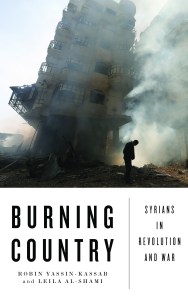
Yassin T03090Thanks to assistance and inspiration from Syrian activists, fighters, journalists, doctors, artists, and thinkers, our book ‘Burning Country: Syrians in Revolution and War‘ is published on January 20th, and launched that evening at Amnesty International in London. In the following days and weeks I’ll be speaking about the book at other venues in London, and in Nottingham, Manchester, Lancaster, Glasgow and  Edinburgh. A list of events below (and we’ll be in the US in April).

First, please read the endorsements, of which we’re very proud:

For decades Syrians have been forbidden from telling their own stories and the story of their country, but here Robin Yassin-Kassab and Leila al-Shami tell the Syrian story. Their words represent the devastated country which has denied them and their compatriots political representation. Burning Country is an indispensable book for those who wish to know the truth about Syria.’ – Yassin al-Haj Saleh

Burning Country is poised to become the definitive book not only on the continuing Syrian conflict but on the country and its society as a whole. Very few books have been written on ‘the kingdom of silence’ that effectively capture how we all got here while not omitting the human voice, the country’s heroes and heroines — a combination that is rare but essential for understanding the conflict and its complexities. Robin Yassin-Kassab and Leila Al-Shami have written a must-read book even as the conflict still rages to understand what happened, why it happened and how it should end.’ – Hassan Hassan, co-author of ISIS: Inside the Army of Terror (New York Times bestseller), Associate Fellow, Chatham House, London

Continue reading “Burning Country UK Events”

Fighting Daesh at the Frontline Club

Alongside BBC correspondent David Lloyn; Richard Spencer, Middle East editor of the Daily and Sunday Telegraph; Shiraz Maher, author of Salafi-Jihadism:The History of an Idea; and Azadeh Moaveni, author of Lipstick Jihad and Honeymoon in Tehran – I was part of this panel discussing Daesh, Nusra, Assad, Saudi-Iran, and the West. (It was also the first time I saw a finished copy of our book Burning Country).

From Deep State to Islamic State

deep1This piece was published at Newsweek Middle East edition.

In 2011, according to the ASDA’A Burson-Marsteller Arab Youth Survey, “living in a democracy” was the most important desire for 92% of respondents. A mere four years later, however, 39% of Arab youths believed democracy would never work in the Arab world, and perceived ISIS, not dictatorship, as their most pressing problem.

Powerful states seem to share the perception, bombing ISIS as a short-term gestural response to terrorism, re-embracing ‘security states’ in the name of realism – concentrating on symptoms rather than causes.

How did the bright revolutionary discourse of 2011 turn so fast to a fearful whisper? Jean-Pierre Filiu’s “From Deep State to Islamic State” – a passionate, sometimes polemical, and very timely book – examines “the repressive dynamics designed to crush any hope of democratic change, through the association of any revolutionary experience with the worst collective nightmare.”

For historical analogy, Filiu evokes the Mamluks, Egypt’s pre-Ottoman ruling caste. Descended from slaves, these warriors lived in their own fortified enclaves, and considered the lands and people under their control as personal property. Filiu sees a modern parallel in the neo-colonial elites – militarised elements of the lower and rural classes – who hijacked independence in Algeria, Egypt, and Syria (and, in different ways, in Libya, Iraq, Tunisia and Yemen).

Continue reading “From Deep State to Islamic State”

The Syrian Jihad

listerThis was published at the National.

Security discourse dominates the international chatter on Syria. Most Syrians see Assad as their chief enemy – he is after all responsible for the overwhelming proportion of dead and displaced. But the Syrian people are not invited to the tables of powerful states, who are in agreement that their most pressing Syrian enemy is ‘terrorism’.

There is disagreement on who exactly the terrorists are. Vladimir Putin shares Assad’s evaluation that everyone in armed opposition is an extremist, and at least 80% of Russian bombs have therefore struck the communities opposing both Assad and ISIS. North of Aleppo, Russia has even struck the rebels while they were batttling ISIS. This wave of the ‘War on Terror’ – now led, with plenty of historical irony, by Russia and Iran – uses anti-terror rhetoric to engineer colonial solutions, just as the last wave did, and ends up promoting terror like never before.

There is no question that the moderate Syrian opposition exists, in the form of hundreds of civilian councils, sometimes directly elected, and at least 70,000 democratic-nationalist fighters. In a recent blog for the Spectator, Charles Lister, one of the very few Syria commentators to deserve the label ‘expert’, explains exactly who they are.

Lister’s book-length study “The Syrian Jihad”, on the other hand, focuses on those militias, from the Syrian Salafist to the transnational Jihadist, which cannot be considered moderate. It clarifies the factors behind the extremists’ rise to such strategic prominence, amongst them the West’s failure to properly engage with the defectors and armed civilians of the Free Syrian Army (FSA) in 2011 and 2012.

Continue reading “The Syrian Jihad”

The Sound and the Fury

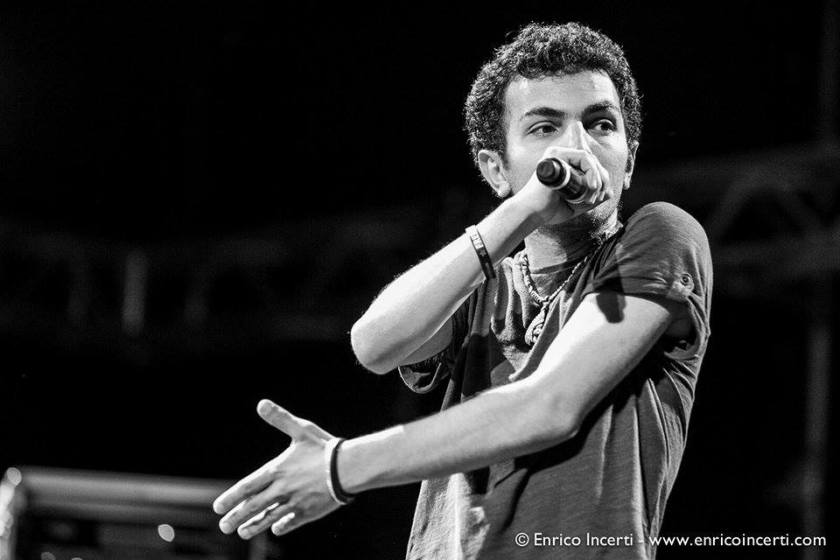
Abu HajarThis was first published (with some great links) at the Guardian. Picture is Abu Hajar. More stories about him and many others in our forthcoming book ‘Burning Country: Syrians in Revolution and War’.

In the first heady weeks of the Arab Spring commentators made much of the role played by social media, and certainly Facebook in particular provided an indispensable tool to young revolutionaries throughout the region. But less noticed, and ultimately far more significant, was the carnivalesque explosion of popular culture in revolutionary public spaces.

The protests in Syria against Bashaar al-Assad’s dictatorship were far from grim affairs. Despite the ever-present risk of bullets, Syrians expressed their hopes for dignity and rights through slogans, graffiti, cartoons, dances and songs.

To start with, protestors tried to reach central squares, hoping to emulate the Egyptians who occupied Tahrir Square. Week after week residents of Damascus’s eastern suburbs tried to reach the capital’s Abbasiyeen Square, and were shot down in their dozens. Tens of thousands did manage to occupy the Clock Square in Homs, where they sang and prayed, but in a matter of hours security washed them out with blood.

This April 2011 massacre tolled an early funeral bell for peaceful protest as a realistic strategy. In response to the unbearable repression, the revolution gradually militarised. By the summer of 2012 war was spinning in downward spiral: the regime added sectarian provocation to its ‘scorched earth’ tactics of bombardment and siege; foreign states and transnational jihadists piled in; those refugees who could got out.

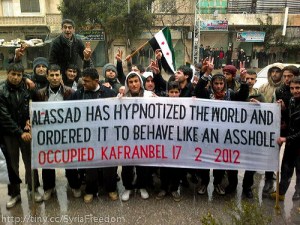
Civil revolutionaries did their best to adapt. Alongside self-organising committees and councils, Syrians set up independent news agencies, tens of radio stations and well over 60 newspapers and magazines. Kafranbel, for instance, a rural town become famous for its witty and humane slogans, broadcasts discussion, news and women’s programmes on its own ‘Radio Fresh’ – despite a recent assault by Jabhat al-Nusra fighters. And Enab Baladi (My Country’s Grapes), is a newspaper published by women in Daraya, a besieged, shelled and gassed Damascus suburb. Remarkably, the magazine focuses on unarmed civil resistance.

Continue reading “The Sound and the Fury”

Leila al-Shami on Stop the War

asshole

by Leila al-Shami

(From Leila al-Shami’s blog.)

Today, the British parliament will be voting on whether or not to join the US coalition in bombing Daesh (ISIS). During the debates the British left has outdone itself – even by its own usual standard of idiocy – to the extent it makes the Tories look progressive.

Over the past few days, demonstrations have been held in London and elsewhere to oppose the UK bombing Syria. The demonstrations were organized by the Stop the War Coalition (STW), an organization which has long adopted a counter-revolutionary position on Syria. Since the start of the uprising in 2011 STW has refused to acknowledge the agency of the oppressed Syrian people struggling against a fascist regime or to support their struggle in any form, preferring to see the current conflict only through a geopolitical lens. Their selective anti-imperialism means they’ve only ever opposed Western intervention in Syria (even when this was not a reality) and refuse to actively oppose Russian or Iranian intervention. They have never called for any action against Assad or opposed the war he has waged on the Syrian people, raining down barrel bombs and targeting civilian areas with Scud missiles for over four years. It is this war which has been the main cause of civilian deaths in Syria and which has created the vacuum and desperation giving rise to Daesh. These ‘progressives’ have consistently refused to give a platform to revolutionary Syrians. They have even, shamefully, called the police to remove Syrians present at a recent meeting. Conversely, they give non-Syrian apologists for the Assad regime a voice, people such as the odious George Galloway and massacre-denier Mother Agnes.

At the demonstrations organized by STW some present were holding Baathist flags and pictures of the mass-murderer Assad. Seriously, a blatant fascist presence was considered acceptable at a protest organized by people who describe themselves as leftists. It is no wonder that their demonstrations were small (compared to the heyday of the Iraq war demos), with no large scale Syrian or Muslim presence. I am sure many who oppose the bombing of Syria would feel alienated joining a protest organized by those who ally themselves with a regime that practices torture on an industrial scale, sodomizes its opponents with broken bottles, and gasses civilian neighbourhoods. One of the speakers at the event held last Saturday, Tariq Ali (once considered a ‘radical’, so I’m told) rhetorically called for Britain to ally itself with Assad and Russia if it wanted to defeat Daesh. This was based on his erroneous claim that Russia is actually attacking Daesh, whilst the evidence shows that the majority of Vlad the Invader’s attacks are aimed at anti-Assad forces (which have also been fighting Daesh since January 2014) and civilians in areas with no Daesh presence. As for Assad, not only has he not attacked Daesh until recently (to gain international legitimacy as a partner in the ever expanding War on Terror) but has actively facilitated its growth.

Jeremy Corbyn, the current leader of the British Labour Party who has been the Chair of STW for the past four years and has now appointed the Stalinist and Putin supporter Seumas Milne as the party’s director of communications, is giving his party’s members the choice of whether to back joining the US coalition or not. To help them make up their minds he has invited Patrick Cockburn to brief Labour MPs on Syria ahead of the vote. Patrick Cockburn openly supports the fascist mass murderer Assad, has called for Britain to ally with Assad’s imperialist sponsors Russia and Iran, has consistently slandered Syrian rebels as ‘Al Qaeda’, makes shit up in his writing like pretending to be an eyewitness to massacres which likely never happened, and recommends Donald Trump’s analysis on the Middle East. Does anyone really consider these people progressives? As an anarchist, it seems to me that the statist ideologies of both left or right have much more in common with each other than any values or principles I adhere to.

As a British Syrian who opposes any foreign power bombing Syria, I cannot help but feel disgusted that these people have hijacked the debate. The only way to defeat Daesh is to give support to local forces which are engaged in the battle with them on the ground. This must include Sunni Arab forces – the population Daesh attempts to rule. Cameron was not wrong when he said there are 70,000 moderate opposition fighters in Syria. However, the idea that these forces will join a coalition fighting Daesh which doesn’t address the main threat to Syrians – the Assad regime – is absurd. As for the anti-war left, if they are to have any relevance or moral compass, they must oppose all those who are bombing Syrians, including the Assad regime and its imperial backers, Russia and Iran. Most of all, they must listen to the voices of Syrians instead of sticking to their patronizing and unprincipled stance of inviting ‘experts’ of dubious credentials speak on their behalf.

Regardless of the outcome of today’s vote, the bombs on Syria will continue to fall.


The Crossing

crossingThis review of Samar Yazbek’s “The Crossing: My Journey to the Shattered Heart of Syria” was first published at the Daily Beast.

This shocking, searing and beautiful book is an account of three visits to Idlib province in northern Syria, an area liberated from the Assad dictatorship “on the ground but betrayed by the sky.”

In the face of regime repression, Syria’s non-violent protests of 2011 had transformed into an armed uprising in 2012. By August of that year, when the author – exiled Syrian novelist and journalist Samar Yazbek – made her first trip, Assad’s forces had been driven from the rural border zones. From a distance, however, via warplanes and long-range artillery, they implemented a policy of scorched earth and collective punishment. So Yazbek finds her homeland changed to a landscape of burnt fields and cratered market places, with boys picking through collapsed homes in search of things to sell and displaced families sheltering in tombs and caves. Death is ever-present. Gardens and courtyards have become cemeteries. Yazbek never shies away from the horror but builds something worthwhile from it, a record and a reflection, for death is ultimately “the impetus of writing and its source.”

Known today only for war, Syria is heir to an ancient civilisation. Idlib province houses the remains of Ebla, a five-thousand-year-old city, and is dotted with half-intact Byzantine towns and churches. The war’s “ruthless sabotage of history” has damaged these priceless sites. In Maarat al-Numan the statue of 9th Century poet Abu Alaa al-Maari, a native of the town highly respected in his own time despite his unusual atheism, has been decapitated by armed Islamists. And the wonderful mosaic museum at the same location has been bombed by the regime and looted by various militias.

But amid these ruins Yazbek encounters a people giving voice to their aspirations after half a century of enforced silence. In revolutionary towns the walls are “turned into open books and transient art exhibits”. Activists organise “graffiti workshops, cultural newspapers, magazines for children, training workshops, privately-run community schools.” In the context of state collapse these projects are born of necessity, but they also reflect the kind of society the revolutionaries hoped to build – inclusive, democratic, forward-looking – one which they are in fact trying to build, even as extremists fashion their own, much darker versions. Through self-organised committees and councils, Yazbek is told, “each region now has its own administration, and every village looks after itself.” This – Syrians’ willed self-determination, Syrian creativity amid destruction – is the positive story so often missed in the news cycle, and it represents a hope for the future, faint though it is. The activists know they are working against insurmountable odds, but continue anyway. They document atrocities and reach out to international media, an endeavour which has so far failed to bear tangible fruit. When they can, they laugh – it’s “as though they inhaled laughter like an antidote to death.”

Continue reading “The Crossing”

The Dictator’s Last Night

gaddafiAn edited version of this review appeared in the Guardian.

Colonel Gaddafi – “the Brotherly Guide, the miracle boy who became the infallible visionary” – possessed a character so colourful it begged entry into fiction. Yasmina Khadra – pseudonym for Algerian ex-military man and bestselling writer Mohammed Moulessehoul – obliges here in “The Dictator’s Last Night”, a title to be fitted alongside such great dictator novels as Marquez’s “The Autumn of the Patriarch” or Vargas Llosa’s “The Feast of the Goat” (the latter set in the last hours of the Dominican strongman Trujillo). Although Khadra matches neither the epic scale nor the experimental virtuosity of those two, his writing here is compulsive, funny, powerfully emotional, and often sinuously intelligent.

For his last night, the “untameable jealous tiger that urinates on international conventions to mark his territory” is confined to a disused school in Sirte, the sky aflame with NATO bombs and rebel bullets, his generals either fleeing or collapsing from exhaustion.

Like Hitler in the bunker he rails against his people’s betrayal – “Libya owes me everything!” – against the West which so recently feted him and, with no irony at all, against his fellow Arab autocrats, those “pleasure-seeking gluttons.”

Khadra’s imagining of him is probably pretty accurate: bullying, mercurial, grandiose, containing an egomaniac’s contradictions – self-obsessed but craving approval, ruthless but oversensitive. It’s “my full moon, nobody else’s,” he declares, and “Everything I did worked.”

Gaddafi remembers his poor Beduin beginnings, fatherless and disturbed, and his struggles against “the barriers of prejudice”. He was spurned when, as a young officer, he proposed marriage to a social superior. The reader sympathises with the humiliation – until shown the nature of the dictator’s later response. Gaddafi’s voice careers from sentimentality to brutality and back, and at first the reader’s heart follows.

Continue reading “The Dictator’s Last Night”

Interview with Saud Alsanousi

SaudI interviewed Kuwaiti novelist Saud Alsanousi for the National. My earlier review of his novel “The Bamboo Stalk” is here.

Born in 1981, Kuwaiti writer Saud Alsanousi won the 2013 International Prize for Arabic Fiction (IPAF) for his novel “The Bamboo Stalk”. A warm and generous interlocutor, here he speaks about otherness, his ‘method-writing’ approach to characterisation, and his aversion to the ‘shock method’…

RYK: Why did you choose the half-Kuwaiti, half-Filipino Isa/Josè as your hero?

SA: Since my childhood I’ve been interested in the image of the other. The other was always seen negatively, whether he was a Westerner, an east Asian, or an Arab from beyond the Gulf. And in turn the West, the Asians, and the Arabs saw us as the other. Of course I rejected their negative image. At the same time I realised that some of it was true – we Kuwaitis had social problems, we were closed in upon ourselves, we didn’t know any culture except our own. We always think we’re right and the other is wrong, socially, religiously. Through reading and travel I discovered that the world was much bigger than us, that we weren’t the axis of the whole universe.

How could I approach the topic in writing? I thought a novel would be better than journalism, because a newspaper article is a brief phenomenon, whereas when a reader follows the life story of a character through a novel, day by day and page by page, he builds a relationship with that character, he really engages with him.

And why Josè specifically? Previous stories about ‘the other’ have focused on the West. We already know the West looks down on us, how Hollywood depicts us, and we’re used to it. Instead I wanted to concentrate on those some may consider our inferiors. I chose the lowest class, those who serve us in shops and hospitals. I wanted to imagine how they see us. Of course, the hero had to be half-Kuwaiti in order to gain intimate access to a Kuwaiti household. My first idea was to make him half-Indian, but the problem with that was that he wouldn’t look foreign enough. He could pass easily for a Kuwaiti. But Josè looks east Asian, and is judged by his appearance.

RYK: How did you set about building the character?

SA: I only talk for myself, but I found that research by reading and watching documentaries wasn’t nearly enough. It produced only cold information, and when I wrote the result looked like a tourism brochure.

So I travelled to the Philippines and lived in a simple house in a traditional village. I wore their clothes. I ate their food and I breathed their air. And I met a lot of expatriate workers in Kuwait, not just Filipinos, and listened to their problems.

I embodied the character. I’m not exaggerating when I say that when I came back home, from the moment I arrived in the airport, I wasn’t Saud Alsanousi but Josè Mendoza. I saw my own country through the eyes of a stranger. From May 2011 to May 2012, while I was writing, I continued to be Josè. I visited the places he would, I rode a bike like him, I tuned my satellite to the Filipino channels, even if I didn’t understand the language. And I surrounded my workspace with bamboo. I could only write the character by embodying it.

RYK: The novel’s themes are human, social, even spiritual. What is your aim in writing? Why do you write?

SA: Let me start with “The Bamboo Stalk.” We don’t know anything about the Filipino. We see him working in Starbucks – that’s it. We know nothing about his cultural and intellectual wealth, his history, his struggle against Spanish colonialism, nor about the social peace in his country despite the presence of three religions. It’s because we don’t know his background that we deal with him in this stereotypical and disrespectful way. And because we don’t know the other, we don’t know our own place in this world.

Continue reading “Interview with Saud Alsanousi”
Uncomfortable Facts

russian bombsTwo stories in one day which you would expect to disrupt the faux-anti-imperialist narrative, but which probably won’t. Narratives stand high above facts, after all.

First, ISIS claims responsibility for a suicide attack which killed Saudi soldiers in Aden, Yemen.

Second, according to this article, printed in full below, Israel has agreed to provide intelligence on the Syrian opposition to Russia, to help it with its bombing runs. In return Russia promises to stop weapons flowing through Syria to Hizbullah, and to tolerate any Israeli bombing of Syria. The last paragraph says that Tzipi Livni, Israel’s former Foreign Minister, “has called for direct cooperation with Iran and Hezbollah in order to protect Israeli interests.”

UPDATE: My friend Elizabeth Tsurkov says this: “Israel is simply ensuring that it can bomb Hizbollah/Iranian targets without being shot down by Russian jets of S-300 systems. There’s no indication anywhere that Israel is sharing intel with the Russian regime on this issue. … Middle East Monitor is a site that it known to fabricate stories.” She may well be right about the source, and about the intelligence sharing. But Russian-Israeli military cooperation is increasing, not only in Syria.

Mainstream and leftist opinion – often guided by a cabal of ageing orientalist white men (Cockburn, Fisk, Bromwich, Glass, etc) – will continue to hold that Saudi Arabia controls ISIS and Russia is lined up with Assad and Iran in a confrontation against the Zionist West, which is intent on Assad’s downfall. These useful idiots are smoothing the way for the fascist-imperialist axis.

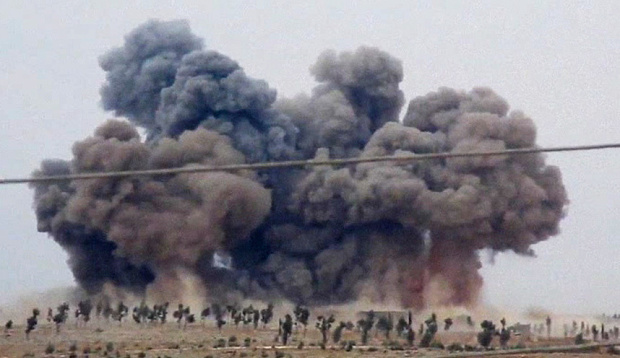
Meanwhile Russian fire falls on Syria’s liberated cities, striking the Free Army in Homs and Jaysh al-Fateh in Idlib, Hama and Lattakia, striking also buildings used by self-organising civilian revolutionary committees and Byzantine ruins outside Kafranbel. Dozens of civilians have been murdered. One in  twenty of Russia’s strikes have targetted ISIS.

It seems regime/ Iranian ground offensives will follow, particularly in northern Homs and the areas of Hama and Lattakia near the regime’s coastal stronghold. The aim is to shore up Assad’s collapsing regime in the fifth of Syria he retains. The larger hope is to destroy the opposition, leaving only Assad and ISIS standing. Then the West may more openly back Assad to take the rest of the country back.

The imperialist assault will undoubtedly extend the war in time and expand it in space. The coming months may see grievous setbacks for opposition forces. In the end, however, Russian bombs will not be able to alter the demographic reality any more than Assad’s bombs or the Iranian militias could before. Assad is running out of fighting men; foreign troops, however many arrive, can extend but not win his war. And not only the opposition militias but the majority of the Syrian people too will refuse to cooperate with any plan envisaging regime survival. For them Assad, not ISIS, is the supreme evil, and with good reason: Assad’s forces are responsible for the overwhelming majority of civilians killed and driven out.

Beyond that, Russia’s economy shrank by 5% last year. Russia isn’t strong so much as it is constantly appeased. But Syria’s fighters are in no mood for appeasement. When the Russians first walked into Afghanistan, when the Americans first walked into Vietnam, they thought their operations would be easy and brief…

Continue reading “Uncomfortable Facts”