From the great 2009 film The People Speak: Bruce Springsteen sings “The Ghost of Tom Joad”, a song that was inspired by John Steinbeck’s masterpiece The Grapes of Wrath.
Author: Idrees Ahmad
I am a Lecturer in Digital Journalism at the University of Stirling and a former research fellow at the University of Denver’s Center for Middle East Studies. I am the author of The Road to Iraq: The Making of a Neoconservative War (Edinburgh University Press, 2014). I write for The Observer, The Nation, The Daily Beast, Los Angeles Review of Books, The Atlantic, The New Republic, Al Jazeera, Dissent, The National, VICE News, Huffington Post, In These Times, Le Monde Diplomatique, Die Tageszeitung (TAZ), Adbusters, Guernica, London Review of Books (Blog), The New Arab, Bella Caledonia, Asia Times, IPS News, Medium, Political Insight, The Drouth, Canadian Dimension, Tanqeed, Variant, etc. I have appeared as an on-air analyst on Al Jazeera, the BBC, TRT World, RAI TV, Radio Open Source with Christopher Lydon, Alternative Radio with David Barsamian and several Pacifica Radio channels.
Silence of the lambs
It says something about American society that on the day a true hero, PFC Bradley Manning, goes to trial, less than twenty people show up to support him. Shame.
Are there any winners of the Iraq war?
With Inside Story Americas, Shihab Rattansi has really elevated the quality of the show. Rattansi is in my view Al Jazeera’s best anchor and the following is a rather superb show with an excellent selection of guests. Don’t miss.
Kargas
The following is cross-posted from Lobelog.com.
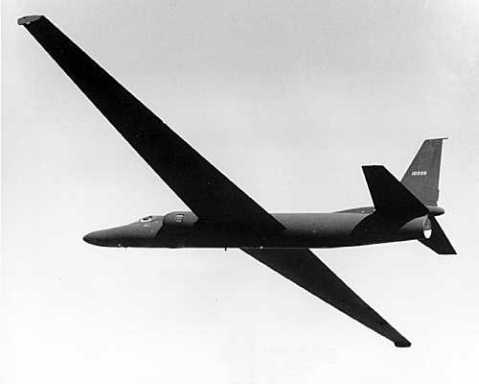
Iran’s Zahedan airport is located on a road named for Allama Iqbal, the great Indian philosopher whom Pakistan after partition adopted as its national poet. The shaheen, or eagle, features prominently in Iqbal’s poetry, as a symbol of vigour, dignity and daring. It is contrasted against the figure of the kargas, or vulture, which represents cunning, cowardice and ignobility. It is the latter appellation that the region frequently applies to the CIA drones which today menace the skies from Waziristan, Kandahar to Zahedan. But shaheen or kargas, they are both ferocious; and it is a feat to capture either. Small wonder then, that some in Iran see cause for celebration in the capture of CIA’s RQ-170 Sentinel drone, a stealth surveillance craft manufactured by Lockheed Martin.
This is not the first time the CIA has delivered one of its most advanced aircraft for inevitable reverse engineering to its putative enemy. On April 9, 1960, people at the Zahedan airport watched anxiously as an aircraft with unusually wide wings approached from the north-east. The Lockheed U-2C was on a top-secret spying mission for the CIA, but its target was not Iran. Indeed, it was coming in to land after being chased by several fighter planes. Over the previous 8 hours, the plane had photographed four strategic Soviet military sites from an altitude of 70,000 feet, well out of the reach of the Russian MiGs and Sukhois. It embarked on its mission from the Badaber air force base 10 miles to the south of Peshawar.
The Terrible Beauty of Wikileaks
The following appears in The Arabs Are Alive, edited by Ziauddin Sardar and Robin Yassin-Kassab.

On 7 December 2010, Tunisian despot Zine el Abidine Ben Ali’s regime blocked internet access to the Beirut daily Al-Akhbar for publishing a US embassy cable which painted the dictator, his wife and her family in a deeply unflattering light. In the July 2009 cable, US ambassador Robert Godec had accused Ben Ali’s regime of having ‘lost touch with the Tunisian people…[tolerating] no advice or criticism whether domestic or international,’ and of increasingly relying ‘on the police for control and focus on preserving power.’ The cable mentioned the growing ‘corruption in the inner circle,’ particularly around first lady Leila Trabelsi and her family, whom it said the Tunisians ‘intensely dislike, even hate.’ It finally concluded that ‘anger is growing at Tunisia’s high unemployment and regional inequities. As a consequence, the risks to the regime’s long-term stability are increasing.’
Ten days later in Sidi Bouzid, 26-year-old street vendor Muhammad Bouazizi immolated himself in front of the local municipality building after his vegetable cart was confiscated by Faida Hamdi, a female municipal official who had then slapped him, spat in his face, and insulted his dead father. Anguished friends and sympathizers soon took to the streets to protest, and Youtube, Facebook and Twitter helped spread the fire further—the long deferred anger of the Tunisians had finally erupted. On 4 January 2011, when Bouazizi succumbed to his wounds, the 5,000 mourners at his funeral were heard chanting, ‘Farewell, Mohammed, we will avenge you. We weep for you today. We will make those who caused your death weep.’ Ten days later, as the protests reached a crescendo, Ben Ali and his wife hoarded their loot and decamped to Saudi Arabia. Some suggested that Wikileaks had drawn first blood.
Rebel Without a Pause—Lupe Fiasco
Lupe Fiasco rocks a Palestinian flag and an Occupy Wall Street t-shirt during his performance at the BET Hip-Hop Awards. (via Mondoweiss).
Vodpod videos no longer available.
Rebel Without a Pause—Lupe Fiasco , posted with vodpod
Vidal in Venice
At an old bookshop that I frequently visit, I recently found a book titled Vidal in Venice, a glossy coffee-table hardback about the history, architecture and culture of Venice, illustrated with superb artwork and photography. The book was a companion edition to a series of documentaries Gore Vidal wrote and presented in 1985 for Channel 4 about the city he calls ‘perhaps the most beautiful cliche on earth.’ Thanks to the wonders of youtube, today I was able to find it and here it is in its entirety.
Romancing the Drone: The Unravelling
In a series of articles for Al Jazeera I had questioned the improbably low casualty figures being cited by the US and Pakistani authorities and endorsed in the bogus statistics produced by the New America Foundation. Gen. Petraeus’s former counterinsurgency advisors David Kilcullen and Andrew Exum had already suggested that up to 98 percent of those killed in the drone strikes may be civilians. Recently, the Bureau of Investigative Journalism had conclusively debunked the CIA’s claims about success of its policy. Today none other than the former Director of National Intelligence Admiral Dennis Blair has called for an end to the drone strikes because he believes the tactic is dangerous and a complete failure which only kills some mid-level militants [in other words it kills a whole lot of civilians since over 2,500 Pakistanis have been killed so far].
Naseema Noor of IPS reports on the recent Bureau of Investigative Journalism study:
Led by British investigative journalist Chris Woods and Pakistani journalist Rahimullah Yusufzai, the study found that at least 45 civilians, including six children, have been killed in 10 drone strikes since August 2010 alone, while another 15 attacks between then and June 2011 likely killed many more.
According to the study, civilians die in one out of every five Central Intelligence Agency (CIA)-operated drone attacks in the tribal region, located on the border with Afghanistan, a statistic that the Bureau says can no longer be denied by the U.S. government.
Continue reading “Romancing the Drone: The Unravelling”
Gunboats and gurkhas in the American Imperium
My new piece on the complicity of the Pakistani elite in the US drone war is up on Al Jazeera‘s website.

Meet Resham Khan. The 52-year-old shepherd was brought on a stretcher to a psychiatric hospital in Islamabad in January, traumatized and unable to speak. The father of six witnessed 15 members of his extended family perish last June when a US drone attacked a funeral procession in his native North Waziristan. The atrocity has left him mute and emotionally paralyzed, his vacant eyes staring into the distance. He gave up on food and drink in the months following the attack; shortly afterward, the pious Muslim gave up on prayer too. His condition also prevented him from looking after his ailing mother who died soon thereafter. And his surviving children have suffered. When the Reuters journalist finally got him to talk, one of the few things he said was ‘Stop the drone attacks.’
Kareem Khan, too, has suffered. On December 31, 2009, his son Zaenullah Khan and his brother Asif Iqbal were among the three people killed in a US drone attack which destroyed their home in Mir Ali, North Waziristan. Kareem’s absence spared him the sight of his mutilated family; and unlike the helpless shepherd, he had the wherewithal to demand justice. In November 2010, his lawyer, Barrister Shahzad Akbar served legal notices to the CIA station chief Jonathan Banks, former Defence Secretary Robert Gates, and former Director of Central Intelligence Leon Panetta for $500 million in damages. Banks, who was in Pakistan on a business visa, took fright and soon fled the scene, and the US government was so terrified of the legal challenge that last month it denied a visa to Barrister Akbar to travel to the US. More survivors have since come forward demanding justice.
Continue reading “Gunboats and gurkhas in the American Imperium”
Gods That Always Fail
 Each day over the next week we’ll be publishing one of the six lectures on the theme of ‘Representation of the Intellectual’ that Edward Said recorded in 1993 as part of the annual BBC Reith Lectures.
The sixth lecture is titled: ‘Gods That Always Fail.’
Gods That Always Fail (30 mins): MP3
 P U L S E