The great Chris Hedges, author of the classic War is a force that Gives us Meaning, speaks out on Gaza.
Author: Idrees Ahmad
I am a Lecturer in Digital Journalism at the University of Stirling and a former research fellow at the University of Denver’s Center for Middle East Studies. I am the author of The Road to Iraq: The Making of a Neoconservative War (Edinburgh University Press, 2014). I write for The Observer, The Nation, The Daily Beast, Los Angeles Review of Books, The Atlantic, The New Republic, Al Jazeera, Dissent, The National, VICE News, Huffington Post, In These Times, Le Monde Diplomatique, Die Tageszeitung (TAZ), Adbusters, Guernica, London Review of Books (Blog), The New Arab, Bella Caledonia, Asia Times, IPS News, Medium, Political Insight, The Drouth, Canadian Dimension, Tanqeed, Variant, etc. I have appeared as an on-air analyst on Al Jazeera, the BBC, TRT World, RAI TV, Radio Open Source with Christopher Lydon, Alternative Radio with David Barsamian and several Pacifica Radio channels.
When Utopia Crumbles
Kim Nicolini on why Revolutionary Road was shut out at the Oscars.
It’s no wonder Revolutionary Road was shut out of the Oscars. As stated in this article from the New York Times, this year the Academy is looking to stories of the “indomitability of human will” to grace with its little gold statues. All of the nominees for best picture are “films built on individual successes” that provide “a nice, big chunk of uplift.” From Slumdog Millionaire to Milk to Frost/Nixon, these are stories where the little guy can beat the big powers that try to keep him down and where human will has the ability to allow us to conquer all, rise up, forge change, and take control of our own lives and destiny. Given that that many of the films deal with battling political and/or economic systems (presidential abuse of power, the Catholic church, economic class stratification), these films are classic Depression era narratives.
In fact, when writing about Slumdog Millionaire, I described it as Frank Capra goes to Mumbai in the 21st Century. Indeed, there is no hiding the fact that we are in a Depression. As the economy sinks lower and lower, people lose their homes and their jobs, and businesses collapse, there is no denying that the Depression is now. So maybe uplift and triumph is what people need. Apparently the Academy thinks they don’t need a movie like Revolutionary Road which provides a relentlessly brutal critique of the shallow illusion of the American Dream and the inherent fallacy of the institution of marriage. Revolutionary Road basically says that everything America pretends to be through its policies of blind acquisition, status through material gain, and a self-deluded vision of Norman Rockwellesque family life is a toxic lie. Well, isn’t it? Of course it is, but now that most Americans have had to look the lie in the face as the veneer of their American Utopia has crumbled under their feet, I guess they don’t want to see it in the movies too.
The ‘Islamist’ who wasn’t
‘The fact that a ‘professional liar’ hoodwinked the media and government is a damning indictment of UK de-radicalising policy’, writes Inayat Banglawala.
He was a self-confessed al-Qaida insider who in the aftermath of the 9/11 attacks was interviewed by all the major news networks eager to hear his fiery rhetoric.
Following the 7/7 bombings, he told us that he had now recognised the error of his ways and was committed to countering “Islamism”. He was going to spill the beans in a keenly anticipated book called Leaving al-Qaida relating how he had gone about recruiting British Muslims to go overseas and fight.
The American CBS network’s flagship documentary programme 60 Minutes broadcast an interview with him in March 2007 in which he talked about his “recruiting and fundraising techniques” in his extremist days.
Iraq’s ‘Teflon Don’
‘The New Fallujah Up Close and Still in Ruins’. Our friend Dahr Jamail, who is presently back in Iraq, files this excellent report for the indispensable TomDispatch.
Fallujah, Iraq — Driving through Fallujah, once the most rebellious Sunni city in this country, I saw little evidence of any kind of reconstruction underway. At least 70% of that city’s structures were destroyed during massive U.S. military assaults in April, and again in November 2004, and more than four years later, in the “new Iraq,” the city continues to languish.
The shells of buildings pulverized by U.S. bombs, artillery, or mortar fire back then still line Fallujah’s main street, or rather, what’s left of it. As one of the few visible signs of reconstruction in the city, that street — largely destroyed during the November 2004 siege — is slowly being torn up in order to be repaved.
The Boundaries of Civilization
Orientalism in a nutshell. Slavoj Žižek shows you the the actual physical dividing line between Oriental despotism and Western European enlightenment.
‘Screwing People Honestly’
Vodpod videos no longer available.
‘Porn Star for Senate‘, by Max Blumenthal
Sen. David Vitter’s phone number was found in the records of the notorious D.C. madam. Now he faces re-election (and massive karmic payback) against a sultry adult entertainer named Stormy. Max Blumenthal has an exclusive interview.
With 2010 midterm elections approaching, Louisiana Republican Sen. David Vitter is positioning himself as a leading conservative stalwart. In July 2008, Vitter joined accused bathroom-stall sex solicitor Sen. Larry Craig in co-sponsoring the anti-gay-marriage Marriage Protection Amendment, then addressed a massive antiabortion rally on the National Mall three days after Barack Obama’s inauguration. Vitter was also the Senate Foreign Relations Committee’s lone vote against sending Hillary Clinton’s secretary of State nomination to the Senate floor.
Dubai’s architecture is beyond crass
‘For all its extravagant novelties and its masses of petunias, Dubai is a city with neither charm nor character’, writes Germaine Greer. ‘From its artificial islands to its boring new skycraper, Dubai’s architecture is beyond crass’.
If Monaco is, in Jack Nicholson’s phrase, Alcatraz for the rich, what shall we make of Dubai? Dubai is a city built between the desert and the pale blue sea, that uses more water per capita than anywhere else in the world, and derives 97% of it from desalination, which means that it is the most expensive water in the world. Much of that water is being used to create a garden in the desert. All across the sprawling conurbation, labourers can be seen planting out millions, possibly billions, of bedding plants, into sand banks perpetually moistened by drip irrigation. Dubai has been built on the premise that nothing succeeds like excess.
‘Intense, focused and targeted’
Rahimullah Yusufzai on developments in Swat and the delusions of the armchair militarists.
Unlike the earlier two phases of the military operations in Swat in 2007 and 2008, the latest one initiated in late January is being praised by the ANP-PPP government in the NWFP and sections of the population opposed to the militants. The more discerning elements of the civil society, who tend to criticise almost anything that doesn’t conform to their political and intellectual orientation, are also backing the intensified military action. The main reason for the support to the armed forces this time is due to the belief that the latest military operation is intense, focused and targeted.
This reminds one of a statement made by Gen Pervez Musharraf on the eve of the US invasion of Afghanistan in October 2001. In a bid to win public support for his unpopular decision to ally Pakistan with the US at the time, he had argued that the American military action in the neighbouring, Taliban-ruled country would be quick, focused and targeted. Obviously, the General was trying to reassure Pakistanis that this was going to be over soon as he calculated the Taliban regime would collapse and the US troops would go home after installing a pro-West government in Kabul. Though President George W Bush contradicted his Pakistani counterpart, Gen Musharraf didn’t correct his flawed assessment. Supremely confident of his military knowledge and intellectual prowess, he even claimed at the time that the Taliban could not fight a guerrilla war and, therefore, would soon become irrelevant.
Dennis Brutus encourages solidarity action
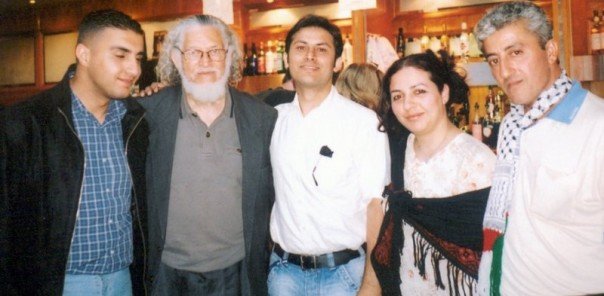
We have been flooded with messages of support and encouragement from across the world since our recent successful action at the University of Strathclyde. Of all the wonderful messages we have received there is none more meaningful than the one from Dennis Brutus, the great South African poet and anti-Apartheid campaigner who pushed to get South Africa suspended from the Olympics which eventually lead to the country’s expulsion from the games in 1970. He once took a bullet for his convictions and was incarcerated along with Mandela on Robben Island. Back in 2005, I had the pleasure of meeting this great man at the G8 Alternatives summit, and today I was delighted to see Prof. Brutus’s message of solidarity.
He also added: ‘we need solidarity action from scottish workers – especiallly scottish dockworker ; also from students in britain – they were great at anti-apartheid actions – especially in Aberdeen, Edinburgh Falkirk and Glasgow; we marched together, as I well remember’.
Security in Iraq: Relatively Speaking

Our dear friend Dahr Jamail, winner of the 2008 Martha Gellhorn Prize, is back in Iraq and here are his impressions. He writes, ‘yes, one could say security is better if one is clear that it is better in comparison not to downtown Houston but to Fallujah 2004’. As for employment, Dahr reports that the line of work with highest job security is that of the grave digger.
If there is to be any degree of honesty in our communication, we must begin to acknowledge that the lexicon of words that describes the human condition is no longer universally applicable.
I am in Iraq after four years away.
Most Iraqis I talked with on the eve of the first provincial elections being held after 2005 told me “security is better.”
I myself was lulled into a false sense of security upon my arrival a week ago. Indeed, security is “better,” compared to my last trip here, when the number of attacks per month against the occupation forces and Iraqi collaborators used to be around 6,000. Today, we barely have one American soldier being killed every other day and only a score injured weekly. Casualties among Iraqi security forces are just ten times that number.
But yes, one could say security is better if one is clear that it is better in comparison not to downtown Houston but to Fallujah 2004.
 P U L S E