How to Crush a Revolution

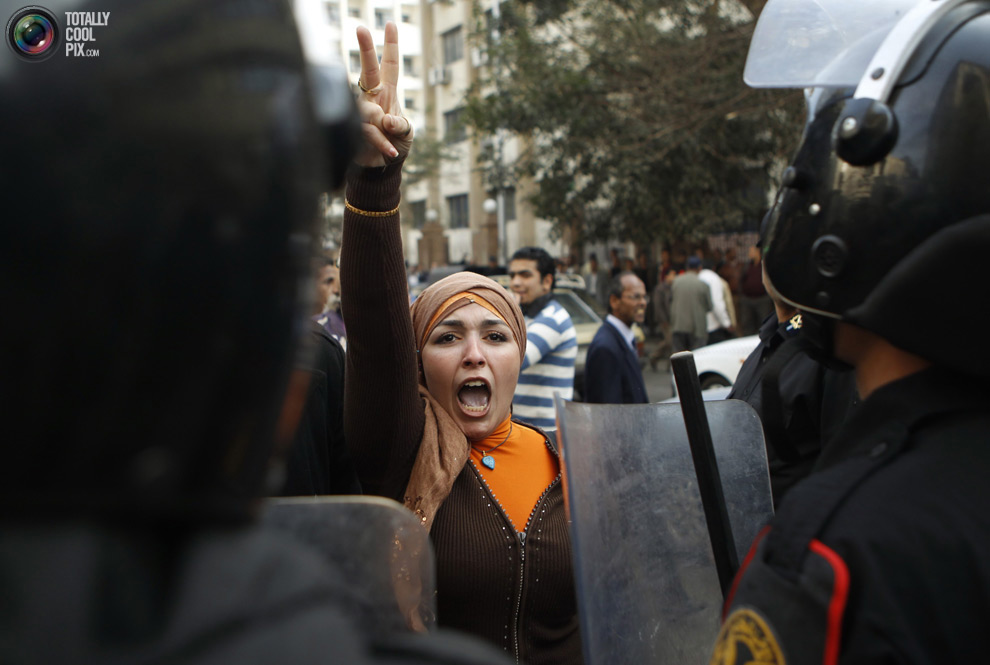
In common with journalists and human rights workers, Egyptian blogger Sandmonkey was beaten by regime thugs today, and his blog closed down. Fotunately his last post was reposted at War in Context. And here it is below, a depressing (I hope against hope he’s being overly pessimistic) account of the last days.

The End is near,” Sandmonkey writes. “I have no illusions about this regime or its leader, and how he will pluck us and hunt us down one by one till we are over and done with and 8 months from now will pay people to stage fake protests urging him not to leave power, and he will stay “because he has to acquiesce to the voice of the people”. This is a losing battle and they have all the weapons, but we will continue fighting until we can’t.”

I don’t know how to start writing this. I have been battling fatigue for not sleeping properly for the past 10 days, moving from one’s friend house to another friend’s house, almost never spending a night in my home, facing a very well funded and well organized ruthless regime that views me as nothing but an annoying bug that its time to squash will come. The situation here is bleak to say the least.

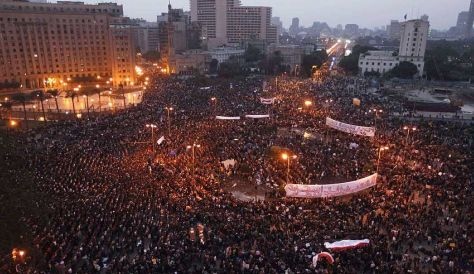
It didn’t start out that way. On Tuesday Jan 25 it all started peacefully, and against all odds, we succeeded to gather hundreds of thousands and get them into Tahrir Square, despite being attacked by Anti-Riot Police who are using sticks, tear gas and rubber bullets against us. We managed to break all of their barricades and situated ourselves in Tahrir. The government responded by shutting down all cell communication in Tahrir square, a move which purpose was understood later when after midnight they went in with all of their might and attacked the protesters and evacuated the Square. The next day we were back at it again, and the day after. Then came Friday and we braved their communication blackout, their thugs, their tear gas and their bullets and we retook the square.

We have been fighting to keep it ever since.
Continue reading “How to Crush a Revolution”

Its Place In The Sun

Ahdaf Soueif writes from Cairo for the Guardian.

I knew something was wrong when I woke up to the sound of car horns. It’s been so quiet and peaceful the last few days we’ve even started seeing the bats once again flitting in and out of the fruit trees at dusk. This wasn’t the normal noise of Cairo traffic; this was aggressive, patterned and constant, like what you get after a football match only lots more so.
Out of my window I saw the crowd marching across 15 May flyover. It’s odd: the pro-Mubarak lot are so much more regimented – and so much less civil: the noise pollution, the rude gestures at the street, the sticks, the attitude – and at the same time the perfectly scripted banners, the “stewards” marshalling and directing them.

By midday they had started to attack Tahrir Square; the attacks are continuing as I write now. I’m getting regular updates from the square from my son, nieces, sister and other friends in the thick of it. The people who on Tuesday night were listening to music and debating modes of government are now putting their bodies on the line. It’s all they have. The pro-Mubarak lot, of course, have sticks and stones, and swords and chains and dogs and trucks and … the military stand by and do nothing. Continue reading “Its Place In The Sun”

Bloodbath

AP photo

When the pro-Mubarak protestors appeared on the streets yesterday they were a comical sight. The small crowd near the Egyptian TV building (so obviously a propaganda set-up) were surrounded and outnumbered by police. It was as if they were trying to remind Egyptians what a traditional demonstration should look like. It was a vision from a previous age, but not quite authentic because the police didn’t break any heads.

Last night Mubarak announced he would step down at the next election. In his last months in power he would arrange an orderly transition of power. This is the ‘managed’ change that Tony Blair, Obama and Netanyahu want. In other words, the survival of the regime, under the torturer and sadist Omar Suleiman if not under Mubarak, co-existing with an impotent parliament which would emerge from slightly-less-rigged elections.

The enormous crowds in Maydan Tahreer, Alexandria, Suez, Mahalla al-Kubra and elsewhere met Mubarak’s speech with howls of derision. But by this morning it seems that the regime has succeeeded in splitting the democracy movement. The hardcore are entirely aware of the threat to the revolution, and will not retreat. Those who are less politically conscious, however, feel that they’ve won a victory and should now go home, lest chaos ensues.

This has been Mubarak’s argument: without me, chaos. It’s certainly true that Egypt needs a resolution soon. The already precarious economy has been on hold for over a week and basic food supplies are running low. Until this morning it seemed regime strategy was to exhaust the revolution.

But now the regime is speeding things up, by engineering chaos. Interior ministy goons masquerading as ‘pro-Mubarak protestors’ have poured into Maydan Tahreer, many on horse and camel back, armed with whips, machetes and sticks. Gunfire has been heard. The army is doing absolutely nothing to protect the people. Earlier today an army spokesman on state TV told the revolutionaries to go home. Old men, women and children are amongst the crowd in Maydan Tahreer. This is going to be very bloody indeed.

Continue reading “Bloodbath”

Now The Wave Is Coming

Two reflections on the revolution, via the Guardian, from Palestinian writers. Raja Shehadeh, author of Palestinian Walks, writes

Now we watch the people in Tunisia and Egypt demonstrate against their police states while, closer to home, we are witnessing the creation, slowly but surely, of a police state of our own. The irony is that while others may be dismantling theirs, ours is being created even before we have a fully fledged state.

In his excellent piece poet Tamim Barghouti puts today’s Arab revolts in their historical context, before noting the consequences for Israel:

Now the wave is coming. I will venture to say that the Egyptian regime has already fallen: it might take some time, but the fear, the perception that the regime is invincible has gone once and for all. All this is followed quite closely in Palestine; any future intifada will not be directed only against the occupation, but also against any Palestinian entity that co-operates with the occupation. Tunisia sent out the message that client regimes fall – that if we can drive the empires out, we will surely be able to drive out their vassals.

As I write, demonstrations rage in the streets of Cairo: everyone knows that if they stay at home, they will be compromising the safety of those in the streets, as well as their own freedom. Cairo knows and Cairo moves. Ramallah worries that an empowered Cairo means an empowered Gaza, and Tel Aviv and Washington know that instead of just Iran, they will now have to worry about Iraq, Syria, Lebanon, Egypt and Palestine all at once.

Both pieces in full after the break. Continue reading “Now The Wave Is Coming”

To the Egyptian Masses: I Kiss The Dust Under Your Feet

Waseem Wagdi, an Egyptian protesting outside the embassy in London, says it all, beautifully.

Sovereignty

Photo by Amr Abdallah Dalsh/ Reuters

My past experience talking to Egyptians, in Egypt and around the world, is that 95% of them hate Husni Mubarak and the humiliation he’s brought upon their once great country. When I ask of their hopes for change, they answer with the bitter resignation common to all Arabs: “Nothing will change. His son will come after him. People are more interested in football, or their next meal.” Arabs from other countries also despair of escaping their state of stagnation. Some like to repeat the Arabic phrase al-‘arab jarab, or ‘the Arabs are scabies.’

But that was then. That was until the Tunisian revolution, which has now reached the centre of the Arab world. Egypt’s Friday of Rage was a beautiful revolutionary moment, when individuals, having witnessed the strength of their protesting compatriots over the previous days, suddenly realised they were not alone. After Friday prayers, a nation claimed sovereignty over its streets – young people, the unemployed, professionals, workers, students, families. The people who didn’t demonstrate provided food, drinks and tear gas remedies to those who did (which means that womens’ participation has been much greater than TV pictures show). On at least one occasion, Christians guarded a Muslim mass prayer under assault by police.

And in Suez, Luxor, Alexandria and Cairo they defeated the police. They torched police stations and police vehicles, as well as the headquarters of the ruling (and absurdly named) National Democratic Party. (The Israeli embassy, meanwhile, has helicoptered its entire staff out of Cairo. One slogan being chanted: ya mubarak ya ameel/ ba’at biladak l-isra’il, or ‘Mubarak you Foreign Agent, You Sold your Country to Israel.’ Tonight the only Israeli flag flying in the Arab world is in Amman.)

Continue reading “Sovereignty”

Tunisia in Syria?

The Guardian published this piece on Syria tacked onto the end of this piece on Egypt. Unfortunately they cut my paragraphs on sectarianism, the most important part of my argument. I should add that, after today’s great revolutionary awakening in Egypt, I am no longer certain of anything. Everything has changed.

2008 demonstration against US bombing of Syria. photo - Xinhua/ Reuters

With its young population, and a bureaucracy run by the same authoritarian party for four decades, Syria is by no means exempt from the pan-Arab crisis of unemployment, low wages and the stifling of civil society, conditions which have now brought revolution to Tunisia. Nevertheless, in the short to medium term it seems highly unlikely that the Syrian regime will face a Tunisia-style challenge.

A state-controlled Syrian newspaper blamed the Tunisian revolution on the Bin Ali regime’s “political approach of relying on ‘friends’ to protect them.” Tunisia’s status as Western client was only a minor motivator for the uprising there, but still al-Watan’s analysis will be shared by many Syrians. Unlike the majority of Arab states, Syria’s foreign policy is broadly in line with public opinion – and in Syria foreign policy, which has the potential to immediately translate into a domestic security issue, matters a great deal. The regime has kept the country in a delicate position of no war with, but also no surrender to, Israel (which occupies the Golan Heights), and has pursued close cooperation with Lebanese and Palestinian resistance movements as well as emerging regional powers such as Turkey and Iran. This is appreciated by ‘the street’, and the president himself is no hate figure in the mould of Ben Ali or Mubarak. Where his father engineered a Stalinist personality cult, mild-mannered Bashaar al-Asad enjoys a reasonable level of genuine popularity. Much is made of his low-security visits to theatres and ice cream parlours.

Continue reading “Tunisia in Syria?”