A Crucial Moment

Whose day will it be?

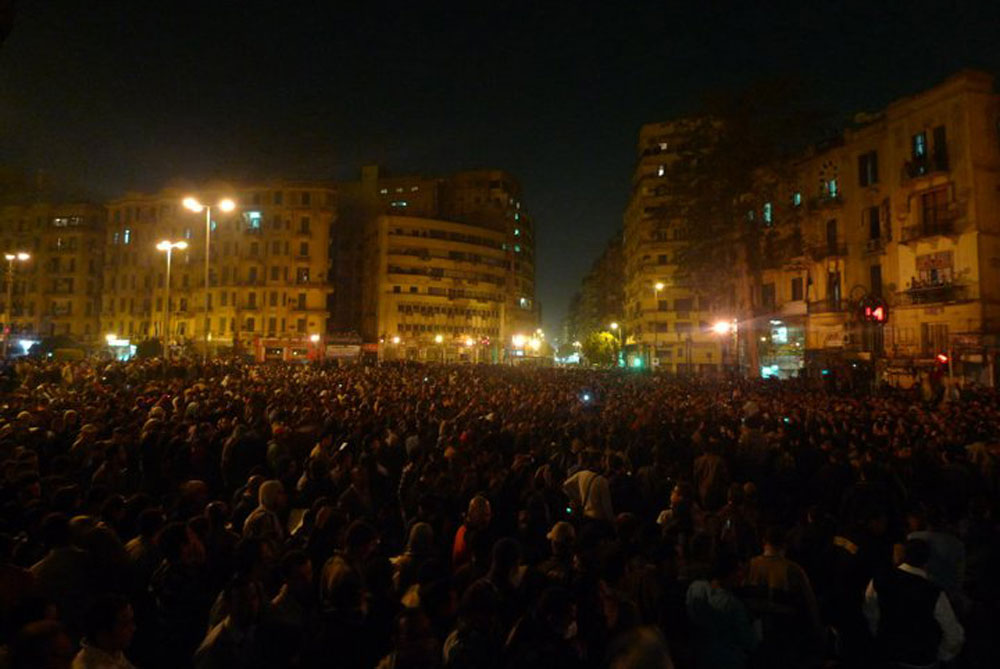
Today is crucial, and could go very badly. The Egyptian gangster regime and its backers have clearly decided to use maximum force to end the popular challenge. At 12.34 this morning, Egypt’s entire internet service was closed down – the largest shutdown in history. Mobile phone services have also been suspended, and al-Jazeera has been taken off the Egyptian air. An al-Jazeera journalist has been beaten up by regime thugs. There are reports that French and British journalists have also been beaten or detained. A CNN crew have had their cameras smashed. Obviously, news is harder to come by today.

Last night senior members of the Muslim Brotherhood were arrested (see Jonathan Wright’s reflection on the Brotherhood role). Now it seems Muhammad al-Baradei has been arrested after leading a protest in Giza. Protests have erupted in Cairo, in Sinai’s al-Arish, in Minya and Assiut in upper Egypt, in Ismailiya, in Alexandria. Roads leading to Suez, where regime forces have lost control, have been closed.

In the circumstances, protestors are remarkably well-organised. And a few reports are coming through of soldiers (in Suez and Alexandria) refusing to attack the people. Latest: 20,000 people have taken over Qasr el-Nil bridge in central Cairo. And Ayman Nour of the Ghad Party is in intensive care after being beaten by police.
Continue reading “A Crucial Moment”

Solidarity in Action

Novelist and Palfest founder Ahdaf Soueif writes from Cairo for the Guardian. “For some time,” she says, “Egypt has felt as though it is under occupation. Today, downtown Cairo was under siege.”

Patience is a virtue – maybe even the supreme one in Egypt’s popular hierarchy of values, but patience also has its limits and, now, at last, it seems as if we’ve arrived at ours. And fittingly, it’s the young of the country who are leading us. They’ve had enough of unemployment, deteriorating education, corruption, police brutality and political impotence.

As is now well known, they organised Tuesday’s protests over Facebook and in closed virtual and actual meetings. Talk about grassroots! “They” is some 20 groups that have sprung up over the last five years. The question has always been how and when will they coalesce? They did on Tuesday; they fused, and with them multitudes of Egyptians young and old – inspired by what happened in Tunis.

They organised protests from Assiut in the south, to Sheikh Zuwayyid in Sinai, and Alexandria, Suez and other cities the length and breadth of Egypt. For Cairo they chose three locations: Shubra, Matariyya and Arab League Street. These were strategic choices: naturally crowded neighbourhoods, with lots of side streets off the main road. Young activists started their march in nearby areas, collected a following and by the time they reached, for example, Arab League Street, they were 20,000 marching.

Continue reading “Solidarity in Action”

Is Mubarak’s Rule Threatened?

Al-Jazeera’s Inside Story asks what the future holds. Kefaya activist Rabab el-Mahdi and writer Afshin Rattansi provide excellent analysis.

Scenes from the Egyptian Intifada

Al-Masry al-Yowm says of Egypt’s stock market crash today, “The crash, which brought year-to-date losses to almost 21 percent, hit at the core of some of the regime’s main accomplishments. The president has built his legacy continuing and expanding the open market policies launched by his predecessor, Anwar Sadat, in the 1970s.” Meanwhile ex-UN nuclear inspector Muhammad al-Baradei is returning to Egypt to (perhaps presumpteously) lead the protests. And the Muslim Brotherhood has finally expressed support for the demonstrations. “We are not pushing this movement, but we are moving with it. We don’t wish to lead it but we want to be part of it,” said Mohammed Mursi, a senior Brotherhood leader.

In this interview, Egyptian journalist Hossam el-Hamalawy contextualises Egypt’s intifada  against earlier mass protests on behalf of Palestine and Iraq. “The regional is local here,” he says. Here Asa’ad Abu Khalil provides a list of slogans heard in recent days. And here are three short films which capture some of the unfolding drama. In the first, journalists demanding police release their colleague Yahya Qlash turn to chanting Fall, Fall, Mubarak, and al-intifada mustamura (The Intifada Continues), and Go, Go, We Don’t Want You, and finally hurriya (Freedom). In the second, a crowd facing off the police chants (if I hear correctly) – One, Two, The Egyptian People Are Alive. The third shows chilling scenes as the police cleared Maydan Tahreer on the first night.

Continue reading “Scenes from the Egyptian Intifada”

Mish Ayazeenu

Photo by Adam Makary

Egypt’s anti-regime protests are unprecedented in size, frequency and ferocity. In Shubra, Dokki, Mohandaseen and Bulaq, Cairenes chanted ash-sha’ab yureed isqaat an-nizam, or The People Want the Fall of the Regime, and braved tear gas and baton-wielding thugs in the central Tahrir Square. Alexandria, Tanta, Suez, and the labour stronghold of Mahalla al-Kubra have also demonstrated. A government building has been burnt in Suez. Posters of Mubarak have been ripped down and burnt in several locations. Mish ayazeenu, the people shout: We Don’t Want Him.

When January 25th’s Day of Anger started, police at first allowed protesters to move freely in the streets. This was unusual, and suggests fear on the authorities’ part, as does the abrupt shift back to traditional methods as night fell. At the time of writing, at least a thousand people have been arrested, several killed, and hundreds beaten. (Here’s an audio recording of Guardian journalist Jack Shenker’s experience being trucked into the desert with other protesters.) Uniformed police are backed up by plainclothes goons, many armed with iron bars. (One hopes that someone is collecting photographs of these people in order to identify and shame them.)

Continue reading “Mish Ayazeenu”

A Different Kind of Dominoes

AFP photo

I ended my last post like this:

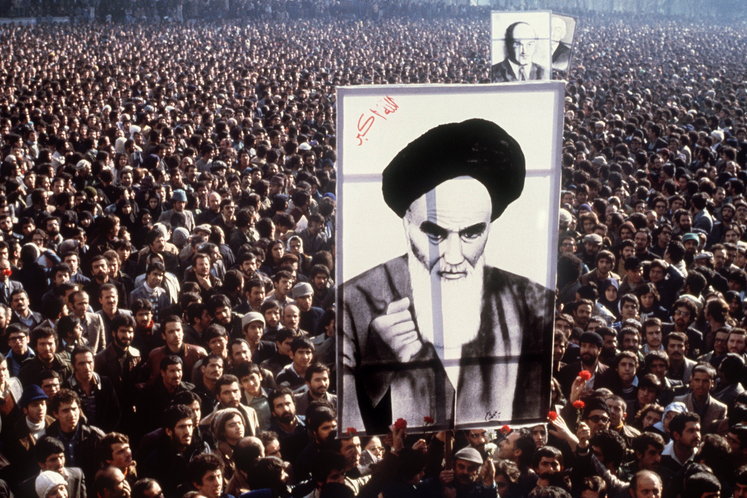
Perhaps in six months’ time non-Arab commentators will decide that the Tunisian revolution was a mere anomaly in an eternally stagnant Arab world. But they’ll be wrong. The revolution will exert a long-term pervasiveness throughout Arab culture, as the Iranian revolution did before it. It will change the air the Arabs breathe and the dreams the Arabs dream.

Well, it seems I was wrong on the timescale. I should have said six minutes. Today several commentators are indeed arguing that the Tunisian revolution is anomalous. Robert Fisk is pessimistic, contending that the Tunisian people are no match for the combined forces of the Tunisian elite and Western imperialism. Perhaps events will prove him right.  Steve Walt fears that those expecting immediate regime change from the Ocean to the Gulf will be rapidly disappointed.

His point is a good one. In the frontline states with Israel, foreign policy issues increase in importance because they have the potential to immediately translate into security issues. The Syrian regime, for instance, may be unpopular for its corruption, bureaucracy, and stifling of dissent, but its foreign policy is broadly in line with Syrian opinion – and in Syria this matters a great deal. The Western clients are more vulnerable to protest, not least because they’re more linked into the ‘globalised’ economy and are thus more vulnerable to dramatic fluctuations in the price of essential goods. Yet even in Jordan legitimate fears of an Israeli intervention (perhaps an attempt to fulfill the Jordan-is-Palestine fantasy) could damp down effervescence. The public in many countries seems too split by sect, ethnicity or tribe to coordinate unified protest. And of course the regimes will now be battening down for fear of Tunisian contagion.

Continue reading “A Different Kind of Dominoes”

Changing the Air

Zein al-Abdine Ben Ali is in Abha, Saudi Arabia. France wouldn’t have him. (Despots, note the speed with which a sponsor drops a client who has outlived his usefulness.) Arab activists are calling for protests outside Saudi embassies.

In Tunisia, the extent of the people’s sacrifice over the last month is becoming clearer. Reports describe Ben Ali’s police terrorising rural areas with punitive rapes and random murders.

And the terror continues. Since Ben Ali’s fall, Tunis and other cities have been plagued by violence. Some of it, such as attacks on Ben Ali family businesses, can be classed as revolutionary. Some more of it is the natural result of taking the lid off after so long; a mix of exuberance, criminality, and what Gazmend Kapplani calls an ‘orphan complex’:

Tyrants are merciless beasts, precisely because they leave behind distorted societies worn down by oppression and above all suffering from an orphan complex. Those who give themselves over to indiscriminate looting and destruction the minute the statues come down are like orphaned children robbing the corpse of a false and terrifying father.

But the most terrifying violence appears to be organised by Ben Ali’s militiamen. Tunisians report battles between army forces on the one hand and ‘police’ and other highly-trained, well-armed gangs on the other. Some of these gangs have been driving through residential areas shooting randomly at people and buildings.

Continue reading “Changing the Air”

This is What Victory Looks Like

photo by Hassene Dridi for AP

Written on the night of January 14th 2011

The dictator, thief and Western client Zein al-Abdine Ben Ali, beloved until a few hours ago in Paris and Washington, has been driven from Tunisia. His reign was ended not by a military or palace coup but by an extraordinarily broad-based popular movement which has brought together trades unions and professional associations, students and schoolchildren, the unemployed and farmers, leftists, liberals and intelligent Islamists, men and women. One of the people’s most prominent slogans will resonate throughout the Arab world and beyond: la khowf ba’ad al-yowm, or No Fear From Now On.

It is to be hoped that Tunisia will now develop a participatory system based on respect for citizens’ rights, that it will reclaim and develop its economy, implement social justice, and move out of the Western-Israeli embrace. The revolution, however, is beset by dangers. Although the head of the snake has been sacrificed, the conglomerate of interests behind the Ben Ali regime is largely still in place, and will be working furiously to restrict and roll back popular participation. For this reason it is of crucial importance that Tunisians are tonight raising the slogan ‘al-intifada mustamura,’ or ‘the intifada continues.’

Continue reading “This is What Victory Looks Like”

Scenes from the Revolution in Tunisia

The protests in Tunisia are growing and spreading. What began with Mohamed Bouazizi’s suicide in Sidi Bouzid at first declared itself a rebellion against unemployment, then became a revolt against corruption. Today ‘freedom’ is one of the words most vigorously chanted. Almost all sectors of society have joined demonstrations and strikes against the Bin Ali regime, a World Bank favourite. Tunisia’s intifada is far more broadly-based than the Green Movement in Iran. In this case, however, Hillary Clinton says the United States is “not taking sides.” Meanwhile the regime has closed schools and universities indefinitely. Human rights groups say over 50 protesters have been murdered by American and perhaps Israeli munitions. The regime claims the figure is 21. Particularly in this lamentable period we must salute the bravery and sacrifice of the Tunisian revolutionaries, and thank them for bringing us hope.

The first film is to a soundtrack of revolutionary Tunisian pop music. The sign the man waves at 0.40 says ‘No Fear After Today’ or ‘No Fear From Now On.’ The second features the symbolic burning of a Bin Ali artwork. The third shows a hospital dealing with the dead and injured, and is not for the faint-hearted. I put it up to remind us of Neda Sultan, and because the BBC doesn’t (although it does have this report).

Continue reading “Scenes from the Revolution in Tunisia”

Sabriya

by Ali Farzat

It’s Damascus: bustling alleyways and courtyards crammed with silence. Sabriya is secretly in love with Adil. Her brother Sami is secretly in love with Nermin. Both loves are chaste and built on idealism, and both are doomed. Adil and Sami join the 1925-27 revolt against the French occupation. Sami is killed by the enemy. Nermine is badgered into marrying a wealthy old man, then ends up eloping with her hairdresser. Sabriya’s fiance Adil is killed, probably by Sabriya’s bullying brother Raghib who doesn’t like the idea of her marrying a baker’s son. Sabriya is left alone to care for her dying mother, then her dying father. Finally she kills herself, leaving her journal for her niece to read, and a message: “Do not let your life be in vain.”

Sabriya: Damascus Bitter Sweet” (in Arabic, “Dimashq Ya Basmat al-Huzn”, or “Damascus, O Smile of Sadness”) was published in Syria and then transformed into a controversial and wildly popular muselsel, or television series. (If the Egyptians are famous in the Arab world for films, the Syrians do muselselat, particularly period dramas). This elegantly-written, carefully-dramatised period novel is nostalgic but also very current in its concerns.

Ulfat Idilbi explicitly links the struggles for national rights and women’s rights. When Sabriya participates (wearing niqab) in a women’s demonstration against the French, she says: “For the first time I felt I was a human being with an identity and an objective, in defence of which I was ready to die.”

Continue reading “Sabriya”