Shahid Alam’s Destabilising Logic of Zionism

This review of Shahid Alam’s indispensable book was written for Holy Land Studies.

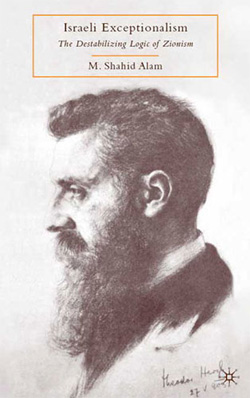
M. Shahid Alam’s latest book “Israeli Exceptionalism: The Destabilising Logic of Zionism” is a fascinating historical analysis, densely detailed and referenced, of the nature and trajectory of Jewish nationalism. It is bracingly honest, dispensing with the usual Western pieties to describe three elements of what Edward Said called Israel’s “ideology of difference.” These are, firstly, the notion of Jewish chosenness and divine right to Palestine; secondly, the ‘miraculous’ creation and survival of the state; and thirdly, the uniquely tragic history of the Jewish people.

Many studies have deconstructed the first two myths. Less attention has been lavished on countering the third, the “lachrymose historiography” of the Jews (in Salo Baron’s words) and its employment to neutralise criticism of the Zionist project. Alam argues persuasively that Zionism was not simply a response to virulent anti-Semitism but also, crucially, the result of Jewish power.

Until the rise of fascism, the trend of Jewish involvement in modern Europe was one of phenomenal success. This is despite recurring episodes of anti-Semitism, particularly in the east. The European Jewish population increased more than tenfold in the eighteenth and nineteenth centuries (the general population increase was by a factor of 3.3). In the same period, Jews moved into the West’s urban power centres. Ironically, anti-Semitic discrimination had “endowed the Jews disproportionately with those assets that would give them vital advantages in Europe’s emerging capitalist societies.” By the early 19th Century, Jews owned 30 of 52 private banks in Berlin. In Vienna in 1900, 62% of lawyers, half the doctors and over half the journalists were Jews. An important strata of Jews now had both money and access to political and cultural elites.

Continue reading “Shahid Alam’s Destabilising Logic of Zionism”
A Short Border Handbook

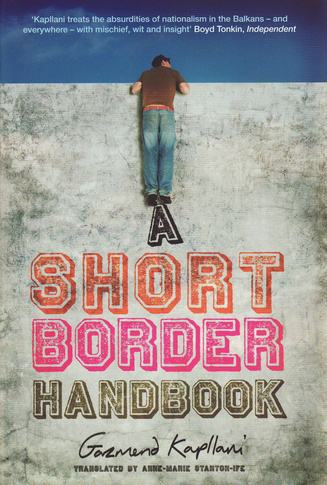
I met Gazmend Kapllani, a Greek of Albanian origin, during a recent visit to Germany (for a British Council ‘Our Shared Europe’ conference). He’s a great conversationalist, so I was pleased when he promised to send me one of his books. A Short Border Handbook arrived this morning. I took it back to bed, planning to read the blurb and perhaps the first chapter before adding it to my enormous pile of books-to-be-read. But I read the whole thing in one go.

It’s not a novel but it feels like one, because it’s so lightly yet densely written, full of stories and humour and therefore with a texture more human than journalistic. Part autobiography, part fiction, part philosophy, Kapllani’s book reminds us that a migrant, unlike a tourist, is the weak pole in relation to his host society, and that the weak are never respected, however hard they work. The Handbook’s general ruminations are applicable to any migrant, but it also addresses very specifically the conditions in Albania in the 1990s which forced so many people to move.

It has the following to say about Enver Hoxha. Examples of other fallen dictators will leap into readers’ minds:

Continue reading “A Short Border Handbook”

Outposts

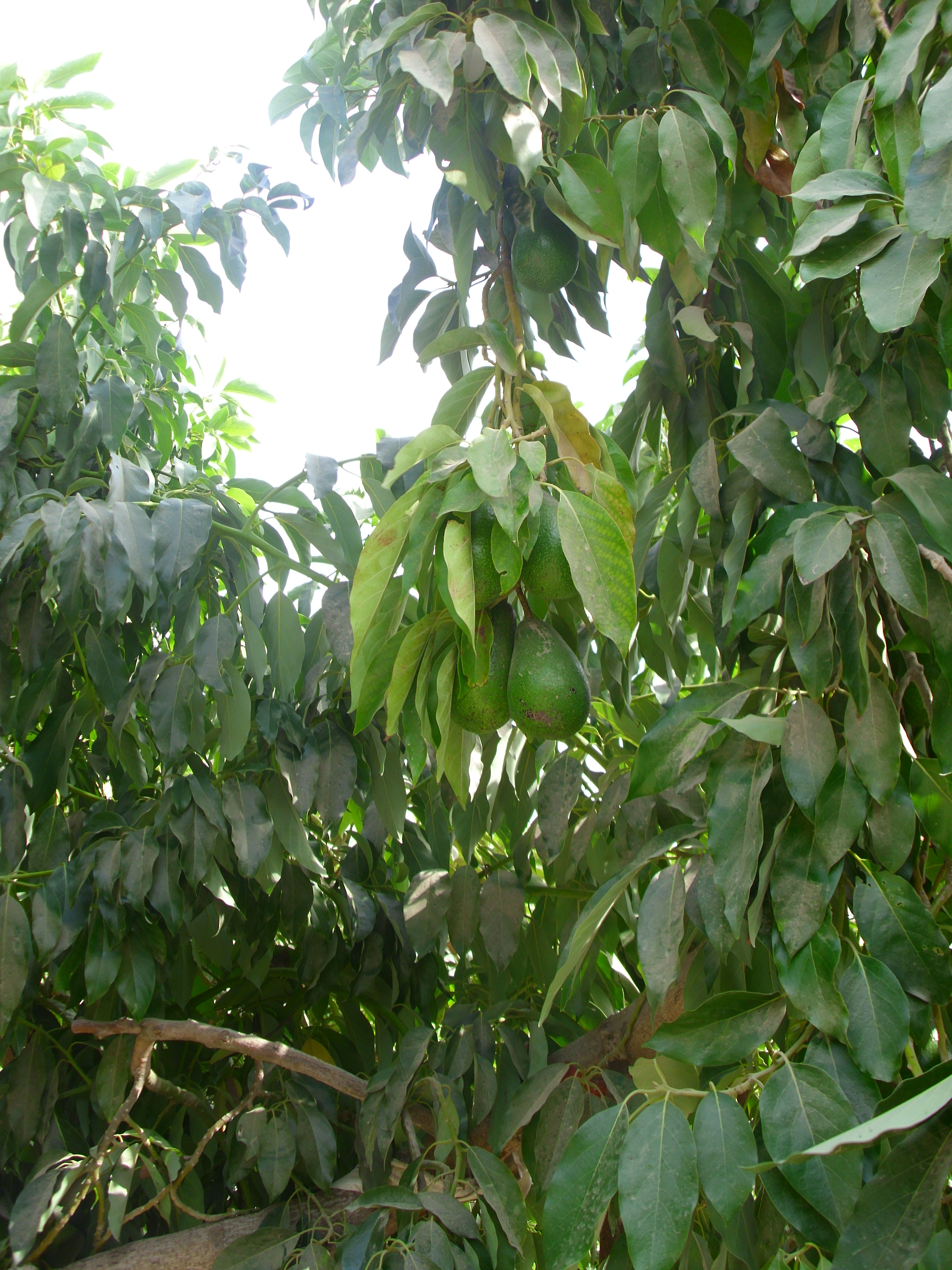
Avocadoes

Whatever the Western media calls them, the illegal Jewish settlements on the West Bank are very far from being outposts. They are connected to Jerusalem and Tel Aviv by fast, Jews-only motorways. Their villas have swimming pools and lawns (a settler is allocated eight times more water than a Palestinian). Even the most recent and farflung of settlements are tooled-up enough to intimidate the Arabs on whose land they encroach.

It’s the Palestinian villages which feel like outposts, although some have been settled for thousands of years. Even when they’re close to major cities they are vulnerable, intermittently cut-off, and surrounded by wolves (or boars).

An example is Iraq Burin, a mountain-top village just a kilometre from Nablus but one trapped behind a checkpoint. Not only are the villagers unable to access city shops and services, they face violent harrassment from soldiers and armed men from the nearby Bracha settlement.

There’s an unarmed ‘popular’ struggle against land confiscation being waged here. It involves weekly demonstrations which are met by tear gas and sometimes bullets (in March two teenagers were killed). Similar protests are held in villages all over the West Bank, most famously in Bil’in, Nil’in and Budrus.

Continue reading “Outposts”

Epilogue on Tony Benn

Me chewing the fat with Ken Livingstone and Nadifa Mohamed.

More after the break..

Continue reading “Epilogue on Tony Benn”

Yom Kippur

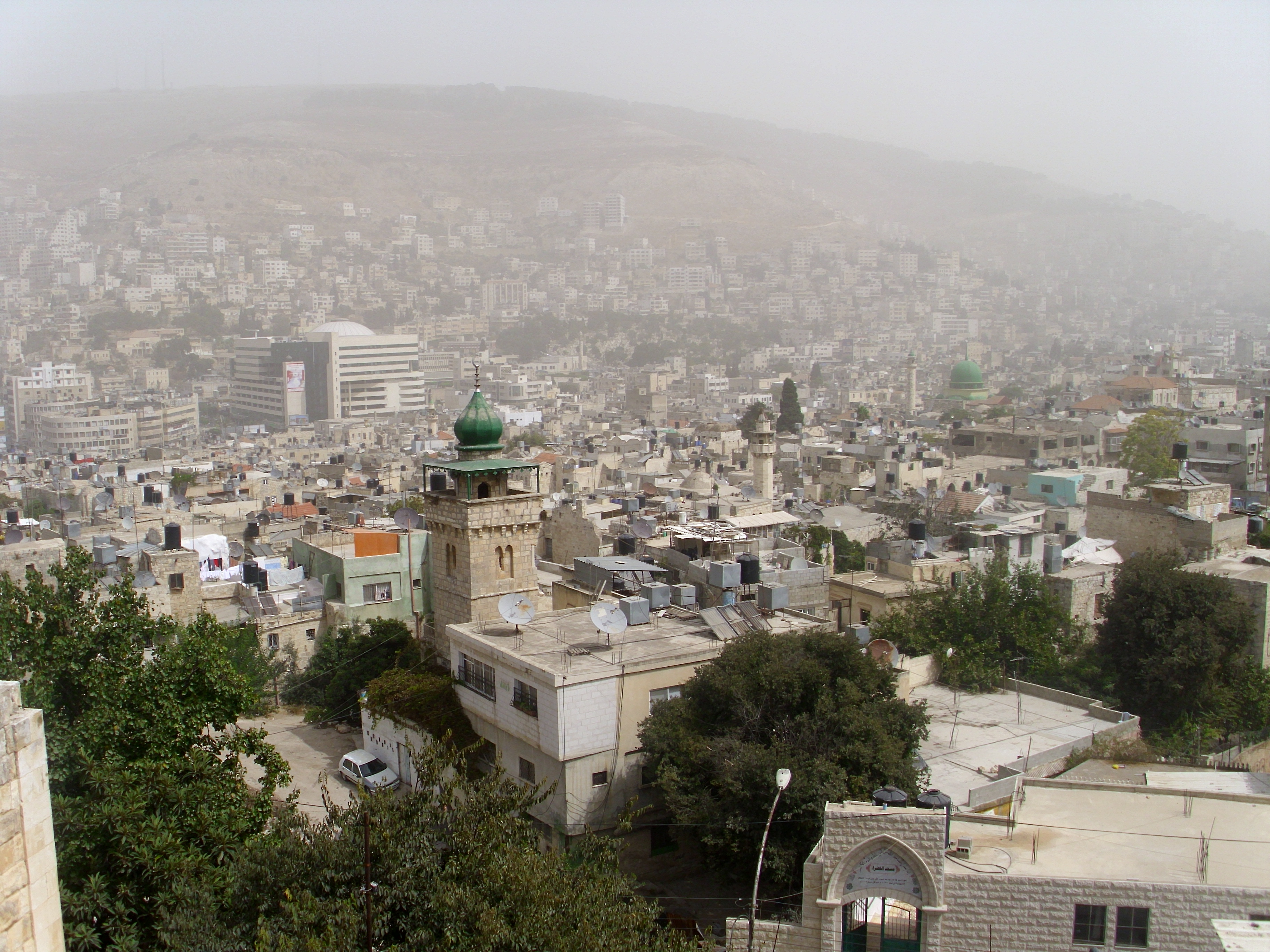
Summer Mist in Nablus

“Have you visited Afghanistan? Pakistan? Yemen? Do you have a weapon? Do you have a credit card? Give us your email address. Do you know anyone in Israel? Do you know anyone in Jordan? What is your novel about? What did you do yesterday?”

It only took an hour and a half to get through the border. They were closing early because it was Yom Kippur, yowm al-ghafran in Arabic, the Day of Atonement.

The driver who met me said he couldn’t go to Nablus, not now, it was getting too late, because the car had Israeli plates and settlers were throwing stones, he could take me to Ramallah instead, although it was further.

“Won’t we be alright with Israeli plates?”

“We need Palestinian plates. They’re throwing stones at Israeli cars because they don’t want Jews driving on the holiday.”

So we went to Ramallah, south through the West Bank. We drove down the confiscated Jordan valley. A couple of memorials to settlers shot here during the Second Intifada were set up at the roadside. To our east, closed military zones and then the hills of Jordan rising. To the west, ochre desert mountains and hardly any habitation.

Continue reading “Yom Kippur”

Letter to the Co-op

I wrote to the Co-op to ask them to stop stocking Israeli goods. Their reply is below, followed by my reply to their reply. Readers, please feel free to adapt my letter, and send your own.

Thank you for your enquiry about the Co-operative’s stance on stocking products sourced from Israel.

Continue reading “Letter to the Co-op”

Petrol

His father used to work at the refinery, which was a good job. His father brought home a new toy every evening, that’s what Bilal remembers. Many of the toys are still at home, stuffed under his mother’s bed: speaking animals, racing cars, things that work if you have batteries.

Bilal thought his father had a round and jolly face, but this thought contradicted the stern, gaunt photograph framed on the living room wall. The photograph was a fact – unlike Bilal’s thought, which was only a thought, as vague and blurry at the edges as thoughts tend to be.

A couple of years ago, a long time now, his father had been arrested and taken away. This happened to a lot of people and was nothing much to cry about.

There was some confusion as to his father’s exact location. One aunt said he was in the local prison. One said he was in prison in the capital. His uncles squeezed his shoulder and said nothing at all.

One aunt said he was in heaven. When Bilal heard her he thought his father had been killed and he began to cry inconsolably. But his mother told him that that aunt was just upset and raving, that his father was in prison in the capital, and that Bilal would meet him again one day when he’d grown up and done something that his father could be really proud of. She said people don’t die in any case. And Bilal was consoled.

He was the oldest child, the only son, in a way the head of the household now. He bossed around his two sisters who were too little to obey him. He knew he bore responsibility for them and for his mother whose wages paid the rent on their flat but didn’t put food on the table. That was his job. But what he suffered in responsibility he regained in freedom.

Continue reading “Petrol”

It’s Called Dignity

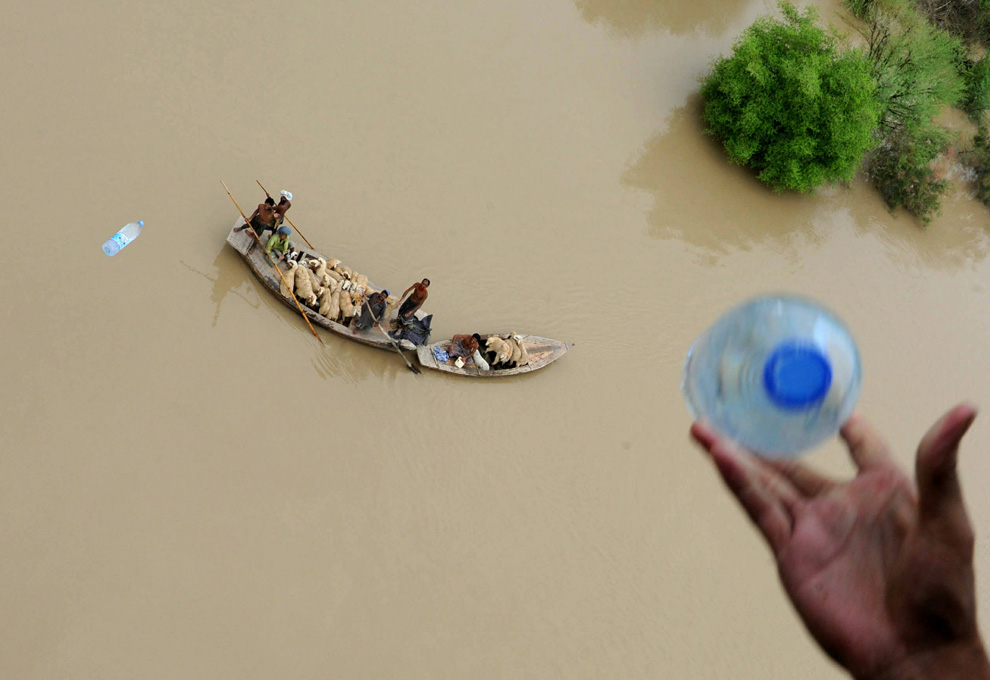
Mohammad Hanif, author of the Booker Prize-listed novel “A Case of Exploding Mangoes“, writes for the Guardian about the worsening aftermath of the floods in Pakistan and the lot of Pakistan’s poor, floods or not.

Last month, in a camp set up for flood refugees outside Pakistan’s southern city of Sukkur, a group of men and boys gathered around the medical tent complaining about the rising cases of stomach infections. “They give us food that’s too spicy,” they said.

“What do they give you?” I asked a young man.

“Korma,” he said. “But they put too many spices in it. We don’t like these spices.”

A relief worker at the camp who overheard our conversation cursed under his breath. “They get to eat korma every day and still they complain.” The implication was clear: could they afford to eat korma before this flood made them homeless? Shouldn’t they be grateful?

Continue reading “It’s Called Dignity”

Sun Deprived in Palestine

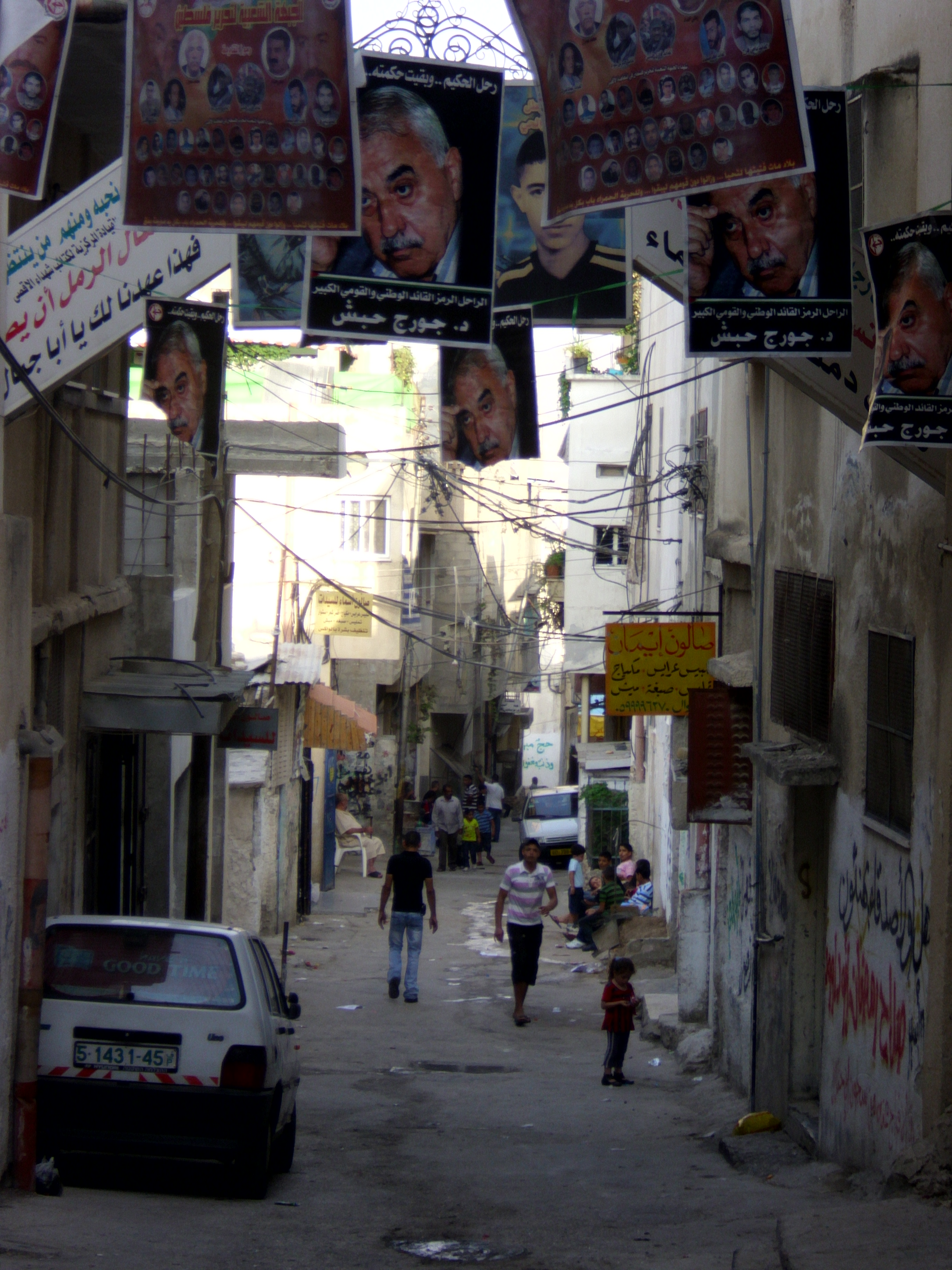
The PFLP's George Habash pulls an eyebrow

Balata Camp started as tents in the fifties, grew cement blocks in the sixties, installed sewage and water in the seventies, and has stretched ever upwards until now. The camp boasts the densest population in the West Bank: at least 25,000 people in a couple of square kilometres (the inhabitants claim up to 40,000). The buildings are so tightly packed that the kids forced out to play in the shadowed alleyways suffer from Vitamin D deficiency, sun deprivation. There are eight to ten people to a residential room. In school there are 50 children to a class. UNRWA schools and the graveyard take up most space. Most of the graves are those of people killed in the streets of the camp.

It’s a remarkably friendly place, but also discomfiting. Many of the young are prematurely aged and many of the old seem broken. There’s a higher proportion of wheelchairs than anywhere else I’ve been. In a comparatively wide street I found boys playing table football in front of a memorial to their murdered playmate. They laughed and screamed. Continue reading “Sun Deprived in Palestine”

An Apartheid Distinction

I was at the border, a British national with an Arab name on my way into Palestine-Israel. The Jordanians were suspicious but not at all intimidating. It felt more like an unexpected cup of tea with an avuncular officer (which it was) than an interrogation. I learnt about Abu Tariq’s children and he learned about my reasons for crossing, my travels, and my career. He noted everything down before shaking my hand.

The bus through no-man’s land was full of Palestinian-Israelis, descendants of the remnant not driven out in 1948 – those the Israelis call ‘Arab-Israelis’, as if they were recent immigrants from Kuwait or Algeria. The sun bubbled the box of our bus. It was airless and sweaty inside.

Israeli border control is staffed by teenaged girls in low-slung military trousers backed up by men with sunglasses and enormous guns. The girls clocked my (Arabic) name, and my bags were searched. Then I was closely questioned. Then I had to wait. Fortunately it was Yom Kippur: they let me through an hour later when they closed up early.

Then by car through the the ethnically-cleansed city of Beesan (signposted in Arabic script with the Hebrew name – Beit She’an), and into the West Bank. The roadsigns here are very democratically scripted in Hebrew, English and Arabic, except for those in Hebrew only. But Palestinian towns and villages are never posted. A visitor travelling a Jews-only road wouldn’t realise that such places exist. Jerusalem is written in Arabic as “Urushaleem,” and then between brackets “al-Quds”, which is the actual, ancient and contemporary Arab name. In such ways the attempt is made to occupy the land’s abstract Arab qualities, to control history and memory, the past as well as the present and future.

Continue reading “An Apartheid Distinction”