Things that Happened While I was There

A large demonstration was held in central Nablus calling for the release of the thousands of prisoners held in the Israeli gulag.
Israeli forces shelled Gaza.

The Palestinian Authority arrested 53 men in overnight raids.

I passed a settlement built during Netanyahu’s ten-month settlement freeze.

Two settlers were shot in the legs by Palestinian fighters while driving near Hebron.

PA president Mahmoud Abbas let slip that he might not pull out of peace talks when the settlement freeze lapses.

The Palestinian Authority arrested 20 men in overnight raids.

Dana wrote a story about a girl raped by a relative.

Hamas forces closed down a Gaza restaurant because a woman had publicly smoked the argileh there.

Continue reading “Things that Happened While I was There”

A History of Significant Moments

How many Britons are aware of the British-Iraq war of May 1941? Not many. Yet such past wars are the producers of today’s reality. People in Iraq remember. If Westerners don’t remember the past they will inevitably fail to understand the present moment.

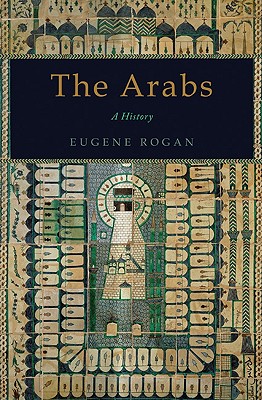
The urge to remind the reader so as to better contextualise the present is the laudable motive energising Eugene Rogan’s “The Arabs. A History,” which covers the last five hundred years.

The history starts in 1516 with the Ottoman defeat of the Mamluk slave-elite, the regime which in previous centuries had repelled Mongols and Crusaders from the Arab heartlands. The Mamluks weren’t Arabs, but they’d ruled from Arab capitals. Now power moved to Istanbul, which makes the moment a good place to begin. From the 1516 collapse in Cairo until the present day, many key decisions governing Arab life have been made in foreign cities. Rogan calls the process “the cycle of subordination to other people’s rules.”

In the early years, Ottoman rule “in the Arab provinces was marked by great diversity and extensive autonomy.” Sulayman’s perspicacious laws, public building projects and reasonable prosperity followed. But the global centre of gravity was shifting, and the long decline set in.

Continue reading “A History of Significant Moments”

Syria’s Diversified Options

Note French bullet holes in roof

This was written six months ago and recently published in Political Insight.

A sigh of relief blew across Syria when the Bush administration was retired. Bush had backed Israel’s reoccupation of West Bank cities, described Ariel ‘the Bulldozer’ Sharon as “a man of peace”, given Syria two million Iraqi refugees and an inflation crisis, and blamed Syria for the assassination of Lebanese prime minister Rafiq al-Hariri. Veiled American threats of “regime change” scared the Syrian people – who observed the blood rushing from neighbouring Iraq – almost as much as they scared the regime itself.

Obama’s re-engagement signalled an end to the days of considering Syria – in the predatorial neo-con phrase – “low-hanging fruit”, but American overtures have remained cautious, the new administration’s policy severely limited by its commitments to Israel and the domestic Israel lobby. Obama nominated Robert Ford as the first American ambassador to Damascus in five years, but the appointment has since been blocked by the Senate. In May, Obama renewed Bush-era sanctions, citing Syria’s “continuing support for terrorist organizations and pursuit of weapons of mass destruction and missile programs,” which, “continue to pose an unusual and extraordinary threat to the national security, foreign policy, and economy of the United States.”

So not much has changed. The neoconservative language is still in place, the same elision of distance between American and Israeli interests, and between anti-occupation militias and al-Qa’ida-style terrorists, plus a flat refusal to understand that the countries really under unusual and extraordinary threat of attack are Syria, Lebanon, and – Netanyahu’s “new Amalek” – Iran.

Continue reading “Syria’s Diversified Options”

Two Schools in Nablus

“Most of the students from age fourteen have had a prison experience.” A great short film from 2008 on secondary schools in Nablus. Parts 2 to 4 over the fold. I challenge anybody to watch the girls’ terror in part three and remain unaffected. We must redouble our efforts to strengthen the Palestinians and to weaken their enemies.

Continue reading “Two Schools in Nablus”

Prisoners

During the journey from Ramallah to Nablus I got talking to the middle-aged man sitting beside me. It turned out he’d been in prison for five years, cramped in a cockroach-run tent with tens of other men. At the kiosk at the end of my street I got talking to a white-haired young man. A few nights earlier the two owners of the kiosk had been taken away in an Israeli jeep. The white-haired man’s brother had been killed in 2007. He himself had done eleven years inside. I got talking to a writing student whose brother was constantly detained. A Palestinian friend of mine who now lives outside did ten years in Israeli jails. Two and a half of them were underground. Almost every male I met in Nablus had been imprisoned at some point. There are at least 8500 prisoners currently inside. But my friend tells me he felt more free inside the small prison than he did inside the larger. So here’s the statistic that counts: in all the territories controlled by the apartheid state of Israel there are 5,300,000 Palestinian prisoners. The other half of the Palestinian people is locked outside in exile. Here’s Saed Abu-Hijleh describing temporary detention.

Hope, and How Not to Visit Palestine

My visit to Nablus coincided with the first Palestinian Human Rights Film Festival at an-Najah University. Even better than the films shown were the panel discussions afterwards, on issues such as refugees, resistance and women’s rights. The first film I saw was “To Shoot an Elephant” (watch it here), a brutal, highly-recommended documentary shot by International Solidarity Movement activists who happened to be in Gaza as the 2008/09 massacre unfolded. After the screening the audience communicated with director Alberto Arce via a video link-up to Spain. (Alberto is permanently banned from entry into Israeli-controlled territory.)

Alberto said this: “It is not my job to tell the Palestinians what to do. It’s my job to support the Palestinians and to witness what’s happening to them. The Palestinians have suffered so much from the actions of foreigners, and foreigners have no right to impose their beliefs on Palestinians.”

Continue reading “Hope, and How Not to Visit Palestine”

The Martyrdom of Shaden al-Saleh

This video (over the fold) concerns Israel’s 2002 murder of a Palestinian teacher,cultural activist and neighbourhood organiser, Shaden al-Saleh. Shaden was the mother of Saed Abu Hijleh, who witnessed the murder and gives his own account here. Saed teaches political geography at Nablus’s an-Najah University, writes poetry, blogs, organises, and provides me with wonderful food and information, for which I’m very grateful. He’s a well-educated member of the Nablus middle classes. He’s also been shot in the belly and in the shoulder and has been imprisoned five times. But his suffering is not unusual. Everybody in Nablus has a story to tell. I’ve just returned from the prison, and over the next couple of weeks I aim to convey a few of the stories I heard. An example of Saed’s English-language poetry is over the fold.

Continue reading “The Martyrdom of Shaden al-Saleh”

Judt on Life, Death and Israel

A couple of shorts on the late, great Tony Judt. First, Still Life focuses on his grace and perseverance while terribly ill. Over the fold, Don’t Talk About Israel shows Judt … talking about Israel.

Continue reading “Judt on Life, Death and Israel”

Palestine Reading – FiveBooks Interview

Five Books is a website which asks writers, academics and othersuch to list recommended books on a given topic. The Five Books Israel-Palestine week features interviews with interesting figures like Steve Walt. And me. Here’s a video interview of me making several of my favourite points:

Continue reading “Palestine Reading – FiveBooks Interview”

David Hirst interviewed

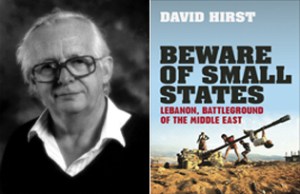
My interview with David Hirst, author of Beware of Small States, reviewed here, was done on behalf of the indispensable Electronic Intifada.

Veteran Middle East correspondent David Hirst, author of the seminal work on the Palestinian plight The Gun and the Olive Branch, has a new release: Beware of Small States, an equally important book on Lebanon’s complex tragedy. The Electronic Intifada contributor Robin Yassin-Kassab interviewed Hirst on his work and views.

Robin Yassin-Kassab: You did your national service in Cyprus and Egypt just before the 1956 Suez War. What effect did your first experience of the Middle East have on you? Why did you end up spending your life in the Middle East, particularly in its more violent corners? Have kidnappings and bannings discouraged you?

David Hirst: Yes, I was one of the last generation of British 18-year-olds obliged to do two years of military service. Politically speaking, it had virtually no effect on me; I was an immature youth from a thoroughly apolitical middle class background, and knew next to nothing about international affairs, and hardly knew, for example, the difference between Arabs and Israelis. But — unusually for a mere private soldier — I sought and secured permission to use a fortnight’s leave to travel round Syria, Iraq, Jordan and Lebanon. I enjoyed the experience. After three years at Oxford, I could not think of a career to embark on. Remembering the American University of Beirut, I wrote and asked them if there were any kind of introductory course about the Middle East that I could follow there. There was. With a vague idea of staying there for a couple of years or so, I found myself drifting into journalism, and, taking to it, I ended up staying fifty.

Continue reading “David Hirst interviewed”