Max Blumenthal discusses his must read article The Great Islamophobic Crusade. Here’s an excerpt:
Little of recent American Islamophobia (with a strong emphasis on the “phobia”) is sheer happenstance. Years before Tea Party shock troops massed for angry protests outside the proposed site of an Islamic community center in lower Manhattan, representatives of the Israel lobby and the Jewish-American establishment launched a campaign against pro-Palestinian campus activism that would prove a seedbed for everything to come. That campaign quickly — and perhaps predictably — morphed into a series of crusades against mosques and Islamic schools which, in turn, attracted an assortment of shady but exceptionally energetic militants into the network’s ranks.
Besides providing the initial energy for the Islamophobic crusade, conservative elements from within the pro-Israel lobby bankrolled the network’s apparatus, enabling it to influence the national debate. One philanthropist in particular has provided the beneficence to propel the campaign ahead. He is a little-known Los Angeles-area software security entrepreneur named Aubrey Chernick, who operates out of a security consulting firm blandly named the National Center for Crisis and Continuity Coordination. A former trustee of the Washington Institute for Near East Policy, which has served as a think tank for the American Israeli Public Affairs Committee (AIPAC), a frontline lobbying group for Israel, Chernick is said to be worth $750 million.
You can read the rest of this excellent article at Max’s website.
 This week on CounterSpin: The journalism organization WikiLeaks is under massive attack by U.S. government officials, corporations, and journalists. Many are calling for the group and its spokesperson Julian Assange to be prosecuted; some have even called for Assange’s execution or assassination. Transnational companies like Visa, MasterCard and Paypal have cut off services, and even liberal US pundits are attacking the group with inaccurate smears. WikiLeaks crime? Making leaked U.S. diplomatic cables available to the world both directly and through its mainstream media partners. In this special extended CounterSpin interview, we’ll talk to Salon.com’s Glenn Greenwald about the assault on WikiLeaks and Assange, and what it means for journalism.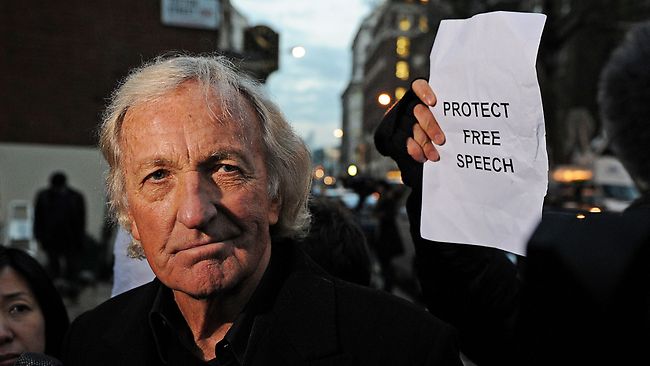

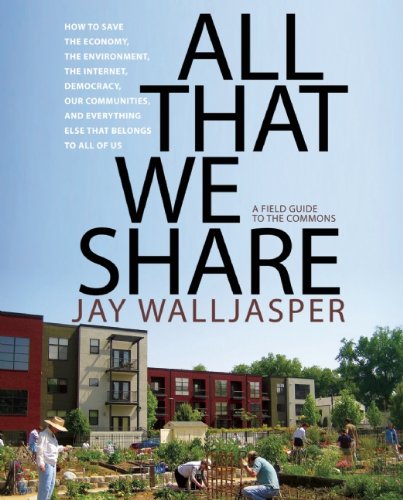 All That We Share is an exciting and exasperating book. The excitement comes from the many voices arguing to place “the commons” at the center of planning for a viable future. The exasperation comes from the volume’s failure to critique the political and economic systems that we must transcend if there is to be a future for the commons.
 P U L S E