by Ahmed Habib
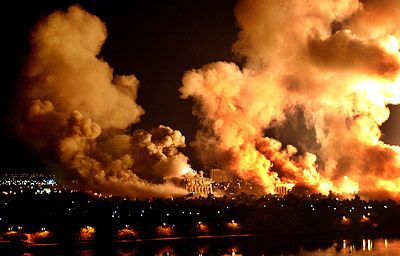 On March 20, 2003, at approximately 5:30 in the early hours of the morning, just at that time where the sun settles into its daytime position over the skies of Baghdad, American jet fighters unleashed indiscriminate firepower over the beautiful city.
Amidst a house filled with resilient spirits, Laila cowered for cover with her neighbours and family. As a twenty year old university student, the Baghdad native had already been through two wars, and a genocidal sanctions regime that limited her childhood to an existence of deprivation and fear.
“This time, it was different, the explosions were so big, we all thought we were going to die,” Laila, a pseudonym used out of fear for her safety, says over a tired phone connection seven years later.
Tens of thousands of kilometres away, activists huddled around a television set, with their heads in their hands, and watched a glorified play by play of death narrated by indifferent talking heads.
“Those are people dying under those bombs, and we couldn’t do anything to stop them,” said Firas from a Toronto apartment, to the backdrop of free flowing tears.
In the lead up to that day, millions of people took to the streets to oppose the impending war, to no avail. Since then, over a million Iraqis have lost their lives, more than five million have been displaced, and countless lives have been destroyed.
 P U L S E