Tag: WikiLeaks
The War You Don’t See
A new John Pilger documentary is always a media event. For over four decades he has set the bar for incisive and intrepid investigative journalism. In The War You Don’t See, his latest, Pilger indicts the mainstream media for its responsibility in enabling wars by sanitizing its image and glorifying its aims.
Michael Moore on why he helped bail out Assange
Michael Moore on why he supports Assange and Wikileaks and why he posted part of his bail (other contributors included John Pilger and our dear friend Tariq Ali)
Also, FAIR has circulated this petition which we encourage you to signt:
We Support WikiLeaks
Stand with Daniel Ellsberg, Barbara Ehrenreich, Arundhati Roy, Noam Chomsky and others–sign FAIR’s petition in support of Wikileaks today.
December 14, 2010
As journalists, activists, artists, scholars and citizens, we condemn the array of threats and attacks on the journalist organization WikiLeaks. After the website’s decision, in collaboration with several international media organizations, to publish hundreds of classified State Department diplomatic cables, many pundits, commentators and prominent U.S. politicians have called for harsh actions to be taken to shut down WikiLeaks’ operations.
Continue reading “Michael Moore on why he helped bail out Assange”
Rap News
All must watch Rap News – featuring (the real) Julian Assange…
Death Squads versus Democracy
by Prof. Michael Keefer
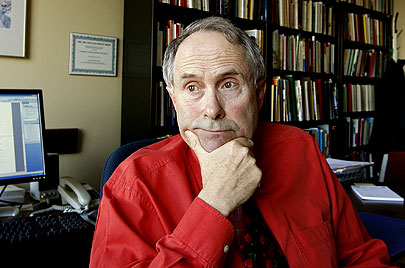
Tom Flanagan, University of Calgary political science professor, right-wing pundit, and mentor and former senior adviser to Prime Minister Harper, has earned himself more international media attention during the past week than even he may have an appetite for.
On November 30th, Flanagan spoke as one of the regular panelists on CBC Television’s national political analysis program, Power and Politics with Evan Solomon. Staring into the camera, while across the bottom of the television screen there appeared a banner reading “WIKILEAKS LATEST: New document mentions PM Stephen Harper,” Flanagan had this to say about Julian Assange, the founder and editor of Wikileaks:
Well, I think Assange should be assassinated, actually. I think Obama should put out a contract and maybe use a drone or something.
WikiRebels
This is the first in depth documentary on Wikileaks, produced by Swedish Television. (The rest of the parts are over the fold)
Exclusive rough-cut of first in-depth documentary on WikiLeaks and the people behind it!
From summer 2010 until now, Swedish Television has been following the secretive media network WikiLeaks and its enigmatic Editor-in-Chief Julian Assange.
Reporters Jesper Huor and Bosse Lindquist have traveled to key countries where WikiLeaks operates, interviewing top members, such as Assange, new Spokesperson Kristinn Hrafnsson, as well as people like Daniel Domscheit-Berg who now is starting his own version – Openleaks.org!
Where is the secretive organization heading? Stronger than ever, or broken by the US? Who is Assange: champion of freedom, spy or rapist? What are his objectives? What are the consequences for the internet?
Operation Payback: hackers speak out
Support Assange
 The Russian government is encouraging NGO’s to nominate Julian Assange for the Nobel Peace Prize. Meanwhile this letter of support has appeared in the Guardian signed by several of our friends.
We protest at the attacks on WikiLeaks and, in particular, on Julian Assange (Report, 9 December) The leaks have assisted democracy in revealing the real views of our governments over a range of issues which have been kept secret and are now irreversibly in the public domain. All we knew about the mass killing, torture and corruption in Iraq and Afghanistan has been confirmed. The world’s leaders can no longer hide the truth by simply lying to the public. The lies have been exposed. The actions of major corporations such as Amazon, the Swiss banks and the credit card companies in hindering WikiLeaks are shameful, bowing to US government pressure. The US government and its allies, and their friends in the media, have built up a campaign against Assange which now sees him in prison facing extradition on dubious charges, with the presumed eventual aim of ensuring his extradition to the US. We demand his immediate release, the dropping of all charges, and an end to the censorship of WikiLeaks.
John Pilger, Lindsey German Stop the War Coalition, Salma Yaqoob, Craig Murray, Alexei Sayle, Mark Thomas, Caryl Churchill, AL Kennedy, Celia Mitchell, Ben Griffin (former soldier), Terry Jones, Sami Ramadani, Roger Lloyd Pack, David Gentleman, Miriam Margolyes, Andy de la Tour, Katharine Hamnett, Iain Banks
Wikileaks: It’s War
One day after the US government declared ‘war’ on Wikileaks, hackers around the world have retaliated. They’ve already taken down the websites of Mastercard and the Swedish prosecutor. Others, such as Paypal and Visa are also under cyber attacks.
Wikileaks and 21st Century Statecraft
Have 250,000 leaks sunk the State Department’s ‘Internet Freedom’ policy?
by Roy Revie
 As the fallout of Cablegate continues to consume column inches, gigabytes, and cabinet meetings across the world, the realisation that this is about more than one man, one organization, and one massive leak seems to be slowly sinking in. While some argue that stories and comment focusing on the process of the leak and the fallout for the organisation only distract from the stories contained within the cables themselves, it is clear that this element is as vital (in the short term at least) as the contents of the cables. We find ourselves in the middle of an unprecedented public debate on Internet freedom and the role of the state online. In this debate much has been written about the motives and background of Wikileaks (some bad, some excellent) while other parties involved have avoided the same scrutiny. Of particular interest in the current discussion is the role of the State Department which under Hillary Clinton’s leadership has played an important and contradictory role in the debate on Internet freedom.
Back in more innocent times, in January of this year, Hillary Clinton gave a speech at the Newseum (a 250,000-square foot monument to media complacency) in which she introduced the concept of “21st Century Statecraft” – a term referring to the recent State Department push for the use of social and new media for diplomatic and geopolitical ends. In this speech she affirmed the US’s commitment to the “principles of internet freedom”, a new Human Right for the 21st Century. Clinton waxed lyrical about the ethical, financial, political and practical reasons why freedom of access and use of the internet should be considered an absolute right – noting that America “stand[s] for a single internet where all of humanity has equal access to knowledge and ideas”. The State Department, it seemed, was committed to a comprehensive and open approach to online freedom and engagement, a new stance for a government which had hitherto tended towards a more iterative approach to interaction with the modern world.
 P U L S E