This is a real treat. Three of the world’s most inventive guitarists, Jimmy Page, The Edge, and Jack White, speak about their art with plenty of interesting archival footage thrown in.
Author: alannahpriestley
Paul Krugman vs. Austerity and its Supporters
Nobel laureate Paul Krugman takes down a fat cat Tory donor Jon Moulton and a Tory MP Andrea Leadsom on BBC Newsnight, comprehensively demolishing their arguments for austerity and cuts.
Imran Khan: Next man in?
Pakistanis are understandably cynical about politics. But during my recent visit I was surprised to find people invigorated with a new found idealism which is enabling a break with politics as usual. At the centre of all these expectations is the person Imran Khan who has been riding on the crest of a human tsunami. In this episode of Al Jazeera’s People & Power, you get to witness some of this new found energy.
Once an international cricket star, Pakistan’s Imran Khan is now playing for a greater prize – to be his country’s next prime minister. But can he upset the political status quo? People & Power has hit the campaign trail to find out.
May TaxCast

TaxCast is an excellent program produced by the Tax Justice Network and hosted by Naomi Fowler. Each 15 minute podcast follows the latest news relating to tax evasion, tax avoidance and the shadow banking system. The show features discussions with experts in the field to help analyse the top stories each month.
In this month’s TaxCast: Tax haven insiders speak out, the co-founder of Facebook ‘unfriends’ the US, and Europe considers a Financial Transaction Tax.
Ghazal
by M. Shahid Alam
A night reading Rumi fills ancient wineglasses.
By day speed & freeway suck God out of me.
I have stayed up all night thinking of you.
Wall Street & City leech love out of me.
Who is my brother if the world is a village?
Jet and internet pluck my roots out of me.
If earth goes toxic, let’s move out to Mars.
This devil optimism takes the heart out of me.
When blue sky and sun wrap me in their arms,
Shähid, this friendship takes the dread out of me.
M. Shahid Alam teaches economics at Northeastern University in Boston. He is the author of Israeli Exceptionalism (Palgrave, 2010). His poems and Ghalib translations have appeared in Kenyon Review(forthcoming), Critical Muslim (forthcoming), Clapboard House, Prairie Schooner, Chicago Review, Beloit Poetry Journal, Paintbrush, Black Bear Review, West Coast Review, Marlboro Review, Journal of South Asian Literature, Kimera, Sufi, Swan, Chowk, Blanket and Pulse.
Will Americans challenge Obama’s drone war?
by Medea Benjamin

On May 29, The New York Times published an extraordinarily in-depth look at the intimate role President Obama has played in authorizing US drone attacks overseas, particularly in Pakistan, Yemen and Somalia. It is chilling to read the cold, macabre ease with which the President and his staff decide who will live or die. The fate of people living thousands of miles away is decided by a group of Americans, elected and unelected, who don’t speak their language, don’t know their culture, don’t understand their motives or values. While purporting to represent the world’s greatest democracy, US leaders are putting people on a hit list who are as young as 17, people who are given no chance to surrender, and certainly no chance to be tried in a court of law.
Who is furnishing the President and his aides with this list of terrorist suspects to choose from, like baseball cards? The kind of intelligence used to put people on drone hit lists is the same kind of intelligence that put people in Guantanamo. Remember how the American public was assured that the prisoners locked up in Guantanamo were the “worst of the worst,” only to find out that hundreds were innocent people who had been sold to the US military by bounty hunters?
Continue reading “Will Americans challenge Obama’s drone war?”
Echoing the State: The New York Times on Honduras
by Keane Bhatt
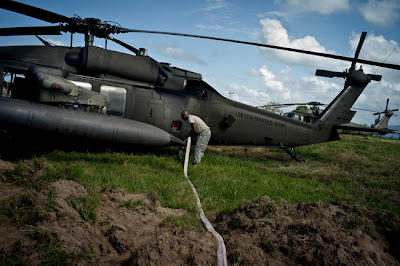
Honduras has belatedly appeared on the radar of the U.S. media over the past couple of weeks. A joint U.S.-Honduras drug raid on Friday, May 11, reportedly killed civilians—including two pregnant women—near Ahuas, a town in the Mosquitia region of Honduras. According to press coverage based on accounts by U.S. officials, four State Department helicopters—piloted by Guatemalan military officers and outside contractors—carried a strike force of Honduran security officers from a U.S.-built base to the Patuca River. They were accompanied by what The New York Times called a “commando-style squad” of U.S. Drug Enforcement Administration (DEA) agents, and acted on Colombian and U.S. intelligence. U.S. and Honduran officials told The Times the forces seized 1,000 pounds of cocaine from a boat before being attacked by another boat of drug traffickers; Honduran personnel, then on the ground, and with support from “the door gunner of at least one of the helicopters,” engaged in a late-night firefight with the traffickers, killing two of them. The State Department and the DEA insist that only Hondurans participated in the shootout.
Both the local mayor and congressional representative disputed this account, asserting in the Honduran newspaper El Tiempo three days after the raid that four people were killed—Emerson Martínez, Chalo Brock Wood, Candelaria Tratt Nelson, and Juana Banegas—and that they were ordinary citizens. In a later interview with TIME, the local leaders said the civilian boat was “ferrying passengers,” and “was passing from the opposite direction and got caught in the nighttime crossfire.” Close to a week after initial reports incorrectly described the mission as having been carried out solely by Honduran forces, and days after the local authorities accused the DEA of involvement, official U.S. spokespersons finally admitted to the DEA’s “advisory role” in the brutal raid.
Continue reading “Echoing the State: The New York Times on Honduras”
CNN: The Latest Outlet for Roger Noriega’s Paranoid Speculations

By Keane Bhatt
This piece was published at NACLA. See also Belén Fernández’s short profile of Noriega here.
On May 2, CNN executive producer Arthur Brice published what was purported to be a news article on Venezuela. Instead, Brice’s 4,300-word screed, titled “Chavez Health Problems Plunge Venezuela’s Future Into Doubt,” is little more than a platform for the bizarre theories of Roger Noriega, an ultra-rightwing lobbyist and one-time diplomat under George W. Bush, who Brice references over two dozen times throughout his article.
As a political commentator, Noriega pontificates with total brazenness. He appeared as the chief pundit in Brice’s CNN piece six months after announcing—based on what he said was the belief of Chávez’s own medical team—that the Venezuelan president was “not likely to survive more than six months.” Noriega is not fazed by facts. He promotes his fantastical claims in many major news outlets, often based on anonymous sources. Take, for example, his 2010 Foreign Policy article, “Chávez’s Secret Nuclear Program,” whose subtitle reads: “It’s not clear what Venezuela’s hiding, but it’s definitely hiding something—and the fact that Iran is involved suggests that it’s up to no good.” (State Department officials dismissed this suspicion with “scorn.”)
CNN’s interviews with Noriega and the other mostly rightwing analysts likely led to this demonstrably false claim at the beginning of Brice’s May 2 article: “Diosdado Cabello, a longtime Chavez cohort . . . amassed tremendous power in January when Chavez named him president of the National Assembly.” In fact, even El Universal, a daily Venezuelan newspaper long-aligned with the opposition, conceded in a January 5 report that Cabello was elected as the new president of the National Assembly, even if “only with the votes” of the majority United Socialist Party of Venezuela (PSUV). Ewan Robertson of Venezuelanalysis.com found that 98 deputies of the pro-government bloc supported Cabello, while the 67-member opposition bloc opposed him. Such mundane electoral processes have guided much of Venezuela’s political dynamics over the past decade.
Continue reading “CNN: The Latest Outlet for Roger Noriega’s Paranoid Speculations”
Stonewall was a Wedding?
 by Kate Redburn
This post was published at the excellent Jacobin Magazine blog.
Are we done yet? Do we have to endure another full day of self-congratulation at Obama’s personal endorsement of same-sex marriage? His announcement was heralded with as much praise as last summer’s legalization of gay marriage in New York. And that was, you know, actual legislation.
This is hardly surprising given the fact that marriage equality is designed to distract liberal consciences and give Democrats political cover to gut social services. While the passage of gay marriage enjoyed the support of prominent campaign donors, it was directly preceded by cuts to homeless shelters for queer youth. It’s a campaign season bait-and-switch — winning votes without making real concessions.
John Steinbeck’s Nobel Speech
‘I am here not to squeak like a grateful and apologetic mouse but to roar like a lion out of pride in my profession.’
 P U L S E