Who would have known that Nick Clegg was such a prophet? Long before he joined the Tories in a governing coalition he had predicted that ill-conceived austerity measures could lead people to riot. But if he was so certain, woudln’t that suggest that he triggered the riots by furnishing the circumstances under which he predicted they would happen?
Author: alannahpriestley
Does Your Congressperson Represent You – or Israel?
by Medea Benjamin

In this time of economic austerity, when jobs are being slashed and Americans are fearful about their future, the Congressional recess is the time for our elected representatives to be home in their districts, reaching out to their constituents and servicing the people they are paid to represent. Instead, this August one out of every five representatives will be taking a junket to Israel, compliments of an affiliate of the Israel lobby AIPAC (American Israel Public Affairs Committee) but still clocked in on the taxpayer’s dime.
Americans who have lost their jobs and seen their life savings evaporate because Congress can’t seem to get it together deserve an explanation of how this crisis will be solved. Following the recent debt debacle, the public is hungry for information about the mysterious 12-person “super committee” that will slash over one trillion dollars from the federal budget. But instead of opening their doors to their constituents, 81 members of Congress will be getting briefings from Israeli government officials, touring historic religious sites, and perhaps “seeking a salty dip in the Dead Sea.” Representative Steny Hoyer, who is leading the Democratic delegation, said he is pleased members of Congress have this opportunity “to gain a deeper understanding of the issues involved in increasing stability in the region.” One has to wonder whether our elected officials are more concerned about the stability of Israel or the well-being of American families.
Continue reading “Does Your Congressperson Represent You – or Israel?”
‘Israel protests silent on occupation issue’
Israeli-American writer Joseph Dana speaks to Al Jazeera from Tel Aviv about the current protests in Israel:
Kama Sutra for Palestinian Intellectuals — Or, How to Love Mahmoud Darwish
by Amal Amireh
 The new Syrian TV drama “In the Presence of Absence,” about the life of the poet Mahmoud Darwish, is giving some Palestinians an ulcer this Ramadan season. The series is being broadcast on several Arab satellite channels, including the Palestinian one. Some objected to the series before it was made because they thought those who were undertaking the project are doing it for profit and are not being faithful to the memory of Palestine’s national poet. Their effort to stop it didn’t pan out and now they are watching in horror as they see their beloved poet miscast, misrepresented, and twisted out of shape. The actor-criminal is one Firas Ibrahim that everyone seems to love to hate. Believe me, voodoo dolls of him will sell like hot qatayef in Rmallah.
They are lamenting that this great poet is being sacrificed on the altar of egos and art-for-profit. They are in a panic that the legacy of Darwish is in danger and that he is being mutilated for an audience that does not know much about him. Some of those objecting to this drama knew Darwish personally: they are friends, disciples, and colleagues. Some are readers who love the man for the poetry he wrote. I feel their pain!
But instead of using the occasion of a bad TV drama to celebrate the Darwish they love, to educate people about his poetry, to write articles that critique the drama they don’t approve of, I’m sad to report that two thousand Palestinian intellectuals are demanding taking the offensive drama off the air. They have even demonstrated in front of Palestine TV to that effect. In other words, they are calling for censorship. Their love for Darwish seems to have obscured their vision.*
Continue reading “Kama Sutra for Palestinian Intellectuals — Or, How to Love Mahmoud Darwish”
In Cuba, the revolution continues, softly, as times change
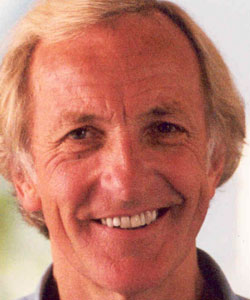 The great Australian journalist and documentary filmmaker John Pilger writes from Cuba:
On my first day in Cuba, in 1967, I waited in a bus queue that was really a conga line. Ahead of me were two large, funny females resplendent in frills of blinding yellow; one of them had an especially long bongo under her arm. When the bus arrived, painted in Cuba’s colours for its inaugural service, they announced that the gringo had not long arrived from London and was therefore personally responsible for this breach in the American blockade. It was an honour I could not refuse.
The bus was a Leyland, made in Lancashire, one of 400 shipped to Cuba in defiance of Washington, which had declared war on the revolution of Fidel Castro. With the Internationale and Love Me Do played to a bongo beat – the Beatles having been “admitted to the Revolution” – we lurched through Havana’s crooked streets. Such a fond memory now accompanies me on my return to Cuba; yet looking back at what I wrote then, I find I used the word “melancholy” more than once. For all the natural warmth of Cubans, the hardship of their imposed isolation left smiles diminished and eyes averted once the music had stopped.
Beyond the nationalised American department stores – the windows empty except for electric fires from China of which Cubans had no need – and the flickering necklace of lights of an almost deserted port, there was the silhouette of an American spy ship, USS Oxford, policing Cuba’s punishment. In 1968, the revolution added its own folly by summarily banning all small businesses, including the paladares, Havana’s lively bars and restaurants. The Soviet era had begun.
Continue reading “In Cuba, the revolution continues, softly, as times change”
Danny Danon talks to Al Jazeera
Al Jazeera’s Teymor Nabili interviews Danny Danon, the far-right deputy speaker of the Israeli Knesset about his views on Israel’s future and the “so-called Palestinians.” Nabili wrote this on his blog yesterday:
The deputy speaker of Israel’s parliament, Danny Danon, appeared on my radar only recently, after he co-sponsored the country’s recent “Boycott Bill”, a piece of legislation that was widely attacked as anti-democratic both at home and by Israel’s traditional supporters in the US.
Danon was, and is, unapologetic about his action, calling critics “hypocrites” and seeing no problem in a law that rides roughshod over one of the bedrock principles of justice – the presumption of innocence.
Kharotabad killings and the cover up
In an in-depth investigation, Mehreen Zahra-Malik reveals the sordid details behind the May 17th murder of five Russian/Tajik civilians by Pakistani security forces near Kharotabad in Baluchistan. This article first appeared on Al Jazeera.

Jamal Tarakai had barely sat down to a late lunch on May 17 when he heard gunshots. Leaving his food untouched, he jumped on his motorbike and drove towards the source of the noise. About 200 metres from his home in Kharotabad on the outskirts of the capital of Balochistan, Quetta, was a Frontier Corps (FC) check post. As Tarakai pulled up on the chowk, he saw at least five FC guards shooting into a pile of sandbags, the firing so intense it created a whirlwind of dust, making it difficult for the cameraman to see who, or what, was being shot at so fiercely.
Pulling out his camera, the journalist started filming the scene. At some point, there was a pause in the firing. The dust settled, somewhat, and the lower portion of a woman in a red shalwar-kameez could be seen lying on the ground. She slowly raised an arm and waved it in the air, fingers stretched out – to signal surrender? To seek mercy? The outstretched hand prompted two of the men in fatigues to start firing again, until it was certain anything living on the receiving end was now almost certainly dead.
TV channels immediately began to pump out congratulatory stories, cheering the FC guards for a job well done. Five alleged Chechen suicide bombers, including three women, had been killed in an encounter with security forces, it was reported. The Balochistan Home secretary quickly issued a statement saying the suspects were wearing suicide vests and had hurled hand grenades at the FC, killing one FC guard, Naik Mohommad Sajjad. The Capital City Police Officer, Daud Junejo, said the five foreigners were Chechen militants linked with Al Qaeda; that they had been planning to carry out attacks in Quetta; and that the women had showed the officers suicide vests and threatened to blow themselves up.
All of the President’s Men: The Bolivarian Succession?
by C.L. Smith
This article first appeared at Upside Down World.
 Since his first electoral victory in 1998, Hugo Chávez Frias has gradually come to permeate practically every facet of Venezuelan society imaginable. Whether it is the daily polemical headlines that scream at passersby from humble newsstands, or the massive roadside billboards displaying the loquacious leader in a variety of guises, it is pretty much impossible to remain ignorant, let alone indifferent, to the omnipotent role that the former paratrooper commander occupies in the collective national psyche.
During the course of his rule, Chávez has attempted to redress the massive economic inequality that exists in this petroleum rich South American nation through a simple redistribution of oil profits to the most disenfranchised demographic in the form of extensive social programs. However, in doing so, the confrontational president has effectively drawn a line in the sand for the Venezuelan electorate over the past twelve years, with few brave citizens daring to openly occupy the middle ground.
Therefore, it came as a shock to Venezuelans of all political affiliations and loyalties this past June 30th when the normally overactive and overexposed president finally dispelled the vicious swirl of rumors surrounding his unusual disappearance from the public eye some two and a half weeks priorby admitting that he was recovering from an operation that had removed cancerous cells from his pelvic area. The news predictably generated feelings of schadenfreude amongst the more sadistic elements of the opposition, while conversely prompting legions of chavistas to openly pray and declare their love for the afflicted leader.
This was all to be expected in the event of such a revelation. What was not, however, was the apparent power vacuum left in the wake of Chávez’s unexpected convalescence in Havana. Amidst the furor of the opposition, who claimed that not only was his undisclosed absence irresponsible yet unconstitutional, the highest ranks of the ruling party PSUV presented a united front to not only their constituents, but to the outside world as well.
However, a different reality belied this perception.
Continue reading “All of the President’s Men: The Bolivarian Succession?”
Murdoch: The Mogul Who Screwed the News
This is a very revealing documentary, a must see.
Jacques Peretti talks to everyone from Hugh Grant to Rupert Murdoch insiders to find out how celebrities, cops and politicians cosied up with, and then turned against, Murdoch.
Fault Lines: The Top 1%
Al Jazeera English’s excellent Fault Lines examines the gap between the rich and the rest in the United States.
 P U L S E