Author: alannahpriestley
Hey, Elton!
Great video medley from filmmaker John Greyson, who writes: “Palestinian civil society has called on Elton John to respect its boycott call and cancel his June 17th concert in Tel Aviv. If he does so, he’ll be joining Santana and Gil-Scott Heron, who recently canceled their spring concerts in Israel. This video suggests six reasons why Elton should join the BDS (boycott, divestment, sanctions) movement.”
Continue reading “Hey, Elton!”
Chávez Takes on Little Red Riding Hood

By Ken Kelley
I was surprised during my trip to Colombia last month when my seemingly enlightened Bogotá cab driver, who had been telling me about his support for Green Party presidential candidate Antanas Mockus in the upcoming elections, suddenly shifted gears and announced that Venezuelan President Hugo Chávez was loco.
The mental state of its leader was not the only issue the driver had with the neighboring country, and he added that money for Venezuela’s social programs came not from oil wealth but rather from proceeds Chávez received as part of an international drug smuggling ring. Among the co-conspirators in the ring, I learned, was ex-President Manuel Zelaya of Honduras, ousted in a coup last summer which according to the cabbie had been justified based on the fact that Zelaya was also loco.
Jerusalem Day
by Ruth Tenne
Jerusalem Day was declared a national holiday by the State of Israel on the 12th May 1968 in celebration of the “liberation” of East Jerusalem and the unification of the city in the aftermath of the 1967 Six-Day War. The medieval Maghrabi Quarter near the Jewish Wailing Wall was demolished soon after, and its Palestinian inhabitants were evicted in order to make way for an open space for Jewish worshipers [1]. To celebrate this occasion the victorious hymn “Jerusalem of Gold” was written in glorification of the annexation of East Jerusalem and the reclaiming of the Western Wailing Wall .
In 1980 the Israeli Knesset passed the Basic Law: Jerusalem, Capital of Israel, confirming Jerusalem’s status as the nation’s “eternal and indivisible capital”. UN Security Council Resolution 478 stated thereafter that the Jerusalem Law was “null and void and must be rescinded forthwith”. [2]. The Resolution instructed UN member-states to withdraw their diplomatic representation from the city – refusing to confer official status on Israel’s illegal act of annexation.
The UN position, however, did not deter Israel from its continued attempts to cleanse East Jerusalem of its Palestinian inhabitants by the use of force and military orders. The so-called “City of Gold” turned into a ghettoised place with rubble from demolished Palestinian houses, razed Palestinian neighbourhoods , desecrated Muslim graveyards, and dispossessed homeless families serving as testimony to Israel’s underlying aim of “purifying” the city of its indigenous Palestinian population. According to the Head of the Israeli Committee Against House Demolitions – Jeff Halper – only 11 percent of East Jerusalem land is available for Palestinian housing as result of Israel’s discriminatory policies which means that Jerusalemite Palestinians are virtually barred from 93 percent of the municipality of Jerusalem. The overall goal is to confine Palestinians to small enclaves in East Jerusalem, or to remove them from the city altogether – an action referred to by Israel as the “quiet transfer”.
Can Obama make “peace” in the Middle East
Our dear friend Phil Weiss makes the most impressive interventions in this debate. He is also the first we have seen who knows how to handle Tim Sebastien well.
Doha Debates takes on the potential for a US brokered deal in the Middle East.
“Fair Trade Wants You!” The Neoliberal Politics of Conscious Consumption
 By Kara Newhouse
“Fair trade is a hand up, not a handout.” I heard this distinction between charity and an economic exchange many times while doing anthropology research among fair trade advocates. With today marking World Fair Trade Day, it’s a good time to examine what fair trade is, and what it isn’t.
The Premise
The premise of “fair trade” is to create markets in the Global North for goods from the Global South, either through businesses that sell directly from the producers (usually handicrafts) or through third party commodity labeling.
Often when people hear about my research on this phenomenon, they ask, “So is it really fair?” This question assumes that “good/bad” labels can be accurately deployed to understand the world’s problems and remedies. The justness of fair trade on the production end of the exchange should be evaluated based on many factors, including the producers’ involvement in shaping what is considered “fair” trade. Other researchers are attempting such evaluations, and the results differ by region and product. Beyond assessing the “fairness” of this consumer movement, I am interested in the roots of fair trade’s appeal to people of the Global North. To understand that, I analyzed the marketing of fair trade goods and interviewed fair trade advocates.
Continue reading ““Fair Trade Wants You!” The Neoliberal Politics of Conscious Consumption”
Putting the world at risk?
Gareth Porter, one of PULSE’s 20 Top Global Media Figures of 2009, on Al Jazeera’s Inside Story discussing Iran and the NPT.
Hillary Clinton, the US secretary of state, has warned that Iran’s nuclear ambitions are putting the world at risk. Have the NPT conferences become a platform to settle political accounts and an opportunity to lobby against adversaries? Does the treaty help rid the world of nuclear weapons or does it advocate maintaining the status quo? And will Obama’s nuclear undertakings help patch the gaps of the NPT?
Searching for Jake Sully in India’s Heartland
by Harsha Walia
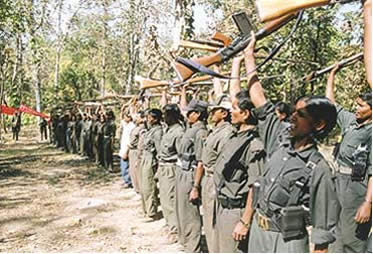 Building traditional irrigation systems, practicing forest conservation and cooperative farming, and providing educational and medical facilities in the isolated rural forests of India. This could apply to any NGO or charity, but is actually the work of armed Naxalite Maoists. In addition to community development, Naxalites have organized politically to self-govern and have claimed responsibility for numerous killings of government officials, security personnel, and alleged informers. Today, many of the Naxal cadres are Adivasis (tribal indigenous) and 40% are women. Naxalites have been operating since the 1970s in 20 states around the jungles of Central and Eastern India.
Naxalites recently made headlines as Indian Prime Minister Manmohan Singh declared them “the most serious internal threat to India’s national security” and unleashed Operation Green Hunt. Under Green Hunt 250,000 police, armed forces, and counter-insurgency teams have been deployed, while the US provides military intelligence and tactical guidance. The jungles are under a heavy siege: checkpoints, army patrols, helicopter missions, gunfire battles that kill 40 civilians per week. Based on the counterinsurgency model of soft power alongside military might (charity from the barrel of a gun), government-sponsored agencies are setting up rehabilitation camps for the 200,000 already-displaced villagers.
Continue reading “Searching for Jake Sully in India’s Heartland”
Atrocities in Afghanistan: A Troubling Timetable
by Kathy Kelly and Dan Pearson

Peace activists can hasten an end to the U.S. war in Afghanistan by demanding a timetable for U.S. military withdrawal. [A bill in the U.S. Congress] introduced by Representatives McGovern and Jones, requires such a timetable. In the Senate, a similar bill has been introduced by Senator Feingold. Arguments in favor of a timetable for withdrawal of U.S. forces from Afghanistan should include readiness to examine disturbing patterns of misinformation regarding U.S./NATO attacks against Afghan civilians.
It is worth noting that even General McChrystal acknowledges that U.S. forces have killed civilians who meant them no harm. During a biweekly videoconference with US soldiers in Afghanistan, he was quite candid. “We’ve shot an amazing number of people and killed a number and, to my knowledge, none has proven to have been a real threat to the force,” said General McChrystal. “To my knowledge, in the nine-plus months I’ve been here, not a single case where we have engaged in an escalation of force incident and hurt someone has it turned out that the vehicle had a suicide bomb or weapons in it and, in many cases, had families in it.”
Those families and individuals that General McChrystal refers to should be our primary concern. We should try to imagine the sorrow and horror afflicting each individual whose tragic story is told in the “timetable” of atrocities committed against innocent people. How can we compensate people who have endured three decades of warfare, whose land has been so ravaged that, according to noted researcher Alfred McCoy, it would cost $34 billion dollars to restore their agricultural infrastructure. We should notify our elected representatives that the $33 billion dollar supplemental funding bill sought by the Obama administration to pay for U.S. wars in Afghanistan and Iraq could be directed toward helping Afghanistan replant its orchards, replenish its flocks, and rebuild its irrigation systems. We should insist on an end to atrocities like those which follow.
Continue reading “Atrocities in Afghanistan: A Troubling Timetable”
The Future of Palestine: Righteous Jews vs. the New Afrikaners

This is the transcript of the Hisham B. Sharabi Memorial Lecture delivered by John J. Mearsheimer at the The Palestine Center today.
It is a great honor to be here at the Palestine Center to give the Sharabi Memorial Lecture. I would like to thank Yousef Munnayer, the executive director of the Jerusalem Fund, for inviting me, and all of you for coming out to hear me speak this afternoon.
My topic is the future of Palestine, and by that I mean the future of the land between the Jordan River and the Mediterranean Sea, or what was long ago called Mandatory Palestine. As you all know, that land is now broken into two parts: Israel proper or what is sometime called “Green Line” Israel and the Occupied Territories, which include the West Bank and Gaza. In essence, my talk is about the future relationship between Israel and the Occupied Territories.
Of course, I am not just talking about the fate of those lands; I am also talking about the future of the people who live there. I am talking about the future of the Jews and the Palestinians who are Israeli citizens, as well as the Palestinians who live in the Occupied Territories.
Continue reading “The Future of Palestine: Righteous Jews vs. the New Afrikaners”
 P U L S E