After the Flood

Pakistan’s flood crisis is making the spread of disease a fast increasing problem and hospitals are struggling to cope with the sheer volume of affected people. Women and children, especially newborns, are suffering the most from malnourishment. Al Jazeera’s Jonah Hull reports from northwest Pakistan.

Jemima Khan has a must-read piece in the Sunday Times. Here’s an excerpt:

The death toll, amounting to 1,600 people, has, Alhamdulillah (praise to God), so far been low relative to the magnitude of the disaster facing Pakistan. Mostly, though, the stories are grim. My ex-husband Imran Khan, whom I spoke to after he visited flood-hit areas in the northwest, sounded uncharacteristically defeated; more so, I thought, than even after his cancer hospital was bombed in 1996. “Pakistan could implode, Jem,” he said. “We are already on the brink of bankruptcy. The poverty and the suffering will be unimaginable. Best not to send the children this weekend. There’s too much to do.”

Continue reading “After the Flood”

Flood of Misery

Al Jazeera on the decimation of infrastructure in the Swat Valley. Also see Kamal Haider’s report on the resulting food and economic crisis.

Continue reading “Flood of Misery”

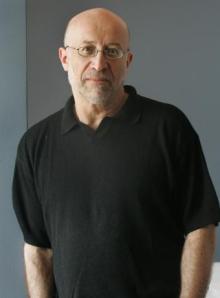
Edge Man: Tony Judt (1948-2010)

Tony Judt, a towering intellect, a moral giant, and a master of prose, has passed on. He did what only the greatest of thinkers do: he constantly evolved. More significantly, he never succumbed to orthodoxies, he was always on the edge. And that is what gave his writing its distinctive freshness. In his last years, he also outgrew his middle-of-the-road liberalism to adopt principled, at times radical, positions on war and capitalism. He fought successfully to erase the gap between passion and principle. The Zionism of his youth had led him to volunteer for the Israeli forces in 1967; he was disillusioned after realizing that the Israeli soldiers he worked with were ‘right-wing thugs with anti-Arab views’ or ‘just dumb idiots with guns.’

Judt’s disenchantment turned him into one of the most courageous and eloquent critics of the Jewish State. But unlike some luminaries of the left, he also had the moral courage to re-examine his own easy assumptions. A year after his first public statement on Israel-Palestine, in which he had called for a two-state solution, Judt acknowledged its unviability and issued a call for a single binational state in Palestine. In the Chronicle of Higher Education, Evan Goldstein describes the essay’s impact.

According to Benny Morris, a professor of history at Ben-Gurion University of the Negev and author of One State, Two States: Resolving the Israel/Palestine Conflict (Yale University Press, 2009), Judt’s essay placed the one-state idea “squarely and noisily on the table of international agendas.” The Forward described it as “the intellectual equivalent of a nuclear bomb on Zionism.” Within weeks, The New York Review had received more than 1,000 letters to the editor. Suddenly, says Robert Boyers, editor of the quarterly Salmagundi and an observer of the liberal intellectual scene, Judt was a major voice weighing in on the Middle East. Indeed, if the death of Judt’s friend the literary critic Edward Said, in 2003, left a “yawning void” in the national conversation about Israel, Palestine, and the Palestinians, as Judt has suggested, then it is Judt himself who has filled that void.

In 2006, he was the only mainstream figure to come to the defence of Mearsheimer & Walt after they published their groundbreaking London Review essay. He later joined John Mearsheimer in a debate organized by the London Review of Books in which they argued against apologists for the lobby. In the same year an event organized by Network 20/20 at which Judt was slated to speak was cancelled following pressure from the ADL and AJC. This prompted Mark Lilla and 114 writers and intellectuals to write a letter of protest to the ADL. He also spoke eloquently in a must-see Dutch documentary on the lobby (in which he also recounts the Network 20/20 incident). Later, he would join Mearsheimer, Tariq Ali and others to stand up for Norman Finkelstein who was being unjustly denied tenure under Israel lobby pressure. He also wrote a burning indictment of Israel’s crime in the same year, calling it the ‘country that wouldn’t grow up.’

Continue reading “Edge Man: Tony Judt (1948-2010)”
What’s a German’s Life Worth?

Chancellor Merkel oversees the transfer of German heritage to the Afghans.

Five thousand US dollars. I know that because I know Germans are not racists. Germans don’t believe that their lives are worth any more or any less than the lives of others. Germans are good people. They value all life equally. Since they value all life equally, I know that a German’s life is worth $5,000. Because that is what they paid today to each one of the 100 Afghan families who lost members to their army’s violence. The victims were all innocent. But we can’t judge them on that: armies tend to be fanatic about tradition. Their reputation is built on consistency and reliability. When it comes to battling the unarmed, few armies are more reliable. But unlike the past, no one could accuse Germans of discrimination today. They showed none in killing the Afghans. Old prejudices have no place in the new Germany. Why, didn’t the German chancellor give unequivocal support to the Jewish State in 2009 when it went about killing over 300 terrorist children in Gaza? But I don’t want to get carried away with all this talk about equality. In the end, the Germans remain a worthier people. Duetschland Uber Alles! See, the United States also overcame its Jim Crow past, but an American life is still worth only $2,500.

Continue reading “What’s a German’s Life Worth?”

Let them have F-16s

A poverty-stricken Pakistani woman and her child wait in an impoverished locality of Khori Garden for free distribution of food items at the same place where earlier a stampede killed 20 women and children queuing for food handouts in an impoverished district of financial capital Karachi. (RIZWAN TABASSUM/AFP/Getty Images)

On June 16, in Lahore, a rickshaw driver, his wife, and three children took poison, driven to despair by extreme poverty. Only the wife survived. On June 17, another young man committed suicide pushed over the edge by poverty and unemployment. On June 18, the Pakistani information minister Qamar Zaman Kaira advised people who are killing their children because of dire poverty to instead hand them over to the Baitul Mal (the Islamic treasury which serves as a social support system). Today in Raheem Yar Khan, a woman in her early thirties jumped in front of an approaching train along with her three children, ages 2 to 7. All died on the spot…

In related news, Pakistan received a shipment of the first three of its order of 18 new F-16 fighter jets from the United States. It has also received over $10 billion in military aid since 2002. It’s to keep Pakistanis safe, you see.

Why the furor over McChrystal?

Gareth Porter, as always, presents sober, informed analysis. The host Paul Jay on the other hand is woefully uninformed about Afghanistan and spews the same liberal interventionists nonsense that created the mess in the first place. This is not surprising since he seems to see Afghanistan through the lens of Mohsen Makhmalbaf’s racist propaganda flick Kandahar which he apparently admires.


TheRealNews — 23 June 2010 — Porter: The real problem is a failed strategy in Afghanistan

Sebastião Salgado: The Photographer as Activist

This is from a few years back. The great Brazilian photographer Sebastião Salgado in conversation with Ken Light and Fred Ritchin at the UC Berkeley Graduate School of Journalism. Also, don’t miss the ringing prose of Eduardo Galeano’s ‘Salgado, 17 Times‘, an essay inspired by Salgado’s work.

Why Turkey is Looking East

Good analysis from Link TV’s Mosaic Intelligence Report. Also see this excellent analysis of Erdogan’s rise by Patrick Cockburn.

linktv 11 June 2010 — (Mosaic Intelligence Report: June 11, 2010) Turkey votes against UN sanctions on Iran. Erdogan is a hero in the Arab world. Did Turkey abandon its EU dreams? And why is it looking towards the East?

channelled French-Russian philosopher Alexandre Kojève’s idiosyncratic reading of Hegel[1] to


[1] Kojève, from whom Fukuyama borrowed the notion of ‘end of history’, was a major influence on Bloom.

Julian Assange in American crosshairs

Daniel Ellsberg warns that Julian Assange, the founder of WikiLeaks.org, faces the possibility of assassination. Should something bad happen to Assange, or should he disappear, you know’d know who did it. Who’s the Rogue State again?