How ‘broken windows’ policing harms people of color

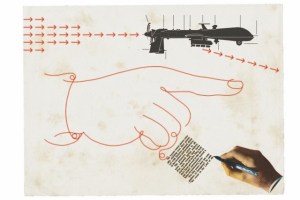
My friend Molly Crabapple uses her superb artwork to explain how “broken windows” policing harms people of color.

Last summer, a New York city police officer choked a black grandfather named Eric Garner to death. Garner was suspected of selling loose cigarettes. The arrests of people like Garner are part of a controversial policing tactic called Broken Windows. Broken Windows claims to prevent large crimes by cracking down on small ones. But it’s really about controlling and punishing communities of color, through police encounters that can sometimes be deadly.

Writing with Foreign Blood: A Visit to Ukraine

By Naomi Foyle

From the moment someone writes with foreign blood
they begin to write with their own

                                    from ‘From the Moment’ by Ihor Pavlyuk (translated by Steve Komarnyckyj)

If your heart has lost its way, your feet are sure to also.

                                                   Hryhorii Skovoroda (translated by Naomi Foyle)

Going to Oxford would have been highlight enough. It was a bright March day, I was staying with old friends and reading at a poetry gig in the evening – the perfect mini-break from a dreary winter in my Brighton basement flat. Jonathan Meades’s abrasive defence of Brutalism still scouring my perception of urban space, I insisted on a cycle tour of the monstrous grey jewels in the university’s crown of gargoyles and spires, further amusing my hosts by bursting into phrasebook Ukrainian whenever we sat down for tea. No linguist, I simply hoped my pronunciation was not too atrocious. Invited to join the English PEN launch tour of A Flight Over the Black Sea by Ihor Pavlyuk, I wanted to at least try to say dobryi vechir – good evening – to the poet and our mutual translator Steve Komarnyckyj. That night, my apparently singular preoccupations converged in an image that haunts me still: Ihor, clad in a traditional black and red embroidered shirt, reciting his pagan poems of sea and steppe between the slender concrete pillars of St Antony’s College. What at first seemed an elegant coincidence soon started to resonate rather more unnervingly. As Steve’s translations scattered blood and thorns into the room, the ecclesiastic, Brutalist-lite columns began to ghost a painful history, their slim grey trunks and ceiling branches evoking the dark forests of Russian Orthodox and Soviet repression that subtly shadow Ihor’s poems. An inescapable synchronicity was at work: looking back I’m not surprised that before the year was out I had been compelled again from my writer’s bunker, this time straight to Ukraine.

Continue reading “Writing with Foreign Blood: A Visit to Ukraine”

Peshawar Blues

I wrote this feature in summer 2012 for the “Pakistan?” special issue of Critical Muslim.

On the Kuwait Airways flight from London to Islamabad, the unusually boorish flight crew handed us disembarkation cards that the government of Pakistan requires all international arrivals to fill. Besides our passport numbers, addresses and reason for visiting, the form asked if we had been to Africa or Latin America in the past week. The purpose of this question was unclear except perhaps as a means to boost national self-esteem: it implied that Pakistan was healthier than those two continents. With the only pen in my row, I helped five other passengers fill their forms.

At Islamabad’s decrepit Benazir Bhutto International Airport, I was pleasantly surprised to find the immigration staff making no undue effort to harass new arrivals. Former president Pervez Musharraf’s successful effort at gender-balancing has markedly improved the behaviour of male airport staff. After sailing through immigration and customs, I became conscious of the disembarkation card still in my hand. Not inclined to take chances, I asked an officer where to deposit it. He hadn’t a clue, nor did anyone else. Finally, a customs official took the card from my hand and helpfully threw it into a bin.

What is still known internationally as the Islamabad Airport is actually based in the city of Rawalpindi. As the historic Grand Trunk Road passes through its crowded precincts, its name changes twice—to Peshawar Road and The Mall. We drove North-West on the Peshawar Road, past the General Head Quarters (GHQ) of the Pakistan Army which in 1895 had served as the launching pad for the Malakand Field Force, the British colonial army’s counter-insurgency campaign against the recalcitrant frontier. The sanguine details of this campaign were preserved in vivid detail by a young Winston Churchill who was also serving as a correspondent for The Times. More recently, on 10 October 2009, the GHQ was the site of a bloody raid by a group of 10 militants who breached its defences and triggered a hostage crisis which ended with 9 soldiers, 2 civilians, and 9 assailants dead.

Continue reading “Peshawar Blues”

How War Eclipsed Syrian Culture

Pulse co-editor Robin Yassin-Kassab speaks at the BBC Arabic Documentary Film Festival:

Continue reading “How War Eclipsed Syrian Culture”

War and Pieces: Brown Moses on Social Media Investigations

Eliot Higgins (aka Brown Moses), founder of Bellingcat, at Google Ideas, Google for Media, and the OCCRP’s Investigathon in New York, talking about open source investigation into the Buk missile launcher linked to the downing of MH17, showing how he was able to trace it to Russia.

Ukraine: From Propaganda to Reality

Timothy Snyder explains the crisis in Ukraine.

Since February, the world’s eyes have been on Ukraine as Ukrainians rebelled against rising authoritarianism in their own country and were met in return with a Russian invasion of Ukraine’s southern and eastern provinces. Yale University’s Timothy Snyder is the world’s leading historian of Eastern Europe. His series of articles in the New York Review of Books has been hailed as the definitive analysis of this crisis. Join him as he clarifies the stakes.

How does the “Islamic State” change the perception of the conflict in Syria?

Bente Scheller delivered the following keynote lecture at a recent conference on Syria at the Heinrich Böll Foundation in Berlin.

10700636_10154775355540591_192187468175987021_o

War, it is commonly said, is a last resort. That is a wise notion and one that should be in the best interest of every party. However, it is problematic to use it as legitimation for the choice to perpetually remain in an observant position. ‘Last’ should mean: last possible – when diplomatic efforts are of no avail, and not for when it is already too late.

The Syrian regime has turned the concept of ‘war as a last resort’ inside out. It commenced the war against its own population without seriously considering the reforms initially demanded by protesters. Children were the first victims of the regime, the first victims of torture in the recent conflict, which led to the outbreak of the revolution in March 2011. Rarely did the regime negotiate in the course of this conflict – and when it did, it regularly broke its promises.

Continue reading “How does the “Islamic State” change the perception of the conflict in Syria?”

The West’s Syria policy has been shaped by media missionaries

A version of this appeared in The National:

nationalThree beheadings have compelled the US into an action that nearly 200,000 gruesome deaths had failed to precipitate.

Last Monday, the US launched a bombing campaign in Syria putatively aimed at the extremist jihadi group ISIL. Also targeted were some “Al Qaeda-linked” organisations. The strikes killed many members of Jabhat Al Nusra (JAN) and Ahrar Al Sham (AS). Both groups are hardline, but their focus is regional. Neither threatens the US; both fight ISIL. But for the US, according to one administration official, it is all “a toxic soup of terrorists”.

Syrian dictator Bashar Al Assad concurs. State media quoted him as supporting any international effort to combat “terrorism” in Syria. For weeks, his regime had been volunteering itself as an ally to the US in its “war on terror”, a status that it had enjoyed under George W Bush. Damascus was once a favoured destination for CIA rendition flights.

It is possible it got its wish. The Syrian opposition, which western polemicists habitually describe as “US-backed”, received no warning of the attacks. Assad and Iran did. Syria’s UN representative Bashar Ja’afari was personally briefed by Samantha Power. The Free Syria Army (FSA) learnt of the attacks from the news.

If JAN and AS have ended up in the same “toxic soup” with their rival ISIS, then it has much to do with poor intelligence and an impoverished media discourse.

Continue reading “The West’s Syria policy has been shaped by media missionaries”

The struggle of man against power is the struggle of memory against forgetting

So said Milan Kundera. And because Assad’s western apologists are determined to overpower, let us preserve the endangered memories and remind people once again what the conflict in Syria is all about.

VETO is a short film sheds light on the current Syrian Revolution and the circumstances behind the transformation from peaceful movement to an armed revolution. VETO takes you through the last two years of this unbearable suffering with over 100,000 Syrian victims and more than 5 million displaced people, and a clueless world about how to stop this horrendous crime! VETO was made in 2012 and was nominated for the Documentary of The Year Award in Germany 2013 and was highlighted by several international media outlets.

The Islamic State

VICE News reporter Medyan Dairieh spent three weeks embedded with the Islamic State, gaining unprecedented access to the group in Iraq and Syria as the first and only journalist to document its inner workings. Once you watch the film you’ll understand why my friend Faisal al Yafai calls them “a cancer of the Middle East politics and society“.

The Islamic State, a hardline Sunni jihadist group that formerly had ties to al Qaeda, has conquered large swathes of Iraq and Syria. Previously known as the Islamic State of Iraq and Syria (ISIS), the group has announced its intention to reestablish the caliphate and has declared its leader, the shadowy Abu Bakr al-Baghdadi, as the caliph.

The lightning advances the Islamic State made across Syria and Iraq in June shocked the world. But it’s not just the group’s military victories that have garnered attention — it’s also the pace with which its members have begun to carve out a viable state.

Flush with cash and US weapons seized during its advances in Iraq, the Islamic State’s expansion shows no sign of slowing down. In the first week of August alone, Islamic State fighters have taken over new areas in northern Iraq, encroaching on Kurdish territory and sending Christians and other minorities fleeing as reports of massacres emerged.