
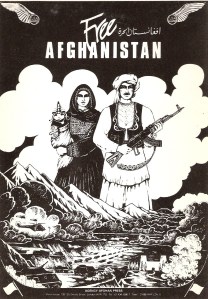
 A British artist made these impressive propaganda posters during the Afghan war against the Soviet occupation. They were also printed as postcards. The picture to the right was sent out as a christmas card by Agency Afghan Press in the UK, prompting London’s Evening Standard to wonder, jokingly, if the three figures represented Joseph, Mary and Jesus. The picture to the left was made for Gulbedeen Hekmatyar’s Hizb-i-Islami, which then had a London office. The pictures raised no horrified eyebrows in the UK – of course not: the Afghan people and the Thatcher and Reagan administrations were all on the same side, for freedom, against godless Soviet communism interfering with a traditional culture. Today, however, Hekmatyar is fighting the NATO occupation of his country, and were a British artist to dare paint an Afghan mujahid, with Qur’an in one hand and kalashnikov in the other, standing on an American flag, underneath a calligraphed ‘Allahu Akbar’, he would quite probably be charged under anti-terror legislation.
Author: Robin Yassin-Kassab
Culture of Fear
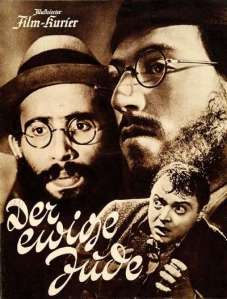
I don’t usually subject myself to it, but a few days ago I found myself near a television in the act of broadcasting the BBC news. One of the headline stories, carefully selected for relevance from this world of trouble, concerned a bleach attack on the boyfriend of a married woman. The woman and her boyfriend were both British Muslims, so the newscaster expected the attack to put the focus back on ‘honour crimes in the Muslim community’. I wonder how many ‘native’ white males were glassed or bottled in Britain last Saturday night for looking at somebody’s girlfriend the wrong way. I wonder when the focus will be directed (it can’t be ‘put back’ because it wasn’t there in the first place) on Anglo honour crimes, on show right now in a pub near you.
Next little episode: Jim Fitzpatrick MP, whose east London constituency is a third Muslim, walked out of a constituent’s wedding party when he discovered – to his horror – that men and women were asked to sit in separate areas. Many comment-posters on the ‘liberal’ Guardian supported Fitzpatrick’s action, because gender segregation is not something we do in this country. Absolutely. If it weren’t for the Muslim cultural invasion, proper Brits wouldn’t have picked up the foreign habit of the stag and hen night.
Imperialism Resurgent
In “The End of Tolerance: Racism in 21st Century Britain”, Arun Kundnani writes, “Racisms are no longer domestically driven but take their impetus from the attempt to legitimise a deeply divided global order. They are the necessary products of an empire in denial.”

Commentators call for immigrants to be schooled in ‘our national story’, which includes hefty chapters on the beneficence of empire. Gordon Brown says, “The days of Britain having to apologise for the British Empire are over. We should celebrate!” Sarkozy urges France to be “proud of its history,” meaning its imperial history.
European empires did sometimes construct railways and drainage systems in the conquered lands. They did build law courts and disseminate a certain kind of cuture. But these questionable achievements must be understood against the larger ugly backdrop. Economies under imperial rule stagnated at best. Huge swathes of Africa were transformed from subsistence agricultural land to cashcrop plantations. When the value of the crop plummetted, or when the crop was grown more cheaply elsewhere, local people were left hungry and unskilled on exhausted soil. Africa has still not recovered from this deliberate underdevelopment. During British misrule, preventable famines killed tens of millions of Indians. Elsewhere in the empire, hundreds of thousands were forced into concentration camps, and torture was institutionalised. There were the genocides of indigenous Australians and Americans, by massacre and land theft as well as by disease. There was the little matter of the transatlantic slave trade.
What Hamas Should Do
I wrote this in March 2008, before the most recent Gaza massacre, and also before the deployment of ‘morality patrols’ in Gaza. Whilst these patrols have no official authority and have usually (but not always) dispensed their advice politely, they still give off the unpleasant whiff of Saudi Arabia, and seem at best like a diversion from more pressing problems. I support Hamas unconditionally in its resistance to Zionism (and now to Wahhabi-nihilism too), but unconditional support does not need to be uncritical.
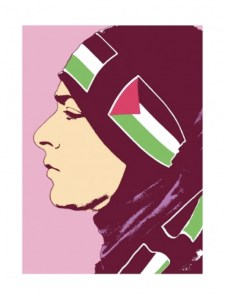 I’ve written a great deal about Israel’s crimes. Here I’ll write about what Hamas should do. I won’t criticise its choice to resist, which I see as entirely legitimate so long as there is no real peace process, and I won’t discuss its evolving methods of resistance, because I don’t think that’s my business or area of expertise. I won’t criticise the so-called ‘coup’ in which it took sole power in Gaza, because it is now common knowledge that it did this to pre-empt an American-Israeli-Dahlan coup against its democratically-elected government, and to restore some kind of order in the territory. And I’m not writing this in an attempt to be ‘objective’ or ‘balanced’; when faced by obvious injustice I see no point in equating the occupier and ethnic cleanser with the occupied and the refugees. I offer the following criticisms as advice, in the hope that it will help the resistance meet its goals.
Abusing Quilliam’s Name
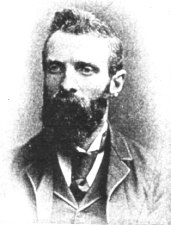 Abdullah Quilliam was a 19th Century British convert to Islam, the founder of a mosque in Liverpool. He was also an anti-imperialist and a supporter of the Caliphate. He argued that Muslims should not fight Muslims on behalf of European powers, citing specifically Britain’s enlistment of Muslim soldiers against the resistance in Sudan. If Quilliam were alive today he would, at very least, be kept under observation by the British intelligence services.
It is ironic, then, that this activist Muslim’s good name has been appropriated by the government-backed and funded Quilliam Foundation, established in April 2008, supposedly to counter extremism in Muslim communities.
Those who read my stuff will know that I despise Wahhabism, and still more Wahhabi-nihilism. I oppose Islamic political projects which aim to capture control of the repressive mechanisms of contemporary Muslim states. I am stunned by the stupidity of such slogans as “Islam is the solution.” I take issue with anyone who attempts to impose a dress code or an interpretation of morality on anyone else, and I loathe those puritanical ideologies which fail to recognise the value of music, art, mysticism, philosophy, and popular and local cultures in the Muslim world. It is obvious that political Islam has often been exploited for very unIslamic purposes by the American empire and its client dictators in Saudi Arabia, Egypt, Pakistan and elsewhere. Nominally Islamic political parties bear a great weight of responsibility for diverting the Iraqi resistance into a disastrous sectarian war. The terrorist attacks on London in July 2007 were abominable crimes and a catastrophe for all British Muslims. I know all that, yet I oppose the Quilliam Foundation.
Freedom of Speech Framed

The Independent has offered Darius Guppy the opportunity to write back against the dominant ‘Iran narrative’ in the Western media. Guppy argues that there is no hard evidence for rigging in the recent Iranian presidential elections (an argument made here and here too), and criticises the easy assumption that Ahmadinejad’s victory was fraudulent, as well as, more generally, the West’s usual double standards when it comes to the Muslim world. He questions the complacent expectation that most young Iranians wish to emulate our ‘free’ society, and contrasts the UK unfavourably with Iran in terms of authoritarian surveillance, public ethics, and culture. “Visit Iran and you will see a people polite, hospitable, cultured, noble and brave,” he writes. “Look at Britain’s urban hell and you will see young girls and boys armed with knives, swearing, half naked, vomiting the previous night’s attempt to stifle their pain and their emptiness.” Guppy here is employing the rant genre, as I often do myself. Like all op-ed journalism, his piece is necessarily partial and incomplete. He generalises, and fails to mention, for example, Iran’s galloping heroin problem. But he surely makes some very good points, and makes them very eloquently. The Independent is to be congratulated for giving him the space.
Or is it? Two paragraphs into the online piece, the reader is directed to another article which mocks the author. This framing piece doesn’t engage Guppy’s arguments but simply launches ad hominem attacks against him. It turns out that Guppy was imprisoned for insurance fraud in 1993. This is relevant information, but not so relevant that we need to be informed even before we’ve finished Guppy’s piece. Then the Independent’s omniscient voice implies Guppy is not a genuine enough native informant because he’s only half Iranian. (Guppy does use the rhetorical ‘we’ in his piece, but also describes himself as an old Etonian. He isn’t pretending to be anything he isn’t.) The framing article also subtly distorts Guppy’s perspective, for instance by claiming that he mocks the idea that Iranians long for democracy. In Guppy’s article, democracy is written inside inverted commas – ‘democracy’. In other words, Guppy is not writing against democracy, but against the propagandist use of the word in the West.
Untermenschen
 This is Jana Hannoun. I met her after a Palestine Literature Festival event at the British Council in occupied east Jerusalem. We were at the British Council because our original venue, the Palestine National Theatre, had been closed down by the Israeli occupiers. The British Council is just down the road from the Sheikh Jarrah neighbourhood, where Jana lived, and which Israel wants to Judaize.
At five o clock in the morning on August 2nd, the Hannoun and al-Ghawe families were physically thrown out of their homes by Zionist troops. 53 people, including 19 children, were made homeless, and their toys and clothes were strewn in the street. They were made homeless because they are members of the wrong ethnic group – because they are Arabs, the natives of Palestine, and not invading Jews. Their homes were immediately occupied by foreign settlers.
This, of course, is fascism. Because of a myth of national origin (and it is a myth – the vast majority of Jews originate from eastern Europe and north Africa, not from Palestine, not even two thousand years ago), the Canaanite-Arab Palestinians are designated untermenschen to be driven out. The Sheikh Jarrah families have experienced this before, as they are refugees from Haifa and west Jerusalem, ethnically cleansed by Zionist terrorist militias in 1948. The UN built homes for them in east Jerusalem after 1948, and that half of the city fell too in 1967. In this report, Jana is interviewed. More videos of the theft can be viewed here.
Obscenity
This is, more or less, a selection from posts I made during the Gaza massacre.
 According to the dictionary, obscenity is what is offensive or repulsive to the senses, or indecent in behaviour, expression or appearance.
From Palestine come pictures on the internet, and on al-Jazeera – burning half bodies, a head and torso screaming, corpses spilt in a marketplace like unruly apples, all the tens and hundreds of infants and children turned to outraged dust. A little more out of focus, but concrete, there is the obscenity of starved refugees and cratered farmland, of shriek-soaked hospital walls and babies born at checkpoints. Still further behind these instances, these symptoms, looms the brute and perpetual obscenity of the ancient Canaanite-Arab Palestinian people having been driven from their land into camps and walled ghettoes, where they have been repeatedly massacred. All of this is offensive, repulsive and indecent. The Western media, not wishing to offend our senses, keeps the obscenity quiet. Better put, they cloak the obscenity with the greater obscenity of untruth, of dreaming a pleasant version while people bleed and die.
This should concern everybody, and first of all writers and readers. For the prime obscenity for us here, away from the immediate death and panic, is the language we use to hide the reality of what’s happening. We use magical terms. This is how it goes:
A Decisive Turning Point?
The Guardian reports on British campaigning in Afghanistan, specifically an “operation” which “took nearly 3,000 British troops, many engaged in gun battles, to capture an area the size of the Isle of Wight.” I do wonder what meaning the verb ‘capture’ has here.
The article relays stories told by “British officials” and a couple of named officers, stirring stories which involve “a risky air attack” and a “Taliban drugs bazaar.” Twenty two British soldiers have been killed in Helmand province this month alone, so I expect our officials are thinking very hard indeed about the stories they tell. The recent adventure is called ‘Operation Panther’s Claw’, and is hoped to be “a decisive turning point in the eight-year conflict.”
We shall see. In the meantime, what seems a potentially decisive sign is the language and direction of this Taliban ‘code of conduct’. It demonstrates not only a higher stage of organisation than at any time since the movement’s 2001 defeat, but also a leap forward in ethics and political understanding.
On suicide bombing, the code says
(These) attacks should only be used on high and important targets. A brave son of Islam should not be used for lower and useless targets. The utmost effort should be made to avoid civilian casualties.
A Flavour to the Ghetto

Writer Alice Walker was part of the Code Pink delegation to Gaza shortly after the December/ January massacre. She responded to her experience, and connected it to the civil rights struggle in America, in an essay on her blog called “Overcoming Speechlessness: A Poet Encounters ‘the horror’ in Rwanda, Eastern Congo and Palestine/Israel.”
Rolling into Gaza I had a feeling of homecoming. There is a flavor to the ghetto. To the Bantustan. To the “rez.” To the “colored section.” In some ways it is surprisingly comforting. Because consciousness is comforting. Everyone you see has an awareness of struggle, of resistance, just as you do. The man driving the donkey cart. The woman selling vegetables. The young person arranging rugs on the sidewalk or flowers in a vase. When I lived in segregated Eatonton, Georgia I used to breathe normally only in my own neighborhood, only in the black section of town. Everywhere else was too dangerous. A friend was beaten and thrown in prison for helping a white girl, in broad daylight, fix her bicycle chain.
But even this sliver of a neighborhood, so rightly named the Gaza Strip, was not safe. It had been bombed for 22 days. I thought of how, in the US perhaps the first use of aerial attacks on US soil, prior to 9/11, was the bombing and shooting from biplanes during the destruction by white mobs of the black neighborhoods in Tulsa, Olklahoma in 1921. The black people who created these neighborhoods were considered, by white racists, too prosperous and therefore “uppity.” Everything they created was destroyed. This was followed by the charge already rampant in white American culture, that black people never tried to “better” themselves.
You can read Walker’s whole piece at Electronic Intifada which first published it.
 P U L S E