by Kathy Kelly
 Nur Agha Akbari and his family live in Kabul, on an unpaved, pitted street lined by mud brick homes. When we visited him this week, his oldest son, age 13, led us to a sitting room inside their rented two-story apartment, furnished with simple mats and pillows. The youngster smiled shyly as he served us tea. Then his father entered the room.
Mr. Akbari is a robust, energetic, well educated man from a respected, academic Afghan family. In the late 1970s, Nur had gone to study agriculture in the UK and remained there, becoming an organic farmer. His four brothers had instead remained in Afghanistan, or else returned there after studies abroad. His two eldest brothers had trained in the Soviet Union – one as an engineer, one as a nuclear scientist – and had received early warning of the likelihood of what came to be the 1979 Soviet invasion. They spoke out publicly about their fears as the invasion grew more and more imminent.
On December 27 of that year, Soviet troops occupied major government, media and military buildings in Kabul, initiating a nine-year war between a nationalist/fundamentalist resistance (the “Mujahideen”) and the Soviet occupiers. Soviet officials fired Nur’s oldest brother from his cancer research work at Kabul University and blacklisted him. He found himself unable to work, and soon joined the resistance. Nur doesn’t know much about what happened to him then, but he was among thousands of people bulldozed into mass graves after capture and execution by the Soviets. All told Nur knows very little about the fates of his three older brothers, all killed in the war. But their tragedy would largely shape his life.

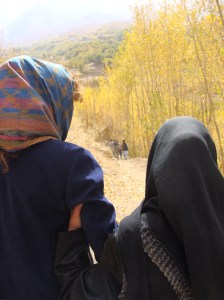

 Again and again in this isolated Afghan province, when visiting Afghan people in their homes or when talking with members of the Afghan Youth Peace Volunteers (AYPV), we have heard this message: “We want to know the people of the world, and we want the world to know that we are human beings, not animals.”
 Kabul, Afghanistan
 P U L S E