A warning: Imran Khan’s report contains disturbing images.
Video footage has emerged showing uniformed soldiers lining up and executing six young men in Pakistan. The goverment claims the video is a propaganda film made by the Taliban. We doubt it.
A warning: Imran Khan’s report contains disturbing images.
Video footage has emerged showing uniformed soldiers lining up and executing six young men in Pakistan. The goverment claims the video is a propaganda film made by the Taliban. We doubt it.
by Beenish Ahmed
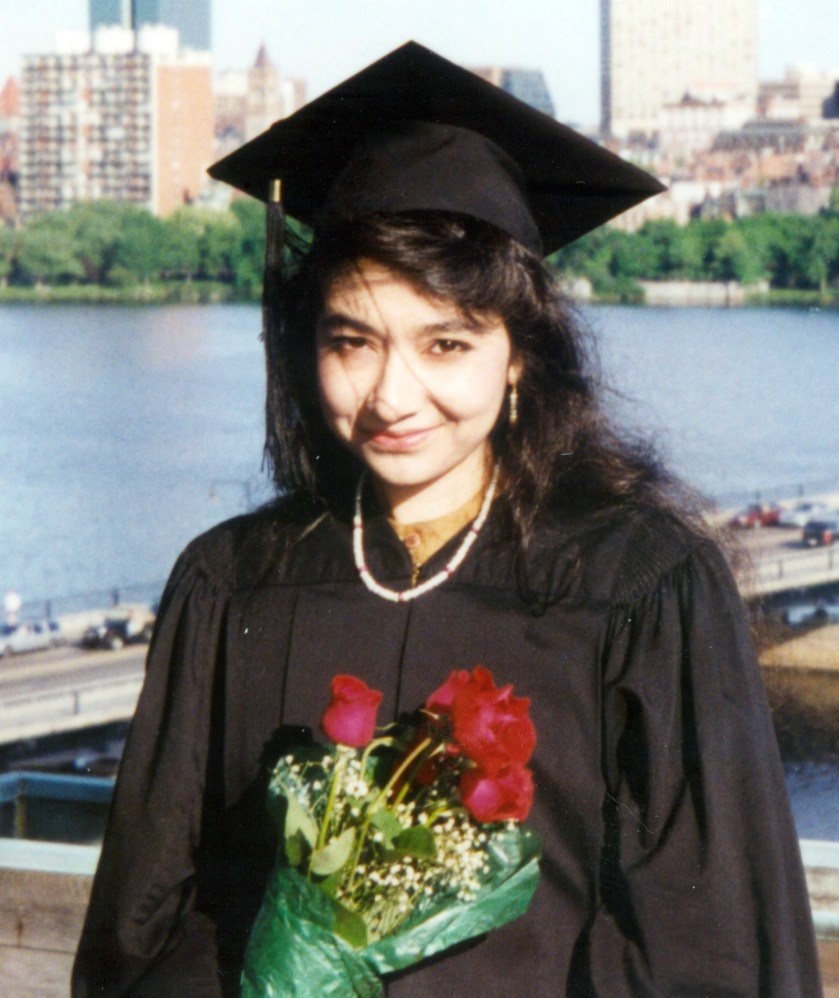 Convicted of attempted murder, Dr. Aafia Siddiqui, 38, was sentenced to 86 years in prison in New York on Thursday. The Pakistan-native was held in custody for two years after allegedly shooting at US troops and an F.B.I agent in Afghanistan with an assault rifle she grabbed from behind a curtain, unlocked, and fired before being shot in the stomach by an interpreter.
Although she infamously topped America’s most wanted list for years, most Americans would be hard pressed to comment at all on the MIT and Brandeis graduate who is due to serve decades in jail for compromising their security.
Perhaps Siddiqui’s trial has received so little attention in the US because the charges brought against her do not relate not to her’s supposed links to Al-Qaeda, or the canisters of chemicals, bomb-making manuals, and lists of American landmarks that she had been carrying at the time her detainment in Afghanistan. This has been seen by Harper’s and many others as an all too easy story, especially given the immense variance in claims made by US officials and Afghani eye-witnesses, as well as Siddiqui’s own story. Despite the questionable circumstances of her arrest, however, no evidence about her capture was allowed to surface at all in the recent trial, only furthering protest in Pakistan.
While the verdict was announced only in the regional section of the New York Times, in her own country, Siddiqui’s case become something of a cause célèbre. Many Pakistanis have long condemned what they believe to be an unjust trial based on fabricated evidence through demonstrations as well as information campaigns.
Given this divergence in understanding, it is worthwhile to ask not only who Aafia Siddiqui is, but what she has come to represent to everyday Pakistanis.
Robert Dreyfuss discusses Obama’s wars on the Alyona Show.
Bob Woodward’s new book, “Obama’s Wars”, released today points out, Obama, during the review of the war in Afghanistan at the end of last year, wanted out. Politically, his advisors, wanted out but the military branch of his national security team wanted more and didn’t give the president another option. Robert Dreyfuss contributing editor at The Nation explains that the problem lies with Obama being so inexperienced when it comes to the military that he didn’t know how to properly ask to end the war.
Defining what a terrorist is and isn’t is a major dilemma. What one may consider terrorism, another may consider resistance. So where does one draw the line? Reese Erlich tackles that topic in his latest book “Conversations with Terrorists: Middle East Leaders on Politics, Violence, and Empire.” Erlich is a veteran journalist who has covered U.S. foreign policy for decades. He has freelanced for National Public Radio, Radio Deutsche Welle, the Australian Broadcasting Corp. Radio, the Canadian Broadcasting Corp. Radio, and writes for The San Francisco Chronicle and The Dallas Morning News.
Drawing on firsthand interviews and original research, Erlich argues that yesterday’s terrorist is often today’s national leader and that today’s freedom fighter may become tomorrow’s terrorist. By branding all of American’s opponents as “terrorists,” it makes it more difficult to look beyond the individual or the political group and understand what they are really all about. I caught up with Erlich recently and here’s what he had to say.
Continue reading “Reese Erlich: “Stop using the word ‘terrorist’””
It has been over six weeks since heavy rains caused devastating floods across Pakistan and the UN has launched an unprecedented disaster appeal for $2bn. Pakistan has already received more than $1bn in emergency donations but some opposition politicians accuse the government of playing politics with international aid money. Al Jazeera’s Kamal Hyder asked the politicians representing both the opposition and the government if the flood victims are receiving aid regardless of their political affinity.
by Tariq Ali
 As if everyday life in Pakistan weren’t dispiriting enough, last month the swift and turbulent Indus burst its banks and swathes of the country disappeared under water. Divine punishment, the poor said, but they were the ones who suffered. Allah rarely targets the rich. As the floods came and the country panicked, its president fled the bunker and went on a tour of inspection to France and Britain.
The floodwaters have now receded in many parts of the country, leaving 20 million people homeless. The province of Sindh, however, is still under threat and 800,000 people are marooned without food. Aid agencies estimate the bail-out costs for the country at between seven and ten billion dollars, but only $800 million has been pledged by foreign donors, in total contrast to the support given after the devastating earthquake of 2005. The rebuilt towns and villages are proof that not all the money was stolen that time. But despite this, little help has been forthcoming from abroad, the result of a combination of Islamophobia and distrust of the Zardari government on financial matters.
Did the rulers of Pakistan treat the worst natural disaster to hit their country as an emergency, and pull out all the stops without thinking of themselves or drooling at the prospects of foreign aid pouring in? Like hell they did. For the whole of August the plutocracy floundered hopelessly as the catastrophe grew. The army did its best, but was hindered by the war on terror. As nearly a million people came under threat from the floodwater in Jacobabad, the local authorities were informed that the nearby Shahbaz airbase could not be used for rescue operations. In response to a parliamentary question from the opposition, the health secretary, Khushnood Lashari, explained: ‘Health relief operations are not possible in the flood-affected areas of Jacobabad because the airbase is controlled by the United States.’ It was not necessary to add that those on the base were busy arming and dispatching drones to hit villages in northern Pakistan. In Swat, closer to the AfPak war zones, a detachment of marines was made available to airlift tribal elders to safety, in an attempt presumably to win hearts and minds. Some hope.
by Kathy Kelly
 In the early 1970’s, I spent two summers slinging pork loins in a Chicago meat-packing factory. Rose Packing Company paid a handful of college students $2.25 an hour to process pork. Donning combat boots, yellow rubber aprons, goggles, hairnets and floor length white smocks that didn’t stay white very long, we’d arrive on the factory floor. Surrounded by deafening machinery, we’d step over small pools of blood and waste, adjusting ourselves to the rancid odors, as we headed to our posts. I’d step onto a milk crate in front of a huge bin full of thawing pork loins. Then, swinging a big, steel T-hook, I’d stab a large pork loin, pull it out of the pile, and plop it on a conveyor belt carrying meat into the pickle juice machine. Sometimes a roar from a foreman would indicate a switch to processing Canadian pork butts, which involved swiftly shoving metal chips behind rectangular cuts of meat. On occasion, I’d be assigned to a machine that squirted meat waste meat into a plastic tubing, part of the process for making hot dogs. I soon became a vegetarian.
But, up until some months ago, if anyone had ever said to me, “Kathy Kelly, you slaughtered animals,” I’m sure I would have denied it, and maybe even felt a bit indignant. Recently, I realized that in fact I did participate in animal slaughter. It’s similar, isn’t it, to widely held perceptions here in the United States about our responsibility for killing people in Afghanistan, in Pakistan, in Iraq and other areas where the U.S. routinely kills civilians.
by Tariq Ali
A few days ago, the West’s favorite Pakistani journalist, Ahmed Rashid, wrote a ‘guest column’ on the BBC website in which he suggested that the Afghan governance model be transferred to Pakistan:
Pakistan’s Reconstruction Trust Fund could be run by a board that included the World Bank, other international lending agencies and independent and prominent Pakistani economists and social welfare figures with no ties to the government.
Pakistanis would still take all the major decisions, but those who did so would not be the cronies of the president, the PM or the opposition leaders.Pakistan’s finance bureaucracy and army would have seats at the table, but certainly no veto powers over how the money is spent.
Their job would be impartial implementation of recovery overseen by the Trust Fund. Such a fund would not just monitor the cash, but help the government put together a non-political, neutral reconstruction effort. It would also help plan long-term economic reforms….
The notion that that the World Bank, IMF and friends are ‘non-political’ and ‘neutral’ is risible and not worth wasting time on, especially given that their supervision of Afghanistan’s largest bank (largely owned and controlled by the Karzai family and just as corrupt as Zardari and his cronies) doesn’t seem to have been all that effective since it collapsed just as the BBC website published the path-breaking text.
by Tariq Ali

A disaster of biblical scope: the floods triggered by heavy monsoon rains a month ago have affected more than 17.2 million people and killed over 1,500, according to Pakistan’s disaster management body. August is the monsoon season in Pakistan. This year a hard rain keeps falling, which is why the floodwaters are not abating. Nearly two thousand deaths and over 20 million people are homeless. The man-made disasters – war in Afghanistan, its spillage into Pakistan – are bad enough. Now the country faces its worst ever natural disaster. Most governments would find it difficult to cope, but the current regime is virtually paralyzed.
Over the last sixty years, the ruling elite in the country has never been able to construct a social infrastructure for its people. This is a structural defect that goes deep and affects the bulk of the population adversely. Today the country’s rulers eagerly follow the neoliberal dictates of the IMF, to keep the loans flowing. Not helpful at the best of times they are useless when the country is undergoing its worst humanitarian crisis of recent decades.
by The Asian Human Rights Commission
 PAKISTAN: Minister tasked with saving US airbase at the cost of the displacement of thousands
The presence of Pakistan army personnel speaks to the fact that the breach of Jamali bypass was intentional and ordered from above.
It has been reported earlier that the US Air Force has denied the relief agencies use of the Shahbaz airbase for the distribution of aid and assistance. Soldiers of the Pakistan army, a federal minister and the administration of Sindh province are blamed for the incident involving Shahbaz Airbase at Jacobabad district in Sindh province in which it has been reported that flood waters were diverted in order to save the airbase. The diversion of the floodwaters is blamed for inundating hundreds of houses and the displacement of 800,000 people. According to the media reports, the Federal Minister of Sports along with soldiers from the army and a contingent of officials from the Sindh provincial government breached the Jamali Bypass in Jafferabad district of Balochistan province during the night between August 13 and 14 to divert the water entering the airbase which has remained in US Air Force hands since the war on terror started in 2001.
 P U L S E