Kargas

The following is cross-posted from Lobelog.com. 
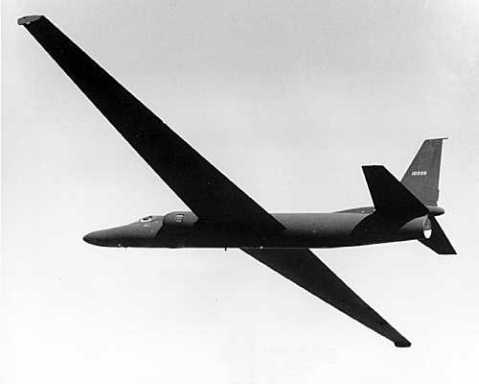
Iran’s Zahedan airport is located on a road named for Allama Iqbal, the great Indian philosopher whom Pakistan after partition adopted as its national poet. The shaheen, or eagle, features prominently in Iqbal’s poetry, as a symbol of vigour, dignity and daring. It is contrasted against the figure of the kargas, or vulture, which represents cunning, cowardice and ignobility. It is the latter appellation that the region frequently applies to the CIA drones which today menace the skies from Waziristan, Kandahar to Zahedan. But shaheen or kargas, they are both ferocious; and it is a feat to capture either. Small wonder then, that some in Iran see cause for celebration in the capture of CIA’s RQ-170 Sentinel drone, a stealth surveillance craft manufactured by Lockheed Martin.

This is not the first time the CIA has delivered one of its most advanced aircraft for inevitable reverse engineering to its putative enemy. On April 9, 1960, people at the Zahedan airport watched anxiously as an aircraft with unusually wide wings approached from the north-east. The Lockheed U-2C was on a top-secret spying mission for the CIA, but its target was not Iran. Indeed, it was coming in to land after being chased by several fighter planes. Over the previous 8 hours, the plane had photographed four strategic Soviet military sites from an altitude of 70,000 feet, well out of the reach of the Russian MiGs and Sukhois. It embarked on its mission from the Badaber air force base 10 miles to the south of Peshawar.

Continue reading “Kargas”

Obama’s drone war claims another victim

by Clive Stafford Smith

Tariq Aziz sits in the centre of the second row in this picture from the 28 October 2011 Jirga with tribal elders and lawyers from Reprieve.

LAST Friday, I took part in an unusual meeting in Pakistan’s capital, Islamabad.

The meeting had been organized so that Pashtun tribal elders who lived along the Pakistani-Afghan frontier could meet with Westerners for the first time to offer their perspectives on the shadowy drone war being waged by the Central Intelligence Agency in their region. Twenty men came to air their views; some brought their young sons along to experience this rare interaction with Americans. In all, 60 villagers made the journey.

The meeting was organized as a traditional jirga. In Pashtun culture, a jirga acts as both a parliament and a courtroom: it is the time-honored way in which Pashtuns have tried to establish rules and settle differences amicably with those who they feel have wronged them.

On the night before the meeting, we had a dinner, to break the ice. During the meal, I met a boy named Tariq Aziz. He was 16. As we ate, the stern, bearded faces all around me slowly melted into smiles. Tariq smiled much sooner; he was too young to boast much facial hair, and too young to have learned to hate.

Continue reading “Obama’s drone war claims another victim”

The Wrong Occupation

by Kathy Kelly

October 20, 2011

In Kabul, Afghanistan’s beleaguered capitol city, a young woman befriended me during December of 2010.  She was eager to talk about her views, help us better understand the history of her country, and form lasting relationships.  Now, she is too frightened to return a phone call from visiting westerners.  The last time I saw her, during the spring of 2011, she was extremely anxious because, weeks earlier, U.S. Joint Special Operations Commandos (JSOC) had arrested her brother-in-law. The family has no idea how to find him. Once, someone working for the International Commission of the Red Cross called the family to say that he was still alive and in the custody of the International Security Assistance Forces, (ISAF).  Numerous families in Afghanistan experience similar misery and fear after night raids that effectively “disappear” family members who are held incommunicado and sometimes turned over to Afghan National Police or the dreaded National Directorate of Security, (NDS).

An October 22, 2011 New York Times report about the findings of UN researchers who interviewed 324 Afghans detained by security forces, found that half of those who were in detention sites run by the NDS told of torture which included beatings, twisting of genitals, stress positions, suspension, and threatened sexual assault.  Of the 324 interviewed, 89 had been handed over to the Afghan intelligence service or the police by U.S./NATO international military forces.

Even though high commanders in the ranks of the U.S. JSOC acknowledge that 50% of the time the night raids and drone attacks “get” the wrong person, (Washington Post, September 3, 2011), the U.S. war planners have steadily escalated reliance on these tactics.

Consider the killing of three brothers in the Nemati family who lived in the Sayyidabad village in Afghanistan’s Wardak province.  Ismail, age 25, and Buranullah, age 23, had returned from their studies in Kabul to celebrate the start of Ramadan with their family in August of 2010. With their brother Faridullah, age 17, they went to the family guest room to study for exams.  They were joined by their younger brother, Wahidullah, age 13.

An initial U.S. military press release on August 12th, 2010, indicated that U.S. forces had captured an important Taliban figure nearby and had taken fire from the Nemati home where they believed Taliban fighters were being hosted as guests. Indeed, two Taliban fighters had stopped at the home two days earlier, asking for food.  Fearful of repercussions if they didn’t feed them, the family had given them food.

Continue reading “The Wrong Occupation”

Why I “Assaulted” Defense Chief Leon Panetta

by 
Alli McCracken 

Alli McCracken being arrested by the police for protesting at the Congressional hearing

“Assault? Who — or what — did I assault?” I asked the police officer incredulously as I sat in his office at the police station, handcuffed to the wall. “Well, looks like it was Leon Panetta himself,” the officer responded as he flipped through a pile of paperwork.

Me? A 22-year-old mild-mannered peace activist, assaulted the Secretary of Defense? I had simply tried to tell him how I felt about the wars. 

On the morning of October 13th about 25 activists who are occupying Washington DC, as part of the nationwide occupations, went on a field trip to Congress. We wanted to attend the House Armed Services Committee hearing where Leon Panetta, the Secretary of Defense, and Martin Dempsy, Chairman of the Joint Chiefs of Staff, were testifying about “lessons learned by the Department of Defense over the preceding decade” and “how those lessons might be applied in the future in light of anticipated reductions in defense spending.” After all, these hearings are open to the public. And shouldn’t we have a say in where our money is being spent?

As a peace activist with the group CODEPINK for the past 10 months, I have done my fair share of sending letters and emails and delivering petitions to our government representatives, asking them to stop pouring trillions of our taxpayer dollars into the endless cycle of death, destruction and reconstruction halfway across the world. There are so many critical things that we could spend that money on here in America, such as education, healthcare, helping the homeless, the elderly, the disabled, the veterans.

Continue reading “Why I “Assaulted” Defense Chief Leon Panetta”

10 Years After: Welcome to the Failed State of Americastan.

by Johnny Barber

Kabul–As we step off the Turkish Air flight and walk across the dusty tarmac to the terminal, we are greeted by a large billboard. In big bold English it proclaims, “Welcome to the Home of the Brave.” It stops me in my tracks. I shake my head, thinking, “damn weird” and continue in to passport control. After waiting in a short line, I present my American passport to the guard in the booth. He doesn’t acknowledge me. He flips through the shiny new pages until he gets to the visa. He stamps it. He turns to the picture. He gives me a precursory glance and hands the passport back to me. I turn and enter Afghanistan.
I have come here with two friends from Voices for Creative Non-Violence, forming a small delegation interested in developing relationships with ordinary Afghans and gathering stories of everyday life since the American invasion in 2001. After collecting our luggage and taking a short bus ride to the parking area, Hakim, Mohammed Jan, and his brother Noor greet us warmly. Hakim and Mohammed Jan are our hosts and the organizing force of the Afghan Youth Peace Volunteers.

Continue reading “10 Years After: Welcome to the Failed State of Americastan.”

Just Obstructed at Bagram as at Guantanamo

by Brian Terrell

BAGRAM AIR BASE, Afghanistan (U.S. Air Force photo by Staff Sgt. Scott T. Sturkol)

Despite ten years of occupation and untold millions of dollars spent on rebuilding Afghanistan’s broken judicial and criminal justice system, the Afghan courts are “still too weak,” the Washington Post reported on August 12, for the United States to relinquish its control over the Parwan Detention Center on Bagram Air Base in Afghanistan. On September 21, the same paper reported that the U.S. military is seeking contractors to significantly increase the capacity of the prison there.

The number of Afghans detained at Bagram has tripled over the past three years to more than 2,600 and the new construction will raise the capacity to 5,500 prisoners. Capt. Kevin Aandahl, a spokesman for the U.S. task force that oversees detention operations in Afghanistan, told the Post that the expansion was necessary to “accommodate an increase in the number of suspected insurgents being detained as a result of intelligence-based counter- terrorism operations, which we conduct with our Afghan partners.”

Many of those held at Bagram have been there since the U.S. occupied the former Soviet air base in 2001, and some two thirds of prisoners there have not been charged with or convicted of any crime. Corruption is rampant in Afghan courts and among police there as it is in many other places but the major fear of the United States is not that the Afghan courts will not function according to their constitution and accepted norms of law, but that they will. In order for Afghanistan to take sovereignty over its own judiciary and prison system, the Afghans must first fix the “cracks of an undeveloped legal system” and adopt essential “reforms,” including adoption of the U.S. practice of detaining suspected insurgents indefinitely without trial.

Continue reading “Just Obstructed at Bagram as at Guantanamo”

What we are Forgetting to Remember: The Social Context of 9/11

by Mike King

September 11, 2001 is a world historic moment, a historical signpost – “9/11” – marking more than a deadly attack, but a moment that truly changed history, one that can help us understand both the past and the present.  This week marks the tenth anniversary of the 9/11 attacks.  Of the memorials given, documentaries aired and news stories published this week, few will address the causes and effects of 9/11 in a way that gives a sense of the root causes, social context and contradictions that surround that moment and continue to define our present.
9/11 grew out of everything from Cold War contradictions to longstanding political grievances and anti-imperialism in the Muslim world.  9/11 propelled two unending wars, Afghanistan being the longest in US history, bankrupting both State finances and global moral legitimacy.  Despite the killing of Osama bin Laden, and his mysterious burial at sea, and despite the fact that there have been no successful terror attacks in the US since 9/11, the US has lost the “War on Terror” in every other conceivable way.  Whether in terms of lost economic hegemony or in terms Federal budget deficits (and their social effects), largely caused by the costs of wars, or in terms of a loss of geopolitical control over much of the Western hemisphere or North Africa, the US leveraged its Empire to fund a new Crusades which has them clutching to their global thrown with one hand, munitions with the other, as the other world powers and financiers wait for the right moment to pull the rug out from under them, as multiple occupations meet persistent resistance.

Continue reading “What we are Forgetting to Remember: The Social Context of 9/11”

September 11

The following is Ken Loach’s contribution to 11’09″01 September 11 a film in which French director Alain Brigand invited leading film makers from 11 different nations to provide their own impression of the September 11 attacks in 11 minutes, 9 seconds and one frame. Loach’s contribution won the the International Federation of Film Critics (FIPRESCI) Prize for Best Short Film.

9/11: When truth became a casualty of war

Al Jazeera’s Listening Post takes a look at the role of the complicit media in the post-9/11 world:

Staying in Afghanistan

by Ross Eventon

A US soldier keeps watch at the site of an explosion in Logar Province south of Kabul Photograph: Omar Sobhani/Reuters

Reports that the US is determined to maintain a presence in Afghanistan will surprise no one except 99% of foreign policy analysts.  Responding to the announcement that the US is in negotiations to maintain a presence until 2024, Mahdi Hassan, senior editor at the New Statesman, writes “the US-led invasions and occupations of both countries have been a dismal failure” because “the presence of western troops in Muslim lands has provoked more terrorism than it has prevented.”

Regardless, Obama escalated the conflict on coming to office.  Citing research that outlines the primary goal of suicide terrorism is to end foreign military occupations, Hassan asks, “Why does an intelligent politician such as Barack Obama have such difficulty understanding this?”

The Afghan and Iraq invasions were launched on the expectation they would increase the terrorist threat to domestic populations, as they duly did.   It is a remarkable example of extreme naivety or intellectual subservience that claims the US is concerned with reducing terror not be met with widespread ridicule.

As Julien Mercille, a lecturer at University College Dublin, points out in the journal Critical Asian Studies, the War on Drugs is equally vacuous.

Continue reading “Staying in Afghanistan”