Leading social commentators Danny Dorling and Kate Pickett discuss the persistence of injustice and the unacknowledged beliefs that propagate it.
Author: alannahpriestley
The best use yet for a tank
The Syrian revolution celebrates Eid.
The Road to Wigan Pier Revisited
George Orwell’s ‘The Road To Wigan Pier‘ was a classic expose of poverty in 1930s Britain. 75 years later, journalistStephen Armstrong travelled the same route and encountered levels of inequality and social injustice that Orwell would have recognised.
In a special event at the RSA, Stephen Armstrong is joined in conversation by Danny Dorling, professor of Human Geography at the University of Sheffield, to discuss why inequality persists in the UK today and where we might find grounds for optimism about the future.
Below is the full audio recording of the talk:
What happened in Houla?
On May 25, when regime militias entered the town of Houla and carried out a gruesome massacre killing 108, including 49 children, something very strange happened. Despite the fact that Channel 4 had entered the town the very next day and collected on-camera testimonies from survivors, reactionary outfits like MediaLens, media watchdogs like FAIR, and some left luminaries, including our friend Tariq Ali, started blaming the victims. There is no reason why official stories shouldn’t be doubted, but given the heinous nature of the crime, one would expect greater care with regard to evidence. As it happened, all of them were relying on a single article appearing in a German publication, written by an author who never visited Houla or met a survivor. This was no innocent mistake: it was pointed out to both Medialens and FAIR that their source was dubious and its claim highly questionable. The source was discredited soon afterwards, and Der Spiegel and the UN have since both confirmed the original reports. Neither Medialens nor FAIR has apologized. Here meanwhile is Al Jazeera’s investigation into the massacre.
On May 25, 2012, the once serene region of Houla in Syria became the scene of events that shocked the world – the massacre of around 100 civilians, almost half of them children. The Syrian regime blamed the massacre “terrorist” groups, but this investigation paints a different picture.
World Have Your Say: Syria
From the BBC World Service’s World Have Your Say. Robin Yassin-Kassab of PULSE joins other commentators to bring you the latest developments.
Gore Vidal on the Republic and its Fall
The best interview with the late Gore Vidal that I’ve heard so far. Unsurprisingly it comes from the inimitable Christopher Lydon of Radio Open Source.
 Having read all the Gore Vidal obits and the many more-and-less grudging encomia, I find the man himself at very near his best in my own conversational files — from an evening at Harvard just before Thanksgiving in 2003, on the occasion of his publishing Inventing a Nation: Washington, Adams and Jefferson. He’d walked into the hall slowly, on a cane, that night, but his chatter was was crackling with fresh mimicry and mischief. (Two nights earlier, his reward at a joint reading in Provincetown was discovering that ancient nemesis Norman Mailer was getting around on two canes.) Great entertainer and great complainer, Vidal at 78 came through as passionate historian and erudite old comic who could still fill the house, and whose repartee was not all repertoire.
Why Afghanistan Can’t wait
by Kathy Kelly and Dr. Hakim
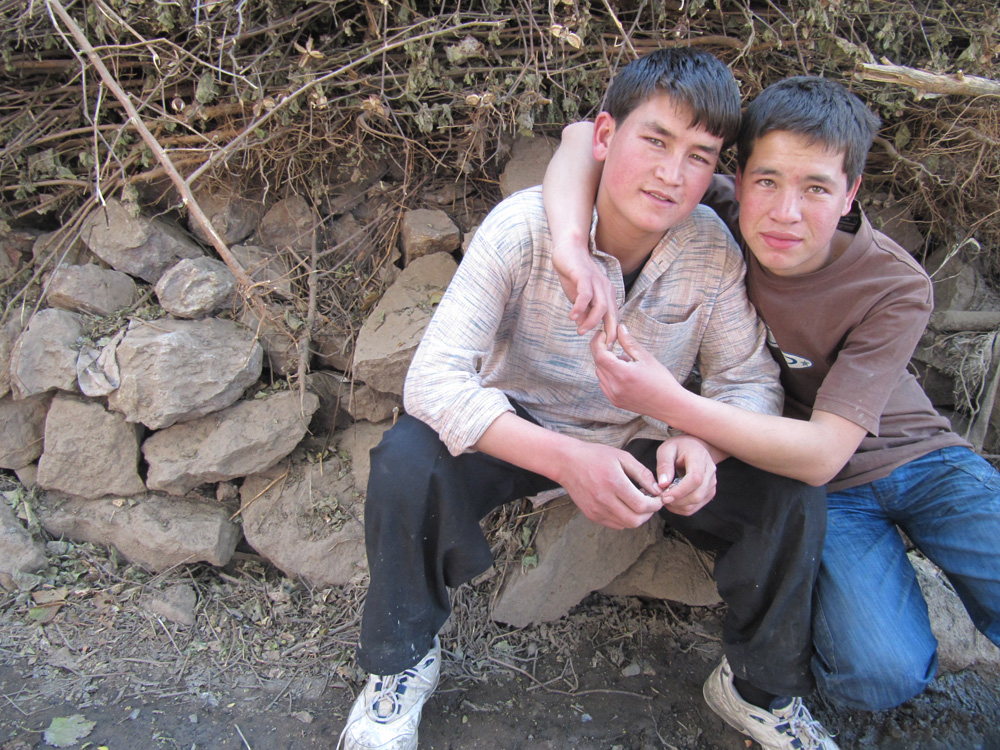
Two days ago, we spent three anxious hours in an outer waiting area of the “Non-Immigrant Visa” section of the U.S. consulate here in Kabul, Afghanistan, waiting for our young friends Ali and Abdulhai to return from a sojourn through the inner offices where they were being interviewed for visas to come speak to audiences in the United States.
They are members of the Afghan Peace Volunteers and have been invited to travel with the U.S.-Mexico “Caravan for Peace” that will be touring the United States later this summer. We didn’t want to see their hopes dashed, and we didn’t want to see this opportunity lost to connect the experiences of poor people around the world suffering from war. The organizers of the Caravan envision and demand alternatives to the failed systems of militarized policing in the terrifyingly violent, seemingly endless U.S.-Mexico drug war. They want to connect with victims of war in Afghanistan especially since, as the top producer of opium and marijuana in the world, Afghanistan has a failing war against drugs as well.
It’s an unprecedented invitation, at a desperately crucial human moment.
Controlling the web
From the new season of Al Jazeera’s Fault Lines.
In January 2012, two controversial pieces of legislation were making their way through the US Congress. SOPA, the Stop Online Piracy Act, and PIPA, the Protect Intellectual Property Act, were meant to crack down on the illegal sharing of digital media. The bills were drafted on request of the content industry, Hollywood studios and major record labels.
Hiroshima
8:15 am tomorrow will be 67 years since the bombing of Hiroshima. To mark the occasion we are publishing the classic piece by John Hersey which was rated by a hundred US editors and journalists as the greatest work of 20th century journalism. [you’ll have to scroll down to p.5 to start reading].
Continue reading “Hiroshima”
Inside Syria’s War
Yaara Bou Melhem of Dateline Australia manages to sneak in to Syria from Turkey to speak to members of the rebel opposition, including a rare interview with Colonel Riad al-Asaad, a leader of the Free Syrian Army.
And over the jump, Anand Gopal‘s ‘Letter from Taftanaz’ in Harper’s [Scrib’d link].
 P U L S E