Freedom of the press is guaranteed only to those who own one
Author: Idrees Ahmad
I am a Lecturer in Digital Journalism at the University of Stirling and a former research fellow at the University of Denver’s Center for Middle East Studies. I am the author of The Road to Iraq: The Making of a Neoconservative War (Edinburgh University Press, 2014). I write for The Observer, The Nation, The Daily Beast, Los Angeles Review of Books, The Atlantic, The New Republic, Al Jazeera, Dissent, The National, VICE News, Huffington Post, In These Times, Le Monde Diplomatique, Die Tageszeitung (TAZ), Adbusters, Guernica, London Review of Books (Blog), The New Arab, Bella Caledonia, Asia Times, IPS News, Medium, Political Insight, The Drouth, Canadian Dimension, Tanqeed, Variant, etc. I have appeared as an on-air analyst on Al Jazeera, the BBC, TRT World, RAI TV, Radio Open Source with Christopher Lydon, Alternative Radio with David Barsamian and several Pacifica Radio channels.
We regret to say that we have taken the hard decision to withdraw our film, “The Yes Men Fix the World,” from the Jerusalem Film Festival in solidarity with the Boycott, Divestment and Sanctions campaign (http://www.bdsmovement.net/).
This decision does not come easily, as we realize that the festival opposes the policies of the State of Israel, and we have no wish to punish progressives who deplore the state-sponsored violence committed in their name.
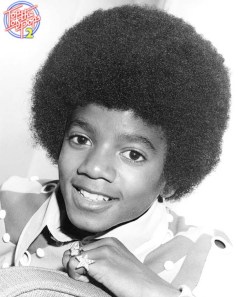
I saw this news item on Jeffrey St. Claire’s Facebook just as I returned from one of my (at least) twice weekly visits to an old bookshop (with a haul that includes works by Adam Smith, Gramsci, Fromm, Koestler, Steinbeck, C. Wright Mills, Albert Hourani and Eric Hobsbawm–all for a mere £10!). I like browsing for books and I am always heartened when I hear about other kindred spirits since the book reading culture appears to be on fast decline. I didn’t expect Michael Jackson to be one, but Carolyn Kellogg’s piece in the Los Angeles Times suggests otherwise. “Owners of local bookstores, including Dutton’s, recall encountering the late pop star perusing their shelves”, she writes. (Also see Democracy Now’s excellent coverage on Michael Jackson’s life and work).
Michael Jackson buying books
When news broke in early 2009 of Michael Jackson’s return to Los Angeles, it was not via reports of him being spotted dining at the Ivy or dancing at the hottest new Hollywood club but book-shopping in Santa Monica.
“He was a longtime and valued customer,” a store representative of art and architecture bookstore Hennessey + Ingalls said Thursday. “We’ll miss him.”
If Jackson’s bookstore appearance surprised his pop fans, it was nothing new for booksellers. A few years ago, Doug Dutton, proprietor of then-popular Dutton’s Books in Brentwood, was at a dinner with people from Book Soup, Skylight and other area bookstores.
“Someone mentioned that Michael Jackson had been in their store,” Dutton said by phone Thursday, “And everybody said he’d shopped in their store too.”
Last Thursday, while working on some writing deadlines, I was switching channels on cable. On CNN they were promoting “Black In America”, an exercise meant to boost ratings by making whites feel good by making blacks look bad, the marketing strategy of the mass media since the 1830s, according to a useful book entitled The Showman and the Slave, by Benjamin Reiss. The early penny press sold a “whiteness” upgrade to newly arriving immigrants by depicting blacks in illicit situations. By doing so they were marketing an early version of a self-esteem boosting product. One of the initial sensational stories was about the autopsy of a black woman named Joice Heth, who claimed to be George Washington’s nurse and over one hundred years old. It was the O. J. story of the time. Circus master, P. T. Barnum, charged admission to her autopsy, which attracted the perverted in droves. And so, if the people broadcasting cable news appear to be inmates of a carnival, there is a connection since the early days of the mass media to that form of show business. According to Reiss, early newspapers were not only influenced by P. T. Barnum, but actually cooperated with him on some hoaxes and stunts.
AFP — Bestselling author Naomi Klein on Friday took her call for a boycott of Israel to the occupied West Bank village of Bilin, where she witnessed Israeli forces clashing with protesters.
“It’s a boycott of Israeli institutions, it’s a boycott of the Israeli economy,” the Canadian writer told journalists as she joined a weekly demonstration against Israel’s controversial separation wall.
“Boycott is a tactic … we’re trying to create a dynamic which was the dynamic that ultimately ended apartheid in South Africa,” said Klein, the author of “The Shock Doctrine: The Rise of Disaster Capitalism.”
“It’s an extraordinarily important part of Israel’s identity to be able to have the illusion of Western normalcy,” the Canadian writer and activist said.
“When that is threatened, when the rock concerts don’t come, when the symphonies don’t come, when a film you really want to see doesn’t play at the Jerusalem film festival… then it starts to threaten the very idea of what the Israeli state is.”
Al Jazeera’s Empire, with Marwan Bishara. The first short documentary is so bad that it could have been made by the BBC or CNN. Flynt Leverett is insightful as usual, but as much as I love and respect Hamid Dabashi, I think he adds little of value to the discussion.
He cared about them, and we all care about him. R.I.P brother.
Tell me what has become of my rights
Am I invisible because you ignore me?
Your proclamation promised me free liberty, now
I’m tired of bein’ the victim of shame…
I can’t believe this is the land from which I came
You know I do really hate to say it
The government don’t wanna see
But if Martin Luther was livin’
He wouldn’t let this be, no, no
TIME Columnist Joe Klein discusses his 10-day trip to Iran to cover the election. It is interesting to note that even mainstream journalists like Joe Klein are offering much more sober and nuanced analysis than people like Juan Cole (and Pepe Escobar who basically reproduces as original analysis whatever he reads on Cole’s blog) who have opted for partisan, emotive propaganda.
The only independent nationwide poll in Iran prior to the election was conducted by the New America Foundation and Terror Free Tomorrow. In the light of the developments since division has emerged among the various analysts at NAF. Yesterday NAF organized a forum where the two camps debated their respective positions. I have yet to watch the whole thing, so I’ll watch it with you all and post comments latter. However, I didn’t like the fact that Steve Clemons posted on his Facebook page a rather silly piece by a woman disparaging Flynt Leverett. (You can find stats on the elections here.)
Iran’s recent elections have sparked riots in the streets of Tehran and intense debate in the media and policy communities around the globe. Join us as some of the world’s leading experts share their varied views on how to interpret current events in Iran, and what they mean for US policy toward Iran going forward.
The Editor: In these parlous times it becomes imperative to distinguish between legitimate and illegitimate solidarity. The following is based on principle and respect for the Iranian people, and its demand for transparency and accountability is one we share even if our own reading of the elections is different.(Also see Khatami and Moussavi‘s statements on the elections which have been translated by our good friend Naj).
The aim of the following appeal is to declare our support for the Iranian movement in its call for a new election and our opposition to any violent intervention on the protesters. We do so as independent academics and not as representatives of our many respective governments. We do so in the hope that the historical appreciation and respect of higher learning in most of traditional Iran will make our voice of solidarity heard within Iran.
Iranians participate in the democratic process
June 21, 2009 — A week ago, Friday June 12, Mahmoud Ahmadinejad was declared the winner of the Iranian presidential election. Immediately after, all other candidates, Mir-Hossein Moussavi, Mehdi Karroubi, and even the conservative Mohsen Rezaei, disputed the official results. So did some people who started several demonstrations to express their anger. More news fueled the suspicion of fraud at an unprecedented scale. On Monday June 15, and to the amazement of the world, millions of people – of all ages, classes, and backgrounds – were in the streets of Tehran demanding another election in what was the biggest demonstration since the revolution in 1979. A week later, despite the threats and beatings issued and ordered by the government, millions of people are still demonstrating, and the movement is growing and spreading to other cities.
Even the Guardian editors’ encomiums can’t escape the characteristic wishy-washiness. So they praise John Berger, in their usual weasly manner of course, and yet denigrate the politics which animates his fiction and gives it its distinctive edge.
John Berger
John Berger’s most tangible influences were that tiny band of intellectuals who combined fine-art criticism with a social conscience: John Ruskin; Oscar Wilde; Walter Benjamin. Great writers all, and 82-year-old Berger is their equal. Indeed, that was true as early as 1972, when he published Ways of Seeing, the classic work of art criticism that became a founding text of cultural studies and still has a huge influence on art teachers and their students. What is most gratifying about the report we publish today is that Berger still holds to the humane, generous values set down in that book, rather than make that long, cliched voyage to being a reactionary with a dessicated heart. The archive of one of the greatest thinkers in postwar Britain – a Booker-winning novelist, an artist, a critic – would have fetched a usefully-high price from any number of American universities, but Berger has given it for free to the British Library. All he wants is for the BL’s representative to help him with some farmwork. That is a typically bit of puckishness from a man who, when he claimed the Booker for his novel G, delivered a tirade of an acceptance speech against the event’s corporate sponsors and promptly handed over half his prize money to the Black Panthers. Gestures like that distracted (how could they not?) attention from his aphorisms such as “Nobody had ever sworn in paint before Picasso”. A sharp, bold statement – but it is also generous, helping the reader see the work under discussion. Those same qualities are true of its author.

 Last Thursday, while working on some writing deadlines, I was switching channels on cable. On CNN they were promoting “Black In America”, an exercise meant to boost ratings by making whites feel good by making blacks look bad, the marketing strategy of the mass media since the 1830s, according to a useful book entitled

 P U L S E