Sisi’s Neo-Fascism

SisiAs the Syrian playwright Saadallah Wannous wrote, “What we see now is not the end of history.” The processes playing out in the Arab world today will take decades to reach their conclusions, so extreme pessimism is as unwise as wild optimism. Nevertheless, at this stage it seems that the most comprehensively defeated of the Arab revolutions is not Syria nor Libya but Egypt, where genuine popular frustration with Muslim Brotherhood incompetence was so cleverly exploited by the military and its business class and Saudi backers (very many supposed ‘secular’, ‘liberal’ and ‘leftist’ Egyptians fell headlong into the trap). The coup solidified a junta in power which has destroyed democracy and the chances of democracy for the foreseeable future, slaughtered and imprisoned supporters of the country’s first elected president, appointed Mubarak-era army officials to governorships of the provinces, revalorised the security services, intensified the siege of Gaza, unleashed a savagely xenophobic campaign scapegoating Palestinians and Syrian refugees, and promoted a cult of personality around the figure of General Sisi. The panegyric below comes from the pen of someone called Lubna Abdel Aziz, and was published in the state-owned Al-Ahram Weekly. It could have come from a German newspaper of the late 1930s.

He stands straight and tall, impeccably attired and starched from head to toe. His freshly washed countenance and youthful zeal shield a Herculean strength and nerves of steel. He wears the feathers of a dove but has the piercing eyes of a hawk. During our thousand days of darkness, dozens of potential leaders pranced and boasted, to no avail. The leader of the people should combine a love of country, a deep faith in God and the desire to serve the nation’s will.

Abdel-Fattah Al-Sisi’s name lit up the darkness. He was called upon at a supreme moment in history; a kind of mysterious rendez-vous with destiny. He was a hero like no other! He aroused attention without exhausting it. Nothing that touched the common run of mortals made any impression on him. All in all, he is but a common man, with an almost aristocratic aura of a nobleman. Composed and cool, Al-Sisi is everyman’s man, with a sort of serene majesty on his brow. He is the chosen leader of the people because he is willing to be their servant.

Let the deaf, dumb and blind media and governments of the West say what they will, Al-Sisi submitted to the will of 33 million Egyptians in the street and 50 million in their homes, crying for salvation. The people led — Al-Sisi followed.

What the West cannot comprehend is the warm affinity between people and army in Egypt, which has endured for centuries. Gamal Abdel-Nasser is a recent example, even when he ruled with the firm grip of a military dictator.

Whatever else is going on in the rest of this vast universe, this much is certain — Al-Sisi has captured the imagination of all Egyptians, if not all the world.

He popped out of nowhere — almost — and his secret ingredient was hope. Napoleon Bonaparte once said “a leader deals with hope”, and the brand of hope that Al-Sisi deals, breathed new life into our withering, perishing dreams.

Are heroes born, made or chosen? Perhaps, all of the above. William Shakespeare believed, “some are born great, some achieve greatness and some have greatness thrust upon them.” Our hero may be the latter, for he sought nothing, yet emerged unexpectedly, admired and beloved, and in full army regalia, smoothly assumed the role he was born for.

Continue reading “Sisi’s Neo-Fascism”

Amal Hanano on Kafranbel

kafranbel1First published at Foreign Policy, the great Syrian journalist Amal Hanano describes her visit to Kafranbel last June (I was honoured to accompany her), and the revolutionary town’s changing strategy in the face of global indifference to (or orientalist misrepresentation of) the Syrian people’s struggle. “Many activists inside and outside Syria,” she writes, “realize that there is no longer a reason to convince the world to action. No one is coming to save Syria.”

KAFRANBEL, Syria — The Syrian revolution’s heart — not yet ravished by the regime or Islamist extremists — beats on in the northern town of Kafranbel, where a group of dedicated activists has captured the world’s attention through witty posters and banners that reflect the state of the revolt since spring 2011. And even as the Syrian narrative has increasingly focused on the extremists or an international plan to dismantle the Assad regime’s chemical stockpiles, the artists of Kafranbel have been engaged in their own struggle — to win back the support of residents of their own town.

The 40-year-old Raed Faris and his partner, 33-year-old Ahmad Jalal, are the creative duo behind the banners. Faris — a tall man with a booming laugh — writes the banners, while Jalal, quiet and shy, draws the cartoons. Together, they spend their time brainstorming, researching, and connecting with others on how to display Syria’s tragedy to the world.

The banners express sophisticated geopolitical analysis in the simplest of forms. They are often inspired by iconic pop culture references: Faris and Jalal have used a Pink Floyd album cover, the Titanic movie poster, and even The Lord of the Rings to describe what is happening in Syria. No side in the crisis was spared — not the Syrian regime and its allies, not the Western powers and the United Nations, not the exiled Syrian opposition, and not even the radical jihadists who eventually came to live among the activists.

Kafranbel’s messages traveled the world. A large collection of the posters and banners was smuggled out of Syria to protect them from being destroyed, and they were displayed as exhibitions across the United States and Europe. One poignant banner — carried in front of the White House last spring on the second anniversary of the revolution — adapted and adopted Martin Luther King Jr.’s timeless words: “I have a dream, let freedom ring from Kafranbel.”

Banners like this one — along with the famous response to the Boston Marathon bombing — drove home the universal and historic nature of the Syrian struggle. Kafranbel’s artists consistently made these connections to show that Syria’s war was not an event isolated by time or geography.

What made Kafranbel’s messages unique was their relentless insistence to reach out to the world. The banners expressed empathy and solidarity: “You are not alone; we suffer with you.” But another message was always embedded: “Do not leave us alone. Do not forget about us.”

But the world read the banners, and did nothing. Eventually, Kafranbel — and by extension, Syria — were disappointed by their global audience.

Continue reading “Amal Hanano on Kafranbel”

Revolutionary Gardening

the radishes are at ground level

For a long time it’s been too late for a happy ending in Syria. The longer this process continues, the less we can hope for.

How do you fight a monster without becoming a monster? How, particularly when the monster’s chief strategy is to make a monster of you? How, when the world’s most powerful storytellers depict you as a monster? How, when monsters hiding behind human facades walk by blindly as you are tortured, raped, humiliated, maimed, murdered?

I don’t really know. I’d welcome a reading list, if anyone has one.

I know this monster must be fought, even if we become monsters while fighting it. I know we must fight both internally and externally. I know the greater and lesser jihads must be fought simultaneously.

At some point, somehow, this stage will be replaced by another. Most probably that stage like this one will be bumbled through blindly. Human beings seldom or never achieve control over their larger social movements. Still, it’s pleasant to imagine that Syrians will be able to defuse the sectarian tensions which have existed at least since ibn Taymiyyeh, which were immeasurably exacerbated by Sykes-Picot and the French occupation’s construction of an ‘army of minorities’, and then set afire by Assad’s gang and its allies. It’s good to hope too that a new constitution will guard against any party, clique or ideological police imposing its straitjacket on the plural people.

Beyond religion and politics, environmental factors should also be taken into account.

It’s interesting to note that Jared Diamond’s three factors of civilisational collapse (deforestation, soil erosion, water management problems) have been present in Syria since late Ottoman times, and rampant in the last couple of decades. People my age who grew up in Damascus remember that in their childhoods the Ghouta still consisted of orchards and streams, that summer temperatures almost never climbed above the mid to high thirties. You don’t have to be my age to remember the Barada as an actual river, rather than a layer of concrete and a few stinking pools. Wasn’t Damascus the city the Prophet refused to enter, fearing to sin by imagining himself prematurely in paradise? The dicatorship’s corruption (anyone with connections or money could build in the green zone) put paid to that. Stupidly grand development schemes repeated the pattern all over the country (Lake Assad, like Lake Nasser, was an environmental and social disaster – see Omar Amiralay’s film A Flood in Ba‘ath Land – a wonderful exercise in quiet irony). People’s lack of control over the public space meant they were alienated from it, and threw black plastic bags all over it (this explains the discrepancy between people’s spotlessly clean homes and the filth in the streets outside). Over the decade before the revolution erupted, a million climate change refugees, according to the UN, left the desertifying north east for the impoverished outskirts of Dera’a, Homs, Damascus and Aleppo. This, combined with the effects of Bashaar’s crony capitalism, provides the backdrop to the uprising. The revolutions to the west, and the monster’s extreme violence, provided the spark.

Continue reading “Revolutionary Gardening”

A Slaughter of Alawi Innocents

For the first time there is proof of a large-scale massacre of Alawis – the heterodox Shia offshoot sect to which Bashaar al-Assad belongs – by Islamist extremists among Syrian opposition forces. In its context, this disaster is hardly surprising. It follows a string of sectarian massacres of Sunni civilians (in Houla, Tremseh, Bayda and Banyas, and elsewhere), the sectarian ethnic cleansing of Sunnis from areas of Homs province, and an assault on Sunni sacred sites such as the Khaled ibn al-Waleed mosque in Homs, the Umawi mosque in Aleppo, and the Omari mosque in Dera’a. It follows two and a half years of rape, torture and murder carried out on an enormous scale by a ‘Syrian’ army commanded by Alawi officers and backed by sectarian Shia militias from Iraq, Iran and Lebanon, and by Alawi irregular militias. Assad and his backers have deliberately instrumentalised sectarian hatred more effectively than the Americans did in Iraq, and they must bear the lion’s share of responsibility for the dissolution of Syria’s social mosaic. Next, the counter-revolutionary forces in the West (chief among them the United States) must be blamed for obstructing the flow of arms to the Free Syrian Army, a policy which has inevitably strengthened the most extreme and sectarian jihadist groups (some of whom, such as the foreign-commanded Islamic State of Iraq and Syria, are actively fighting the Free Army). Human Rights Watch’s important report on the massacre of Alawi villagers is summed up in the video below. Sadly, HRW fails to adequately distinguish between Syrian and foreign, and moderate and extremist anti-Assad militias. The excellent EAWorldview critiques the report here. Its conclusion:

The HRW report illustrates the dangers of conflating the various factions of the insurgency under the heading “armed opposition groups”.

Coincidentally, that conflation is a tactic of the regime who seeks to portray the insurgency as extremist-led, largely foreign fighters rather than an extension of the indigenous protest movement that took up arms after Assad’s forces used violence to quash it from March 2011.

By this conflation, HRW (a fine organisation which has done great work in uncovering the truth of the Syrian conflict) veers dangerously close to the orientalist/racist stereotyping of the Syrian people’s struggle now dominant in both the rightist and liberal/leftist Western media.

It goes without saying that the crimes committed against Alawi civilians in northern Lattakia province are grotesque and idiotic, and constitute another strategic blow against the revolution and the survival of the Syrian state.

Gilbert Achcar on the Syrian Revolution

In this interview published at Socialist Resistance, the clear-sighted leftist Gilbert Achcar explains the importance of standing in solidarity with Syria’s popular revolution and the need to resist the propaganda of Western, Russian, and Gulf counter-revolutionary forces. Achcar is interviewed by Terry Conway.

TC: Could you assess the present state of the Arab uprising in general before we focus more specifically on Syria?

GA: What is happening now is a confirmation of what could be said from the start; the fact that what began in December 2010 in Tunisia, was not a ‘Spring’ as the media called it, a brief period of political change during which one despot or another is overthrown, opening the way for a nice parliamentary democracy, and that’s it. The uprisings were portrayed as a ‘Facebook revolution’, another one of these ‘colour revolutions’.  I, for one, insisted from the beginning that this was a misrepresentation of reality. What started unfolding in 2011 was a long-term revolutionary process, which would develop over many, many years if not decades, especially if we take into account its geographic extension.

From that perspective, what we have had so far is just the opening phase of the process. In some countries they have managed to go beyond the initial stage of overthrowing existing governments; this was the case in Egypt, Tunisia and Libya – the three countries where the regimes were overthrown by the uprising. And you can see that these countries are still in a state of turmoil, instability, which is usual in revolutionary periods.

Those eager to believe that the Arab uprising has ended or was stillborn focused on the initial victory of Islamic forces in elections in Tunisia and Egypt. Against such doomsayers, I stressed the fact that this was actually unavoidable since elections held shortly after the overthrow of the despotic regime could only reflect the balance of organised forces that existed in these countries. I argued that the Islamic fundamentalists’ period in power would not last long, if we consider the real roots of the revolutionary process.

This long-term revolutionary process is rooted in the social reality of the region, characterised by many decades of stalled development – a higher rate of unemployment, especially youth unemployment, than in any other region in the world over several decades.  These were the real basic causes of the explosion, and as long as these causes are not addressed, the process will continue. Any new government which has no solutions to these root problems will fail. It was predictable that the Muslim Brotherhood would fail: in my book The People Want, which was of course written before Morsi’s overthrow in Egypt, I argued that the Muslim Brotherhood would fail inevitably. I wrote the same about Ennahda in Tunisia, which is now faced with a very strong protest movement that puts the future of the government in question.

So there is an ongoing process throughout the region, which, like any revolutionary process in history, has ups and downs, periods of advances and periods of setbacks – and sometimes ambiguous periods. The most ambiguous event in the whole process until now has been the recent experience in Egypt where we saw this huge mass mobilisation against Morsi on 30 June, which was a very advanced experience in democracy by a mass movement asking for the recall of an elected president who had betrayed the promises he made to the people. But at the same time, and here lies the ambiguity of course, you had the military coup and widespread illusions that the army could play a progressive role, including amongst dominant sections of the broad left as well as amongst liberals.

Continue reading “Gilbert Achcar on the Syrian Revolution”

The London Review of Books on Syria

An improvised weapon in Aleppo

Robin Yassin-Kassab

I wrote to the editor of the London Review of Books concerning their Syria (and Libya) coverage. There’s been no reply, so I’m posting the letter here.

Dear….

…….(introduction)…..

Watching the representation of the tragedy in the media has been almost as depressing as watching Syria burn. As someone with strong leftist and anti-imperialist leanings, it’s been particularly galling to find that ‘leftist’ commentary on Syria has often been the worst of all. Large sections of the left have wholeheartedly embraced the very discourse that they resisted during the War on Terror years – that of ‘terrorists’ and al-Qa’ida conspiracies explaining all. Leftist journalists have paid little or no attention to the regime’s blatant and deliberate instrumentalisation of sectarian hatreds, but have focussed on, and exaggerated, the backlash. Robert Fisk has gone so far as to embed himself with the regime army, and to (grotesquely) interview survivors of the Darayya massacre in the presence of the perpetrators of the massacre. Many leftists have convinced themselves, against all the evidence, that the American-led empire has been conspiring against the Syrian regime since the start of the revolution, that this is a re-run of Iraq. Tariq Ali even appeared on Russia Today (near the start) to explain that America was trying to take over Syria but Russia was protecting the country. Russia – the imperialist power which is arming and funding the regime as it commits genocide.

I subscribe to the London Review of Books because it’s by far the best written, most incisive, most reflective, and bravest British publication. Publishing Walt and Mearsheimer was a great move. On the middle east, Adam Shatz is always excellent, well-informed, interested in teasing out a complex truth. Much of the coverage of the revolutions has been eurocentric and orientalist, however. I agreed with novelist Hisham Matar when he called ‘shame’ on Hugh Roberts’s very long Libyan piece which at no point attempted to see things from a Libyan perspective. Rather, it cast the Libyans as passive agents, pawns in the hands of the devilishly clever white man. And on Syria, commentary has been statist-leftist, as if this were an amusing chess game between regional and super powers rather than a struggle for freedom and a genocide, with only one side receiving sustained imperialist aid. I wrote in brief about Patrick Cockburn’s orientalism here.

Syria’s Grassroots Civil Opposition

Leila Shrooms writes this excellent survey of Syrian civil activists for Tahrir-ICN.

The discourse on Syria has been dominated by discussions of militarization, Islamization, sectarianism and geopolitical concerns. Conversely there has been relatively little focus on Syria’s grass roots civil opposition. This has led to a lack of knowledge outside of Syria for activists who want to stand in solidarity with Syria’s revolutionaries but don’t know where to start. This article attempts to provide an introduction to some of the many civil resistance initiatives taking place on the ground and efforts at revolutionary self-organization. It is by no means a comprehensive overview. It focuses on initiatives that are non-party political  or religiously aligned.[1] It must be remembered that prior to March 2011 there was not a functioning civil society in Syria as rights to free expression, assembly and association were highly restricted with severe consequences for those who failed to comply.[2]

Who are the grass roots civil opposition?
The core of the grassroots civil opposition is the youth, mainly from the working and middle-classes, in which women and diverse religious and ethnic groups play active roles. Many of these activists remain non-affiliated to traditional political ideologies but are motivated by concerns for freedom, dignity, social justice and basic human rights.

Local committees and local councils
The main form of revolutionary organization in Syria has been at the local level, through the work of local committees and local councils. These were influenced by the work of Syrian anarchist Omar Aziz. He argued that it was inconsistent for revolutionaries to participate in protests by day and then return to living within the hierarchical and authoritarian structures imposed by the state. Aziz believed that revolutionary activity should permeate all aspects of life and advocated for radical changes to social relationships and organization. He called for autonomous, non-hierarchical organization and self-governance, based of principles of cooperation, solidarity and mutual aid.[3] Together with comrades he founded the first local committee in Barzeh, Damascus.

Today hundreds of local committees/coordinations have been established in neighborhoods and towns throughout the country.[4]  In the local committees revolutionary activists engage in multiple activities, from documenting and reporting on violations carried out by the regime (and increasingly elements of the opposition) to organizing protests and civil disobedience campaigns (such as strikes and refusing to pay utility bills) and collecting and providing aid and humanitarian supplies to areas under bombardment or siege. They operate as horizontally organized, leaderless groups, made up of all segments of the society. Whilst organizing on the local level, they have built up networks of solidarity and mutual aid across the country.

At the city and district levels local councils have been established. There are 128 throughout Syria.[5] They are often the primary civil administrative structure in areas liberated from the state, as well as some areas that remain under state control.[6] These ensure the provision of basic services, coordinate with the local committees, coordinate with armed resistance groups and maintain security. They mainly follow some form of representative democratic model and free local elections have occurred in areas where they have been established, something that has not happened in Syria under four decades of Baath rule. Some councils change their elected representatives every three months and their is no leader amongst them. As the humanitarian situation has deteriorated they have taken on an increasingly vital role but they face many challenges. The scarcity of resources has meant that some have had to suspend work, such as happened in Aleppo. In an appeal for support to local councils, human rights activist Razan Zaitouneh says “We cannot continue to demand local councils to play their role without support and employment plans that assist them to do the simplest actions helping civilians to survive under siege and shelling. These plans include providing potable water, collecting garbage from residential areas, and supporting projects that provide food from inside the besieged area exposed to hunger.”[7] She also highlights that lack of resources make local councils susceptible to influence by armed groups and that help is needed for them “to be independent from supporting parties that try to arm the region to establish their authority on the ground, rather than enable [them] to have neutrality- as much as possible- and make independent decisions.” [8] At least one Local Council in Manbej, Aleppo, suspended work in protest against the excess of the militant Jihadi group ISIS in the town.[9] Some local councils have been more successful and inclusive than others which have been plagued by infighting or found themselves unable to displace the bureaucratic structures of the old regime.

Continue reading “Syria’s Grassroots Civil Opposition”

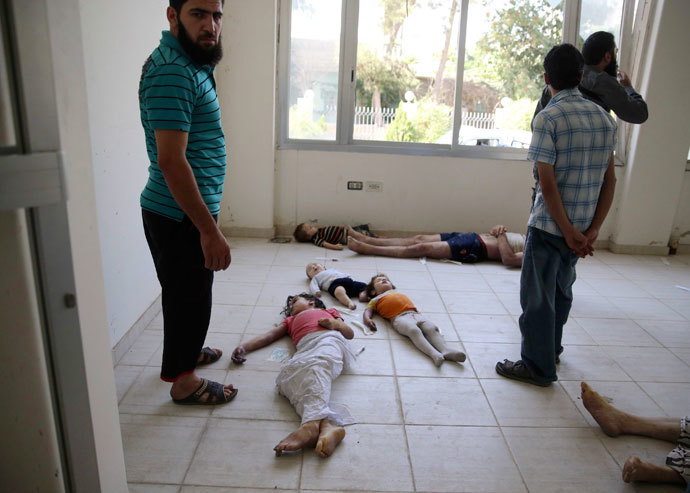
Godzilla in Damascus

gas1Godzilla in Mexico, by Roberto Bolano.

Listen carefully, my son: bombs were falling
over Mexico City
but no one even noticed.
The air carried poison through
the streets and open windows.
You’d just finished eating and were watching
cartoons on TV.
I was reading in the bedroom next door
when I realized we were going to die.
Despite the dizziness and nausea I dragged myself
to the kitchen and found you on the floor.
We hugged. You asked what was happening
and I didn’t tell you we were on death’s program
but instead that we were going on a journey,
one more, together, and that you shouldn’t be afraid.
When it left, death didn’t even
close our eyes.
What are we? you asked a week or year later,
ants, bees, wrong numbers
in the big rotten soup of chance?
We’re human beings, my son, almost birds,
public heroes and secrets.