Islamophobia is Bad—Only Because Occupying Muslims is Good

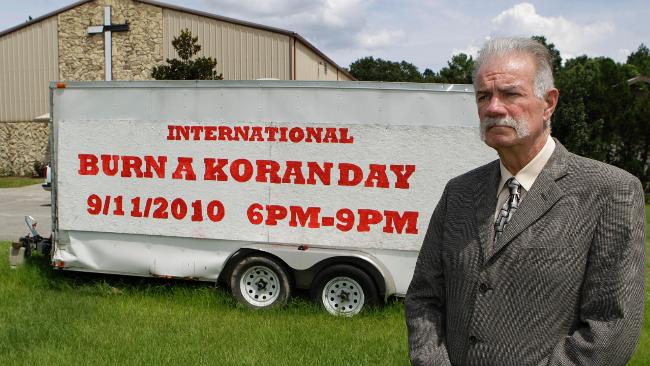
Pastor Terry Jones plans to hold a Koran burning to mark the September 11 terror attacks, despite warnings it would incite more violence (Photo: AP)

by M. Junaid Levesque-Alam

At this point, it’s not even clear whether Jones will go ahead with his pyrotechnics, but the lesson still stands.

Animosity toward Islam has reached such extremes in America that officialdom only rallies against anti-Muslim invective if it interferes with its warring on Muslim countries.

Perhaps it’s just the skeptic and former journalist in me, but that’s my impression as I review the recent blow-up about the planned September 11th Qur’an bonfire.

Terry Jones, the pastor of the tiny Florida church that may conduct the book-burning, has garnered endless—and doubtless desired—attention from media outlets as military commanders and administration officials fret over the fallout of his obscene reimagination of Farenheit 451.

General Petreaus, who is rightly concerned for the welfare of the women and men under his command, warned that Jones’s actions “would undoubtedly be used by extremists in Afghanistan—and around the world—to inflame public opinion and incite violence.”

Petreaus’s pronouncements were followed by an equally onerous message from White House spokesman Robert Gibbs, who averred that any behavior “that puts our troops in harm’s way would be a concern to this administration.”

Continue reading “Islamophobia is Bad—Only Because Occupying Muslims is Good”
Islam and America’s Most Powerful Cult

by M. Junaid Levesque-Alam

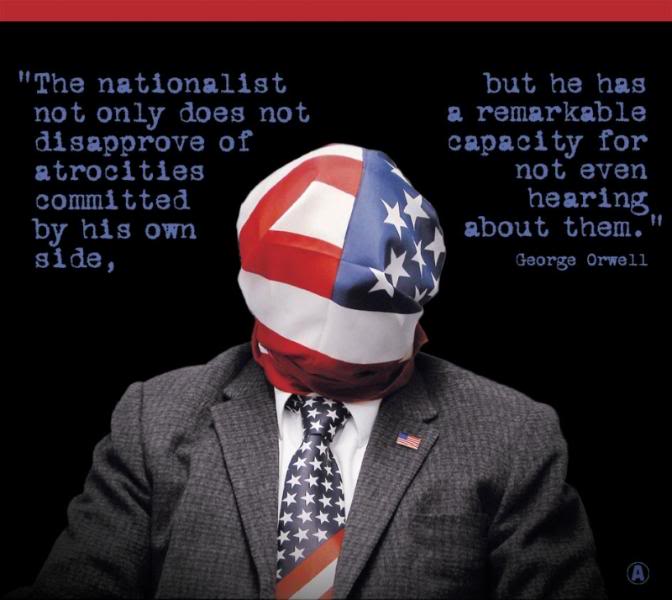
In their spirited assault on Islam, conservatives have seized upon one notion with particular delight: the Abrahamic faith embraced by a quarter of humanity is a “cult.”

Tennessee Lt. Gov. Ron Ramsey popularized the claim in July when a constituent asked about the “threat that’s invading our country from Muslims”; Ramsey wondered aloud whether Islam “is actually a religion or is it a nationality, way of life or cult” and later asserted that “far too much of Islam has come to resemble a violent political philosophy more than peace-loving religion.” Soon after, some of Ramsey’s constituents set ablaze a planned mosque site near Nashville and fired shots when parishioners tried to inspect the damage.

Farther south, in Florida, Pastor Terry Jones proclaimed that Islam is not just a cult but a Satanic creation — hence his planned bonfire of Qur’ans. He is not alone among Floridians. Congressional candidate and retired Army officer Allen West announced earlier this year that Islam is “not a religion” but a “vicious enemy” intent on “infiltrating” America. Another candidate in the sunshine state, Ron McNeil, described Islam as a malicious plot to “destroy our way of life.”

And in upstate New York this August, teenagers who viewed the local mosque as a “cult house” terrorized mosque-goers by blasting a shotgun and sideswiping a parishioner.

What accounts for this renewed alacrity in attacking Islam?

Continue reading “Islam and America’s Most Powerful Cult”

A Specious Compromise on Cordoba

by M. Junaid Levesque-Alam

You are not terrorists. Your religion is not evil. Your project is not a monument to murder. But since some believe otherwise, I propose a compromise:

Get out.

That is the message adopted by some liberals and their allies in the wake of smoldering conservative rage over the Cordoba proposal.

Nevada Senator Harry Reid, New York Governor David Patterson, former DNC chair Howard Dean, and New York Archbishop Timothy Dolan all echo the same theme: Muslims have the right to build a Muslim facility two blocks from Ground Zero—but they would be wrong to do so.

If the argument sounds familiar, that’s because it is. “No one is disputing that America stands for—and should stand for—religious tolerance,” Sarah Palin averred before assailing the proposal through her Facebook megaphone a month ago.

Of course, the official conservative position—“we are tolerant, just not here”—was always a transparent lie.

Continue reading “A Specious Compromise on Cordoba”

Christopher Hitchens and the Quest for Grade-A Muslims

by M. Junaid Levesque-Alam

Christopher Hitchens

Almost 50 years ago, Frantz Fanon raced against death to finish his famous indictment of colonialism, The Wretched of the Earth. In that book, he wrote:

“Western bourgeois racial prejudice as regards the nigger and the Arab is a racism of contempt; it is a racism which minimizes what it hates.”

But there was a twist.

The ideology of Western prejudice, Fanon observed, “manages to appear logical in its own eyes by inviting the sub-men to become human, and to take as their prototype Western humanity…”

Today this ideology is once again attracting robust defenders, as conservatives and some liberals arrogate the right to judge which Muslims are worthy of their good graces.

Christopher Hitchens, for one, has recently declaimed that Imam Feisal Rauf of the embattled Cordoba House fails to make the grade. Hitchens mutters that as far as Muslims go, Rauf is “no great bargain.” The more Hitchens learns about him, the more “alarmed” he becomes.

Continue reading “Christopher Hitchens and the Quest for Grade-A Muslims”

Cordoba House and Religious Freedom

by David Bromwich

When Nancy Pelosi said the power and money backing the anti-Muslim protests in New York and elsewhere should be investigated, she had in mind the simplest of political questions. Who benefits? In this case, who benefits from a spectacle of words and images that suggest that right-wing populism in America has now taken a definitively anti-Muslim tone? The message of these protests against more than one mosque is that the fight to defeat al Qaeda has become a war against Islam.
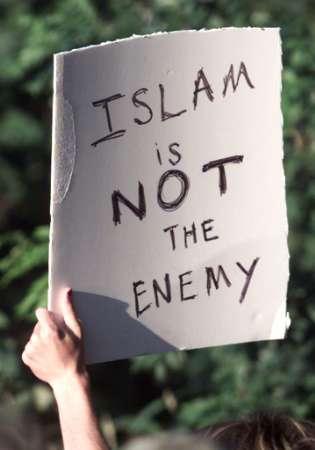
No American is helped by that change of view. It exposes us to an enlarged hostility from the Arab world, heated by suspicion and legitimate fear. The only people who stand to gain are those who have an interest in setting the United States against the Arab countries of the Middle East. Who would that be? Pelosi has sharper instincts than the other leaders of her party. Her distrust of the sudden prosperity of a “grassroots” movement has been borne out by Jane Mayer’s recent investigation of the funding of the Tea Party by the billionaire Koch brothers.

The worst damage of the crowd actions of the summer has come from the faintheartedness of those who knew better, but declined to denounce them. The crowd has been permitted to go on believing it is wrong for Muslims to do something the Constitution gives all Americans a right to do. How did this deformation of public feeling begin? The protests against Cordoba House shifted from a parochial to a national issue on the impetus of two statements. The first came from Abraham Foxman, the national director of the Anti-Defamation League, on July 30. Foxman put the ADL on the record in sympathy with the protest against the planned community center and mosque. His statement conceded the right of the planners, but defended the prejudice, that is, the rooted feelings of the non-Muslims in this case, regardless of reason, right, or law.

Continue reading “Cordoba House and Religious Freedom”

Bin Laden’s Rising Influence In America

by M. Junaid Levesque-Alam

American leaders are always trying to assess Osama bin Laden’s level of influence over Muslims.

They should look at his influence over their own countrymen.

The aversion to a proposed Muslim center near Ground Zero shows that it is Americans, not Muslims, whose thinking the terrorist leader has most successfully recast to his advantage.

The detractors strengthen and draw strength from bin Laden; their hot prejudice bolsters his assertion that America despises Islam and betrays an acceptance of his claim that he embodies the faith.

Reception

At first, the proposal to build the 12-story facility two blocks from the site of the World Trade Center aroused scant disapproval. It was even welcomed as an opportunity to reaffirm America as a land of tolerance and reclaim Islam as a religion of moderation.

The group behind the project, Cordoba House, pitched the facility (which would include restaurants, bookstores, art exhibits, a pool, an auditorium, and a prayer space) as a means of bridging divides between faiths. Its board of directors draws from various faiths, and its mission statement promotes intercivilizational understanding.

Continue reading “Bin Laden’s Rising Influence In America”

Who is welcome on the territory of the French Republic?

by Najate Zouggari

June 2009, Palais de Versailles: French president Nicolas Sarkozy declares in a major policy speech that the “burqa is not a sign of religion, it is a sign of subservience. It will not be welcome on the territory of the French republic.” Sarkozy does this while ignoring the fact that the women wearing this garment are as French as he is. In this fiercely republican discourse taking place in a monarchist palace he also declares that the burqa “is not the idea that the French republic has about a women’s dignity” while missing  another point — this “idea” about women’s dignity did not allow French women to vote until 1944. French women earned their right to vote after Turkish women, whose access to European citizenship is now denied by Sarkozy.
By extension, the ideas the French republic has about its Muslim community can be understood through the 750 euro joke of Minister Brice Hortefeux: “We always need one [Arab, Muslim]. When there’s one, that’s alright. It’s when there are a lot of them that there are problems.” With these words, he echoed the presidential “inflammatory language” against minorities and the poor: Sarkozy once referred to people living in impoverished areas “scum.” But Nadine Morano (Secretary of State for Family Affairs) asked Muslims (not the President) to speak properly by saying: “I want them to love France when they live here, to find work and not to speak in slang. They shouldn’t put their caps on back to front,” as if all Muslims in France live in suburbs, wear either a cap or a burqa, and need to be reminded that France can never be their real home.

Continue reading “Who is welcome on the territory of the French Republic?”

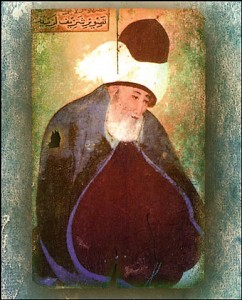
“O, God! Have mercy on me! Distracted, I whirl” — Rumi’s Gift

Not frivolously, around the alleys and bazaars, I whirl.
Lover’s temperament, I have — to have one glimpse of my Beloved, I whirl.

After Maulana Rumi (actual poet unknown)

Singing: Nusrat Fateh Ali Khan and Qawwaals

Translated by Huma Dar

Raqs al-Ruhani, al-Qahirah (Huma Dar 2005)
Naa Man Behooda Gird-e Koocha-o-Baazaar Mi Gardam (Huma Dar 2005)

نه من  بيهوده  گرد کوچه  و  بازار  می  گردم
مذاق عاشقی  دارم  پئ  ديدار  ميگردم

خدايا  رحم  کن  بر  من  پريشان وار  می  گردم
خطا کارم  گناھگارم  به  حال زار  می  گردم

شراب شوق  می نوشم  به  گرد يار  می  گردم
سخن مستانه  می گويم  ولے  هوشيار  می  گردم

گھےخندم  گھے گريم گھے افتم  گھے خيزم
مسيحا  در دلم  پيدا  و  من  بيمار  می گردم

بیا جانا  عنایت  کن  تو  مولانای رومی  را
غلام  شمس  تبریزم  قلندروار  می گردم

Continue reading ““O, God! Have mercy on me! Distracted, I whirl” — Rumi’s Gift”

Rumi On Reason

(adapted from his Fihi Ma Fihi )

M. Shahid Alam

Man seeks to know God, not because he is knowable;
not reasonably, but by reasoning he knows him.

When man accepted the trust, it was reason
he acquired, to say yes to his Creator.

Man is a moth, God a candle. When his wings
wrap around the candle’s flame,
why should they not burn –
and he perish in its fire?

A moth that shuns the candle’s flame
is not a moth. A candle that does not
draw the moth, that will not
burn it to ashes – is not a candle.

Man is not man if he denies God,
if he eviscerates his urge to know him.

A god that man can know is not
God, he is man’s alter ago.

— M. Shahid Alam is professor of economics at Northeastern University, Boston, and author of Israeli Exceptionalism (Palgrave: 2000). Visit his website – http://qreason.com – and write to him at alqalam02760@yahoo.com.

An Evening with Karen Armstrong

Karen Armstrong is the author of the classic The History of God.

UCtelevision — 17 June 2010 — One of the world’s leading commentators on religious affairs, Karen Armstrong discusses the intersection of religion and secularism in contemporary life. She explores the ideas that Islam, Judaism and Christianity have in common and their effect on world events. Series: Walter H. Capps Center Series