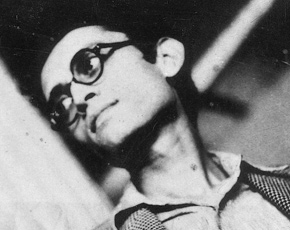
Has Imran Khan’s Political Tsunami Hit Pakistani Shores?

by M. Shahid Alam

1

I have never had the patience for long-winded novels, and much less for memoirs, but I am glad I persuaded myself to read Imran Khan’s Pakistan: A Personal History. Now that Tehreek-e-Insaaf , the political party founded and led by Imran Khan, gathers momentum – after many years in the political wilderness – and may yet grow to challenge the established political parties in the next elections, it is time to take a closer look at the man who leads this party, and promises to restore justice and dignity to Pakistan’s long-suffering but mostly passive population.

Once I had gotten past the Prologue – which I thought did not belong at the beginning of the book – Khan’s narrative never lost its power to sustain my interest. The book takes the reader through many unexpected shifts in the protagonist’s life – from cricket to charity work, from charity work to politics, from the life of a celebrity to a life of piety, from disdain for Islam to a deepening respect for its richness and depth, from contempt (a colonial legacy common to Pakistan’s elites) for ordinary Pakistanis to a growing concern for their tormented lives, from wilting shyness before audiences to a determination to face the glare of public life, from growing anxiety about Pakistan’s problems to an unshakable resolve to do something about them; etc. In short, the book takes the reader through the life of an extraordinary man, at first fully immersed in the privileges of his class and his cricket celebrity but slowly turning inwards, questioning the colonial mindset of his own privileged class, angry at the limitless corruption of Pakistan’s rulers, and, finally, reaching resolution in his commitment to take Pakistan back from its corrupt elites. A politician with Imran Khan’s record would be rare in Western ‘democracies.’  In a country like Pakistan, mired for decades in the corruption of rapacious elites, he is an anomaly – an outlier. Should the Pakistanis embrace Imran Khan, should they give him the chance to pick and lead the nation’s political team, this could be a game-changer for their country.

Continue reading “Has Imran Khan’s Political Tsunami Hit Pakistani Shores?”

Obama Administration Silencing Pakistani Drone-Strike Lawyer

by Medea Benjamin

Shahzad Akbar (left) with Karim Khan, a resident of North Waziristan whose 18-year-old son and 35-year-old brother were killed in a CIA drone strike which destroyed his family home. (Reuters)

When is the last time you heard from a civilian victim of the CIA’s secret drone strikes? Sure, most of them can’t speak because they’re deceased. But many leave behind bereaved and angry family members ready to proclaim their innocence and denounce the absence of due process, the lack of accountability, the utter impunity with which the U.S. government decides who will live and die.

In the wake of the 9/11 attacks, the U.S. government has increasingly deployed unmanned drones in the Middle East, South Asia and Africa. While drones were initially used for surveillance, these remotely controlled aerial vehicles are now routinely used to launch missiles against human targets in countries where the United States is not at war, including Pakistan, Somalia and Yemen. As many as 3,000 people, including hundreds of civilians and even American citizens, have been killed in such covert missions.

The U.S. government will not even acknowledge the existence of the covert drone program, much less account for those who are killed and maimed. And you don’t hear their stories on FOX News, or even MSNBC. The U.S. media has little interest in airing the stories of dirt poor people in faraway lands who contradict the convenient narrative that drone strikes only kill “militants.”

Continue reading “Obama Administration Silencing Pakistani Drone-Strike Lawyer”

Anatol Lieven at the Karachi Literature Festival

Dawn.com’s Salman Haqqi interviews Anatol Lieven, author of “Pakistan: A hard country” during the Karachi Literature Festival 2012.

Heart & Mind-O-Matic

From the great, Pulitzer-Prize winning political cartoonist Mark Fiore.

Learn all about the US drone program in Pakistan and other lucky countries across the globe! See how fortunate one young villager is to have the US looking out for him and fighting extremism. Never mind the attacks on funerals and rescuers. A Mark Fiore political animation.

Pakistani FM on the regional crises

Pakistani foreign minister Hina Rabbani Khar speaks about drones, Afghanistan, Iran, Syria and more.

American drones hitting targets on Pakistani territory is illegal, and involvement of the Pakistani spy agencies with Taliban not even worthy of comment, said Hina Rabbani Khar, Pakistan’s Foreign Minister, exclusively to RT.

Israeli false flag operations against Iran

Mark Perry’s explosive Foreign Policy article about Israeli attempts to drag the US into another war is being smothered in the US with a conspiracy of silence. On the other hand, in Israel itself it made the frontpages of Ha’aretz and Jerusalem Post. (Also see Perry’s response to Israeli denials). Among mainstream television networks, only the venerable Al Jazeera has given it its due. Have a look:

Agents with Israel’s spy agency have posed as CIA agents in operations to recruit members of the Pakistani group Jundallah, according to a report in Foreign Policy magazine. Using US dollars and passports, the agents passed themselves off as members of the US’ Central Intelligence Agency in the operations, according to memos from 2007 and 2008, said the report which was published on Friday. Al Jazeera speaks with author, historian and journalist Mark Perry authored the Foreign Policy report.

Re-Membering Toba Tek Singh: Looking for Manto

Between works censored for “obscenity” and those pirated and then censored for nationalism, which censorship is more obscene?

by Huma Dar

Sa'adat Hasan Manto
Sa’adat Hasan Manto

In today’s edition of Dawn.com, Jan 1, 2012, the renowned feminist poet, Fahmida Riaz has an article, “Understanding Manto,” about Urdu literature’s enfant terrible, Sa’adat Hasan Manto.  This year will mark Manto’s birth centenary.  Thank you, Fahmida Apa, for writing this moving tribute!  Sad indeed is the day when Pakistan cannot or does not publish Manto’s work, uncensored, unedited.  Despite justified indignation, knowing our “guardians of morality and piety,” it aches my heart to confess, I am not surprised.

Ironically, the “Indian pirated edition”—even if we overlook the immense ethical difficulties with the issue of piracy, and the direly-needed resources that were (and are) thus withheld from Manto and his family—is still no guarantee of accessing the “original, uncensored text.”  Christine Everaert in her book, Tracing the Boundaries between Hindi and Urdu: Lost and Added in Translation (Brill, 2009) painstakingly records many elisions, omissions, and additions in just a few of Manto’s stories as they’re carried from their original Urdu to the [pirated] Hindi versions.  Some of these transformations are, of course, to ease the transmission of the literary register in Urdu to Hindi; others to simply make things more palatable for Indian nationalism.  (Please especially see the Chapter II of this book for many examples…)

Hearts and Minds

Armed US drones have been blamed for more than 300 missile attacks in seven years in Pakistan’s tribal areas. Residents of Pakistan’s tribal areas say that they feel terrorised by the strikes, and doctors say that those who survive them often suffer from post-traumatic stress disorder (PTSD). Al Jazeera’s Kamal Hyder met with the survivors of one such strike at a hospital in the Pakistani city of Peshawar.

Anatol Lieven: how to end the US dust-up with Pakistan

Anatol Lieven, author of the excellent Pakistan: A Hard Country, on Christopher Lydon’s indispensable Radio Open Source, discussing the recent dust up between Pakistan and the US.

Anatol Lieven is explaining how the so-called allies in the so-called War on Terror have come to pot-shotting each other on the Pakistani side of the border with Afghanistan. In the Financial Times last May (“How American folly could destroy Pakistan“) Lieven was warning of the perverse logic of confrontation in US policy. The killing last weekend of 24 Pakistani soldiersin a NATO air strike for which President Obama is refusing to apologize can be taken as confirmation of the hazard. Ever since the US Navy swoop on OBL early in May, the risk in Lieven’s eyes was that the US would overplay its hand with demands on the thoroughly alienated Pakistani Army. The American demand-too-far (Lieven is saying emphatically today) is that the Pakistani Army go to war on the Taliban home bases in the Pashtun tribal wilderness. That demand cannot, will not, be met: (a) because the Taliban is a big part of the network that Pakistan counts on to protect and project its interest in Afghanistan when the US forces shrivel, then leave; and (b) because the big majority of Pakistanis — army, elite and masses — see the Taliban in Afghanistan as a legitimate resistance force fighting foreign occupation, like the mujahedeen who fought the Soviets, or Communist guerillas who fought Nazis in Europe. When Pakistan under Pres / Gen Musharraf undertook a half-way offensive against the Taliban in the border wilderness, “they set off an Islamist rebellion inside Pakistan which continues to this day… The Pakistanis do have a case: thanks to the U.S., they have a civil war inside Pakistan which has claimed far more Pakistani lives than Americans killed on 9.11. … We keep talking about wanting to support democracy. Well, the democratic majority in Pakistan wants us to go to hell.”

Continue reading “Anatol Lieven: how to end the US dust-up with Pakistan”

Pakistan’s Bonded Slaves

In this episode of Slavery: A 21st Century Evil, Al Jazeera’s Rageh Omaar investigates slavery that is passed down from father to son, mother to daughter.

Continue reading “Pakistan’s Bonded Slaves”