Robin Yassin-Kassab: Too late for two states

Reporting for Al Jazeera, writer and PULSE co-editor Robin Yassin-Kassab writes:

I saw Haneen al-Zoabi giving a lecture. She is the knesset member who sailed with the Gaza Flotilla and was so shabbily abused while attempting to give her account of events to Israel’s parliament. In Nablus, she spoke emotionally about the situation of Palestinian-Israelis, the descendants of those few who escaped ethnic cleansing in 1948.

Citizens but not nationals of the state (nationality is for Jews only), Palestinian-Israelis receive a fraction of the services offered to Jews, are forbidden from teaching Palestinian history in schools and are as likely to be victims of land confiscation as fellow Palestinians in the West Bank. Ninety-three per cent of Israel’s land is off-limits to non-Jews and half of Palestinian-Israeli families live below the poverty line.

I heard Jamal Hwayil speak. He was the leader of the Fatah-affiliated al-Aqsa Martyrs Brigade in Jenin at the time of Israel’s 2002 massacre there and now he is an independent member of the Palestinian parliament. He took a clear position on Palestinian division: “Political arrests are wrong. Wrong in Gaza and wrong in the West Bank. Political arrests have no place in a liberation struggle.”

A little later he added: “There can be neither meaningful negotiations nor productive armed resistance so long as the political leadership is divided.”

Read all of Yassin-Kassab’s “Too late for two states” here.
Valley of the Wolves: Palestine

Israel-Turkey relations may survive the Flotilla flap, but lets see if they can survive this. Kurtlar Vadisi is the immensely popular Turkish series which was first turned into a Rambo-style big budget film attacking the US occupation of Iraq (at a time when relations between the US and Turkey were otherwise cordial). In the forthcoming film, the same Turkish team infiltrates Israel (or Palestine, as the film’s hero insists on calling it) to exact revenge for the flotilla murder. Here’s the trailer:

Yom Kippur

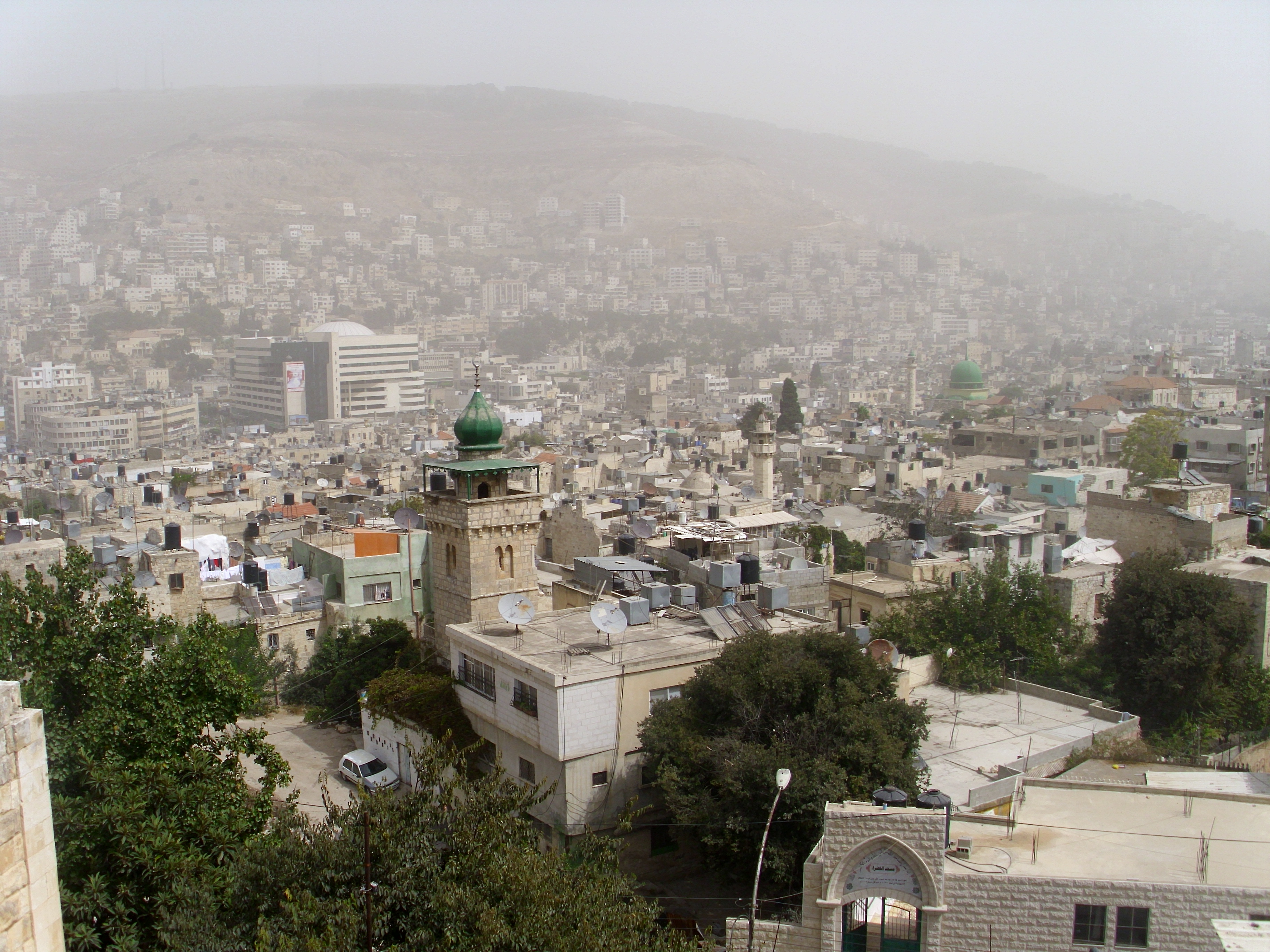
Summer Mist in Nablus

“Have you visited Afghanistan? Pakistan? Yemen? Do you have a weapon? Do you have a credit card? Give us your email address. Do you know anyone in Israel? Do you know anyone in Jordan? What is your novel about? What did you do yesterday?”

It only took an hour and a half to get through the border. They were closing early because it was Yom Kippur, yowm al-ghafran in Arabic, the Day of Atonement.

The driver who met me said he couldn’t go to Nablus, not now, it was getting too late, because the car had Israeli plates and settlers were throwing stones, he could take me to Ramallah instead, although it was further.

“Won’t we be alright with Israeli plates?”

“We need Palestinian plates. They’re throwing stones at Israeli cars because they don’t want Jews driving on the holiday.”

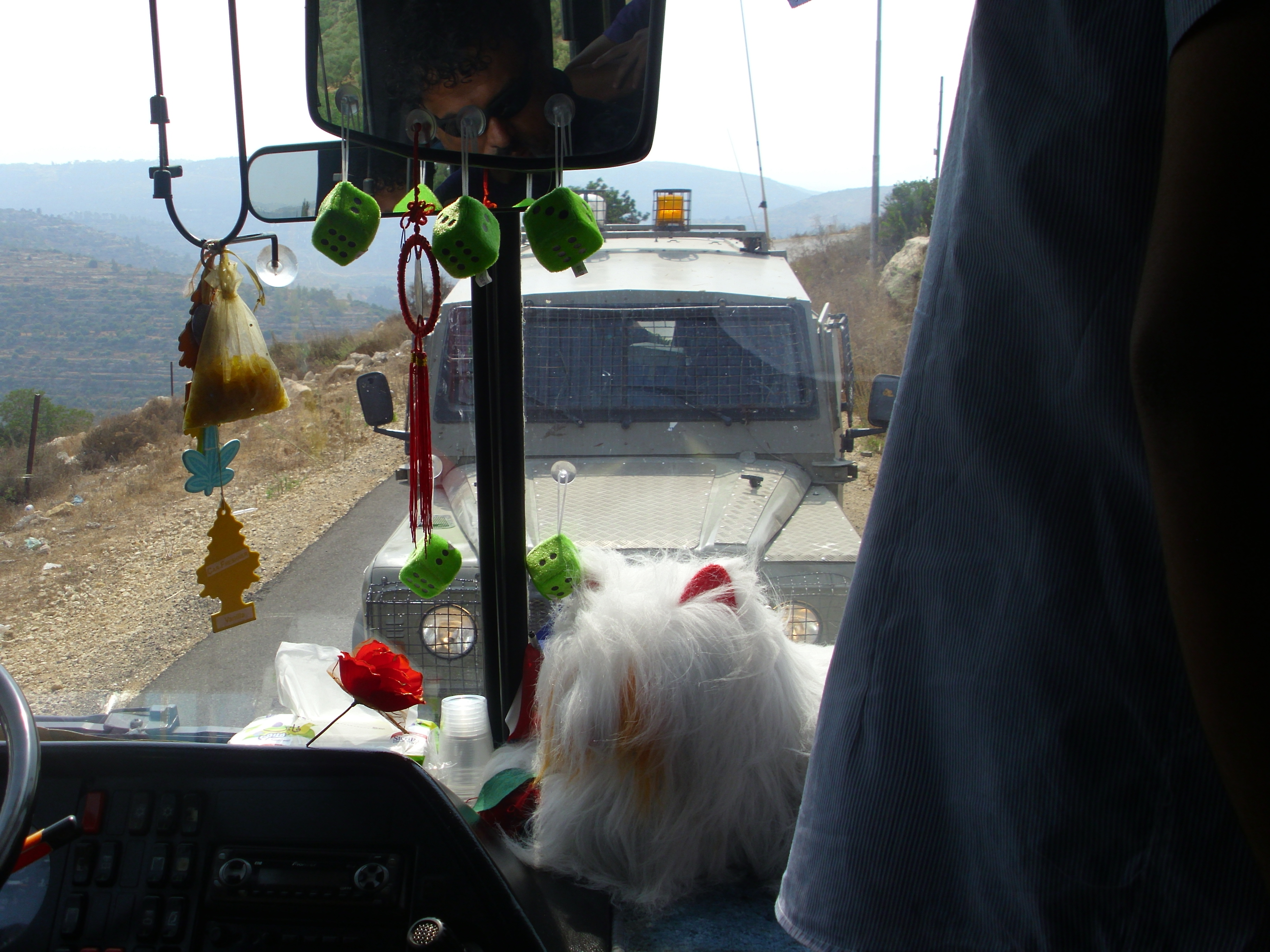
So we went to Ramallah, south through the West Bank. We drove down the confiscated Jordan valley. A couple of memorials to settlers shot here during the Second Intifada were set up at the roadside. To our east, closed military zones and then the hills of Jordan rising. To the west, ochre desert mountains and hardly any habitation.

Continue reading “Yom Kippur”

The CPCCA and the New McCarthyism

Intelligent activism by Jewish Canadians who advocate against the fictional notion of a “new anti-semitism” which is used as a pressure tactic by the likes of the Anti-Defamation League and Harvard’s McCarthyite-in-Chief Alan Dershowitz against anyone who criticizes Israeli policies. Video by Independent Jewish Voices.

Europe’s Alliance With Israel: Aiding the Occupation

David Cronin’s important new book Europe’s Alliance with Israel: Aiding the Occuption (Pluto Press) isJacket image for Europe’s Alliance with Israel now available, filling a key void in the growing body of literature on the role of the Israel lobby. Cronin is one of the very few journalists who regularly exposes the pernicious role of the Israel lobby in Brussels and the long-standing hypocrisies of the European Union. (See some of Cronin’s articles published on PULSE in the past, here and here).

In carefully crafted official statements, the European Union presents itself as an honest broker in the Middle East. In reality, however, the EU’s 27 governments have been engaged in a long process of accommodating Israel’s occupation of Palestinian territories.

Journalist David Cronin interrogates the relationship and its outcomes. A recent agreement for ‘more intense, more fruitful, more influential co-operation’ between the EU and Israel has meant that Israel has become a member state of the Union in all but name. Cronin shows that rather than using this relationship to encourage Israeli restraint, the EU has legitimised actions such as the ill-treatment of prisoners and the Gaza invasion.

Concluding his account, Cronin calls for a continuation and deepening of international activism and protest to halt the EU’s slide into complicity.

Continue reading “Europe’s Alliance With Israel: Aiding the Occupation”

Ali’s Story

Al Jazeera – Ali, a Palestinian veteran of the intifada, went to Saudi Arabia for medical treatment after an Israeli settler shot him in the leg.

While there, he learned that his younger brother Yusef had been killed by an Israeli soldier.

Ali had spent years in Israeli prisons for actions like demonstrating against the occupation, throwing stones, and being a member of a political party.

Continue reading “Ali’s Story”

Tariq Ali assesses Obama’s record

Our dear and respected friend Tariq Ali on the Riz Khan Show.

Sun Deprived in Palestine

The PFLP's George Habash pulls an eyebrow

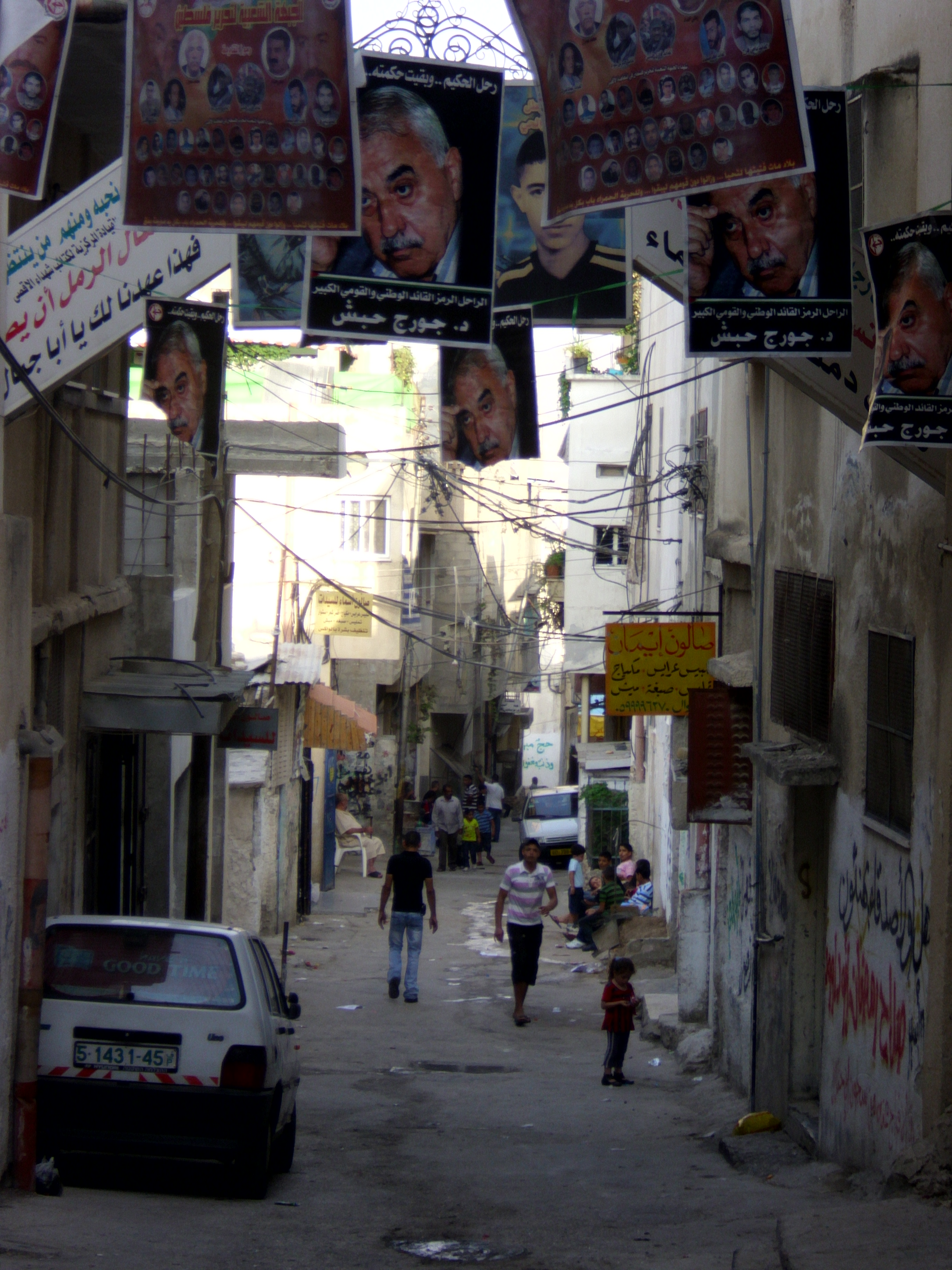
Balata Camp started as tents in the fifties, grew cement blocks in the sixties, installed sewage and water in the seventies, and has stretched ever upwards until now. The camp boasts the densest population in the West Bank: at least 25,000 people in a couple of square kilometres (the inhabitants claim up to 40,000). The buildings are so tightly packed that the kids forced out to play in the shadowed alleyways suffer from Vitamin D deficiency, sun deprivation. There are eight to ten people to a residential room. In school there are 50 children to a class. UNRWA schools and the graveyard take up most space. Most of the graves are those of people killed in the streets of the camp.

It’s a remarkably friendly place, but also discomfiting. Many of the young are prematurely aged and many of the old seem broken. There’s a higher proportion of wheelchairs than anywhere else I’ve been. In a comparatively wide street I found boys playing table football in front of a memorial to their murdered playmate. They laughed and screamed. Continue reading “Sun Deprived in Palestine”

An Apartheid Distinction

I was at the border, a British national with an Arab name on my way into Palestine-Israel. The Jordanians were suspicious but not at all intimidating. It felt more like an unexpected cup of tea with an avuncular officer (which it was) than an interrogation. I learnt about Abu Tariq’s children and he learned about my reasons for crossing, my travels, and my career. He noted everything down before shaking my hand.

The bus through no-man’s land was full of Palestinian-Israelis, descendants of the remnant not driven out in 1948 – those the Israelis call ‘Arab-Israelis’, as if they were recent immigrants from Kuwait or Algeria. The sun bubbled the box of our bus. It was airless and sweaty inside.

Israeli border control is staffed by teenaged girls in low-slung military trousers backed up by men with sunglasses and enormous guns. The girls clocked my (Arabic) name, and my bags were searched. Then I was closely questioned. Then I had to wait. Fortunately it was Yom Kippur: they let me through an hour later when they closed up early.

Then by car through the the ethnically-cleansed city of Beesan (signposted in Arabic script with the Hebrew name – Beit She’an), and into the West Bank. The roadsigns here are very democratically scripted in Hebrew, English and Arabic, except for those in Hebrew only. But Palestinian towns and villages are never posted. A visitor travelling a Jews-only road wouldn’t realise that such places exist. Jerusalem is written in Arabic as “Urushaleem,” and then between brackets “al-Quds”, which is the actual, ancient and contemporary Arab name. In such ways the attempt is made to occupy the land’s abstract Arab qualities, to control history and memory, the past as well as the present and future.

Continue reading “An Apartheid Distinction”

Things that Happened While I was There

A large demonstration was held in central Nablus calling for the release of the thousands of prisoners held in the Israeli gulag.

Israeli forces shelled Gaza.

The Palestinian Authority arrested 53 men in overnight raids.

I passed a settlement built during Netanyahu’s ten-month settlement freeze.

Two settlers were shot in the legs by Palestinian fighters while driving near Hebron.

PA president Mahmoud Abbas let slip that he might not pull out of peace talks when the settlement freeze lapses.

The Palestinian Authority arrested 20 men in overnight raids.

Dana wrote a story about a girl raped by a relative.

Hamas forces closed down a Gaza restaurant because a woman had publicly smoked the argileh there.

Continue reading “Things that Happened While I was There”