American Public Opinion and the ‘Special Relationship’

by John Mearsheimer

There is no question that the United States has a relationship with Israel that has no parallel in modern history. Washington gives Israel consistent, almost unconditional diplomatic backing and more foreign aid than any other country. In other words, Israel gets this aid even when it does things that the United States opposes, like building settlements. Furthermore, Israel is rarely criticized by American officials and certainly not by anyone who aspires to high office. Recall what happened last year to Charles Freeman, who was forced to withdraw as head of the National Intelligence Council because he had criticized certain Israeli policies and questioned the merits of the special relationship.

Steve Walt and I argue that there is no good strategic or moral rationale for this special relationship, and that it is largely due to the enormous influence of the Israel lobby. Critics of our claim maintain that the extremely tight bond between the two countries is the result of the fact that most Americans feel a special attachment to Israel. The American people, so the argument goes, are so deeply committed to supporting Israel generously and unreservedly that politicians of all persuasions have no choice but to support the special relationship.

Continue reading “American Public Opinion and the ‘Special Relationship’”
Zionist Dialectics: Past and Future

Excerpted from Israeli Exceptionalism (Palgrave: 2009).

by M. Shahid Alam

My God! Is this the end? Is this the goal for which our fathers
have striven and for whose sake all generations have suffered?
Is this the dream of a return to Zion which our people have
dreamt for centuries: that we now come to Zion to stain its soil
with innocent blood?”

Ahad Ha’am, 1921

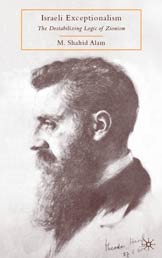
This study has employed a dialectical framework for analyzing the destabilizing logic of Zionism. We have examined this logic as it has unfolded through time, driven by the vision of an exclusionary colonialism, drawing into its circuit – aligned with it and against it – nations, peoples, forces, and civilizations whose actions and interactions impinge on the trajectory of Zionism, and, in turn, who are changed by this trajectory.

It would be a bit simplistic to examine the field of interactions among the different actors in this historic drama on the essentialist assumption that these actors and their interests are unchanging. Instead, we need to explore the complex ways in which the Zionists have worked – and, often have succeeded – to alter the behavior of the other political actors in this drama: and, how, in turn, the Zionists respond to these changes. Most importantly, we need to explore all the ways in which the Zionists have succeeded in mobilizing the resources of the United States and other Western powers to serve their specific objectives.

Continue reading “Zionist Dialectics: Past and Future”

Nablus Limited

A soap factory and an olive oil business in Nablus deal with the harsh realities of the Israeli occupation and its impact on the economy.

Continue reading “Nablus Limited”

Remembering Sabra and Shatila: On massacres, atrocities and holocausts

by Sonja Karkar

The Massacre

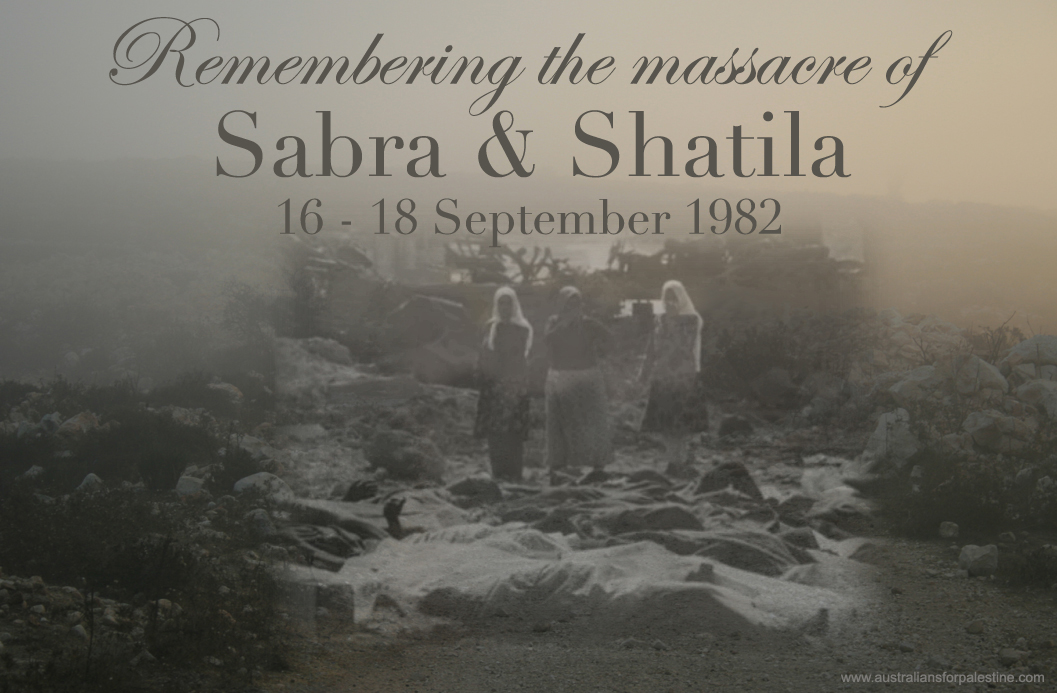
It happened twenty-eight years ago – 16 September 1982.  A massacre so awful that people who know about it cannot forget it.  The photos are gruesome reminders – charred, decapitated, indecently violated corpses, the smell of rotting flesh, still as foul to those who remember it as when they were recoiling from it all those years ago. For the victims and the handful of survivors, it was a 36-hour holocaust without mercy.  It was deliberate, it was planned and it was overseen.  But to this day, the killers have gone unpunished.

Sabra and Shatila – two Palestinian refugee camps in Lebanon – were the theatres for this staged slaughter.  The former is no longer there and the other is a ghostly and ghastly reminder of man’s inhumanity to men, women and children – more specifically, Israel’s inhumanity, the inhumanity of the people who did Israel’s bidding and the world’s inhumanity for pretending it was of no consequence. There were international witnesses – doctors, nurses, journalists – who saw the macabre scenes and have tried to tell the world in vain ever since.

Each act was barbarous enough on its own to warrant fear and loathing.  It was human savagery at its worst and Dr Ang Swee Chai was an eye witness as she worked with the Palestinian Red Crescent Society on the dying and the wounded amongst the dead.  What she saw was so unimaginable that the atrocities committed need to be separated from each other to even begin comprehending the viciousness of the crimes. [1]

Continue reading “Remembering Sabra and Shatila: On massacres, atrocities and holocausts”

Resistance threads

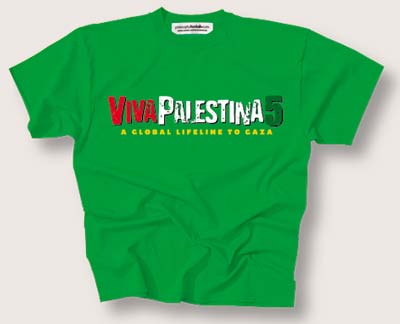
On Saturday 18 September, the fifth, and most ambitious convoy leaves for Gaza. From London, Casablanca and Doha three simultaneous routes consisting of hundreds of vehicles to break the siege. Three times in the last eighteen months Viva Palestina has broken Israel’s siege, each time successfully delivering their aid, despite Israel’s murderous assault on the Freedom Flotilla , they fully intend to deliver this time too. Our VIVA PALESTINA 5 T-shirt will be worn by all drivers and crew. Sales of the shirt help fund the convoy. We can’t all be on this incredible journey to bring vital material aid and international solidarity to Gaza but by wearing this shirt we are all convoy members.

Courtesy of the team at Philosophy Football.


On Gaza, Artists Speak Out

Terry Jones, Annie Lennox, Thandie Newton, Alexei Sayle, Mike Figgis, Katharine Hamnett and Jason Flemyng, voice their support for Amnesty International’s ongoing efforts to secure justice for both Palestinians and Israelis and make an impassioned plea for Israel to cease its illegal siege of Gaza. Find out more here.

Jamal Juma: The real obstacle to peace in the Levant is the presence of a criminal, racist state

Illegal settlements on Palestinian land are one of the biggest stumbling blocks for these talks. The Palestinians have warned that they will walk out of talks if a freeze on settlement construction, which is set to expire at the end of the month, is not extended. Danni Dayan, Chairman of the Settlers Council in Jerusalem, and Jamal Jumaa, a Palestinian activist in Ramallah, debate the issues facing their leaders.

Chris Hedges lends support to USToGaza.org

Chris Hedges speaking at the Tabernacle Church fundraiser for www.ustogaza.org in Philadelphia on September 10, 2010.

Continue reading “Chris Hedges lends support to USToGaza.org”

Lauren Booth’s Open Letter To Israel

Free Gaza’s Lauren Booth has an open video letter to the people of Israel.

Continue reading “Lauren Booth’s Open Letter To Israel”