President of Cant

By Tariq Ali

A year since the White House changed hands, how has the American empire altered? Under the Bush Administration it was widely believed, in both mainstream opinion and much of the amnesiac section of the left, that the United States had fallen under an aberrant regime, the product of a virtual coup d’état by a coterie of right-wing fanatics—alternatively, ultra-reactionary corporations—who had hijacked American democracy for policies of unprecedented aggression in the Middle East. In reaction, the election to the Presidency of a mixed-race Democrat, vowing to heal America’s wounds at home and restore its reputation abroad, was greeted with a wave of ideological euphoria not seen since the days of Kennedy. Once again, America could show its true face—purposeful but peaceful, firm but generous; humane, respectful, multi-cultural—to the world. Naturally, with the makings of a Lincoln or a Roosevelt for our time in him, the country’s new young ruler would have to make compromises, as any statesman must. But at least the shameful interlude of Republican swagger and criminality was over. Bush and Cheney had broken the continuity of a multilateral American leadership that had served the country well throughout the Cold War and after. Obama would now restore it.

Rarely has self-interested mythology—or well-meaning gullibility—been more quickly exposed. There was no fundamental break in foreign policy, as opposed to diplomatic mood music, between the Bush 1, Clinton and Bush 2 Administrations; there has been none between the Bush and Obama regimes. The strategic goals and imperatives of the us imperium remain the same, as do its principal theatres and means of operation. Since the collapse of the USSR, the Carter Doctrine—the construction of another democratic pillar of human rights—has defined the greater Middle East as the central battlefield for the imposition of American power around the world. It is enough to look at each of its sectors to see that Obama is the offspring of Bush, as Bush was of Clinton and Clinton of Bush the father, as so many appropriately biblical begettings.
Continue reading “President of Cant”

A visit from Oz

Along with a Youtube video [see below], the following short report appeared on the Ha’aretz website today:

Israel’s new immigration police has joined security forces in cracking down on foreign activists residing in the Palestinian West Bank, Haaretz has learned.

The Oz Unit participated last week in the attempted arrest of a number of activists in the West Bank town of Bil’in, and also in the raid that nabbed leading Palestinian militants Mohammed Hatib that same night. Two weeks ago, the unit took part in the arrest of a Czech activist in Ramallah…

An Israel Defense Forces officer can be seen ordering the activists to obey the unit’s instructions, explaining that immigration officials have every right to make such requests. The same officer then urges the immigration official to search for some default or problem in the detainee’s documents,

The IDF soldiers can later been seen forcefully detaining a few of the activists. When asked why the arrest was being carried out, the soldier said that the immigration official would explain everything.

So for some background on the ‘Oz’ unit, here are some links:

Established by a 2008 cabinet decision, the task force, which goes by the Hebrew name “Oz” (courage), is the enforcement body of the Population Authority that comes under the aegis of the Interior Ministry, and replaced the immigration police. The unit has 200 inspectors, who have policing powers only with regard to foreigners.

Continue reading “A visit from Oz”

And they call this man eloquent…

‘The middle east is obviously an issue that has plagued… the region… for … centuries.’

It appears the word ‘occupation’ is not a part of this blathering milquetoast’s vocabulary. (Kudos to the courageous questioner, who, I am told, was Laila Abdelaziz of the University of South Florida.)

The person he reminded me most of was this:

‘A Walk in the Park’

A worthwhile view from the BBC’s Panorama programme, apart from the predictable technique of “balance” that results in giving airtime to b/s hasbara. It’s still lights years ahead of what would air in the US and presents far more of the reality of Palestinian dispossession and israeli apartheid. In ‘A Walk in the Park’, Jane Corbin walks through the occupied streets and parks of Jerusalem (thanks Dave).

Part One


Continue reading “‘A Walk in the Park’”

Capital murder

First and foremost, united Jerusalem, which will include both Ma’ale Adumim and Givat Ze’ev — as the capital of Israel, under Israeli sovereignty…
Prime Minister Yitzhak Rabin, on the vision for a “permanent solution”, 5 October 1995

Jerusalem is the eternal capital of the Jewish people, a city reunified so as never again to be divided
Prime Minister Benjamin Netanyahu, 21 May 2009

The current consensus in the international community is that East Jerusalem, occupied by Israel since 1967, is the capital of a future Palestinian state. Israel’s unilateral annexation of territory to create expanded municipal boundaries for a ‘reunited’ Jerusalem was never recognised.

Over the last forty-three years, Israel has created so-called ‘facts on the ground’ in the Occupied Palestinian Territories (OPT), in defiance of international law. Since the Madrid/Oslo peace process, successive Israeli governments have continued to colonise Palestinian land at the same time as conducting negotiations.

The extent and scale of Israel’s illegal settlement project across the West Bank, as well as the road network, the Separation Wall, and other ways in which Israel maintains its rule over the OPT, has led some to believe that the creation of an independent, sovereign Palestinian state is impossible.

Perhaps one of the clearest indicators that there is no Palestinian state-in-waiting under Israel’s regime of control is East Jerusalem.

Continue reading “Capital murder”

A Country of Words

“We travel like other people, but we return to nowhere…

We have a country of words.”

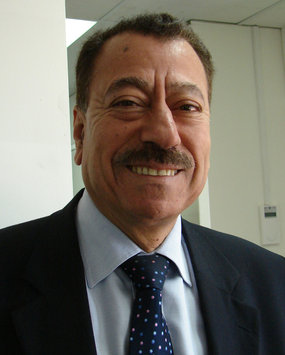
A traditional Arab media operation, according to Abdel Bari Atwan, is “characterised by editorial interference from the owners, slavishness to social hierarchies, backstabbing and nepotism.” It goes without saying that all the Arab local-national press, TV and radio stations are controlled by their respective regimes. Only in the pan-Arab sphere, beyond the control of any single regime, is there a possibility of anything better. Yet of the pan-Arab newspapers, ash-Sharq al-Awsat and al-Hayat are owned by different branches of the Saud family dictatorship, while the smaller-circulation al-Arab is part of the Libyan regime’s propaganda apparatus. Even after the satellite revolution, pan-Arab TV remains tame and partial, fattened and diluted by Gulf money, often providing its viewers a contradictory diet of Islamic and American-consumerist bubble gum. The second most famous channel in the Arab world, al-Arabiyya, is yet another mouthpiece for the Sauds (during last winter’s Gaza massacre it became known amongst Arabs as al-Ibriyya, or ‘the Hebrew’). The most famous channel, al-Jazeera, is of course the model that broke the mould. Its challenging reporting and inclusion of all sides in open debate has had a revolutionary effect on the Arabs.

Al-Jazeera’s print equivalent is the London-based al-Quds al-Arabi, founded in 1989, seven years before al-Jazeera. It may not have the immediate impact or mass audience of al-Jazeera (it’s banned in most Arab countries) but with its cast of excellent writers, its fearless exposure of Arab regime corruption, its scoops (al-Qa’ida chooses to communicate with the world through its pages), its renowned culture section, and its refusal to bury news from Palestine behind the football results, al-Quds al-Arabi is indispensable. Rather than backstabbing, its staff have sometimes worked for no pay to keep the operation afloat. Its founder, editorialist and editor-in-chief Abdel Bari Atwan is as passionate and articulate in speech as on the page, and is admired by the Arabs for his call-a-spade-a-spade style on those TV channels which dare to host him, usually al-Jazeera Arabic and Hizbullah’s al-Manar. Atwan’s “The Secret History of al-Qa’ida” is a book-length account of his meeting with Osama bin Laden and of the development of the al-Qa’ida network. Now Atwan has written an autobiographical memoir titled with a line from a Mahmoud Darwish poem, “A Country of Words.”

Continue reading “A Country of Words”

Inviting David Brooks to My Class

The Zionists are prisoners of a bad dream: they must first free themselves, break free from the prison in which they can only play the part of tormentors, if they and especially their Palestinian victims are to live normal lives.

M. Shahid Alam

On January 12, the New York Times carried an article by David Brooks on Jews and Israel. It so caught my eye, I decided to bring its conservative author to my class on the economic history of the Middle East. I sent my students the link to this article, asked them to read it carefully, and come to the next class prepared to discuss and dissect its contents.

My students recalled various parts of the NYT article but no one could explain its substance. They recalled David Brooks’ focus on the singular intellectual achievements of American Jews, the enviable record of Israeli Jews as innovators and entrepreneurs, the mobility of Israel’s innovators, etc. One student even spoke of what was not in the article or in the history of Jews – centuries of Jewish struggle to create a Jewish state in Palestine.

But they offered no comments about Brooks’ motivation. Why had he decided to brag about Jewish achievements, a temptation normally eschewed by urbane Jews. In my previous class, while discussing Edward Said’s critique of Orientalism, I had discussed how knowledge is suborned by power, how it is perverted by tribalism, and how Western writers had crafted their writings about the Middle East to serve the interests of colonial powers. Not surprisingly, this critique had not yet sunk in.

I coaxed my students, asking them directly to explore if David Brooks had an axe (or more than one) to grind. Was there an elephant in the room they had missed? What was the subtext of the op-ed?

Continue reading “Inviting David Brooks to My Class”

An Interview with Joe Sacco

From the excellent Ctrl.Alt.Shift Unmasks Corruption. An interview with Joe Sacco the acclaimed author, illustrator, journalist and historian. Sacco is the author of several award-winning works of graphic journalism, including Palestine, Safe Area Gorazde, War Junkie, and The Fixer.

Continue reading “An Interview with Joe Sacco”