Obama and the measure of Lincoln

In yet another insightful interview with Radio Open Source, Yale professor David Bromich analyzes the political failings of the US president Barack Obama. He observes:

David Bromwich

At a time of crisis you hope for something more than proficiency of maneuver. You hope for consistency of explanation and the kind of reassurance that can come to people in a democracy from actually learning from somebody who is leading them where they are headed. … It’s not beyond a capable president actually to give a lesson in history. What real leadership comes from is finding the principle and the action that goes with it on which people could agree though they don’t yet realize that they would agree, what they most care about it even though it hasn’t yet found words, what their longterm interests, not their present opinions are… [Leadership comes from] deciding what the commitments are, standing to them, and then repeating, phrase by phrase and precept by precept, what it is you believe and how B follows A and C follows B.

The Straight Line from the Seminole Wars to the War on Terror

from Indian Country Today Media Network, via Antiwar.com

Did the GWOT start with him?

by Gale Courey Toensing

Andrew Jackson’s illegal and heavily censured actions during the First Seminole War in 1817 were cited recently during the military trial of a Guantanamo prisoner and was used as a precedent for the $690 billion defense authorization bill recently passed by Congress that would give the president unilateral authority to wage war at home or abroad and detain anyone suspected of terrorism or “providing material aid to terrorism” anywhere in the world, indefinitely and without trial. Although there is no direct connection between the Guantanamo case and that legislation, the right of free speech is threatened by both and raises fears that the legislation could be used to squelch any kind of dissension or resistance to government policies or actions. And coming on the heels of the government’s use of “Geronimo” as the code name for Osama bin Laden, the man who epitomized global terrorism, indigenous peoples fear that the legislation could be used against them for asserting their right to self determination, sovereignty and the protection of their lands and resources against exploitation by governments or corporations.

continue

Photo Chronicle of Mexico’s Caravan for Peace with Justice and Dignity

by Kristin Bricker and Santiago Navarro

This article first appeared at Upside Down World.

On June 4, poet Javier Sicilia and farmer Julian LeBaron led a 500-person caravan through what one major Mexican magazine referred to as the country’s “route of blood.” Over the following week, the caravan passed through some of the most dangerous places in Mexico: Michoacan, San Luis Potosí, Zacatecas, Durango, Coahuila, Nuevo Leon, and Chihuahua. The caravan ended on June 10 in Ciudad Juarez, which Sicilia dubbed Mexico’s “epicenter of pain” because just over one-fifth of the country’s homicides occurred in that city in 2010.

One of the caravan’s principle goals was for drug war victims to network and organize. The caravan collected victims’ stories and contact information in every town it visited.

Dozens of drug war victims from across the country, such as Nepomuceno Moreno Nuñez from Ciudad Obregón, Sonora, travelled with the caravan to meet other victims and share their stories.

Moreno Nuñez (above, right, shown hugging Javier Sicilia) wants to find his son, 18-year-old Jorge Mario Moreno León, who was kidnapped and disappeared along with five friends on July 1, 2010.

Moreno Nuñez spoke with the kidnappers when they answered Jorge Mario’s cell phone. They told him that the young men were kidnapped because they collaborated with the Beltran Leyva criminal organization. “They made a mistake,” laments Moreno Nuñez. “They said that one of the boys [Mario Enrique Diaz Islas] was the son of an accomplice to the Beltran Leyvas. It’s not true.” In reality, Mario Enrique’s father, Mario Diaz Garduño, was the director of the Hermosillo municipal Health Department.

Continue reading “Photo Chronicle of Mexico’s Caravan for Peace with Justice and Dignity”

Dressing Like a Terrorist

Like many others, I was dismayed to learn of the two imams wearing traditional Muslim garb who were forcibly removed from an airplane that was to carry them to a conference on Islamophobia.  The passengers who were removed from a Delta/ASA flight in Memphis, Masudur Rahman and Mohamed Zaghloul, apparently frightened other passengers and upset one of the pilots, who refused to fly with them on board.  Not everybody was dismayed, however.  The Delta/ASA pilot and the frightened passengers have received support from numerous voices among the American commentariat.

The situation was a clear-cut case of ethnic profiling.  On this everybody should agree.  Some of those who support the pilot’s action want to disclaim their support of profiling, but such a desire is dishonest.  People need to accept the realities of the positions they express, even if those positions attach to descriptors that have negative connotations.  If you support the pilot, you are supporting an instance of ethnic profiling.  Either accept that fact or develop a different opinion.

I have been reading commentaries about the case with much interest.  One argument in particular keeps arising:  the notion that Rahman and Zaghloul deserve what happened to them because they dressed like terrorists.  The reasoning goes like this:  Muslims commit terrorism; Muslims look a certain way; a certain look thus portends the possibility of terrorism.  In short, those who appear to be Muslim are worthy of extra scrutiny because they are more likely to be terrorists than other people.

Continue reading “Dressing Like a Terrorist”

The Unmaking of Israel’s Soul and the Making of Israel’s Dead Soul

I wrote the following piece about my new book Israel’s Dead Soul at the request of Temple University Press for its blog.

I am, of course, often asked about the title. I cannot complain about the inquiries, though. When one chooses to title a book Israel’s Dead Soul, he or she can’t rightly expect polite nodding or painfully feigned interest when that title is uttered.

It is good to give a book a title that provokes reaction, though in this case the reaction has a decent probability of being negative. But I relish the opportunity to discuss Israel’s dead soul, which is why I named my book Israel’s Dead Soul. There needs to be discussion, much more discussion, of the role a mythologized Israel plays in American political and intellectual life.
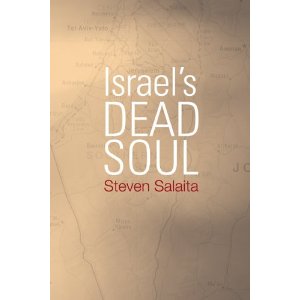
The best way to understand what I mean by the title is to read the book, but I offer some thoughts on it here. There is no false advertising in the title: I have no affinity for Israel or Zionism, and I wanted to make that clear for anybody picking up the book, no matter his or her politics. The adjective “dead” intimates finality and thus my belief that Zionist settler colonization is unsustainable. The title also illuminates a profound skepticism I have about the propensity of people to imagine nation-states as anthropomorphic entities.

This happens in lots of ways: by referring to nation-states by the pronoun “she,” by conceptualizing their bureaucracies and policing mechanisms as living organisms, and by endowing those nation-states with souls. Nation-states, however, do not exist to do humane things; they are invented replicas of elite societies that steadfastly facilitate their enrichment. I don’t believe that Israel is unique among nation-states in being soulless. All of them share this distinction.

I do believe Israel is unique in the level of anguish its citizens and supporters express about its soul. My book quotes a wide variety of writers and politicians who wring their hands about Israel’s declining soul or the potential Israel has, if its behavior doesn’t improve, to lose its soul altogether. The point is that Israel once stood for something noble and compassionate and that its foolishness or arrogance or shortsightedness has separated it from its better self.

I find this type of reasoning unappealing and unconvincing. It belongs to the same rhetorical tradition we see in the United States, where commentators and politicians lament actions such as torture or extrajudicial killing and implore our leaders to restore the true spirit of America. The founding of the United States, of course, was accompanied by chattel slavery and the dispossession of indigenous peoples. Israel likewise has no noble or compassionate origin: it was founded on the displacement of 700,000 Palestinians and immediately consecrated juridical racism that would exclude Palestinians from the full rights of nationality.

By acknowledging the violence central to the founding of Israel (and other nation-states) we can question the moral commonplaces of jingoism that usually accompany nationalistic celebration. If Israel has a corrupted soul, then it can presumably vanquish corruption and restore its endemic purity. This would be possible, however, only if Israel ceased to exist as an ethnocentric nation-state. Such is the irony of any desire to restore the nation-state to honor. The only way to vanquish the impurities of the nation-state is to vanquish the nation-state.

I reject, in all their manifestations, the ideological vocabularies of exclusionary belonging so fundamental to discourses of Zionism. To mourn Israel’s dilapidated soul is essentially to accommodate the logic of ethnonationalism. In any case, as long as that dilapidated soul belongs to Israel it has no chance of resurrection.

For more information about Israel’s Dead Soul, please click here

Want to make your war a “Just War”? A quick how-to, with help from WikiLeaks.

War is hell, war is pain and sorrow–unless of course it’s a Just War which is noble, heroic, every true Christian’s blessed jihad, and if you can swing it, fully authorized by the UN Security Council.  Even if Just Wars both ancient (say, the Albigensian crusade) and modern (the starvation of thousands of Iraqis by UN Security Council-authorized sanctions) have been unspeakably nasty, Just Wars are still at least Just, so what’s not to like?

cluster-bombs.jpg
These cluster bombs are just.

There are two ways to make your war a Just War, with all the fringe benefits.  Please read carefully.

First, convince the world that the war is just by invoking the UN Charter and getting Security Council authorization.   The law involved is less straightforward than the Scholastic neo-Aristotelianism that used to justify Just Wars, so you’ll be wanting to hire some lawyers.  Less intelligent presidents will put angry anti-diplomats like John Bolton on the task, but cannier ones will hire smoother jurists like Harold Koh and Samantha Power to make the case in the dulcet tones of humanitarian NGOese.  This is the preferred way of making a war Just nowadays, most likely a matter of supply and demand, as there’s no shortage of secular casuists graduating from the top law schools, and the US Department of Defense has 15,000 lawyers on hand.

The second way to make your war a Just War is to get the Pope to declare it so, or at least not denounce it as an unjust war.  This may sound self-consciously retro, but new WikiLeaks disclosures reveal that it has never truly gone out of style.  The story Continue reading “Want to make your war a “Just War”? A quick how-to, with help from WikiLeaks.”

Ecuador expels U.S. ambassador

Heather Hodges

The following press release is from the Center for Economic and Policy Research (CEPR). Mark Weisbrot is co-writer with Tariq Ali of the Oliver Stone film “South of the Border“.

A declaration by the Ecuadorian government that U.S. Ambassador Heather Hodges is “persona non grata” and must leave Ecuador as soon as possible should not come as a surprise, Mark Weisbrot, Co-Director of the Center for Economic and Policy Research, said today. Weisbrot noted that the expulsion follows recent troubling revelations in cables released by Wikileaks that describe U.S. government co-ordination with Colombia over a public relations strategy to attempt to link Ecuadorian President Rafael Correa to the Colombian guerrillas the FARC.

“The Obama Administration doesn’t seem to know how to have normal diplomatic relations with democratic, left-of-center governments in the hemisphere,” Weisbrot said. He noted that there was a trend – well documented through U.S. government cables, funding disclosures, and other information – of attempts to undermine governments in Bolivia, Brazil, Honduras, Venezuela, and other countries.
Continue reading “Ecuador expels U.S. ambassador”

The muzzling of Israel critics in European universities

David Cronin, author of the recently released Europe’s Alliance with Israel: Aiding the Occupation, writes in his latest piece for Mondoweiss:

If imitation is the best form of flattery, then the activists behind Israeli Apartheid Week have been paid an immense tribute. As students belonging to Palestine support groups across Britain held events to mark the annual March event, they learned of a rival initiative. A network of on-campus Zionist societies have declared their own Israeli Awareness Week over the same period.

The awareness week has relied heavily on gimmicks to try and counter impressions that Israel has a war addiction. Stalls staffed by visiting Israeli students have offered sugary delights labelled “Peace of Cake”; signatures have been collected for a “we support a two-state solution” petition.

Continue reading “The muzzling of Israel critics in European universities”

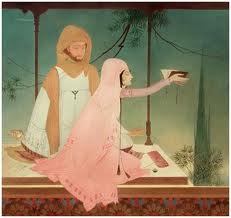
4. Ghazal from Ghalib

translated by M. Shahid Alam

Only a few come back to us in roses and tulips.
Many more lie buried, dust on their sleeping eyelids.

By day, the daughters of Pleiades play out of sight.
At night, they lift their veils in ravishing display.

My eyes pour blood on this night of savage partings:
two lamps I have lighted to sanctify love’s sorrow.

I will make them pay for the years of torment, if
by chance, these darlings play houris in paradise.

He shall have sleep, perfumed air, silken nights,
if you untie your jasmine-scented hair in his arms.

I have no use for your coy approaches to the divine.
Past your schools and creeds, we worship God alone.

If Ghalib were to keep this up (he cries inconsolably),
every man, woman, child will soon be leaving town.

first published in Prairie Schooner, Spring 2011

For more ghazals from Ghalib, click here.

M. Shahid Alam is professor of economics at Northeastern University. He is the author of Israeli Exceptionalism (Palgrave, 2009) and Challenging the New Orientalism (IPI, 2007). Visit his website at http://qreason.com. Write to him at alqalam02760@yahoo.com.