Armed US drones have been blamed for more than 300 missile attacks in seven years in Pakistan’s tribal areas. Residents of Pakistan’s tribal areas say that they feel terrorised by the strikes, and doctors say that those who survive them often suffer from post-traumatic stress disorder (PTSD). Al Jazeera’s Kamal Hyder met with the survivors of one such strike at a hospital in the Pakistani city of Peshawar.
Category: US Foreign Policy
Kargas
The following is cross-posted from Lobelog.com.
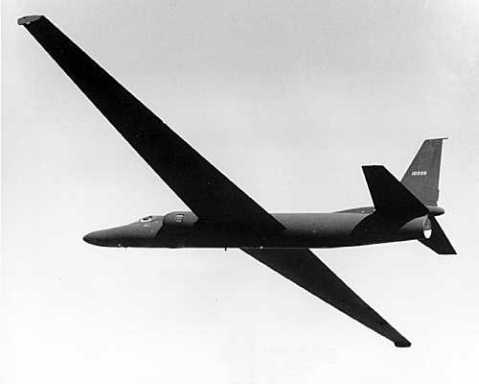
Iran’s Zahedan airport is located on a road named for Allama Iqbal, the great Indian philosopher whom Pakistan after partition adopted as its national poet. The shaheen, or eagle, features prominently in Iqbal’s poetry, as a symbol of vigour, dignity and daring. It is contrasted against the figure of the kargas, or vulture, which represents cunning, cowardice and ignobility. It is the latter appellation that the region frequently applies to the CIA drones which today menace the skies from Waziristan, Kandahar to Zahedan. But shaheen or kargas, they are both ferocious; and it is a feat to capture either. Small wonder then, that some in Iran see cause for celebration in the capture of CIA’s RQ-170 Sentinel drone, a stealth surveillance craft manufactured by Lockheed Martin.
This is not the first time the CIA has delivered one of its most advanced aircraft for inevitable reverse engineering to its putative enemy. On April 9, 1960, people at the Zahedan airport watched anxiously as an aircraft with unusually wide wings approached from the north-east. The Lockheed U-2C was on a top-secret spying mission for the CIA, but its target was not Iran. Indeed, it was coming in to land after being chased by several fighter planes. Over the previous 8 hours, the plane had photographed four strategic Soviet military sites from an altitude of 70,000 feet, well out of the reach of the Russian MiGs and Sukhois. It embarked on its mission from the Badaber air force base 10 miles to the south of Peshawar.
The Terrible Beauty of Wikileaks
The following appears in The Arabs Are Alive, edited by Ziauddin Sardar and Robin Yassin-Kassab.

On 7 December 2010, Tunisian despot Zine el Abidine Ben Ali’s regime blocked internet access to the Beirut daily Al-Akhbar for publishing a US embassy cable which painted the dictator, his wife and her family in a deeply unflattering light. In the July 2009 cable, US ambassador Robert Godec had accused Ben Ali’s regime of having ‘lost touch with the Tunisian people…[tolerating] no advice or criticism whether domestic or international,’ and of increasingly relying ‘on the police for control and focus on preserving power.’ The cable mentioned the growing ‘corruption in the inner circle,’ particularly around first lady Leila Trabelsi and her family, whom it said the Tunisians ‘intensely dislike, even hate.’ It finally concluded that ‘anger is growing at Tunisia’s high unemployment and regional inequities. As a consequence, the risks to the regime’s long-term stability are increasing.’
Ten days later in Sidi Bouzid, 26-year-old street vendor Muhammad Bouazizi immolated himself in front of the local municipality building after his vegetable cart was confiscated by Faida Hamdi, a female municipal official who had then slapped him, spat in his face, and insulted his dead father. Anguished friends and sympathizers soon took to the streets to protest, and Youtube, Facebook and Twitter helped spread the fire further—the long deferred anger of the Tunisians had finally erupted. On 4 January 2011, when Bouazizi succumbed to his wounds, the 5,000 mourners at his funeral were heard chanting, ‘Farewell, Mohammed, we will avenge you. We weep for you today. We will make those who caused your death weep.’ Ten days later, as the protests reached a crescendo, Ben Ali and his wife hoarded their loot and decamped to Saudi Arabia. Some suggested that Wikileaks had drawn first blood.
Anatol Lieven: how to end the US dust-up with Pakistan
Anatol Lieven, author of the excellent Pakistan: A Hard Country, on Christopher Lydon’s indispensable Radio Open Source, discussing the recent dust up between Pakistan and the US.
Anatol Lieven is explaining how the so-called allies in the so-called War on Terror have come to pot-shotting each other on the Pakistani side of the border with Afghanistan. In the Financial Times last May (“How American folly could destroy Pakistan“) Lieven was warning of the perverse logic of confrontation in US policy. The killing last weekend of 24 Pakistani soldiersin a NATO air strike for which President Obama is refusing to apologize can be taken as confirmation of the hazard. Ever since the US Navy swoop on OBL early in May, the risk in Lieven’s eyes was that the US would overplay its hand with demands on the thoroughly alienated Pakistani Army. The American demand-too-far (Lieven is saying emphatically today) is that the Pakistani Army go to war on the Taliban home bases in the Pashtun tribal wilderness. That demand cannot, will not, be met: (a) because the Taliban is a big part of the network that Pakistan counts on to protect and project its interest in Afghanistan when the US forces shrivel, then leave; and (b) because the big majority of Pakistanis — army, elite and masses — see the Taliban in Afghanistan as a legitimate resistance force fighting foreign occupation, like the mujahedeen who fought the Soviets, or Communist guerillas who fought Nazis in Europe. When Pakistan under Pres / Gen Musharraf undertook a half-way offensive against the Taliban in the border wilderness, “they set off an Islamist rebellion inside Pakistan which continues to this day… The Pakistanis do have a case: thanks to the U.S., they have a civil war inside Pakistan which has claimed far more Pakistani lives than Americans killed on 9.11. … We keep talking about wanting to support democracy. Well, the democratic majority in Pakistan wants us to go to hell.”
Continue reading “Anatol Lieven: how to end the US dust-up with Pakistan”
Jimmy Carter in conversation with Jon Snow
On 5 October 2011, Jon Snow spoke to Jimmy Carter on a wide range of issues including religion, race and politics.
Support Today’s Freedom Riders by Ending U.S. Support for Israeli Apartheid
by Josh Ruebner
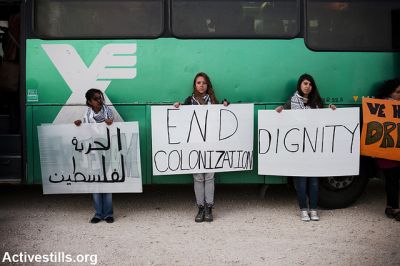 Fifty years ago, Freedom Riders braved beatings and arson by supremacists intent on maintaining apartheid in the Jim Crow South. By challenging segregated transportation through nonviolent action, these African American and white activists set in motion a process that ultimately dismantled segregation. While the struggle for racial justice continues, at least this shameful chapter of formal racial discrimination is history.
Reflecting on this anniversary, Rep. John Lewis, one of the main organizers of the Freedom Rides, noted that they “changed America. Before the movement…people were afraid….That fear is gone. People can walk, live, work and play with a sense of dignity and a sense of pride.”
Fired by the same drive for dignity and pride, six Palestinian nonviolent activists boarded last week an Israeli settler bus to draw the world’s attention to the segregated transportation systems and apartheid conditions they endure living under Israel’s brutal 44-year military occupation of the Palestinian West Bank and East Jerusalem. Channeling Frederick Douglass, spokesperson Hurriyeh Ziadah asserted, “Our rights will not voluntarily be handed to us, so we are heading out to demand them.
While attempting to ride from the occupied West Bank into occupied East Jerusalem, nonviolently demanding their right to benefit from infrastructure created by Israel on their land, Israeli military stopped the bus, physically removed and arrested the riders who held signs reading “Freedom,” “Dignity,” and “We Shall Overcome.”
Continue reading “Support Today’s Freedom Riders by Ending U.S. Support for Israeli Apartheid”
Maher Arar on the Syrian Conflict
Maher Arar, who was rendered to Syria by the CIA and tortured by the regime on behalf the United States, speaks about the conflict in Syria.
Obama’s drone war claims another victim
by Clive Stafford Smith

LAST Friday, I took part in an unusual meeting in Pakistan’s capital, Islamabad.
The meeting had been organized so that Pashtun tribal elders who lived along the Pakistani-Afghan frontier could meet with Westerners for the first time to offer their perspectives on the shadowy drone war being waged by the Central Intelligence Agency in their region. Twenty men came to air their views; some brought their young sons along to experience this rare interaction with Americans. In all, 60 villagers made the journey.
The meeting was organized as a traditional jirga. In Pashtun culture, a jirga acts as both a parliament and a courtroom: it is the time-honored way in which Pashtuns have tried to establish rules and settle differences amicably with those who they feel have wronged them.
On the night before the meeting, we had a dinner, to break the ice. During the meal, I met a boy named Tariq Aziz. He was 16. As we ate, the stern, bearded faces all around me slowly melted into smiles. Tariq smiled much sooner; he was too young to boast much facial hair, and too young to have learned to hate.
Cornel West on the Drone war
Cornel West speaks about inequality, injustice and America’s policy of routine extrajudicial killing.
Why I “Assaulted” Defense Chief Leon Panetta
by Alli McCracken

“Assault? Who — or what — did I assault?” I asked the police officer incredulously as I sat in his office at the police station, handcuffed to the wall. “Well, looks like it was Leon Panetta himself,” the officer responded as he flipped through a pile of paperwork.
Me? A 22-year-old mild-mannered peace activist, assaulted the Secretary of Defense? I had simply tried to tell him how I felt about the wars. On the morning of October 13th about 25 activists who are occupying Washington DC, as part of the nationwide occupations, went on a field trip to Congress. We wanted to attend the House Armed Services Committee hearing where Leon Panetta, the Secretary of Defense, and Martin Dempsy, Chairman of the Joint Chiefs of Staff, were testifying about “lessons learned by the Department of Defense over the preceding decade” and “how those lessons might be applied in the future in light of anticipated reductions in defense spending.” After all, these hearings are open to the public. And shouldn’t we have a say in where our money is being spent?
As a peace activist with the group CODEPINK for the past 10 months, I have done my fair share of sending letters and emails and delivering petitions to our government representatives, asking them to stop pouring trillions of our taxpayer dollars into the endless cycle of death, destruction and reconstruction halfway across the world. There are so many critical things that we could spend that money on here in America, such as education, healthcare, helping the homeless, the elderly, the disabled, the veterans.
Continue reading “Why I “Assaulted” Defense Chief Leon Panetta”
 P U L S E