by Johnny Barber
“All wars, whether just or unjust, disastrous or victorious, are waged against the child.” — Eglantyne Jebb, founder of Save the Children, 1919.
 In Kabul, the children are everywhere. You see them scrounging through trash. You see them doing manual labor in the auto body shops, the butchers, and the construction sites. They carry teapots and glasses from shop to shop. You see them moving through the snarled traffic swirling small pots of pungent incense, warding off evil spirits and trying to collect small change. They can be found sleeping in doorways or in the rubble of destroyed buildings. It is estimated that 70,000 children live on the streets of Kabul.
The big news story on CNN this morning is the excitement generated as hundreds of people line up to buy the newest iphone. I can’t stop thinking of the children sitting in the dirt of the refugee camp, or running down the path pushing old bicycle tires, or the young boy sitting next to his overflowing sacks of collected detritus. He has a deep infection on the corner of his mouth that looks terribly infected. These images contrast with an image of an old grandfather, dressed in a spotless all white shalwar kameez squatting on the sidewalk outside a huge iron gate, embracing his beautiful young grand daughter in a huge hug, each smiling broadly, one of the few moments of joy I have witnessed on the streets of Kabul.
In Afghanistan, one in five children die before their 5th birthday, (41% of the deaths occur in the first month of life). For the children who make it past the first month, many perish due to preventable and highly treatable conditions including diarrhea and pneumonia. Malnourishment affects 39% of the children, compared to 25% at the start of the U.S. invasion. 52% don’t have access to clean water. 94% of births are not registered. The children are afforded very little legal protection, especially girls, who are stilled banned from schools in many regions, used as collateral to settle debts, and married through arranged marriages as young as 10 years old. Though not currently an issue, HIV/AIDS looms as a catastrophic possibility as drug addiction increases significantly, even among women and children. Only 16% of women use modern contraception, and children on the streets are vulnerable to sexual exploitation. This is why the “State of the World’s Mothers” report issued in May 2011 by Save the Children ranked Afghanistan last, with only Somalia providing worse outcomes for their children.
Continue reading “Whatever Happened to Women and Children First?”
 Don’t worry, this isn’t another article about “Social Media and the Arab Spring”. Not that it’s unimportant, but it strikes me that
 Kabul–As we step off the Turkish Air flight and walk across the dusty tarmac to the terminal, we are greeted by a large billboard. In big bold English it proclaims, “Welcome to the Home of the Brave.” It stops me in my tracks. I shake my head, thinking, “damn weird” and continue in to passport control. After waiting in a short line, I present my American passport to the guard in the booth. He doesn’t acknowledge me. He flips through the shiny new pages until he gets to the visa. He stamps it. He turns to the picture. He gives me a precursory glance and hands the passport back to me. I turn and enter Afghanistan.
 September 11, 2001 is a world historic moment, a historical signpost – “9/11” – marking more than a deadly attack, but a moment that truly changed history, one that can help us understand both the past and the present. This week marks the tenth anniversary of the 9/11 attacks. Of the memorials given, documentaries aired and news stories published this week, few will address the causes and effects of 9/11 in a way that gives a sense of the root causes, social context and contradictions that surround that moment and continue to define our present.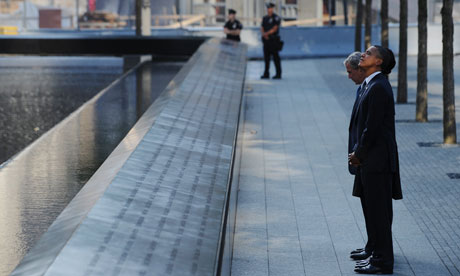

 P U L S E