Pakistan creates its own enemy

Funeral for the eight civilians killed in the Pakistani military's failed attempt to assassinate militant leader Mangal Bagh Afridi (EPA)

The is a version of my Le Monde Diplomatique article updated for the Arabic, French, German, Italian, Norwegian, and Portuguese editions. It is also on Counterpunch, December 4-6, 2009 (It also appears in the February 2010 issue of the Japanese monthly Sekai)

On the day I arrived in Peshawar mid-September, the evening stillness was broken by nine loud explosions, each preceded by the sucking sound of a projectile as it arced into Hayatabad, the suburban sprawl west of the city. Their target was a Frontier Constabulary post guarding the fence that separates the city from the tribal region of Khyber.

When I lived here seven years ago, Hayatabad hosted many Afghan refugees; those with fewer resources lived in the slums of Kacha Garhi, along the Jamrud Road to the Khyber Pass. Many established businesses here and dominated commerce and transportation in parts of the city. Some would temporarily migrate to Afghanistan in summer where it was cooler. But Peshawar was a sanctuary, as Afghanistan was perpetually at war. Now the remaining Afghans are leaving because Afghanistan feels safer. There are checkpoints all over the city, many kidnappings, and during my visit, there were at least three suicide bombings and four rocket attacks, many of them targeting Hayatabad.
Continue reading “Pakistan creates its own enemy”

Robert Greenwald on Afghanistan

AfghanRobert Greenwald of Brave New Films speaks about Afghanistan on Bob McChesney’s excellent Media Matters.

Robert Greenwald and McChesney discuss Afghanistan

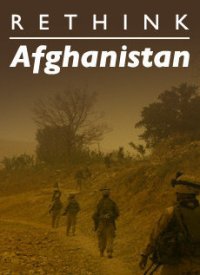
Robert Greenwald is a producer, director and political activist. Greenwald is the founder and president of Brave New Films. Under Greenwald’s direction, Brave New Films has produced a series of short political videos, including the Fox Attacks and Real McCain campaigns. Robert Greenwald’s Brave New Foundation is currently producing Rethink Afghanistan, a groundbreaking documentary being released online in real-time; the film features experts from Afghanistan, Pakistan and the U.S. discussing the United States’ flawed strategy in Afghanista

Hearts, Minds, and Dollars

POLITICS: U.S. in Pakistan’s Mind: Nothing But Aversion

Analysis by Muhammad Idrees Ahmad

With Nato supply convoys passing through the FATA region, US military hardware frequently falls into the hands of insurgents.

PESHAWAR, Pakistan, Oct 30 (IPS) – To the west of Peshawar on the Jamrud Road that leads to the historic Khyber Pass sits the Karkhano Market, a series of shopping plazas whose usual offering of contraband is now supplemented by standard issue U.S. military equipment, including combat fatigues, night vision goggles, body armour and army knives.

Beyond the market is a checkpoint, which separates the city from the semi-autonomous tribal region of Khyber. In the past, if one lingered near the barrier long enough, one was usually approached by someone from the far side selling hashish, alcohol, guns, or even rocket-propelled grenade launchers. These days such salesman could also be selling U.S. semi-automatics, sniper rifles and hand guns. Those who buy do it less for their quality—the AK-47 still remains the weapon of choice here—than as mementos of a dying Empire.

The realisation may be dawning slowly on some U.S. allies, but here everyone is convinced that Western forces have lost the war. However, at a time when in Afghanistan the efficacy of force as a counterinsurgency tool is being increasingly questioned, there is a newfound affinity for it in Pakistan.

Continue reading “Hearts, Minds, and Dollars”

Leaving Waziristan

A force of 28,000 Pakistani army personnel is at the moment conducting an operation in South Waziristan. The operation was preceded by months of aerial bombing, and as the following Al Jazeera reports show the human cost in terms of lives lost, and displacement is high. A BBC crew earlier found the refugees so outraged with the Pakistani military’s operation that they were chanting slogans in support of Hakimullah Mehsud, the new leader of the Pakistani Taliban, and Maulvi Faqir Muhammad and other TTP leaders.

Thousands flee Pakistan conflict – 22 Oct 09

Continue reading “Leaving Waziristan”

The Power of Nightmares

The 2004 Adam Curtis classic.

1. Baby It’s Cold Outside

2. The Phantom Victory

3. The Shadows in the Cave

The Irresistible Illusion

You know that things for the Western occupation of Afghanistan have reached a pretty pass when the most devastating indictment of its failures comes from a former colonial manager. Here is Rory Stewart in the London Review of Books (the world’s best publication by far ) presenting what may be the most trenchant critique of the of the US-UK occupation of Afghanistan, but as can be expected from someone who had earlier played a key role in managing the UK occupation of Southern Iraq, he limits it to the handling of the occupation.

We are accustomed to seeing Afghans through bars, or smeared windows, or the sight of a rifle: turbaned men carrying rockets, praying in unison, or lying in pools of blood; boys squabbling in an empty swimming-pool; women in burn wards, or begging in burqas. Kabul is a South Asian city of millions. Bollywood music blares out in its crowded spice markets and flower gardens, but it seems that images conveying colour and humour are reserved for Rajasthan.

Barack Obama, in a recent speech, set out our fears. The Afghan government

is undermined by corruption and has difficulty delivering basic services to its people. The economy is undercut by a booming narcotics trade that encourages criminality and funds the insurgency . . . If the Afghan government falls to the Taliban – or allows al-Qaida to go unchallenged – that country will again be a base for terrorists who want to kill as many of our people as they possibly can . . . For the Afghan people, a return to Taliban rule would condemn their country to brutal governance, international isolation, a paralysed economy, and the denial of basic human rights to the Afghan people – especially women and girls. The return in force of al-Qaida terrorists who would accompany the core Taliban leadership would cast Afghanistan under the shadow of perpetual violence.

When we are not presented with a dystopian vision, we are encouraged to be implausibly optimistic. ‘There can be only one winner: democracy and a strong Afghan state,’ Gordon Brown predicted in his most recent speech on the subject. Obama and Brown rely on a hypnotising policy language which can – and perhaps will – be applied as easily to Somalia or Yemen as Afghanistan. It misleads us in several respects simultaneously: minimising differences between cultures, exaggerating our fears, aggrandising our ambitions, inflating a sense of moral obligations and power, and confusing our goals. All these attitudes are aspects of a single worldview and create an almost irresistible illusion.

Continue reading “The Irresistible Illusion”

Obama’s bulldozer risks turning the Taliban into Pakistan’s Khmer Rouge

The caption reads Pakistan first
The caption reads "Pakistan first"

Pankaj Mishra is one of the most astute analysts of South Asian politics. In the following he argues that ‘Unless the US president can break his hardline posture, the wars in Afghanistan and Pakistan could prove his Vietnam’.

Last month Richard Holbrooke, the US state department’s special representative, met students from Pakistan’s north-west tribal ­areas. They were ­enraged by drone attacks, which – ­according to David Kilcullen, counterinsurgency adviser to General Petraeus – have eliminated only about 14 terrorist leaders while killing 700 civilians. One young man told Holbrooke that he knew someone killed in a Predator drone strike. “You killed 10 members of his family,” he said. ­Another claimed that the strikes had unleashed a fresh wave of refugees. “Are many of them Taliban?” Holbrooke asked. “We are all Taliban,” he replied.

Describing this scene in Time, Joe Klein said he was shocked by the declaration, though he recognised it as one “of solidarity, not affiliation”. He was also bewildered by the “mixed loyalties and deep resentments [that] make Pakistan so difficult to handle”. One wishes Klein had paused to wonder if people anywhere else would wholeheartedly support a foreign power that “collaterally” murders 50 relatives and friends from the air for every militant killed.

Continue reading “Obama’s bulldozer risks turning the Taliban into Pakistan’s Khmer Rouge”

Visitors and Hosts in Pakistan

Kathy Kelly
Kathy Kelly (portrait by Robert Shetterly)

The brave and tireless Kathy Kelly who founded Voices in the Wilderness to campaign against the genocidal UN-US sanctions on Iraq is presently touring the Pakistani conflict zones.Yesterday we published her moving report from the Shah Mansoor refugee camp in Swabi. Today she sent us two of her earlier dispatches which we have published below. All her future dispatches from the region will also be appearing on PULSE.

9 June 2009, Waziristan — In Jayne Anne Phillips’ Lark and Termite, the skies over Korea, in 1950, are described in this way:

“The planes always come…like planets on rotation. A timed bloodletting, with different excuses.”

The most recent plane to attack the Pakistani village of Khaisor (according to a Waziristan resident who asked me to withhold his name) came twenty days ago, on May 20th, 2009.  A U.S. drone airplane fired a missile at the village at 4:30 AM, killing 14 women and children and 2 elders, wounding eleven.

Continue reading “Visitors and Hosts in Pakistan”

Down and Out in Shah Mansoor

Refugees await uncertain fate in IDP camps

The tireless and wonderful Kathy Kelly is visiting refugee camps in Pakistan with Dan Pearson. Here is her first dispatch (Mahmood Mamdani recently told me that apparently Arundhati Roy is also in Swat these days):

In Pakistan’s Swabi district, a bumpy road leads to Shah Mansoor, a small village surrounded by farmland. Just outside the village, uniform size tents are set up in hundreds of rows. The sun bores down on the Shah Mansoor camp which has become a temporary home to thousands of displaced Pakistanis from the Swat area. In the stifling heat, the camp’s residents sit idly, day after day, uncertain about their future. They spoke with heated certainty, though, about their grievances.As soon as we stepped out of the car, men and children approached us. They had all arrived from Mingora, the main city of Swat, 15 days prior. One young man, a student, told us that bombing and shelling had increased in their area, but, due to a government imposed curfew, they weren’t allowed to leave their homes. Suddenly, the Pakistani Army warned them to leave within four hours or they would be killed. With the curfew lifted long enough for them to get out of Mingora, they joined a mass exodus of people and walked for three days before reaching this camp.

Continue reading “Down and Out in Shah Mansoor”