Resistance is fertile

John Berger’s experience at the National Gallery highlights the zeitgeist of the age of GWOT.

The novelist and art critic recalls an Easter visit to the National Gallery and a strange and violent encounter with an attendant

I was in London on Good Friday, 2008. And I decided, early in the morning, to go to the National Gallery and look at the Crucifixion by Antonello da Messina. It’s the most solitary painting of the scene that I know. The least allegorical.

In Antonello’s work – and there are fewer than 40 paintings which are indisputably his – there’s a special Sicilian sense of thereness which is without measure, which refuses moderation or self-protection. You can hear the same thing in these words spoken by a fisherman from the coast near Palermo, and recorded by Danilo Dolci a few decades ago in Sicilian Lives (1981):

“There’s times I see the stars at night, especially when we’re out for eels, and I get thinking in my brain. ‘The world is it really real?’ Me, I can’t believe that. If I get calm, I can believe in Jesus. Badmouth Jesus Christ and I’ll kill you. But there’s times I won’t believe, not even in God. ‘If God really exists, why doesn’t He give me a break and a job?’”

Continue reading “Resistance is fertile”

The Age of Might is over

‘The adventure on the high seas is a blast from the past,’ writes Geoffrey Wheatcroft. ‘The US empire now faces the impotence of conventional force’

For the family of Richard Phillips, the captain of the Maersk Alabama, his rescue by special forces was the best possible Easter present. For Americans it was an exhilarating display of American power, and for Barack Obama it was a gratifying demonstration that he isn’t the wimpish pacifist the Republicans called him.

But to a detached observer, this gung-ho adventure in the Indian Ocean is the rule-proving exception. What we have recently seen far more often is what a New York Times headline on the piracy story said last Thursday: “US power has limit”. We’re dealing, that’s to say, with one of the most important discoveries of our time: the impotence of great might.

Continue reading “The Age of Might is over”

The Red Cross Torture Report: What It Means

An important piece by Mark Danner in the New York Review of Books on the ICRC Report on the Treatment of Fourteen “High Value Detainees” in CIA Custody.

Download the text of the ICRC Report on the Treatment of Fourteen “High Value Detainees” in CIA Custody by The International Committee of the Red Cross, along with the cover letter that accompanied it when it was transmitted to the US government in February 2007. This version, reset by The New York Review, exactly reproduces the original including typographical errors and some omitted words.

When we get people who are more concerned about reading the rights to an Al Qaeda terrorist than they are with protecting the United States against people who are absolutely committed to do anything they can to kill Americans, then I worry…. These are evil people. And we’re not going to win this fight by turning the other cheek.

If it hadn’t been for what we did—with respect to the…enhanced interrogation techniques for high-value detainees…—then we would have been attacked again. Those policies we put in place, in my opinion, were absolutely crucial to getting us through the last seven-plus years without a major-casualty attack on the US….

—Former Vice President Dick Cheney, February 4, 2009[1]

1.

When it comes to torture, it is not what we did but what we are doing. It is not what happened but what is happening and what will happen. In our politics, torture is not about whether or not our polity can “let the past be past”—whether or not we can “get beyond it and look forward.” Torture, for Dick Cheney and for President Bush and a significant portion of the American people, is more than a repugnant series of “procedures” applied to a few hundred prisoners in American custody during the last half-dozen or so years—procedures that are described with chilling and patient particularity in this authoritative report by the International Committee of the Red Cross.[2] Torture is more than the specific techniques—the forced nudity, sleep deprivation, long-term standing, and suffocation by water,” among others—that were applied to those fourteen “high-value detainees” and likely many more at the “black site” prisons secretly maintained by the CIA on three continents.

Continue reading “The Red Cross Torture Report: What It Means”

Gore Vidal: ‘The Most Interesting Man in the World’

Gore Vidal with Bill Maher:

The whip-smart and ever-sly Gore Vidal visited “Real Time” on Friday, giving his historical and sometimes hysterically funny take on the state of the United States. He also revisited a few key moments from his personal history, illustrated by some priceless archival footage found by Bill Maher’s crack research team. Is it too soon to make an Amelia Earhart joke? It’s not too late to make one about Sarah Palin, apparently.

Continue reading “Gore Vidal: ‘The Most Interesting Man in the World’”

Israel’s Racist in Chief

Chris Hedges on Israel’s Racist in Chief Avigdor Lieberman.

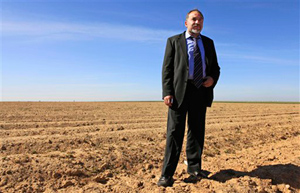
Israel’s new foreign minister, Avigdor Lieberman, stands in a field just outside the Gaza Strip. Lieberman’s right-wing Yisrael Beiteinu Party had an impressive showing in Israel’s recent election, campaigning with the slogan “Without loyalty, there is no citizenship.”

It was unthinkable, when I was based as a correspondent in Jerusalem two decades ago, that an Israeli politician who openly advocated ethnically cleansing the Palestinians from Israeli-controlled territory, as well as forcing Arabs in Israel to take loyalty oaths or be forcibly relocated to the West Bank, could sit on the Cabinet. The racist tirades of Jewish proto-fascists like Meir Kahane stood outside the law, were vigorously condemned by most Israelis and were prosecuted accordingly. Kahane’s repugnant Kach Party, labeled by the United States, Canada and the European Union as a terrorist organization, was outlawed by the Israeli government in 1988 for inciting racism.
Continue reading “Israel’s Racist in Chief”

Boycott the Independent on Sunday

The paper blames the dead victim Ian Tomlinson. No person with a shred of decency should buy or subscribe to Independent on Sunday. If you want to read Robert Fisk or Patrick Cockburn’s reports, do so online. Don’t waste your money on this pseudo-liberal, conformist shit-rag. Editor-at-Large Janet Street-Porter writes an execrable apologia for police brutality in today’s paper where she warns readers that ‘before we put the police in the dock, it might be worth considering what Mr Tomlinson was doing that night, and what state of mind he might have been in’. The situation, she tells us, is ‘a great deal more complicated’.

But what exculpatory evidence does she proffer?

Mr Tomlinson was an alcoholic who lived in a bail hostel around the corner from me in the City of London. He’d tried and failed to stay away from booze, but I make no judgement about that [MIA: What is the relevance, then, of this information to the case at hand?]…Knowing that he was an alcoholic is critical to understanding his sense of disorientation and his attitude towards the police, which might on first viewing of the video footage, seem a bit stroppy.[MIA: So she is making a judgment about that; worse, she feels qualified to pronounce on Tomlinson’s ‘attitude’ from the mere seconds of available footage]… Witnesses say Mr Tomlinson appeared to be drunk, he wasn’t coherent and couldn’t move very well… It had been a long and trying day for the police. Mr Tomlinson wound them up when he didn’t get out of the way. [MIA: Perhaps it had also been ‘a long and trying day’ for Tomlinson and the police wound him up when they ‘didn’t get out of the way’, but this tool is only willing to give the perpetrator the benefit of a doubt]

In short, Tomlinson was asking for it. Not least, because he was a down-and-outer who was ‘wearing a Millwall shirt, smoking a cigarette, and he’d had a few drinks’. Street-Porter inverts the demands of homicide investigation in focusing on the actions and the state of mind of the victim rather than the perpetrator. And she does all that in the guise of actually standing up for the little guy. Her headline blares that ‘Tomlinson was no saint’. Presumably one has to be a saint now to earn immunity from the Police’s abuses of authority.

I would urge all readers to write to the Independent and express your disapproval in the strongest terms possible. I would also encourage other bloggers to highlight this issue and to help end the media’s complicity with the progressive erosion of civil liberties.

This odious creature must feel the heat. She is sick.

letters@independent.co.uk
editor@independent.co.uk

Authority And The Individual

bertrandrussellAuthority and the Individual is a Reith lecture given by Bertrand Russell in 1948.  The text of this lecture happens to be a favourite book of mine and I was glad that the BBC put the original audio online (even if it’s only the first two parts of the series).  In his own words “The fundamental problem I propose to consider in these lectures is this: how can we combine that degree of individual initiative which is necessary for progress with the degree of social cohesion that is necessary for survival?”

Authority and the Individual (56:37): MP3

Which is more important, freedom or order? In Authority and the Individual, the first of the BBC’s famous Reith lectures, Russell tackles what is still one of the most hotly debated issues of the twentieth century: the conflict between law, order and authority and the rights of each individual man and woman.

US Drones have killed 687 Innocents

Amir Mir reports in The News that the 60 US drone attacks in Pakistan have killed 687 civilians for the 14 al-Qaeda suspects they were targeting. If you’ve ever wondered why so-called ‘human rights’ groups are treated with such scepticism (if not disdain) outside the US and EU, see this statement from a New York Times report on the drone attacks: “Marc Garlasco, a former military targeting official who now works for Human Rights Watch, the international advocacy group, said the drones had helped limit civilian casualties in Afghanistan and Iraq, where the Air Force uses them to attack people laying roadside bombs and to attack other insurgents.”

LAHORE: Of the 60 cross-border predator strikes carried out by the Afghanistan-based American drones in Pakistan between January 14, 2006 and April 8, 2009, only 10 were able to hit their actual targets, killing 14 wanted al-Qaeda leaders, besides perishing 687 innocent Pakistani civilians. The success percentage of the US predator strikes thus comes to not more than six per cent.

Figures compiled by the Pakistani authorities show that a total of 701 people, including 14 al-Qaeda leaders, have been killed since January 2006 in 60 American predator attacks targeting the tribal areas of Pakistan. Two strikes carried out in 2006 had killed 98 civilians while three attacks conducted in 2007 had slain 66 Pakistanis, yet none of the wanted al-Qaeda or Taliban leaders could be hit by the Americans right on target. However, of the 50 drone attacks carried out between January 29, 2008 and April 8, 2009, 10 hit their targets and killed 14 wanted al-Qaeda operatives. Most of these attacks were carried out on the basis of intelligence believed to have been provided by the Pakistani and Afghan tribesmen who had been spying for the US-led allied forces stationed in Afghanistan.

The remaining 50 drone attacks went wrong due to faulty intelligence information, killing hundreds of innocent civilians, including women and children. The number of the Pakistani civilians killed in those 50 attacks stood at 537, in which 385 people lost their lives in 2008 and 152 people were slain in the first 99 days of 2009 (between January 1 and April 8).

Continue reading “US Drones have killed 687 Innocents”

Obama and habeas corpus — then and now

Glenn Greenwald shows that Obama is worse than Bush on state secrets.

It was once the case under the Bush administration that the U.S. would abduct people from around the world, accuse them of being Terrorists, ship them to Guantanamo, and then keep them there for as long as we wanted without offering them any real due process to contest the accusations against them.  That due-process-denying framework was legalized by the Military Commissions Act of 2006.  Many Democrats — including Barack Obama — claimed they were vehemently opposed to this denial of due process for detainees, and on June 12, 2008, the U.S. Supreme Court, in the case of Boumediene v. Bush, ruled that the denial of habeas corpus rights to Guantanamo detainees was unconstitutional and that all Guantanamo detainees have the right to a full hearing in which they can contest the accusations against them.

In the wake of the Boumediene ruling, the U.S. Government wanted to preserve the power to abduct people from around the world and bring them to American prisons without having to provide them any due process.  So, instead of bringing them to our Guantanamo prison camp (where, the U.S. Supreme Court ruled, they were entitled to habeas hearings), the Bush administration would instead simply send them to our prison camp in Bagram, Afghanistan, and then argue that because they were flown to Bagram rather than Guantanamo, they had no rights of any kind and Boudemiene didn’t apply to them.  The Bush DOJ treated the Boumediene ruling, grounded in our most basic constitutional guarantees, as though it was some sort of a silly game — fly your abducted prisoners to Guantanamo and they have constitutional rights, but fly them instead to Bagram and you can disappear them forever with no judicial process.  Put another way, you just close Guantanamo, move it to Afghanistan, and — presto — all constitutional obligations disappear.

Continue reading “Obama and habeas corpus — then and now”

‘Fallujah never leaves my mind’

This week marks the 5th anniversary of the First Battle of Fallujah. By the end of the second attack on the city in November 2004 hundreds of civilians were slaughtered and 60-70% of the city reduced to rubble. Operation Phantom Fury marked one of the darkest moments in the history of the occupation of Iraq – which explains why it has been so carefully dispatched down Orwell’s Memory Hole with the aid of the complicitous silence of the free press. “Laith Mushtaq was on of only two non-embedded cameramen working throughout the April 2004 ‘battle for Fallujah’ in which 600 civilians died. Five years on, he recounts the events he witnessed and filmed.”

“What you saw on your TV sets at home reflects only ten per cent of the reality. Also, if you watch those pictures at home, you can change the channel.

But we were in the middle. We smell. We feel, see, and touch everything. We could touch the bodies, but we couldn’t change the channel. We were the channel.

When I think of Fallujah, I think of the smell. The smell was driving me crazy. In a dead body, there is a kind of liquid. Yellow liquid. The smell is disgusting, really. It sticks in your nose. You cannot eat anymore.

Continue reading “‘Fallujah never leaves my mind’”