A History of Significant Moments

How many Britons are aware of the British-Iraq war of May 1941? Not many. Yet such past wars are the producers of today’s reality. People in Iraq remember. If Westerners don’t remember the past they will inevitably fail to understand the present moment.

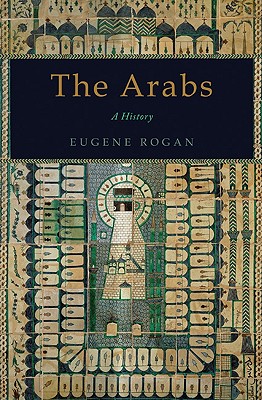
The urge to remind the reader so as to better contextualise the present is the laudable motive energising Eugene Rogan’s “The Arabs. A History,” which covers the last five hundred years.

The history starts in 1516 with the Ottoman defeat of the Mamluk slave-elite, the regime which in previous centuries had repelled Mongols and Crusaders from the Arab heartlands. The Mamluks weren’t Arabs, but they’d ruled from Arab capitals. Now power moved to Istanbul, which makes the moment a good place to begin. From the 1516 collapse in Cairo until the present day, many key decisions governing Arab life have been made in foreign cities. Rogan calls the process “the cycle of subordination to other people’s rules.”

In the early years, Ottoman rule “in the Arab provinces was marked by great diversity and extensive autonomy.” Sulayman’s perspicacious laws, public building projects and reasonable prosperity followed. But the global centre of gravity was shifting, and the long decline set in.

Continue reading “A History of Significant Moments”

The Secret Iraq Files

UPDATE: See part II of Al Jazeera’s Secret Iraq Files below. Also see Part 1 and Part 2 of Democracy Now‘s interview with Julian Assange, and Daniel Ellsberg on why he supports Wikileaks.

The Wikileaks war logs present irrefutable evidence of the murder, torture and rape which has been occuring for the past seven years in Iraq. However, it is not clear why it has chosen to collaborate with the dubious Iraq Body Count which for years has been providing a convenient underestimate of Iraqi casualties to war supporters.

Continue reading “The Secret Iraq Files”

“Tell them to come to Afghanistan and make friends”

by David Smith-Ferri

Editor’s Note: American peace activists Kathy Kelly, Jerica Arents and David Smith-Ferri are part of a 3 person delegation currently travelling in Afghanistan. Find more entries from their travelogues on PULSE.

Again and again in this isolated Afghan province, when visiting Afghan people in their homes or when talking with members of the Afghan Youth Peace Volunteers (AYPV), we have heard this message: “We want to know the people of the world, and we want the world to know that we are human beings, not animals.”

On our first night in Bamiyan, we joined the AYPV at a restaurant on the main street in town. The restaurant, unlike those I am accustomed to visiting, served groups of customers in separate, rooms. So we walked down an alley, around the back of the restaurant, up a steep flight of metal stairs to a narrow landing which opened onto several small, windowless rooms. Inside one of them we arranged ourselves as comfortably as possible on the floor and along the walls, eleven Afghan youth and three Americans.

At the outset of the conversation, fourteen-year-old Ali asked us, “How do Americans know we are bad?” The question burst out of him, without preamble, as though he’d been carrying it for years, waiting for this opportunity. He followed it with a statement: “We want Americans to know we are not animals.” Later, while he held my arm and walked me home in the dark, I asked Ali about this belief regarding American perceptions of Afghan people. “Why else would they bomb us?” he said. There wasn’t anything more to say.

Today, two days later, we again gathered for a shared meal, this time in twenty-year-old Moh’d (short for Mohammad) Jan’s home, in a village outside Bamiyan. We piled into a van, and drove out over rocky, pitted, unpaved mountain roads, following the fickle course of a narrow river. High, red-rock cliffs loomed above us, and wherever there was flat land, it was cultivated. “Would you like to leave the car here and walk to my home along the river?” Moh’d Jan asked. We readily agreed.

Stenciled on nearby rocks in the Dari language were words warning people that the hills above are laced with landmines. We left the road and followed a creek lined with willow and cottonwood trees, along the edge of cultivated plots – apple orchards, potato fields being harvested, swaths of thickly-sown, bright green pea plants – the autumn sun pouring into the valley with sweet abundance, as though time had stopped and it would always be like this.

Continue reading ““Tell them to come to Afghanistan and make friends””
Creating a new Courage

by Jerica Arents

Editor’s Note: American peace activists Kathy Kelly, Jerica Arents and David Smith-Ferri are part of a 3 person delegation currently travelling in Afghanistan. Find more entries from their travelogues on PULSE.

Kabul, Afghanistan – After an exhausting day trekking through the dirt roads of the city of Bamiyan and outlying settlements, three Americans were guided by a dozen Afghan boys to a tent packed with overstuffed pillows and comforters. After the boys served them a delicious meal cooked over a small outdoor stove, they affixed their flashlights to the spine of the tent and invited the Americans to enter. Unlike the forts I made in my parents’ living room when I was little, this tent had a pressing message: a group of youngsters in a central province of Afghanistan want peace, not war.

The Afghan Youth Peace Volunteers, a group of ethnically diverse young men from a city one hundred miles northwest of Kabul, have been actively speaking out against the U.S- and NATO occupation for the last four years. The boys have endured grave opposition and community ridicule. However, through the help of networking sites and YouTube, this group of young men want to ask the world, “Why not love?”

“Our life is a life of the poor”, reflected the mother of one of the boys as we sat in her simple village home. With Afghanistan now being the worst country a child can be born into, alongside the challenges of building life in a country that has been fraught with thirty years of war, the very existence of this group of gentle spirits is miraculous. Many of these boys have lost one or both of their parents to infectious disease or conflict. Their city of 60,000 has no running water, little internet access, and a few hours of generated electricity a night. A barrage of cars, bicycles, donkeys, motorcycles and vans share the single-lane paved road that bisects the city – and over and over again we experienced the striking hospitality of this tense land.

Continue reading “Creating a new Courage”

Howl

Allen Ginsberg on Pacifica Radio radio reading his banned poem “Howl” followed by a discussion with publisher Lawrence Ferlinghetti.

An interview with graphic artist Eric Drooker who has produced a graphic novel based on his friend Allen Ginsberg’s “Howl”. The full text of the poem is over the fold.

Download program audio (mp3, 47.85 Mbytes)

Few poems have been as celebrated or reviled as Allen Ginsberg’s ‘Howl,’ which was penned in Berkeley at the height of the Cold War, andwas the subject of a famous obscenity trial against publisher Lawrence Ferlinghetti. Renowned painter and graphic novelist Eric Drooker speaks about his friend Allen Ginsberg, whose poem he has animated, and discusses why ‘Howl’ still can’t be read in full on the radio today.

Allen Ginsberg and Eric Drooker, Howl: A Graphic Novel Harper Perennial, 2010
Continue reading “Howl”

The Iraq War Logs: Torture and Complicity

It is the largest classified military leak in history. Released by WikiLeaks, the 391,832 reports (‘The Iraq War Logs‘) document the war and occupation in Iraq, from 1st January 2004 to 31st December 2009 (except for the months of May 2004 and March 2009) as told by soldiers in the United States Army. Each is a ‘SIGACT’ or Significant Action in the war. They detail events as seen and heard by the US military troops on the ground in Iraq and are the first real glimpse into the secret history of the war that the United States government has been privy to throughout.

The reports detail 109,032 deaths in Iraq, comprised of 66,081 ‘civilians’; 23,984 ‘enemy’ (those labeled as insurgents); 15,196 ‘host nation’ (Iraqi government forces) and 3,771 ‘friendly’ (coalition forces). The majority of the deaths (66,000, over 60%) of these are civilian deaths.That is 31 civilians dying every day during the six year period.

For the past ten weeks Al Jazeera has had complete access to those files. As part of its forthcoming coverage, Al Jazeera reveals how the US military gave a secret order not to investigate torture by Iraqi authorities discovered by American troops.

Continue reading “The Iraq War Logs: Torture and Complicity”

Tea party, Big money, Twisted maps

Al Jazeera: Ahead of the US midterm elections, Fault Lines presenter Avi Lewis travels to Nevada and Florida — two states gripped by political division and economic uncertainty.

“War does this to your mind”

by Kathy Kelly

Editor’s Note: American peace activists Kathy Kelly, Jerica Arents and David Smith-Ferri are part of a 3 person delegation currently travelling in Afghanistan. Find more entries from their travelogues on PULSE.

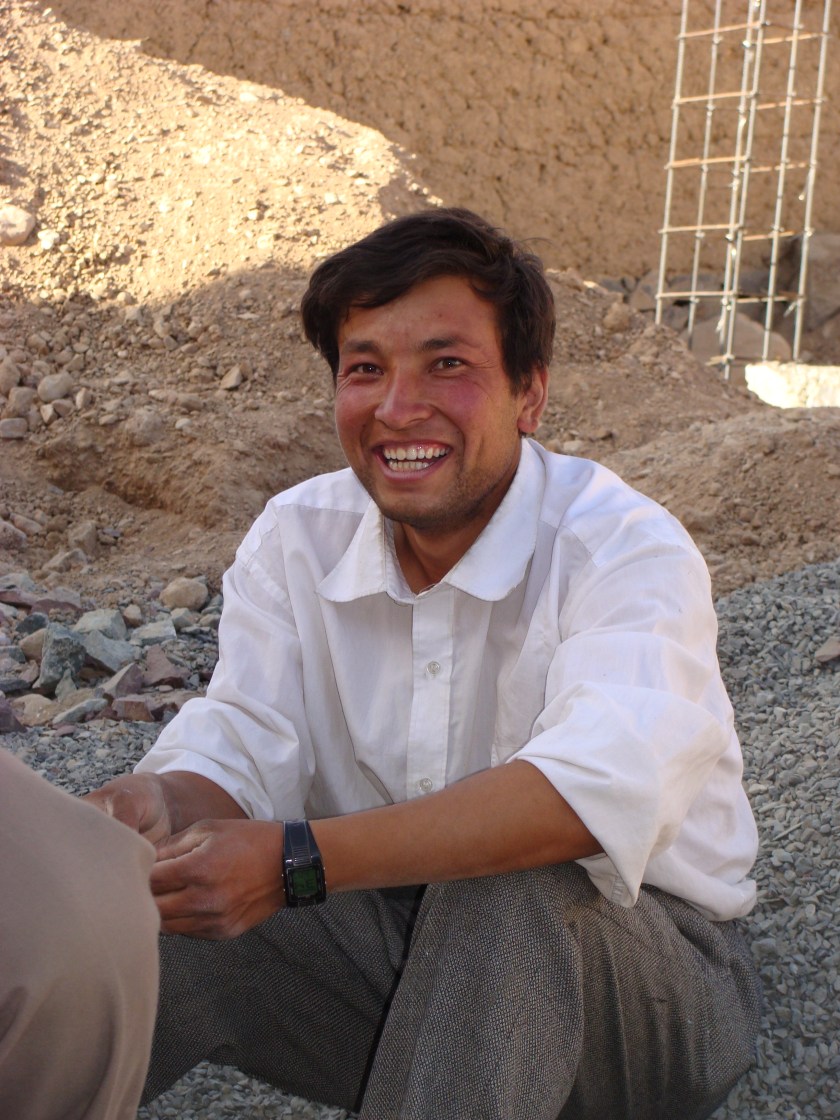
Khamad Jan at a construction site in Bamiyan, Afghanistan

Kabul– Khamad Jan, age 22, remembers that, as a youngster, he was a good student who enjoyed studying.  “Now, I can’t seem to think,” he said sadly, looking at the ground.  There was a long pause. “War does this to your mind.”

He and his family fled their village when Taliban forces began to attack the area. Bamiyan Province is home to a great number of Hazara families, and Khamad Jan’s is one of them. Traditionally, other Afghan ethnic groups have discriminated against Hazaras, regarding them as descendants of Mongolian tribes and therefore inferior.

During the Taliban attacks, Khamad Jan’s father was captured and killed.  As the eldest, Khamad Jan bore responsibility to help provide for his mother, two brothers and two sisters. But he struggled with debilitating depression, so much so that villagers, anxious to help, talked of exorcism. One day, he said he felt ready to give up on life.  Fortunately, community members and his friends in a local youth group, the “Afghan Youth Peace Volunteers,” have helped him come to terms with the pain he feels, assuring him that he can find a meaningful future.

Khamad Jan’s village is a particularly hard place in which to build houses, roads or farms. He and his family own a small plot of land which produces potatoes and wheat. The family works hard, but they only grow enough to feed themselves for seven months of the year. For a few months of every year, they must depend heavily on bread and potatoes, a carbo-diet which leads to malnutrition.  Like other women in the village, Khamad Jan’s mother and sisters are chronically anemic, suffering from headaches and leg cramps.

Continue reading ““War does this to your mind””

Bamiyan Diaries – Day Two

by David Smith-Ferri

Editor’s Note: American peace activists Kathy Kelly, Jerica Arents and David Smith-Ferri are part of a 3 person delegation currently travelling in Afghanistan. Read Smith-Ferri’s first piece on their experiences here.

Building Bamiyan Peace Park

The city of Bamiyan, with a population of roughly 60,000, has only one paved street, a wide, two-kilometer road without lanes that is a site of constant activity from 5 a.m. to curfew, at 10 p.m., and is referred to as the “Bazaar” because it is lined on both sides with shops.

In our short time here, we’ve been struck by how hard people, both in town and in the outlying villages, have to work to make a meager living. Children clearly work hard, too, seeming to participate fully in the livelihood of the family. At almost anytime of the day they can be seen at all manner of enterprise – helping set up the family street stall early in the morning, riding a donkey to fetch water in five-gallon plastic jugs, helping harvest potatoes, herding sheep or goats, collecting leaves for fuel, washing clothes in a creek, caring for younger siblings; and of course, they also attend school. Their work is as much a part of the landscape as the cottonwood trees and the red-rock cliffs which stand above the rivers.

Having had a chance to talk with members of the Afghan Youth Peace Volunteers (AYPV) and learn something about their significant commitments to home, family, and school, it was with delight and astonishment that we visited Bamiyan Peace Park today with nine proud members of the group and learned about their role in its development and use.

Continue reading “Bamiyan Diaries – Day Two”