Is Pakistan’s ‘Monkey Show’ Coming Apart?

M. Shahid Alam

For too long now, the government of Pakistan – at its highest levels – has looked like a monkey show staged by the United States of America.

The USA picks the mercenaries from Pakistan’s wealthy and corrupt elites who are eager to play the part of the monkey. Once in office, they act upon cues that are called by the US plenipotentiary in Islamabad or elsewhere. The monkey master says, Give us transit rights; the monkey obliges. He says, Join our war against Afghanistan; the monkey obliges again. He says, We will bomb your people, you take the blame; the monkey obliges again. The monkey never disappoints.

All that the monkey master has to do to keep this monkey show going is to toss a few peanuts to the monkeys in the show for every act well-performed.

Of course, in order to try to fool the Pakistanis, the monkey master complains periodically that the monkey is not “doing enough.” The monkey replies that the master is not “giving enough” – peanuts, that is.

How long is this monkey show going to go on?

How long will Pakistanis stand for this humiliation?

Continue reading “Is Pakistan’s ‘Monkey Show’ Coming Apart?”

The Net Delusion

In this brilliant lecture Evgeny Morozov asks if free information means free people? The event was recorded on 19 January 2011 in LSE’s Sheikh Zayed Theatre. It was moderated by Alison Powell.

Available as: mp3 (38 MB; approx 82 minutes)

At the start of the twenty-first century we were promised that the internet would liberate the world. We could come together as never before, and from Iran’s ‘twitter revolution’ to Facebook ‘activism’, technological innovation would spread democracy to oppressed peoples everywhere. We couldn’t have been more wrong. Morozov destroys this myth, arguing that ‘internet freedom’ is an illusion, and that technology has failed to help protect people’s rights. Not only that – in many cases the internet is actually helping authoritarian regimes. From China to Russia to Iran, oppressive governments are using cyberspace to stifle dissent: planting clandestine propaganda, employing sophisticated digital censorship and using online surveillance. We are all being manipulated in more subtle ways too – becoming pacified by the net, instead of truly engaging. This event marks the publication of Evgeny Morozov’s new book The Net Delusion: How Not to Liberate The World.

Continue reading “The Net Delusion”

Wikileaks as a modern challenge

by Farid Farid

One of Australia’s most acclaimed authors, Tim Winton, has re-released Land’s Edge: A Coastal Memoir. Through a series of autobiographical reflections, Winton describes how Australia is a littoral society always on “the edge of things” – floods, bushfires, riots etc… Winton talks about the sensuality of water being central to the Australian imaginary. Through his prose about surfing and sharks, readers can also envision human cargo packed on a floating boat teetering between life and death.

It is perhaps then fitting that this was underscored a couple of days ago by the enthusiastic reception by foreign minister Kevin Rudd and defence minister Stephen Smith of their British counterparts William Hague and Liam Fox at the HMAS Watson on a naval base in Sydney harbour. In an ironic scene on the water, the Australian government’s foreign image untarnished by floods or asylum seekers was tactfully kept and strategic interests were shared between “cousins on opposite sides of the world” according to Hague and Fox.

Hague & Fox in their joint opinion piece for the Sydney Morning Herald opt for a turgid title that spells out their foreign policy objectives — ‘Stronger alliance required to meet modern challenges’. They probably had Wikileaks in mind as one of these trans-national challenges with both countries agreeing to tighten intelligence cooperation against cyber crimes.

Continue reading “Wikileaks as a modern challenge”

WikiLeaks: Why it Matters. Why it Doesn’t?

A panel of leading thinkers explore WikiLeaks and its implications for access to information, security, first amendment rights, innovation, and more. Moderated by The Real News founder Paul Jay and presented by the Churchill Club, the panel speakers are Daniel Ellsberg, Clay Shirky, Neville Roy Singham, Peter Thiel and Jonathan Zittrain.

The Special Tribunal for Lebanon (STL): Prerequisites for Injustice?

Omar Nashabe delivers the LSE Global Governance public lecture.

This event was recorded on 18 January 2011 in Hong Kong Theatre, Clement House
The indictment of the STL in the Hariri assassination case is expected to be filed soon. However there are suspicions that the judicial process has been politically manipulated. This lecture will attempt to show that there have been serious flaws in the STL as an international mechanism for achieving justice. Omar Nashabe received a PhD in Criminal Justice; he serves as editor of the justice section of al-Akhbar newspaper and advisor on human rights and prisons to the Lebanese government. In 2007 he published The Roumieh Prison, if it could speak [in Arabic] with Dar as-Saqi, Beirut/London. The event was chaired by  Professor Susan Marks.
Available as:
mp3 (51 MB; approx 112 minutes)
Editor’s note: Unfortunately the first few minutes of the lecture are missing from the podcast.
Event Posting: The Special Tribunal for Lebanon (STL): Prerequisites for Injustice?

Helen Thomas on the perils of criticizing Israel in the US media

A remarkably fair and respectful segment on legendary journalist Helen Thomas from CNN.

Addicted to Risk

“How else to describe this, but as a form of mass insanity. Just when we know we need to be learning to live on the surface of our planet, off the power of sun, wind and waves; we are frantically digging to get at the dirtiest, highest emitting stuff imaginable…”

The brilliant Naomi Klein delivered this TED talk at on December 8, 2010, in Washington, DC. (A transcript of her speech is to be found below the fold).

Continue reading “Addicted to Risk”

Coffee With Hezbollah: A Review

by Tom Chartier

Lately, in the last few years… like since Richard Milhous Nixon assumed the coveted title of POTUS… I have had trouble falling asleep at night. Sound familiar? You betcha! The stresses and anxiety of the days have a tendency to beat us to death, and relaxation is tough to find.

How to switch off the horrors of tomorrow’s deadlines, tomorrow’s exams, and tomorrow’s humiliations at the TSA pat-down and peep show? Tough questions indeed.

To make matters worse, I also have trouble getting out of bed in the morning. Not only do I live in complete terror of… well, terror… I also live in terror of saying the wrong thing. Look at all the trouble that dude Assange has caused with his little website, wikileaks.com! My God! State secrets, plots, skullduggery and shenanigans are being exposed! Is there no decency left in America?

God… or State… forbid the First Amendment and Free Speech should actually be upheld. We have our national paranoia to protect!

But… I have veered from the path of the straight and narrow and my purpose. Let me return to the subject of stress relief.

Continue reading “Coffee With Hezbollah: A Review”

A Different Kind of Dominoes

AFP photo

I ended my last post like this:

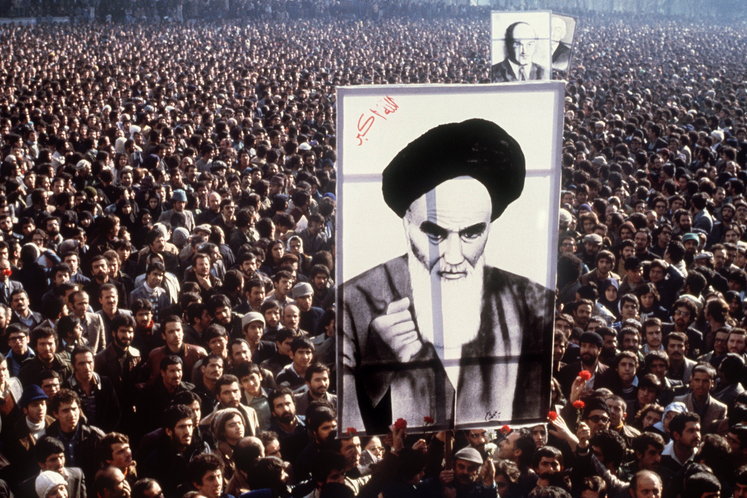
Perhaps in six months’ time non-Arab commentators will decide that the Tunisian revolution was a mere anomaly in an eternally stagnant Arab world. But they’ll be wrong. The revolution will exert a long-term pervasiveness throughout Arab culture, as the Iranian revolution did before it. It will change the air the Arabs breathe and the dreams the Arabs dream.

Well, it seems I was wrong on the timescale. I should have said six minutes. Today several commentators are indeed arguing that the Tunisian revolution is anomalous. Robert Fisk is pessimistic, contending that the Tunisian people are no match for the combined forces of the Tunisian elite and Western imperialism. Perhaps events will prove him right.  Steve Walt fears that those expecting immediate regime change from the Ocean to the Gulf will be rapidly disappointed.

His point is a good one. In the frontline states with Israel, foreign policy issues increase in importance because they have the potential to immediately translate into security issues. The Syrian regime, for instance, may be unpopular for its corruption, bureaucracy, and stifling of dissent, but its foreign policy is broadly in line with Syrian opinion – and in Syria this matters a great deal. The Western clients are more vulnerable to protest, not least because they’re more linked into the ‘globalised’ economy and are thus more vulnerable to dramatic fluctuations in the price of essential goods. Yet even in Jordan legitimate fears of an Israeli intervention (perhaps an attempt to fulfill the Jordan-is-Palestine fantasy) could damp down effervescence. The public in many countries seems too split by sect, ethnicity or tribe to coordinate unified protest. And of course the regimes will now be battening down for fear of Tunisian contagion.

Continue reading “A Different Kind of Dominoes”