by Tariq Ali

The refusal of the people to kiss or ignore the rod that has chastised them for so many decades has opened a new chapter in the history of the Arab nation. The absurd, if much vaunted, neocon notion that Arabs or Muslims were hostile to democracy has disappeared like parchment in fire.
Those who promoted such ideas appear to the most unhappy: Israel and its lobbyists in Euro-America; the arms industry, hurriedly trying to sell as much while it can (the British prime minister acting as a merchant of death at the Abu Dhabi arms fair); and the beleaguered rulers of Saudi Arabia, wondering whether the disease will spread to their tyrannical kingdom. Until now they have provided refuge to many a despot, but when the time comes where will the royal family seek refuge? They must be aware that their patrons will dump them without ceremony and claim they always favoured democracy.
If there is a comparison to be made with Europe it is 1848, when the revolutionary upheavals left only Britain and Spain untouched – even though Queen Victoria, thinking of the Chartists, feared otherwise. Writing to her besieged nephew on the Belgian throne, she expressing sympathy but wondered whether “we will all be slain in our beds”. Uneasy lies the head that wears a crown or bejewelled headgear, and has billions stored in foreign banks.
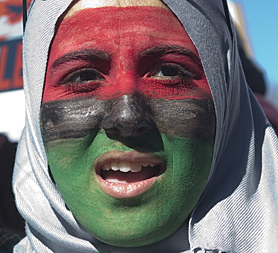
 New York Times columnist Nicholas Kristof has graphically chronicled the heart-wrenching realities that have shrouded over Manama in recent days. Whilst there may be criticisms of a sometimes de-contextualised narrative, his articles are nevertheless sufficient to shed light on the fundamental grievances that have spurred the popular protests across Bahrain. There is more than enough in his articles to evoke the deepest emotion and sympathy for unarmed civilians being systematically crushed under the juggernaut of a western-armed foreign mercenary force doggedly determined to maintain the vestiges of a brutally authoritarian regime.
 P U L S E