Thank You So Much

A message from the father of the murdered nine-year-old Ibrahim Shayban to Russia, China and Bashaar al-Asad.

The Russian and Chinese vetoes to protect the Syrian regime from UN Security Council condemnation are reminiscent of all those American vetoes to protect Israel. Both countries have their reasons for shielding the Syrian regime: Russia’s naval base at Tartus, discomfort over the way the Libya No Fly Zone slipped into more overt intervention, the fear that UN condemnation may one day focus on Russian abuses in Chechnya and Chinese abuses in Tibet and Xinjiang. But both countries should consider their own interests more creatively. Ultimately, their influence in Syria and the wider region will depend on their image in Syrian and Arab eyes. The Syrian regime will not be there for ever. The Syrian people will.

Iran is another state which has repeatedly shot itself in the foot since the Arab revolutions began, first by mischaracterising as Islamic uprisings the deposings of Mubarak, Bin Ali and Qaddafi, then by opposing the revolution which seems most similar to Iran’s in 79 – the Syrian revolution. Iran used to be popular in Syria even amongst many sectarian-minded Sunni Muslims. It used to be popular in the wider Arab region. This popularity was Iran’s best guarantee against marginalisation and even military attack from the region’s pro-Western forces. But its popularity has evaporated this year.

Back to Ibrahim. He was martyred while leaving a mosque in the Qaboon suburb of Damascus. His funeral was held today in Meydan, in the heart of the city. Here’s some footage. Apparently insecurity forces killed two of the mourners when they came out of the mosque into the street.

Commentators have been telling us that central Damascus remains quiet. It’s true that many areas have been quiet, either because the upper middle class inhabitants still support the regime or are sitting on the fence, or because of the overbearing police and mukhabarat presence on the streets. Damascus has certainly not slipped out of regime control, as Homs, Hama, Deir ez-Zor and Idlib sometimes have. Yet Damascus has been bubbling for a long time. Pro-regime commentators will say that Kafar Souseh (which has demonstrated frequently since Shaikh Rifa’i of the Rifa’i mosque was shot) is a suburb, not the city itself – which is true, if Camden Town isn’t part of London. Suburbs further out – like Harasta, Douma, Muadamiya – have been veritable war zones for months. Imagine if Streatham, Hackney, Tottenham and Ealing were in a state of war and commentators told us ‘London remains quiet.’ And Meydan and Rukn ad-Deen have witnessed frequent, large demonstrations, and savage repression. These places are as central as Chelsea and Kensington. Smaller, briefer demonstrations have occurred in high-class Malki, in Sha‘alaan, Shaikh Muhiyudeen, Baghdad Street, Muhajireen. You can’t get more central. The last place is within earshot of Bashaar al-Asad’s house. If the quietness of Damascus reassures the regime, I think they’d better start panicking.

Rebel Without a Pause—Lupe Fiasco

Lupe Fiasco rocks a Palestinian flag and an Occupy Wall Street t-shirt during his performance at the BET Hip-Hop Awards. (via Mondoweiss).

Vodpod videos no longer available.

The Darkness Approaches, a Light Shines Bright

by Johnny Barber

Today in Afghanistan people feel an unnamable horror lurking just below the surface of their everyday lives. It has been described as a tension, a feeling of pressing apprehension, as if a breaking point is about to be breached. People wake each day with this feeling; it accompanies them through their dreams each night.

Driving through the streets of Kabul I watch people set about their business deliberately. There is little laughter, the absence of joy as palpable as the heavy brown dust swirling through the streets choking off the sun.

We turn down a pock marked dirt road. Reminded of a video game my son used to love, we swerve from side to side to miss as many obstacles as possible, including oncoming traffic of all varieties, crashing through spine-jarring potholes with regularity. We spot the large pink building behind a huge steel gate. The guard points to a door and tells us to call inside.

We have arrived at the New Learning Center, a school serving the children of Afghanistan. It was founded and directed by Andeisha Farid, a young Afghan woman, who was herself a displaced person during the Soviet war and grew up in refugee camps in Iran and Pakistan. Andeisha had one simple idea. If she could help one child, that child would return to her family and influence the family. In turn, the family would influence the village, the village would influence the province, the province would influence the country. This simple idea has turned into 11 orphanages, serving 700 children, and the New Learning Center, newly opened in May 2011.

Continue reading “The Darkness Approaches, a Light Shines Bright”

Our Lady of Alice Bhatti

This review was written for the Guardian.

“These Muslas,” says Joseph Bhatti, father of Alice, “will make you clean their shit and then complain that you stink.” This is pretty close to the mark. Pakistan won’t forget the low-caste origins of most of its Christians, or ‘Choohras’, who constitute an ‘untouchable’ sweeper and maid class. In recent decades, with the rise of increasingly intolerant forms of Islam, the Choohra plight has worsened. Christians are victims of obscene ‘blasphemy’ laws and frequent sectarian violence. The outside world is often ignorant of the minority’s very existence.

How refreshing, therefore, that Mohammed Hanif, Booker-listed author of ‘A Case of Exploding Mangoes’ and perhaps Pakistan’s brightest English-language voice, has chosen to view his country through the eyes of a (lapsed) Christian – the eponymous Alice Bhatti, a hard-nosed, warm-hearted nurse, too beautiful for her own good, also nifty with a razor blade.

Her lover and foil is the ‘Musla’ Teddy Butt, a thigh-waxing, body-building, Mauser-packing lowlife. Teddy works unofficially for the Gentlemen’s Squad, a police unit somewhat darker than the Keystone Cops staffed by partially reformed rapists, torturers and sharpshooters.

Continue reading “Our Lady of Alice Bhatti”

New Media and ‘the War of Ideas’ – On looking in your own backyard

by Roy Revie

Don’t worry, this isn’t another article about “Social Media and the Arab Spring”. Not that it’s unimportant, but it strikes me that those involved in the revolutions are better placed to examine these questions. In any case, I’m sure the booming industry in Arab Spring conferences, books, and special journal issues will sufficiently suck out any revolutionary joy and furnish us with reports on the minutiae of what they think is important. I’ll leave them to it. Besides, the revolutionary potential of communication technologies which can sometimes allow you to talk to each other and broadcast information that would otherwise be repressed seems kind of self evident. While Western leaders implore foreign autocrats (with a vigour which varies proportionally to some ‘tipping point’ calculus of self-interest) to ‘tear down this firewall!’, and op-ed after op-ed is written about the impact of technology on autocracies I want to reverse the lens: how is social media changing the way liberal Western governments operate? What are the implications of the American embrace of ‘internet freedom’ for US Government foreign policy and military practice?

The key focus of US government communication efforts is influence on publics, both foreign and domestic, as a means to winning legitimacy. This element of state activity is seen as all the more important in the post-9/11 ‘battle of ideas’ in which Robert Gates has said success “will be less a matter of imposing one’s will and more a function of shaping behaviour – of friends, adversaries, and most importantly, the people in between”. Militarily, contemporary conflict has seen, one theorist suggests, a “shift in the classical centres of gravity away from the will of governments and armies to the perceptions of populations”. In these circumstances, it is not difficult to see why the rise of Web 2.0 has forced widespread and serious consideration of communication policy. As Ali Fisher has written, “the internet provides a unique environment for the ideological clashes that have occurred” since 9/11, as new communication platforms produce a situation where “the hegemonic group is unable to use the organs of the State for coercion”. A cursory look at the most memorable events of the Iraq war support this: while early on the system of ‘embedding’ journalists seemed a massive PR coup for the Coalition, providing a largely compliant media with heart-of-the-action footage, what history will remember will be the unofficial ‘emergent’ images from Abu Ghraib, Fallujah, and Saddam Hussein’s execution chamber. Influence and communication has had to be re-thought.

Continue reading “New Media and ‘the War of Ideas’ – On looking in your own backyard”

10 Years After: Welcome to the Failed State of Americastan.

by Johnny Barber

Kabul–As we step off the Turkish Air flight and walk across the dusty tarmac to the terminal, we are greeted by a large billboard. In big bold English it proclaims, “Welcome to the Home of the Brave.” It stops me in my tracks. I shake my head, thinking, “damn weird” and continue in to passport control. After waiting in a short line, I present my American passport to the guard in the booth. He doesn’t acknowledge me. He flips through the shiny new pages until he gets to the visa. He stamps it. He turns to the picture. He gives me a precursory glance and hands the passport back to me. I turn and enter Afghanistan.
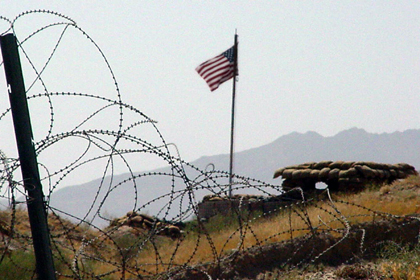
I have come here with two friends from Voices for Creative Non-Violence, forming a small delegation interested in developing relationships with ordinary Afghans and gathering stories of everyday life since the American invasion in 2001. After collecting our luggage and taking a short bus ride to the parking area, Hakim, Mohammed Jan, and his brother Noor greet us warmly. Hakim and Mohammed Jan are our hosts and the organizing force of the Afghan Youth Peace Volunteers.

Continue reading “10 Years After: Welcome to the Failed State of Americastan.”

The wonderful world of Tony Blair

Britain’s most fearless investigative journalist Peter Oborne follows up his excellent work exposing Britain’s Israel lobby and the Murdoch empire with another devastating documentary about the myriad conflicts of interest of the execrable Tony Blair. (Also see Ali Abunimah’s piece on Blair’s myriad shady dealings).

International viewers can watch the documentary below:

Continue reading “The wonderful world of Tony Blair”

Just Obstructed at Bagram as at Guantanamo

by Brian Terrell

BAGRAM AIR BASE, Afghanistan (U.S. Air Force photo by Staff Sgt. Scott T. Sturkol)

Despite ten years of occupation and untold millions of dollars spent on rebuilding Afghanistan’s broken judicial and criminal justice system, the Afghan courts are “still too weak,” the Washington Post reported on August 12, for the United States to relinquish its control over the Parwan Detention Center on Bagram Air Base in Afghanistan. On September 21, the same paper reported that the U.S. military is seeking contractors to significantly increase the capacity of the prison there.

The number of Afghans detained at Bagram has tripled over the past three years to more than 2,600 and the new construction will raise the capacity to 5,500 prisoners. Capt. Kevin Aandahl, a spokesman for the U.S. task force that oversees detention operations in Afghanistan, told the Post that the expansion was necessary to “accommodate an increase in the number of suspected insurgents being detained as a result of intelligence-based counter- terrorism operations, which we conduct with our Afghan partners.”

Many of those held at Bagram have been there since the U.S. occupied the former Soviet air base in 2001, and some two thirds of prisoners there have not been charged with or convicted of any crime. Corruption is rampant in Afghan courts and among police there as it is in many other places but the major fear of the United States is not that the Afghan courts will not function according to their constitution and accepted norms of law, but that they will. In order for Afghanistan to take sovereignty over its own judiciary and prison system, the Afghans must first fix the “cracks of an undeveloped legal system” and adopt essential “reforms,” including adoption of the U.S. practice of detaining suspected insurgents indefinitely without trial.

Continue reading “Just Obstructed at Bagram as at Guantanamo”

Meltdown: The Secret History of the Global Financial Collapse

We recently posted the first part of a superb four-part documentary on the forces behind the financial meltdown. A production of the Canadian Broadcasting Corporation (CBC), the series is currently being aired in installments on Al Jazeera but can be viewed on the CBC website in its entirety by clicking here.

The four installments appear in reverse order on the site; start with the video listed fourth from the top (Meltdown: The Men Who Crashed the World), followed by Parts II (A Global Tsunami), III (Paying the Price), and IV (After the Fall).

UPDATE: The CBC website has been rearranged. Click on the following links to watch the film on YouTube:

Part I, Part II, Part III, Part IV.