Al Jazeera’s Inside Story features interviews on regional and US responses to Netanyahu’s US-pitched speech, though the episode has the somewhat overstated title ‘US-Israeli ties under pressure’ (would that they were!). Kamahl Santamaria talks to Abdul-Bari Atwan, Editor-in-chief of Al Quds Al-Arabi; Patrick Seale, veteran Middle East analyst; and Aaron Miller, former US State Department adviser. While Al Jazeera is not without its own editorial biases, Abdul-Bari Atwan’s views are well aired and merit attention here.
Author: alannahpriestley
On the pretence of peace
A guest op-ed from Brenda Heard of Friends of Lebanon.
On Sunday 14 June 2009, hours before Israeli Prime Minister Benjamin Netanyahu delivered a statement announcing his expectations of the international community, Israeli F-16 jets dropped several bombs along the southern Gaza border. The Israeli military said it was targeting underground tunnels. Four Palestinians were wounded. (More on the exchange of hostilities here and here.)
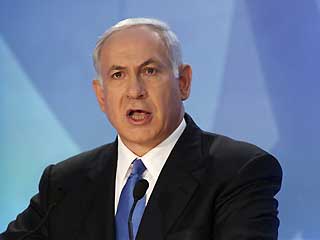
As the Palestinians were being treated in hospital, Netanyahu proclaimed, “Peace has always been our people’s most ardent desire.” In fact the speech was interwoven with Hallmark-Greeting-Card-messages of tranquil harmony. “If we join hands and work together for peace. . . .”
Cut the violins. In essence, Netanyahu stated that he expected the international community to support his desire to turn his holy land into his Disney land so as to regain the tourist trade needed to bolster an ailing Israeli economy. We could make this whole Palestinian problem go away, he said, if we simply ignore those we forced out and bend those remaining into complete submission. Lest anyone get the wrong idea, though, we’ll let them keep a flag and a song. Just to prove how civilised we are.
Destroying houses and lives, the israeli way
Two videos highlight the plight of Palestinians whose homes have been destroyed. The first features the courageous activism of israeli Ezra Nawi, who had tried to stop military bulldozers from destroying the homes of Palestinian Bedouins in the South Hebron region. (Yes, those are IOF soldiers callously laughing in the aftermath of home demolitions). Nawi, a Jewish Israeli of Iraqi descent, is viewed as a threat because he has brought international attention to efforts to illegally remove Palestinians from the Hebron region. He will be sentenced in July and a campaign is underway to rally to his cause. The second clip is from the Guardian’s Inigo Gilmore who visits the devastated neighbourhoods in Gaza to find that families are still living among the rubble, in tents.
Support Israeli Human Rights Activist Ezra Nawi – http://www.supportezra.net
Continue reading “Destroying houses and lives, the israeli way”
Lebanon’s election results and the Age of Resistance
Franklin Lamb writing from Dahiyeh, Beirut.
 Hundreds of muezzin called believers to Lebanon’s mosques at 3:35 a.m. this morning for the Al Fajr (the Dawn) prayer. The haunting and beautiful strains of Allahu Akbar (God is great) and Ash-‘hadu ana la elaha ella Allah (I bear witness that there is no God by Allah) wafted from minarets and flowed softly, pushed by the morning sea breezes, along Beirut’s sandy, but trash-strewn beaches at Ramlet al Baida. Drifting along the Corniche Mazzra and Raouche, below the American University of Beirut, they swirled around the silent and narrow streets and alleys of Lebanon’s capital and drifted east and up along her mountains. Caressing the mountain tops they embraced the majestic Basilica at Harissa, high above Jounieh, topped by its 15-ton bronze statue of Saydet Libnan or Notre Dame du Liban.
Proclaimed the “Queen of Lebanon” by the Patriarch of Antioch at the beginning of the last century, this Blessed Virgin is a shrine with claimed healing powers for Pilgrims, and the patron saint of Lebanon’s Christians. She is held in the highest esteem by Shia and Sunni Muslims, as well as Druze. The Koran contains 253 references to Mary, two hundred more than in the New Testament.
Continue reading “Lebanon’s election results and the Age of Resistance”
How Much Really Separates Obama and Netanyahu?
Jennifer Loewenstein writes that policy continuity from the previous administration in fact persists in Obama’s proclamations: “Barack Obama has sent Benjamin Netanyahu the message he most seeks, whether Netanyahu recognizes it or not: continue your colonial-settler project as you have been doing; just change the vocabulary you use to describe it.”
 Benjamin Netanyahu and Barack Obama have one thing very much in common: both of them have nearly the same vision for the future of “Palestine”. They may not recognize it yet, but sooner or later, whether Netanyahu remains in power or is replaced by someone who speaks Dove-Liberalese better, they will shake hands and agree that the only thing that really separated them in the early months of President Obama’s administration was semantics: the language each man used to describe what he saw for the future of Palestine, or “the Israeli-Palestinian conflict” – a phrase that suggests there are two sides each with a grievance that equals or cancels out the other’s and that makes a just resolution so difficult to formulate.
How deeply have we been indoctrinated.
Continue reading “How Much Really Separates Obama and Netanyahu?”
Nasrallah’s Turn
Nicholas Noe tracks the evolution of Sayyed Hassan Nasrallah’s rhetoric since 2006.
 Over the last decade and a half, Sayyed Hassan Nasrallah, the secretary general of Lebanon’s militant Shiite movement Hezbollah, has steadily moved front and center in the often vitriolic (and regularly under-informed) Western debate over the threat that ‘radical Islam’ is said to pose to the world at large.
Now, as Nasrallah appears ready to lead what could be a new majority in the Lebanese Parliament, the steady stream of accusations and threats have, somewhat predictably, turned into a deluge – with Arab states, Arab media and prosecutorial offices far and wide at the forefront of efforts to paint him as public enemy Number One.
A central reason for all the attention in the past, of course, has been that Nasrallah and Hezbollah have managed – for better or worse, depending on your perspective – to inflict a series of increasingly significant setbacks for US and especially Israeli interests: the ignominious, unilateral withdrawal from South Lebanon by the Israel Defense Forces (IDF) in May 2000, the failure of the Bush administration to vanquish Hezbollah and Syria in one go following the 2005 assassination of Lebanese Premier Rafik Hariri, and, of course, the July 2006 war – vigorously encouraged by the Americans and lost by the Israelis.
Coming Down to the Wire in Lebanon: Parliamentary Immunity, Israeli Spies and Fake IDs
Franklin Lamb writes from Beirut’s Abdel Kadas Kabbani High School Polling Station
95 hours and the Polls will open
 As election volunteers in Lebanon work this morning to spruce up its hundreds of Polling Places for Sundays’ election, Minister of Education Bahia Hariri, sister of the murdered Rafiq, canceled school for Saturday and Monday as a precaution, and the US Embassy just an hour ago issued an advisory for Americans to avoid public places and “reminds American citizens in Lebanon that even peaceful gatherings and demonstrations can turn violent unexpectedly.” As for the voters, they are preparing to elect 128 Parliamentary Delegates from more than 550 candidates who theoretically will chart this country’s course over the next four years.
Beirut’s airport is jammed with thousands of Lebanese, often given free tickets, arriving to vote from all over the world, but most heavily from the US, Canada, and Europe.
Drop-outs can succeed
More than two dozen candidates have dropped out of the race (and may now be millionaires if they were not already). This electoral phenomenon regularly happens just before the voting in Lebanon. One drop-out candidate confided to a Carter Center STO (short term observer) that he put two kids through college in France with what he earned by abandoning his candidacy.
20000 Killed While The World Wasn’t Watching?
As the London Times reports that its investigations into the final three weeks of fighting in Sri Lanka’s civil war yield a shocking figure of claiming more than 20,000 civilian lives, a UN official tells the paper the actual figure is “Higher. … Keep going.” The three-week bombardment may have ended the 26-year war but what atrocities were committed during the final weeks when the Sri Lankan government kept out journalists and aid workers?
Continue reading “20000 Killed While The World Wasn’t Watching?”
Colonizing Culture – Dahr Jamail

Trangress
The geo-strategic expansion of the American empire is an accepted fact of contemporary history. I have been writing in these columns about the impact of the US occupation on the people of Iraq in the wake of the “hard” colonization via F-16s, tanks, 2,000-pound bombs, white phosphorous and cluster bombs.
Here I offer a brief glimpse into the less obvious but far more insidious phenomenon of “soft” colonization. That scholars and political thinkers have talked at length of such processes only establishes the uncomfortable reality that history is bound to repeat itself in all its ugliness, unless the human civilization makes a concerted effort to eliminate the use of brute force from human affairs.
FAIR on the NYT’s Pentagon Propaganda
 Fairness and Accuracy in Reporting (FAIR) has an action alert on the New York Times‘ Pentagon Propaganda, detailing its misleading report on Guantánamo and terrorism. This comes as the same paper last year published David Barstow’s revelations about the Pentagon’s hidden hand in “news” coverage to generate pro-war propaganda and favourable coverage for the Bush administration, for which he has won a Pulitzer Prize for investigative reporting. (See also this interview on Democracy Now earlier this month). The NYT continues to try to have it both ways: (selectively) exposing propaganda as well as exercising it as an extension of the US military and political establishment. FAIR does well to keep the scrutiny turned right up:
While former Vice President Dick Cheney has been front and center in the media debate over the current White House’s national security policies, he’s not the only one trying to challenge the White House’s message. The New York Times published a front-page article (5/21/09) that bolstered the notion that former Guantánamo prisoners “return” to terrorist activity.
The remarkably credulous Times story, under the headline “1 in 7 Freed Detainees Rejoins Fight, Report Finds,” was based on a Pentagon report leaked to the paper before its release yesterday evening. The article emphasized the notion that former prisoners “returned to terrorism or militant activity”–without adequately explaining the definition of either term, or examining whether those former detainees were ever “terrorists” in the first place.
 P U L S E