The author, poet and critic discusses her role as a social campaigner and feminist.
Author: alannahpriestley
Active Non-violence in Palestine and Israel
By David Hartsough
 When some people think of Palestine and Israel, they often picture Palestinians as suicide bombers and terrorists while the Israeli military are seen as bombing whole neighborhoods in Palestine. The violence and counter-violence and endless war has created a hopelessness about any peaceful future for the Holy Land.
However, during a month-long stay in Palestine and Israel recently, I found something else. I found something very positive and hopeful and perhaps the key to a peaceful resolution of this tragic conflict — and a possible path toward a peaceful future for both peoples.
I found that violence is not the whole story. Endless checkpoints, 26-foot high walls, and the great fear and mistrust between many Israelis and Palestinians are grimly persistent features of life there. But there is also an alternative to this cycle of destruction being forged on both sides. There is a larger story beyond the script of retaliatory violence – a story of a growing nonviolent movement that both Palestinians and Israelis are building. It is this larger story that I would like to share.
Continue reading “Active Non-violence in Palestine and Israel”
Russell tribunal says sanction Israel
Russell Tribunal on Palestine concludes the EU should sanction Israel until violations stop.
The genius of an oeuvre is measured by the breadth of its message – Avatar as not “just another war movie”
by Kim Bizzarri

Following last night’s choice of the Oscars’ jury to award Katherine Bigelow’s The Hurt Locker with the Best Picture prize, the debate has since then moved to the pubs and the ether. It appears to be primarily concerned with whether Bigelow’s portrait of “the” war does justice to the genre and whether, with time, Avatar will come to be recognised as more deserving of the aspired title. The debate however is having the effect of reducing Cameron’s gargantuan critique of modernity to “just another war movie”, adding to the already popular dismissal of the film, by the intellectual left, as a western guilt-fantasy.
Lets start by considering the assumption that Avatar is “just another war movie”.
If indeed we accept that Cameron’s intention was to provide us with a science-fictional portrait of war, then we must also conclude that von Trier’s Dogville is nothing more than an aesthetically minimalist representation of the Great Depression. Just as von Trier exploits the Great Depression as a historical backdrop against which he develops a provocative portrayal of human nature, so does Cameron in the use he makes of military intervention in Avatar.
Taher, a UCI protester originally from Gaza, writes that heckling Oren was right
 Taher Herzalla is a third-year political science major at UC Riverside and was part of the “Irvine 11” that protested Michael Oren’s recent address. Taher is himself originally from Gaza and has been directly affected by the hafrada regime’s brutality. He had this piece published in the Orange County Register: be sure to write to the editor or leave a quick comment to thank them for publishing it. Check out their blog, Stand with the Eleven and spread their Stand With the Eleven action flyer.
Today, our American civil rights movement is praised worldwide for its humanism, righteousness, and courage. But, it was not always this way.
The same leaders we now hold in high esteem were once labeled as rabble-rousers for their principled and unpopular stands. It is no surprise then, that those who stand today against one of the greatest injustices of our time are similarly labeled. I am in a worldwide movement advocating for the indigenous Palestinian population and opposing the apartheid policies of Israel. The United Nations has condemned Israeli actions with more resolutions than any other nation.
I know the pain of Israel’s brutal military tactics firsthand. Three members of my immediate family were killed in Gaza last year during “Operation Cast Lead,” in which more than 1,400 Palestinians were killed and more than 5,300 wounded.
Continue reading “Taher, a UCI protester originally from Gaza, writes that heckling Oren was right”
How Western anti-Muslim bigotry became respectable
The Real News on the historic roots of the resilient ideology of Islamophobia.
Europe’s Alliance with Israel
by David Cronin

One of the pitfalls of specialising in European politics, as I have for the past 15 years, is that certain assumptions become hardwired in your brain. For a long time, my critical faculties shut down when I heard senior EU representatives speak of the Middle East. I happily accepted the official narrative that they were striving for a just resolution to the conflict between Israel and the Palestinians and that it would be foolish to park the so-called peace process in a “blood-soaked lay-by”, in the words of former EU commissioner Chris Patten.
Israel’s attacks on Lebanon in 2006 and on Gaza just over a year ago illustrated how naive and gullible I had been. In the first instance, Tony Blair blocked the EU from formally calling for a ceasefire because he wanted Israel to be given whatever space it perceived necessary to fight Hezbollah (Israel’s slaughter of Lebanese civilians in that 33-day war elicited no more than statements of “regret” from London).
It is true that the Union did urge a halt to the violence that Israel inflicted on Gaza’s 1.5 million inhabitants in late 2008 and early 2009. Yet by describing that attack as “disproportionate”, key EU representatives implicitly approved the Israeli version of events – that everything had been provoked by the missiles Hamas was firing on the southern Israeli towns of Ashkelon and Sderot. “Gaza was a crisis waiting to happen,” Marc Otte, the Union’s Middle East envoy, told me. “Do you think the Palestinians could continue to launch rockets on Israel without Israel reacting?”
“Getting rid of hope and faith”: Abe Osheroff on the struggle for a better world
by Robert Jensen
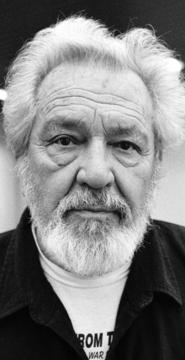
After a recent talk about the struggle for social justice and the threats to the ecosystem, a student lingered, waiting to talk to me alone, as if he had something to confess.
“I feel so overwhelmed,” he finally said, wondering aloud if political organizing could really make a difference. The young man said he often felt depressed, not about the circumstances of his own life but about the possibilities for change. Finally, he looked at me and asked, “Once you see what’s happening — I mean really see it — how are you supposed to act like everything is going to be OK?”
I hear such concerns often, from young and older people alike. Perhaps the questions are rationalizations for political inaction for some people, attempts to persuade themselves that there’s no reason to join left/progressive movements. But most of the people I meet who struggle with this question are activists, engaged in all kinds of worthy projects. They aren’t looking for a reason to drop out but are trying to face honestly the state of the world. They want to stay engaged but recognize the depth of multiple crises — economic, political, cultural, and ecological.
Some organizers respond to such concerns with upbeat assurances that if we just get more people on board and work a little bit harder, the problems will be solved — if not tomorrow, certainly within some reasonable period of time. I used to say things like that, but now I think it’s more honest, and potentially effective, to acknowledge how massive the obstacles that need to be overcome really are. We must not only recognize that the world’s resources distributed in a profoundly unjust way and the systems in which we live are fundamentally unsustainable ecologically, but also understand there’s no guarantee that this state of affairs can be reversed or even substantially slowed down. There are, in fact, lots of reasons to suspect that many of our fundamental problems have no solutions, at least no solutions in any framework we currently understand.
Continue reading ““Getting rid of hope and faith”: Abe Osheroff on the struggle for a better world”
The Assault on Illhem
by Tariq Ali
 Forgive an outsider and staunch atheist like myself who, on reading the recent French press comments relating to Ilhem Moussaid the hijab-wearing NPA candidate in Avignon, gets the impression that something is rotten in French political culture. Let’s take the debate at face-value. A young Muslim woman joins the NPA [New Anti-Capitalist Party]. She obviously agrees with its program that defends abortion, contraception, etc, i.e. a woman’s right to choose. She is then told that despite this she does not have the right to choose what she wears on her head. It’s astonishing. There is no Koranic injunction involved. The book says: “Draw their (women’s) veils over their bosoms and not display their beauty”, which can be interpreted in several ways but is disregarded most blatantly by hijab-wearing Egyptian women I see in Cairo and Karachi wearing tight jeans and T-shirts that contradicted the spirit of the Koranic message.
Patriarchal traditions, cultural habits and identity are what is at stake here and they vary from generation to generation. Pushing people back into a ghetto never helps.
Dissident Jews: Unwanted in Germany?
by Raymond Deane

A European country that scapegoats a Semitic people, persecutes defenders of human rights by stripping them of employment, and denies freedom of speech to Jews: surely a description of Germany during the Third Reich?
Yes, but unfortunately also a description of Germany at the outset of the 21st century.
In the wake of German Chancellor Merkel’s craven speech to the Israeli Parliament (the Knesset) two years ago, I wrote: “a penance is being paid for Germany’s past crimes… by the Palestinians to whose plight Merkel is so indifferent…. By scapegoating the victims of its former victims, Germany is compounding its past crimes.” (Scapegoat upon Scapegoat, Electronic Intifada, 20 March 2008).
Just one year later I described the case of Hermann Dierkes, forced to resign his position as representative of Die Linke (The Left Party) on Duisburg city council after tentatively advocating a boycott of Israeli goods. I commented: “It appears that freedom of speech, supposedly one of the proudest acquisitions of post-Fascist Germany, is readily suppressed when exercised to advocate positive action against the racist, politicidal institutions and actions of the Zionist state.” (A public stoning in Germany, Electronic Intifada, March 2009).
 P U L S E