Equatorial Guinea: The good, the bad and the ugly

by Agustín Velloso

The Obamas and the Mbasogos

The Bad

Teodoro Obiang Nguema Mbasogo, Equatorial Guinea’s recalcitrant leader, is a very wealthy man. He has amassed such a fortune that he could only get rid of his bank notes by burning them.

He cannot use his money to buy power – he has, after all, enjoyed that in its absolute form for the last thirty years. His eldest son wants for nothing, and his family is wallowing in plenty. Global Witness published a report entitled ‘The Secret Life of a Shopaholic: How an African dictator’s playboy son went on a multi-million dollar shopping spree in the US’.

Neither does Teodoro Obiang need money to earn a place among the world’s most powerful. He is already a welcome member of this cabal, which often treats him with affection. Welcoming him in Washington back in 2006, erstwhile secretary of state Condoleeza Rice said, ‘You are a good friend, and we welcome you’.

He has been welcomed to Beijing six times by Hu Jintao, who said to him, ‘bilateral relations between our two countries have developed through goodwill’.

Continue reading “Equatorial Guinea: The good, the bad and the ugly”

The Unstated Script

William A. Cook provides an overview of the state of affairs of the zionist affairs of state, in a piece entitled The Unstated Script of the Wiesel Open Letter to President Obama. It is a good summary but by no means definitive: one could add theft of Palestinian tax credits, water, fertile top soil, religious sites, harvesting of human organs, daily humiliations, and much much more …

Let’s draw up the bill of particulars that is hidden from the world, the subtext, the unsaid prayer no one in this American government wants revealed and certainly no one in Israel wants displayed publicly.

What is the true nature of this state of Israel that … is now seeking to enlist the governments of the world against its perceived “existential” enemy, Iran?

* It is a state without mercy, a state without morals, a state premised on racism, a state built on deception and lies;

* a state defiant of international law, the Universal Declaration of Human Rights, and the Geneva Conventions that apply to occupying powers;

* a state, unlike North Korea or Iran, the other identified Axis of Evil states, that has invaded neighboring states and occupies them;

Continue reading “The Unstated Script”

The Second Battle of Gaza: Israel’s Undermining Of International Law

by Jeff Halper

The Israeli attack on Gaza in December 2008/January 2009 was not merely a military assault on a primarily civilian population, impoverished and the victim of occupation and besiegement these past 42 years. It was also part of an ongoing assault on international humanitarian law by a highly coordinated team of Israeli lawyers, military officers, PR people and politicians, led by (no less) a philosopher of ethics. It is an effort coordinated as well with other governments whose political and military leaders are looking for ways to pursue “asymmetrical warfare” against peoples resisting domination and the plundering of their resources and labor without the encumbrances of human rights and current international law. It is a campaign that is making progress and had better be taken seriously by us all.


Since Ariel Sharon was indicted by a Belgian court in 2001 over his involvement in the Sabra and Chatila massacres and Israel faced accusations of war crimes in the wake of its 2002 invasion of the cities of the West Bank, with its high toll in civilian casualties (some 500 people killed, 1,500 wounded, more than 4,000 arrested), hundreds of homes demolished and the urban infrastructure utterly destroyed, Israel has adopted a bold and aggressive strategy: alter international law so that non-state actors caught in a conflict with states and deemed by the states as “non-legitimate actors” (“terrorists,” “insurgents” and “non-state actors,” as well as the civilian population that supports them) can no longer claim protection from invading armies. The urgency of this campaign has been underscored by a series of notable setbacks Israel subsequently incurred at the hands of the UN. In 2004, at the request of the General Assembly, the International Court of Justice in The Hague ruled that Israel’s construction of wall inside Palestinian territory is “contrary to international law” and must be dismantled—a ruling adopted almost unanimously by the General Assembly, with only Israel, the US, Australia and a few Pacific atolls dissenting. In 2006 the UN Commission of Inquiry concluded that “a significant pattern of excessive, indiscriminate and disproportionate use of force by the IDF against Lebanese civilians and civilian objects, failing to distinguish civilians from combatants and civilian objects from military targets.” together with the harsh criticism of the UN’s Goldstone report on Gaza accusing the Israeli government and military again of targeting Palestinian civilians and causing disproportionate destruction, has made this campaign even more urgent.

Continue reading “The Second Battle of Gaza: Israel’s Undermining Of International Law”

Raymond Deane’s Open Letter to the Heinrich Böll Foundation on Norman Finkelstein

UPDATE: It now appears that the Rosa Luxemburg House has also cancelled the lecture. For shame.

Raymond Deane, renowned composer and founding member and former chairperson of the Ireland-Palestine Solidarity Campaign, sent this open letter to the Heinrich Böll Foundation after they cancelled Norman Finkelstein’s scheduled lecture in Berlin under the pretense that Finkelstein is a “controversial” figure.  PULSE is the first site to publish this letter in English.  The letter is also being translated into German, and will be appearing on several German websites shortly.  Finkelstein’s talk will still take place, but will be hosted by the Rosa Luxembourg Foundation.

Continue reading “Raymond Deane’s Open Letter to the Heinrich Böll Foundation on Norman Finkelstein”

BDS: Calling all Geographers

What follows is an open letter in response to the International Geographical Union’s (IGU) refusal to relocate its July 12 – 16, 2010 regional conference outside of Tel Aviv in support of the internationally supported Boycott, Divestment and Sanctions campaign aimed at Israel.  The IGU was initially confronted by the Palestinian Campaign for the Academic and Cultural Boycott of Israel in November 2009.  This letter was printed on the US Campaign for the Academic & Cultural Boycott of Israel’s website today.

Geographers and other academics can sign the letter here.

As geographers, faculty, students, and people of conscience, we are profoundly dismayed by IGU’s decision to hold its July 2010 regional conference in Tel Aviv, in violation of the widely endorsed Palestinian civil society call for Boycott, Divestments, and Sanctions (BDS) against Israel. We are equally troubled by IGU’s response [1] to the open letter issued by the Palestinian Campaign for the Academic and Cultural Boycott of Israel (PACBI), which urged the Executive Committee to relocate the upcoming regional conference out of Israel [2].

Continue reading “BDS: Calling all Geographers”

Murderers at Large

These people murdered the Palestinian leader Mahmoud al-Mabhouh in Dubai. According to British officials, the death squad was sent by the Israeli spy agency Mossad. An international arrest warrant is out for them. Report them to your nearest police station if you come across them.

The New York Times and the Israeli-Palestinian Conflict: The Bronner Affair

By Jerome Slater

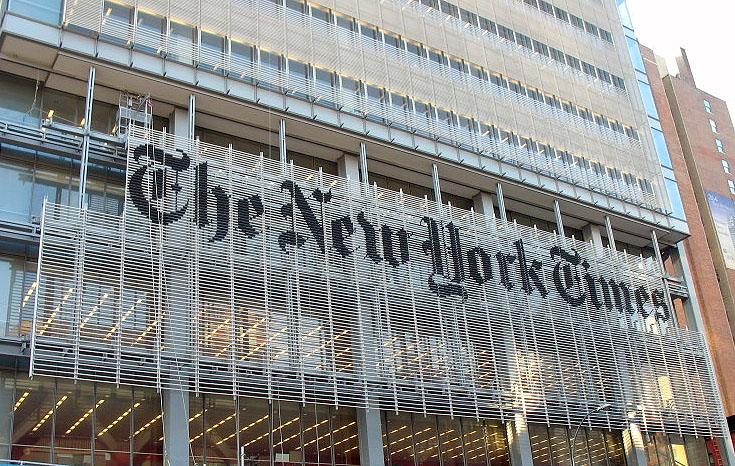
The New York Times has now confirmed that the son of Ethan Bronner, for the past two years its chief correspondent in Israel, has enlisted in the Israeli army. On January 25, the website Electronic Intifada picked up on what was then still a rumor and pointed out that the internal policies of the Times state that journalists might have to be reassigned if the activities of family members create apparent conflicts of interest. The policy guidelines provide an example: “A brother or a daughter in a high-profile job on Wall Street might produce the appearance of conflict for a business reporter or editor….”

Electronic Intifada sent a message to Bronner asking if the rumor was true. Bronner did not respond but turned the message over to Susan Chira, the Times foreign editor, who did. With the usual brisk arrogance, evasiveness, or non-responsiveness of the Times whenever its coverage of the Israeli-Palestinian conflict is criticized, Chira dismissed the question of whether Bronner’s family ties (he is also married to an Israeli woman) constituted a conflict of interest: “Mr. Bronner’s son is a young adult who makes his own decisions. At the Times we have found Mr. Bronner’s coverage to be scrupulously fair and we are confident that will continue to be the case.”

No doubt the Times hoped that would dispose of the issue, but thanks to the internet, it was not to be.

Continue reading “The New York Times and the Israeli-Palestinian Conflict: The Bronner Affair”

The Coming Revolt of the Guards

Thoughts from Dane County Jail
 
by Joshua Brollier
 
Entering Fort McCoy

On entering the Dane County Jail, the first holding cell that Brian Terrell and I were placed in had only one other person. We previously saw this man outside the cell during our initial booking. He was a man with dark black skin and a full beard. I thought I heard one of the officers say he was from Gambia. When we entered the cell, the man was in mid-ritual in what appeared to be a Muslim’s midday prayer. A young white guard, who had the accent of a Midwesterner, looked disdainfully at the man and then somewhat positively at Brian and me. The guard said, “Just ignore that,” as if the man was insulting or threatening us by his peaceful act of prayer. To which I replied, “It’s fine with me.”

This experience was contrasted by the next encounter I had with another officer who made digital copies of my fingerprints and pictures. As this middle-aged man placed my hand on the machine, I made a remark that I was surprised that he did not already have my information handy. (This was the third time I was fingerprinted and pictured for this same charge.) He said, “Oh yeah? You arrested a lot? What are you in for?” I told him that I was arrested with a group who engaged in civil disobedience at Ft. McCoy. Getting the sense that this man may have previously been in the armed services, I explained that we were not against the men and women in the military personally, but that our goals were to enter the base to talk to the rank and file soldiers about ending the wars in Iraq and Afghanistan and to make certain the soldiers were aware of their right to refuse illegal and immoral orders.

Continue reading “The Coming Revolt of the Guards”

Graphic History of the Honduran Coup, final part

Dan Archer, comics journalist and instructor at Stanford University, has the following to say about the final installment of his 3-part graphic history of the Honduran coup, which can be viewed below:

In the final part… I focus on piecing together the evidence of the repression that went mostly undocumented in the wake of the Nov 29th Honduran elections. Despite the media’s portrayal of a democratic transition to Porfirio Lobo’s inauguration as president a week ago, the de facto government’s use of violence and threats against resistance members should stand as an ominous augury, especially given its clear links to Lobo and his cabinet. Most troubling of all is the United States’ involvement under the banner of promoting ‘democracy,’ a term that is being increasingly used as a pretext for supporting a regime whose sympathies correspond to the American agenda (be it CAFTA or alarmist left-wing conspiracies), regardless of popular feeling or their worrying record of human rights abuses.”

Continue reading “Graphic History of the Honduran Coup, final part”

New York Times: No conflict of interest — with the conventional wisdom

by Robert Jensen

The New York Times’ public editor wrestled this week with conflict-of-interest charges sparked by the revelation that Jerusalem bureau chief Ethan Bronner’s son had joined the Israeli army.

The executive editor of the paper responded with a sensible defense of the paper’s decision to keep Bronner in that position.

Although it had the appearance of a spirited exchange, the “debate” was a tired old diversion that keeps us from facing more important questions, not just about the Israel/Palestine conflict but about U.S. journalists’ coverage of the world. As is typical in mainstream journalists’ discussions of journalistic neutrality and objectivity, the focus on an individual obscures more important questions about the institutions for which individuals work and the powerful forces that shape those institutions’ picture of the world.

The question posed by the Times officials is framed in the narrowest terms: Could Bronner maintain his neutrality and objectivity given those family circumstances, or was that indirect connection to one side of the war “still too close for comfort,” in public editor Clark Hoyt’s words. In his Sunday column, Hoyt described Bronner as a “superb reporter” but concluded that the paper should reassign him to avoid the appearance of a conflict of interest. Executive editor Bill Keller argued that such a policy would disqualify many reporters from assignments that draw on their specialized knowledge and diminish the quality of the reporting in the paper, and concluded there is no reason to reassign Bronner.

Continue reading “New York Times: No conflict of interest — with the conventional wisdom”