Beirut One: Dividing Lines

I’ve just come back from the Hay Literature Festival in Beirut. Literature Across Frontiers asked me to write three posts on the experience. Here’s the first.

On the plane from Heathrow I sat next to an Armenian lady. She was born in Aleppo, Syria’s most cosmopolitan city, has lived in New Jersey for years, and is visiting Lebanon for a week, for her nephew’s wedding. I asked why she wasn’t staying longer; it’s such a long flight from the states after all. “Why not?” she replied. “Relatives and politics: these are two reasons not to stay long in the Middle East.”

Politics, which tends to suck in relatives, especially if you’re Armenian, or Palestinian, or any variety of Lebanese. We talked about her grandmother’s sister, a victim of the 1915 genocide of Armenians in Turkey, when somewhere between half and one and a half million people were murdered, either by massacre or by forced marches into the heat of the Syrian desert. Armenians call it ‘the Great Crime’.

Continue reading “Beirut One: Dividing Lines”

Blumenthal vs al-Akhbar’s Pro-Asad Propaganda

The great anti-Zionist Max Blumenthal explains why he has resigned from al-Akhbar, previously a Lebanese leftist newspaper, now a propaganda rag for the sectarian gangster regime in Syria. He examines the disgusting rubbish al-Akhbar has recently published by Amal Saad-Ghorayeb, Shermine Narwani and Ibrahim Amin. The whitewashing, misrepresentation, plain hallucination and outright Islamophobia resorted to by these writers would be comical if the Syrian people were not being slaughtered and if so many idiot ‘leftists’ in the West were not being influenced by them. — R.Y-K.

A farewell to Al Akhbar and Assad’s apologists

by Max Blumenthal

“Syrian weapons are being used – most unfortunately – against our camp, while the rulers of Damascus continue to repeat that they are here in Lebanon in order to defend our camp. This is a murderous lie, a lie which pains us more than anyone else… But we wish to inform you that we will fight in defense of this camp with our bare hands if all our ammunition is spent and all our weapons are gone, and that we will tighten our belts so that hunger will not kill us. For we have taken a decision not to surrender and we shall not surrender…”

–open letter from the residents of Tal al Zataar refugee camp to the world, July 13, 1976

I recently learned of a major exodus of key staffers at Al Akhbar caused at least in part by disagreements with the newspaper leadership’s pro-Assad tendency. The revelation helps explain why Al Akhbar English now prominently features the malevolent propaganda of Amal Saad Ghorayeb and the dillentantish quasi-analysis of Sharmine Narwani alongside editor-in-chief Ibrahim al-Amin’s friendly advice for Bashar Assad, whom he attempts to depict as an earnest reformer overwhelmed by events.

When I joined the fledgling Al Akhbar English website last fall, I was excited to contribute my writing on the Israel-Palestine situation and US foreign policy to a paper that I considered one of the most courageous publications in the Arab world. At the time, the Syrian uprising had just begun, and apparently, so had the debates inside Al Akhbar, which reflected the discussions within the wider Lebanese Left. Almost a year later, the results of the debate have become clear on the pages of the paper, where despite the presence of a few dissident voices, the apologia for Assad and his crimes has reached unbearable levels.

I considered responding on my blog to some of the more outlandish ravings published at Al Akhbar, but eventually decided my energy would be better spent on covering the topics I knew best — and which I could discuss with the authority of journalistic experience. Meanwhile, my frustration and embarrassment mounted as one Ghorayeb screed after another appeared on the site, each one more risible than the next.

Following her vehement defense of the Syrian dictator’s use of surgery metaphors to refer to his security forces’ brutal crackdowns, Al Akhbar English featured Ghorayeb’s daftest work to date: an attack on Arab Third Wayers (supporters of the anti-imperialist, anti-authoritarian political tendency) in which she asserted that “the real litmus of Arab intellectuals’ and activists’ commitment to the Palestinian cause is no longer their support for Palestinian rights, but rather, their support for the Assad leadership’s struggle against the imperialist-Zionist-Arab moderate axis’ onslaught against it.”

Continue reading “Blumenthal vs al-Akhbar’s Pro-Asad Propaganda”

The Milgram Experiment in Syria

Howleh. picture by Kaveh Kazemi/ Getty Images

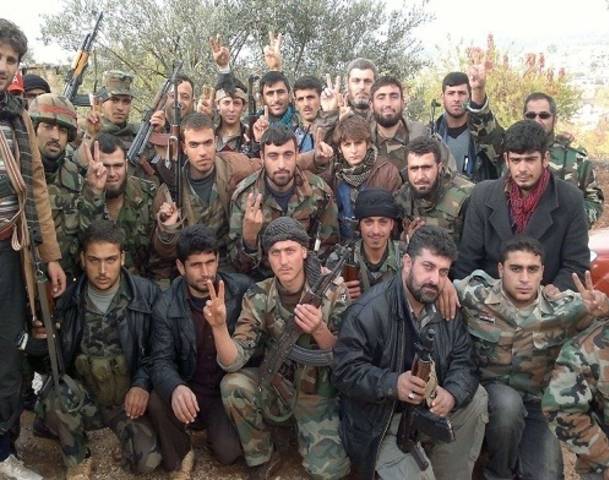
It has thrown students out of top-floor windows. It has shelled cities from the land and from the air. It has raped women and men and tortured children to death. Now with the massacres at Howleh and Qubair – in which Alawis from nearby villages, accompanied by the army, shelled, shot and stabbed entire families to death – the Syrian regime has escalated its strategy of sectarian provocation. Here Tony Badran explains very well the sick rationale behind these acts.

To a certain extent the regime’s plan has already worked. Now it seems inevitable that sectarian revenge attacks will intensify. In general, sectarian identification is being fortified in the atmosphere of violence created by the regime and added to by the necessary armed response to the regime. Sectarian hatred will deepen so long as the regime survives to play this card.

The regime wants us to understand the conflict in purely sectarian terms. Many Syrians recognise this and are resisting it. At this impossibly difficult time it’s good to remember the Alawi revolutionaries, who are heroes, and crucial to the revolution, heroic in the way Jewish anti-Zionists are heroic.

What do I mean by heroic? A disproportionate number of Alawis owe their livelihood to the regime. To fight for a post-regime future means to fight for a future in which their community will be, at best, less favoured than at present. This takes moral and political courage. Many Alawis have grown up surrounded not, as most Syrians have, by anti-regime mutterings, but by the happy version. To break with this version requires a psychological transformation, something as big as growing up. More concretely, there are family pressures – and family is so important in Syria. Very many Alawis are employed in the security forces. If your uncle is an officer in the mukhabarat, therefore, you don’t find it easy to publicly oppose the regime. It takes courage to do so, and the kind of confidence in your own judgment which will allow you to discount the arguments of your elders and authorities. Only a few people have such strength. (Of course it takes much more strength to live in a Sunni neighbourhood being beseiged and bombed, but this is a different kind of strength.)

Continue reading “The Milgram Experiment in Syria”

Arm the Guerrillas

This was published at Foreign Policy.

There are some, perhaps many, Syrians who detest their government and are entirely aware of its treasonous nature — yet wish for the demonstrations and the guerrilla actions of the Free Syrian Army (FSA) to stop and for President Bashar al-Assad’s regime to regain control as soon as possible. They take this position out of a profound pessimism: They believe it is impossible to uproot the surveillance-and-torture state and its deep sectarian substructure, that more people will die the longer the unrest continues, that the economy will collapse further, and that nothing will alter the end — Assad’s inevitable victory. Some Syrians go so far as to say that the regime itself, or a branch of it, is surreptitiously encouraging demonstrations so as to have an “excuse” to teach the new generation an unforgettable lesson.

I can’t agree with this defeatist perspective on principle — the principle being my refusal to give in to despair, and my faith in the ability of human beings to change their circumstances. I understand it, however, and I understand that I might share it if I were living in the heart of the horror instead of in Scotland. But apart from principle, I think the assumption underlying the defeatist perspective is mistaken. Yes, the regime is still able to kill, and will continue or even intensify its killing. However, it has lost control of the country and won’t be able to reestablish it.

The much-maligned United Nations observers have confirmed what news reports had already suggested: Large areas of the Syrian countryside and provincial cities are either under FSA control or nobody’s. Regime forces are able to infiltrate and punish areas under the revolutionaries’ sway, but they dare not linger. Sometimes, they are not even able to move in. When the Assad regime recently attempted to retake the eastern city of Rastan, the FSA destroyed a number of armored vehicles and killed 23 soldiers, forcing the military to retreat.

Continue reading “Arm the Guerrillas”

Taliban Poetry

A shaved version of this review appeared in the Guardian.

In the 1980s an artist friend of mine made a poster for Gulbuddin Hekmatyar’s Hizb-e-Islami, a militia later allied with the Taliban. The poster depicted a fully-bearded Afghan mujahid clutching Quran and Kalashnikov and standing atop a slaughtered Russian bear. It was sent as a postcard to British journalists and politicians, without controversy.

In the same period I remember reading stories in the mainstream press about the Mujahideen’s poetic love of flowers and song. After the Russian rout, these Mujahideen committed excesses so extreme that it took Taliban puritanism to re-establish order. Then the Taliban committed their own excesses, of a different sort, and after 9/11 the West waged war on them for metonymic reasons. Nobody now celebrates the gentle, flowery qualities of these men who have burnt schools and lynched television sets.

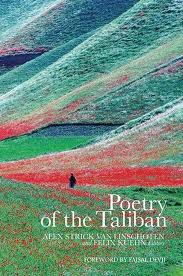
“Poetry of the Taliban”, therefore, is a brave and very useful project. It offers the reader a perspective on the conflict through the Other’s eyes. It offers the human element, and as such is worth more than a library-full of cold analysis.

There are poems of love, battle, transience, grief, enthusiasm, material deprivation and mystical astonishment. The voices are diverse and often surprising. Faisal Devji’s preface points out that the poetry displayed here is not the official product of the Cultural Committee of the Islamic Emirate, not centrally-organised propaganda, but the efforts of men (and a woman) who fight for a variety of reasons, tribal, ethnic or nationalist, and particularly out of gut resistance to foreign occupiers, wherever they come from.

Continue reading “Taliban Poetry”

Ramadan’s Arab Awakening

A mangled version of this review appeared in the Independent.

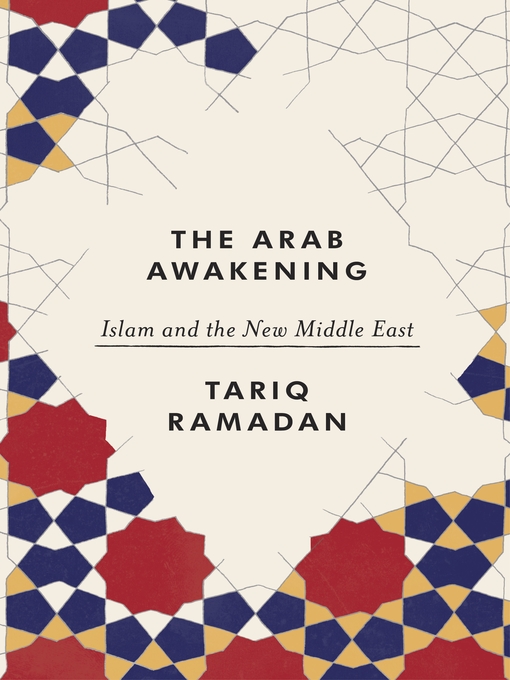
What is happening in the Middle East? Tariq Ramadan, one of the foremost Muslim intellectuals, calls the contemporary events ‘uprisings’, more concrete and permanent in their effect than ‘revolts’ but still short of thoroughgoing ‘revolutions’. So far, Tunisia is the only clear democratising success, and even there it remains unclear if the new dispensation will be fundamentally more just economically than the last.

Half of this slim volume is spent examining whether the uprisings were staged or spontaneous. Ramadan counsels against both the naive view that outside powers are passive observers of events, and the contrary belief that Arab revolutionaries have been mere pawns or useful idiots in the hands of cunning foreign players.

Certainly the US and its allies helped to guide events by collaborating with the military hierarchies which removed presidents in Tunisia and Egypt, and by full-scale intervention in Libya – this for a variety of obvious reasons. An agreement signed by Libya’s NTC in March last year, for instance, guaranteed France 35% of future oil exports.

There’s been Gulf and Western hypocrisy over Bahrain, home to Formula One and the US Fifth Fleet, and al-Jazeera’s coverage has been tailored to reflect its Qatari host’s strategic concerns.

Then, less convincingly, the social media conspiracy: trainees from 37 countries learned non-violent cyberactivism in Serbia. Google, Twitter and Yahoo offered training in the US. Google provided satellite access codes to Egyptian activists so they could evade censorship, but not to their Syrian counterparts.

Continue reading “Ramadan’s Arab Awakening”

Not Writing About Syria

picture by Paul Klee

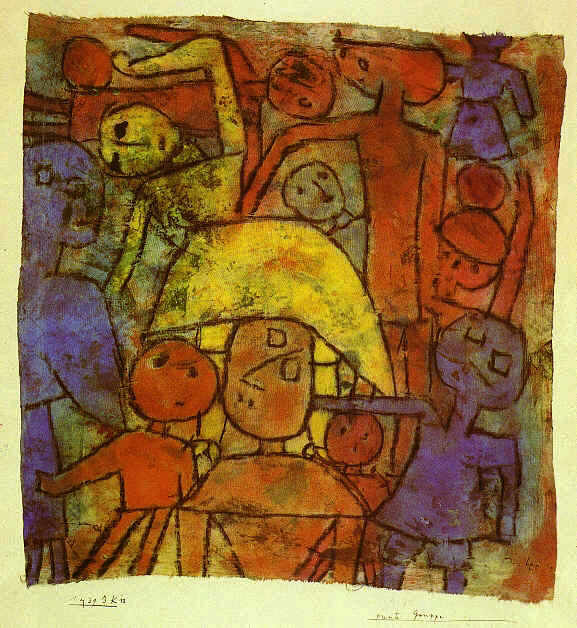
I haven’t been writing about Syria at my previous pace. The time is not right.

This is a time for Syrian internet activists, those still surviving, to send us their videos. It’s a time for gathering evidence – although no more evidence is needed.

It’s a time for reporters to write, for committed foreign journalists to smuggle themselves inside and tell the tale. (You could call the murdered journalists martyrs, because they chose to go to a place where they knew they might die, and they did so for the sake of the truth.)

People who have specific human stories to tell should tell them. I hear the occasional story, and I might relay some of them; but I am not there. I am observing from Scotland.

This time is the beginning of a long process of creative mulling for those who will eventually produce novels and films concerned with the tragedy.

Most of all it’s a time in which people scream and suffer and die, a time to wait for the next explosion, or the next kick at the door, or for the return of the rapists, or for the next shriek of pain and humiliation from the neighbouring cell. It’s a time for burying children at night, hastily, in silence. And the suffering continues with glacial inevitability. Fate doesn’t seem to plan an end to it, not yet.

Continue reading “Not Writing About Syria”

Sectarianism and Honesty

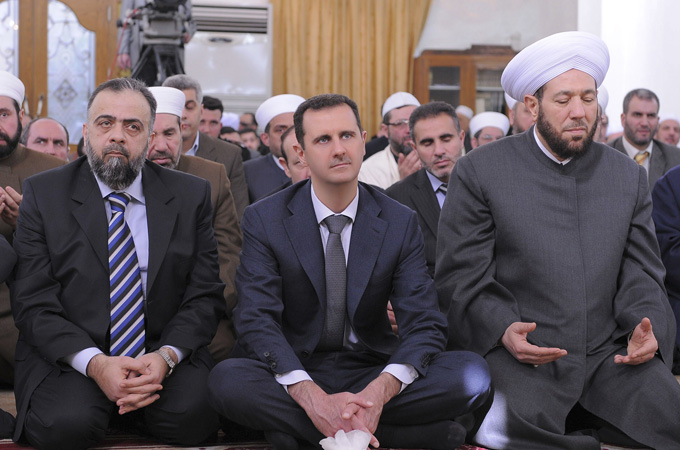
the Syrian dictator accompanied by the Sunni mufti

This was published in the excellent Ceasefire magazine.

Ba‘athism began as a conscious attempt to supercede the sectarian and regional divisions which plague the Arab world. That’s why many of its early ideologues were Christians or members of other minority groups. The Ba‘athist slogan umma arabiya wahida zat risala khalida – One Arab Nation Bearing an Eternal Message – employing the word for ‘nation’ which previously designated the international Muslim community, and the word for ‘message’ previously associated with the Prophet Muhammad’s divine message – suggests that this variety of Arabism actually intended to supercede religion itself, or to become a new religion.

In Iraq it all went wrong very quickly. Saddamist Ba‘athism in effect designated ethnic Arabs of the Sunni sect as true Arabs, the Shia majority as quasi-Persian infiltrators, and the Kurds as an enemy nation. Saddam even wrote a characteristic pamphlet called ‘Three Things God Should Not Have Invented – Persians, Jews and Flies’, and so demonstrated the slip from nationalism to fascism.

Syria was somewhat different, somewhat more sophisticated. Despite the fact that the president and his top spies and generals were Alawis from the Lattakkia region, only Sunni Islam and Christianity were taught in the state’s religious education system (to the chagrin of traditional Alawi shaikhs). When the president prayed in public he prayed in the manner of the majority, Sunni-style. In the last couple of decades the regime sought to broaden its base by coopting Sunni businessmen as well as soldiers from the minority groups. And the majority’s rituals and religious festivals were never banned as they were in Iraq.

Continue reading “Sectarianism and Honesty”

Critical Muslim

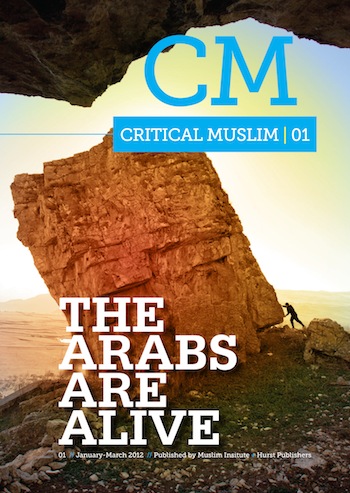
I’d like to draw your attention to the Critical Muslim, a new quarterly journal which looks like a book. I co-edit the journal with Ziauddin Sardar, who is perhaps Britain’s most prominent ‘critical Muslim’. The CM is concerned with the politics, economics, culture, law and literature of the Muslim world – and of course the Muslim world today includes locations such as London and Lima. Our writers are convinced and sceptical Muslims, religious and cultural Muslims, and non-Muslims. We publish a range of perspectives, usually but not always with a somewhat leftist leaning. And the CM has a sense of humour.

I’m very proud of the arts section. The first issues include a story by the accomplished British-Pakistani writer Aamer Hussein, poetry and prose from upcoming Iraqi writers (one of whom is the very highly-rated Hassan Blasim), a selection of the Arabic poetry (Qabbani and others) which accompanied the Arab uprisings, essays on the Palestine Literature Festival and the Erbil Literature Festival (in Iraqi Kurdistan), a great story of cross-cultural love (and disappointment) by young British writer Suhel Ahmed, poetry from the great Mimi Khalvati, an essay on Muslim jazz, and much more.

Continue reading “Critical Muslim”