Finkelstein in Prague

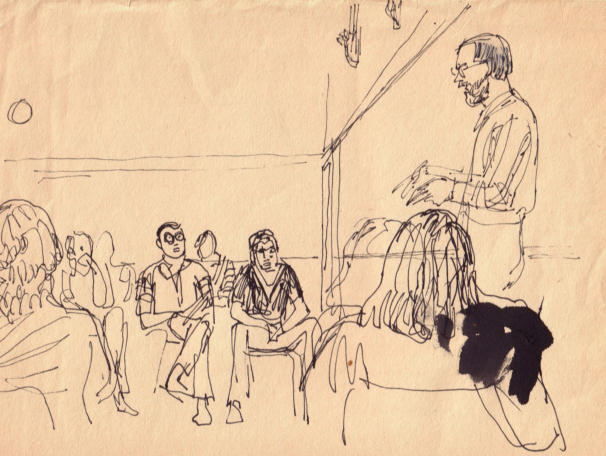
Last week, Norman Finkelstein delivered a series of lectures in Prague as part of his European speaking tour. Finkelstein was initially invited to speak at the prestigious Czech Academy of Sciences but had his invitation revoked less than 24 hours prior to his scheduled talk, allegedly at the behest of the Prime Minister’s office. A similar fate befell Finkelstein’s appearance in Munich and Berlin, where the Heinrich Boll and Rosa Luxembourg Foundations cancelled the events, following “a concerted campaign by neoconservative and pro-Israeli pressure groups, such as Honestly Concerned and BAK Shalom, known for their unconditional support of Israeli policies and the defamation of critics as anti-Semites.”

Here is Finkelstein’s lecture at Casa Gelmi in Prague, organised by the Czech pro-Palestinian group ‘Friends of Palestine’.

Continue reading “Finkelstein in Prague”

A Struggler in Context

An edited version of this review appeared at the Electronic Intifada.

“From afar,” writes Ramzy Baroud (founder of the indispensable Palestine Chronicle), “Gaza’s reality, like that of all of Palestine, is often presented without cohesion, without proper context; accounts of real life in Gaza are marred with tired assumptions and misrepresentations that deprive the depicted humans of their names, identities and very dignity.”

Baroud’s “My Father was a Freedom Fighter” is an antidote to the media’s decontextualisation and dehumanisation of Palestinians. It’s also an instant classic, one of the very best books to have examined the Palestinian tragedy.

As the title suggests, Baroud relates the life of his father, Mohammed Baroud. Each step in the story is located in a larger familial, social, economic and political context, one distinguished by eyewitness accounts and made concrete by an almost encyclopedic wealth of detail. But neither the book’s detail nor its deep reflection conflict with its compulsive readability. It’s quite an achievement.

Continue reading “A Struggler in Context”

‘Gaza is an open-air prison’

John Holmes, the United Nation’s humanitarian chief, has revisited the Gaza Strip, a year after Israel’s assault on the territory ended.

He told Al Jazeera that it was disappointing how little has changed since the war and that there has been no real possibility of reconstruction, mainly because of Israel’s siege of the Strip.

He said the blockade resulted in misery for the Palestinians.

“They’re living in a kind of open-air prison. They’re still suffering this kind of collective punishment they’ve been suffering for three years now.”

Dissident Jews: Unwanted in Germany?

by Raymond Deane

Norman Finkelstein

A European country that scapegoats a Semitic people, persecutes defenders of human rights by stripping them of employment, and denies freedom of speech to Jews: surely a description of Germany during the Third Reich?

Yes, but unfortunately also a description of Germany at the outset of the 21st century.

In the wake of German Chancellor Merkel’s craven speech to the Israeli Parliament (the Knesset) two years ago, I wrote: “a penance is being paid for Germany’s past crimes… by the Palestinians to whose plight Merkel is so indifferent…. By scapegoating the victims of its former victims, Germany is compounding its past crimes.”  (Scapegoat upon Scapegoat, Electronic Intifada, 20 March 2008).

Just one year later I described the case of Hermann Dierkes,  forced to resign his position as representative of Die Linke (The Left Party) on Duisburg city council after tentatively advocating a boycott of Israeli goods. I commented: “It appears that freedom of speech, supposedly one of the proudest acquisitions of post-Fascist Germany, is readily suppressed when exercised to advocate positive action against the racist, politicidal institutions and actions of the Zionist state.” (A public stoning in Germany, Electronic Intifada, March 2009).

Continue reading “Dissident Jews: Unwanted in Germany?”

The Second Battle of Gaza: Israel’s Undermining Of International Law

by Jeff Halper

The Israeli attack on Gaza in December 2008/January 2009 was not merely a military assault on a primarily civilian population, impoverished and the victim of occupation and besiegement these past 42 years. It was also part of an ongoing assault on international humanitarian law by a highly coordinated team of Israeli lawyers, military officers, PR people and politicians, led by (no less) a philosopher of ethics. It is an effort coordinated as well with other governments whose political and military leaders are looking for ways to pursue “asymmetrical warfare” against peoples resisting domination and the plundering of their resources and labor without the encumbrances of human rights and current international law. It is a campaign that is making progress and had better be taken seriously by us all.

Since Ariel Sharon was indicted by a Belgian court in 2001 over his involvement in the Sabra and Chatila massacres and Israel faced accusations of war crimes in the wake of its 2002 invasion of the cities of the West Bank, with its high toll in civilian casualties (some 500 people killed, 1,500 wounded, more than 4,000 arrested), hundreds of homes demolished and the urban infrastructure utterly destroyed, Israel has adopted a bold and aggressive strategy: alter international law so that non-state actors caught in a conflict with states and deemed by the states as “non-legitimate actors” (“terrorists,” “insurgents” and “non-state actors,” as well as the civilian population that supports them) can no longer claim protection from invading armies. The urgency of this campaign has been underscored by a series of notable setbacks Israel subsequently incurred at the hands of the UN. In 2004, at the request of the General Assembly, the International Court of Justice in The Hague ruled that Israel’s construction of wall inside Palestinian territory is “contrary to international law” and must be dismantled—a ruling adopted almost unanimously by the General Assembly, with only Israel, the US, Australia and a few Pacific atolls dissenting. In 2006 the UN Commission of Inquiry concluded that “a significant pattern of excessive, indiscriminate and disproportionate use of force by the IDF against Lebanese civilians and civilian objects, failing to distinguish civilians from combatants and civilian objects from military targets.” together with the harsh criticism of the UN’s Goldstone report on Gaza accusing the Israeli government and military again of targeting Palestinian civilians and causing disproportionate destruction, has made this campaign even more urgent.

Continue reading “The Second Battle of Gaza: Israel’s Undermining Of International Law”

President of Cant

By Tariq Ali

A year since the White House changed hands, how has the American empire altered? Under the Bush Administration it was widely believed, in both mainstream opinion and much of the amnesiac section of the left, that the United States had fallen under an aberrant regime, the product of a virtual coup d’état by a coterie of right-wing fanatics—alternatively, ultra-reactionary corporations—who had hijacked American democracy for policies of unprecedented aggression in the Middle East. In reaction, the election to the Presidency of a mixed-race Democrat, vowing to heal America’s wounds at home and restore its reputation abroad, was greeted with a wave of ideological euphoria not seen since the days of Kennedy. Once again, America could show its true face—purposeful but peaceful, firm but generous; humane, respectful, multi-cultural—to the world. Naturally, with the makings of a Lincoln or a Roosevelt for our time in him, the country’s new young ruler would have to make compromises, as any statesman must. But at least the shameful interlude of Republican swagger and criminality was over. Bush and Cheney had broken the continuity of a multilateral American leadership that had served the country well throughout the Cold War and after. Obama would now restore it.

Rarely has self-interested mythology—or well-meaning gullibility—been more quickly exposed. There was no fundamental break in foreign policy, as opposed to diplomatic mood music, between the Bush 1, Clinton and Bush 2 Administrations; there has been none between the Bush and Obama regimes. The strategic goals and imperatives of the us imperium remain the same, as do its principal theatres and means of operation. Since the collapse of the USSR, the Carter Doctrine—the construction of another democratic pillar of human rights—has defined the greater Middle East as the central battlefield for the imposition of American power around the world. It is enough to look at each of its sectors to see that Obama is the offspring of Bush, as Bush was of Clinton and Clinton of Bush the father, as so many appropriately biblical begettings.

Continue reading “President of Cant”

Members of Congress sign letter urging Obama to stop the siege of Gaza

Some good news came out of Washington yesterday that went largely unnoticed. Ha’aretz reported 54 members of Congress sent a letter to president Barack Obama urging him to pressure Israel to end the siege on Gaza.  Ha’aretz correspondent Natasha Mozgovaya writes:

The letter was the initiative of Representatives Jim McDermott from Washington and Keith Ellison from Minnesota, both of whom are Democrats. Ellison is the first American Muslim to ever win election to Congress. McDermott and Ellison wrote that they understand the threats facing Israel and the ongoing Hamas terror activities against Israeli citizens but that “this concern must be addressed without resulting in the de facto collective punishment of the Palestinian residents of the Gaza Strip.” “We ask you to press for immediate relief for the citizens of Gaza as an urgent component of your broader Middle East peace efforts,” they wrote, adding that the siege has hampered the ability of aid agencies to do their work in Gaza. The congressmen urged Obama to pressure Israel to ease the movement of people into and out of Gaza, especially students, the sick, aid workers, journalists and those with family concerns, and also to allow the import of building materials to rebuild houses. Israel has warned that such materials would be used to rebuild Hamas infrastructure and not civilian homes.

Fifty-four members of Congress urging the president to pressure Israel to treat Gazans like human beings is a positive development, albeit a VERY small one.  Critics may content that the letter protects Israel’s image. I understand that. But I still think it’s encouraging.

Operation Cast Lead blew the lid off Israel’s rationale for the occupation and the congressional visits to Gaza have exposed to them what Gazans encounter on a day-to-day basis. More members of Congress need to do this.

Full text of the letter below.

Continue reading “Members of Congress sign letter urging Obama to stop the siege of Gaza”

A Country of Words

“We travel like other people, but we return to nowhere…

We have a country of words.”

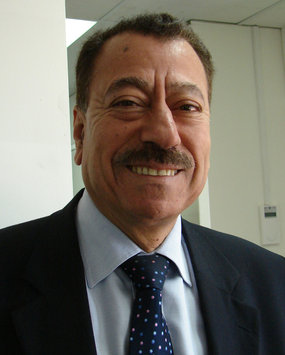
A traditional Arab media operation, according to Abdel Bari Atwan, is “characterised by editorial interference from the owners, slavishness to social hierarchies, backstabbing and nepotism.” It goes without saying that all the Arab local-national press, TV and radio stations are controlled by their respective regimes. Only in the pan-Arab sphere, beyond the control of any single regime, is there a possibility of anything better. Yet of the pan-Arab newspapers, ash-Sharq al-Awsat and al-Hayat are owned by different branches of the Saud family dictatorship, while the smaller-circulation al-Arab is part of the Libyan regime’s propaganda apparatus. Even after the satellite revolution, pan-Arab TV remains tame and partial, fattened and diluted by Gulf money, often providing its viewers a contradictory diet of Islamic and American-consumerist bubble gum. The second most famous channel in the Arab world, al-Arabiyya, is yet another mouthpiece for the Sauds (during last winter’s Gaza massacre it became known amongst Arabs as al-Ibriyya, or ‘the Hebrew’). The most famous channel, al-Jazeera, is of course the model that broke the mould. Its challenging reporting and inclusion of all sides in open debate has had a revolutionary effect on the Arabs.

Al-Jazeera’s print equivalent is the London-based al-Quds al-Arabi, founded in 1989, seven years before al-Jazeera. It may not have the immediate impact or mass audience of al-Jazeera (it’s banned in most Arab countries) but with its cast of excellent writers, its fearless exposure of Arab regime corruption, its scoops (al-Qa’ida chooses to communicate with the world through its pages), its renowned culture section, and its refusal to bury news from Palestine behind the football results, al-Quds al-Arabi is indispensable. Rather than backstabbing, its staff have sometimes worked for no pay to keep the operation afloat. Its founder, editorialist and editor-in-chief Abdel Bari Atwan is as passionate and articulate in speech as on the page, and is admired by the Arabs for his call-a-spade-a-spade style on those TV channels which dare to host him, usually al-Jazeera Arabic and Hizbullah’s al-Manar. Atwan’s “The Secret History of al-Qa’ida” is a book-length account of his meeting with Osama bin Laden and of the development of the al-Qa’ida network. Now Atwan has written an autobiographical memoir titled with a line from a Mahmoud Darwish poem, “A Country of Words.”

Continue reading “A Country of Words”
Inviting David Brooks to My Class

The Zionists are prisoners of a bad dream: they must first free themselves, break free from the prison in which they can only play the part of tormentors, if they and especially their Palestinian victims are to live normal lives.

M. Shahid Alam

On January 12, the New York Times carried an article by David Brooks on Jews and Israel. It so caught my eye, I decided to bring its conservative author to my class on the economic history of the Middle East. I sent my students the link to this article, asked them to read it carefully, and come to the next class prepared to discuss and dissect its contents.

My students recalled various parts of the NYT article but no one could explain its substance. They recalled David Brooks’ focus on the singular intellectual achievements of American Jews, the enviable record of Israeli Jews as innovators and entrepreneurs, the mobility of Israel’s innovators, etc. One student even spoke of what was not in the article or in the history of Jews – centuries of Jewish struggle to create a Jewish state in Palestine.

But they offered no comments about Brooks’ motivation. Why had he decided to brag about Jewish achievements, a temptation normally eschewed by urbane Jews. In my previous class, while discussing Edward Said’s critique of Orientalism, I had discussed how knowledge is suborned by power, how it is perverted by tribalism, and how Western writers had crafted their writings about the Middle East to serve the interests of colonial powers. Not surprisingly, this critique had not yet sunk in.

I coaxed my students, asking them directly to explore if David Brooks had an axe (or more than one) to grind. Was there an elephant in the room they had missed? What was the subtext of the op-ed?

Continue reading “Inviting David Brooks to My Class”