Kenneth Roth of Human Rights Watch calls bullshit on Russian and Assad regime propaganda in an appearance on RT (Russia’s answer to Fox News).
Category: Syria
Ground Zero Syria
A documentary on Assad’s war on the Syrian people.
Debating Intervention
This morning I participated in a discussion on the BBC World Service Radio’s World Have Your Say concerning potential strikes on the Assad regime. Listen here.
Later in the day I made a brief contribution to Newshour (in the last ten minutes). Here it is.
Intervention?
 If the US-led West wished to invade and occupy Syria, or to engineer regime change from afar, it would have taken advantage of the two-and-a-half-year chaos in Syria to intervene long before now.
When the US-led West invaded Iraq in 2003, Saddam Hussain was contained. He’d committed his genocides in the past, when he was an ally of the West against Iran, and in 1991, under Western military noses (as he slaughtered Shia rebels and their families en masse, the allied forces in Kuwait and southern Iraq gave him permission to use helicopter gunships, and watched). But in 2003 Saddam was contained and reasonably quiet. There was no popular revolution against him. The West invaded anyway, on the pretext of inexistent Weapons of Mass Destruction.
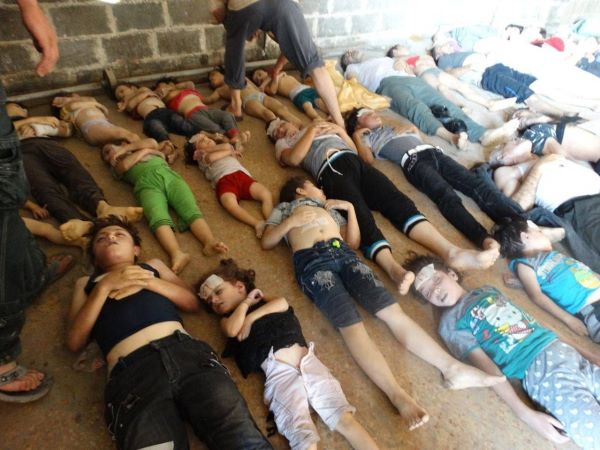
The Syrian regime’s ultra-violent repression of a peaceful protest movement spawned an armed resistance. The regime met the armed resistance with genocide and ethnic cleansing. Then a week ago the regime struck multiple targets in the Damascus suburbs with chemical weapons, perhaps killing as many Syrians in three hours as Palestinians were killed in Israel’s month-long rampage in Gaza (2008/9).
The conflict has been well and truly internationalised for a long while now. Saudi Arabia, Qatar and Turkey have provided limited and intermittent military supplies to various parts of the opposition (the US has prevented them from delivering heavy weapons). The international brigades of the Islamic State of Iraq and al-Sham – an enemy both of the regime and the democratic opposition to the regime – has been empowered in pockets of northern Syria. The regime has received much more serious financial and military help from Russia and Iran, and has brought in Hizbullah and Iraqi sectarian militias to help it fight its battles. Hizbullah’s switch from defence against Zionism to repression of a revolutionary Arab people has propelled Lebanon back to the verge of civil war. Meanwhile, between a quarter and a third of Syrians are displaced, destabilising Turkey and Jordan as well as Lebanon.
Letter to John Baron MP
 Behind the scenes at Newsnight, John Baron MP said to me, “If you put your emotions aside, for the sake of containment, wouldn’t it be better if Assad won?” I wrote him the following response. As he hasn’t responded, I’m making it public. (To John Baron’s credit, he was one of the few Tories to oppose the invasion of Iraq and the occupation of Afghanistan).
We met at the BBC Newsnight debate on Syria. I think you gave me a card, which I promptly lost. I hope you find this message.
I’m taking the liberty of sending you my latest article concerning sectarian readings of the Syrian situation (my other stuff is on the same blog) as well as something by the secular intellectual Yassin al-Haj Saleh which presents a case better than I could.
As for your question, wouldn’t it be better for containment if Assad were to win? here’s a slightly fuller answer.
Assad can’t win completely, even with continuing solid support from Russia, Iran and Iran’s Iraqi and Lebanese clients, because the opposition has numbers on its side (and secondarily because Saudi weapons will continue to come in). If things go on as they are, a much more likely medium term result is the splintering of the country into zones of destabilisation:
1. a regime/Alawi zone between Damascus and the coast bridged by Homs, which will involve a massive ethnic cleansing of Sunnis from the Homs area (the regime has already burnt the land registry) and probably from the coastal cities too. The blowback from this probable future may well catalyse the sectarian mass slaughter of civilians which hasn’t yet happened from the opposition’s side. As I said in the green room, Assad’s rump state would be in effect Iran’s state (as opposed to Iran’s ally, which Syria was before 2011), beholden to Iran, because it’s Iran and its clients who are directing the regime fightback now. The risk is high that Iran will use Syria as a proxy front for its war with Israel in the same way that Syria once used Lebanon. And while Iran already ‘has’ Lebanon, Hizbullah is forced to deal with other groups in Lebanese politics. Control of a straightforward military/sectarian dictatorship, and a bigger country, is much more of a prize for Iran. I’m no friend of Israel, but America and Britain generally are, so it’s surprising to see all concerned ignoring the emergence of a greater strategic threat to the status quo than Iran’s nuclear programme (if they actually believe their rhetoric of Iran posing a threat to Israel).
Politics not Theology
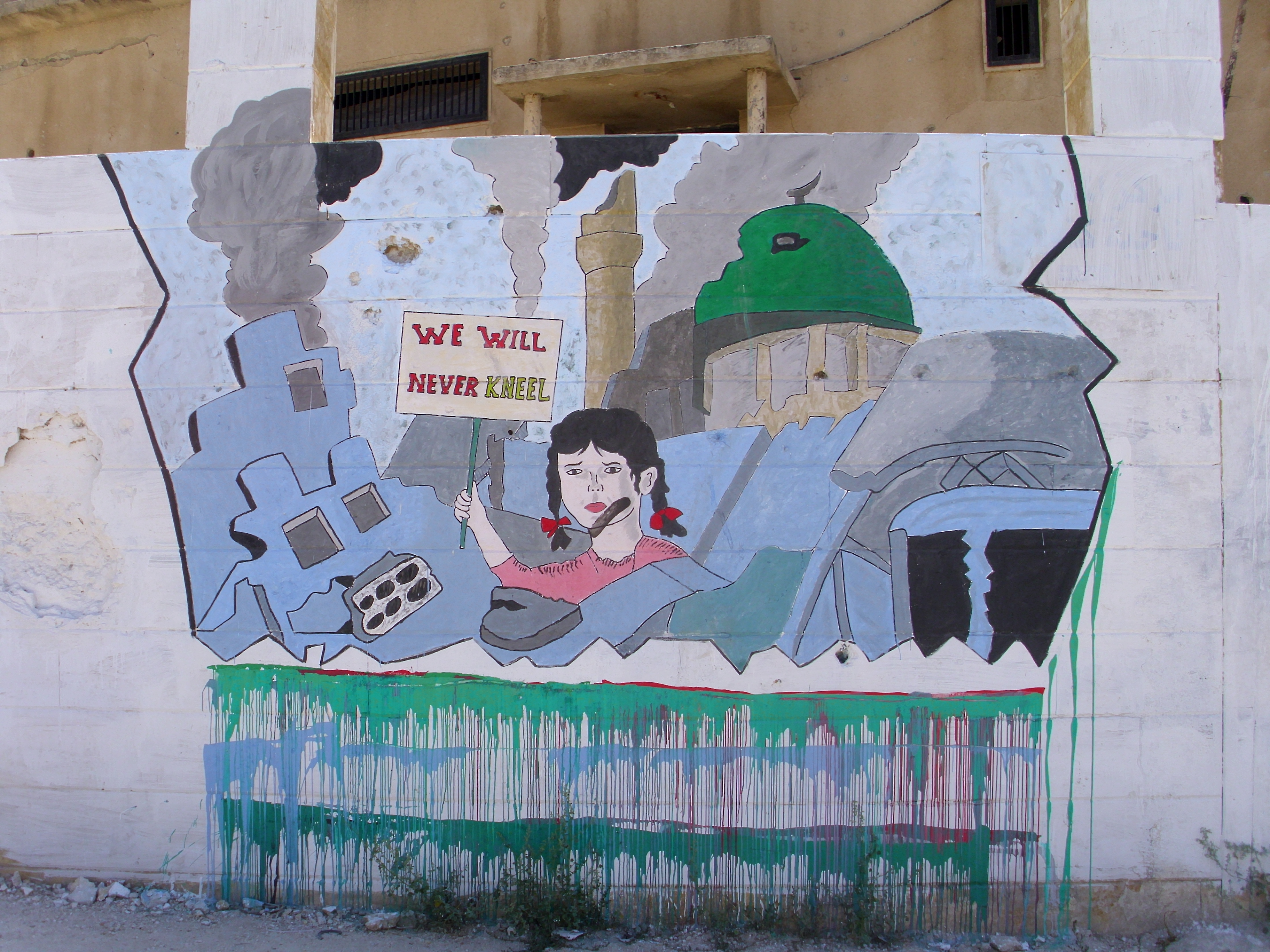 This was published by the National. If you’d prefer to read my tense choices, before the subediting process, read this version here.
I live in Scotland, where I am witness to the continuing legacy of Protestant-Catholic communal hatred, despite the theological indifference and general irreligiosity of the populace.
The hatred is most commonly activated by the Rangers-Celtic football game. (In his great novel “Kieron Smith, Boy”, James Kelman brings it viscerally alive through the mouth of a Glaswegian child.) It is manifest too in Orange Order marches and schoolyard slurs. It intersects with the gang violence of the ‘schemes’. Most of the time, of course, it’s absent, or it emerges as friendly competitiveness rather than actual conflict, but you can bet your last communion wafer that it would blossom into something much fiercer if, in the event of political crisis, a divide-and-rule tyrant were to send Catholic militia in to pacify restive Protestant areas, or vice versa.
Like Scotland’s sectarians, Syria’s Alawis are usually largely secular and ignorant of their own theology (at least they were – a war-driven religious revival is touching them as well as the Sunnis). Over the last four decades Alawi religious scholars have been assassinated or otherwise silenced by the Assad regime as it sought to render the community entirely dependent on the Ba‘athist state. Most Alawis (by no means all) continue to support Assad because they have no other community leadership. Add to this that many have relatives working in the security forces, and so fear a loss of privileges and even violent revenge when the regime falls. Alawis also remember their historical marginalisation by the Sunni majority, and therefore fear majority rule.
As in Iraq, Palestine-Israel, or Northern Ireland, the conflict in Syria is not about theology but about group fears and resentments. Ultimately, it’s about power. Communal tensions are the result not of ancient enmities but of contemporary political machinations. And nothing is fixed in time. Syria’s supposedly ‘Sunni rebellion’ (which contains activists and fighters of all sects) becomes more or less Islamist in response to rapidly-changing political realities. A few months ago, for example, Islamist black flags dominated demonstrations in Raqqa, in the east of the country; now Raqqa’s demonstrations are as likely to protest Jabhat an-Nusra, the extremist militia which nominally controls the city, as the regime. This isn’t an Islamist rebellion but a popular revolution. As in Egypt, if the Islamists oppress the people or fail to deliver, they too will be revolted against.
Journey to Kafranbel
This account of my trip into Syria’s partially liberated Idlib province was published by the Guardian.
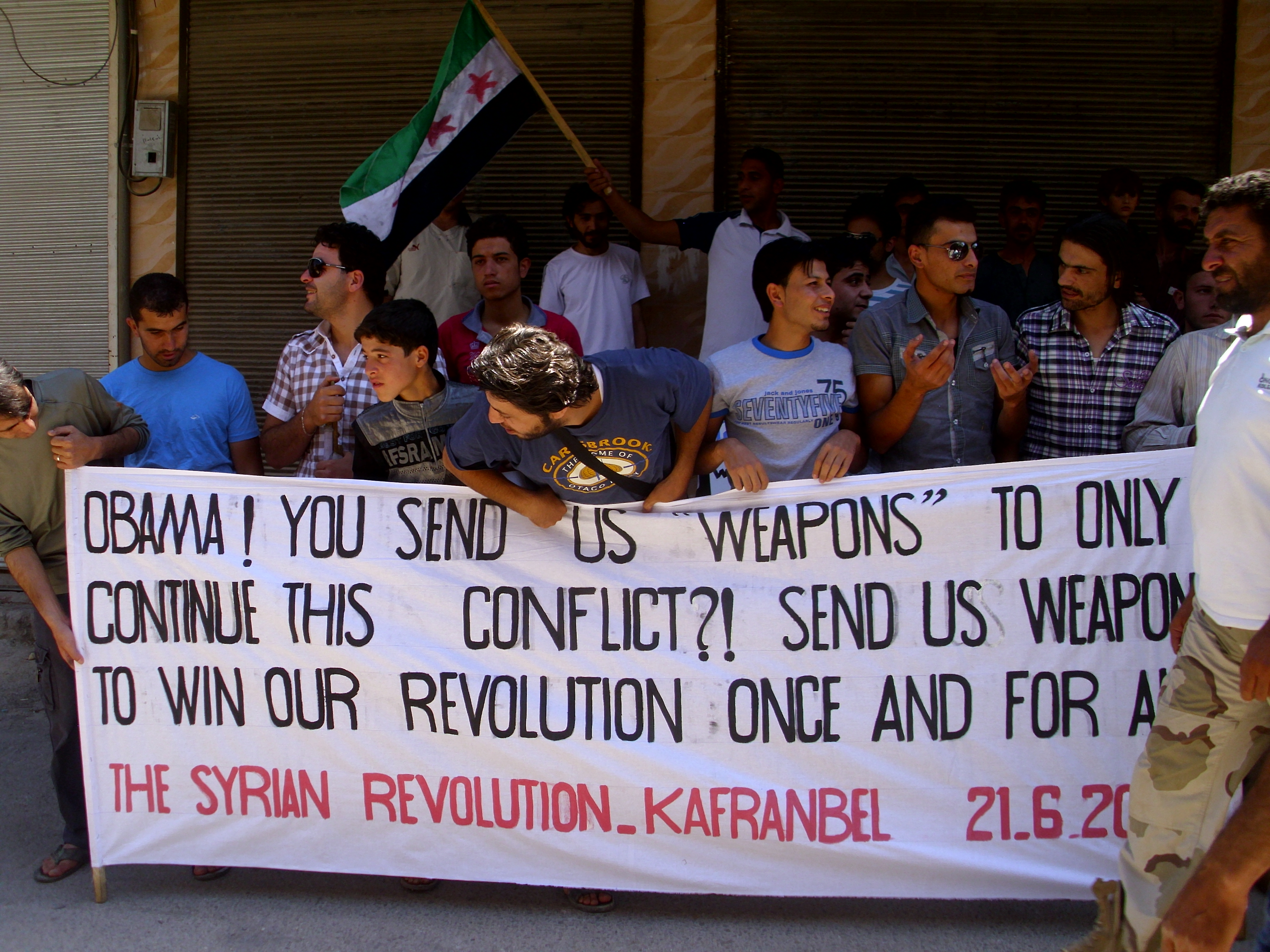 To cross the border I had to climb a wall three times my height. It was the most frightening part of my trip into liberated Syria.
At Atmeh camp (where I’d been working, just inside Syria on the Turkish border) there’s no passport control but only a gap in the barbed wire. On the day of our journey, however, the Free Syrian Army and PKK-linked Kurds were facing off nearby and the Turkish authorities blocked access as a result. This meant we had to go through the official border at Bab al-Hawa. Two of our party possessed Syrian passports, and were waved through. Two of us didn’t, and so were smuggled across by Kurdish teenagers.
We skirted a deserted shack which our escorts pretended was a policeman’s house. One disappeared for a while, pretending to pay an expensive bribe. Our winding path led through a red-soiled olive grove, far away from the border post, but then wound back towards it, and to the wall. I could see the backs of soldiers through the trees, smoking not patrolling.
There were no security cameras. The boys told me they’d taken Chechens across like this.
At wallside a whispered negotiation ensued. We soon haggled a price for their service. The next part was more difficult – They wanted us to scale the wall into what was obviously still the Turkish border post.
I looked at my fellow smugglee. “Do you believe this?” I asked in English.
“I don’t know. Talk to them some more.”
So it went on, until at last Abdullah, one of our hosts inside Syria, phoned to advise me to do as the boys said.
So I climbed too fast for vertigo to strike, scissored my legs over the railings, dropped onto concrete, rolled, picked myself up, then endeavoured to walk across the neatly-trimmed lawn with a nonchalant but entitled and entirely legal air. I strolled through the airconditioned duty free zone and rejoined my companions to wait for the bus through no-man’s-land. (No private cars have been allowed here since a car bombing in February killed thirteen). Sitting in front of me on the bus: a fattish version of Che Guevara, in curls, beard and black beret, but with nogodbutgod printed on the beret.
Newsnight: Is it time to arm the Syrian People?
Pulse co-editor Robin Yassin-Kassab on the BBC’s Newsnight show in an episode dedicated to Syria.
Yassin-Kassab versus Landis
Thanks to Joshua Landis for posting (at Syriacomment) this dispute, which originally took place on Sultan Saoud al-Qassimi’s facebook page. I earlier took issue with Syriacomment’s coverage here.
Sultan Sooud: Great read by Joshua Landis on Obama’s three options on Syria. The one, two and three state solutions.
 Racan Alhoch: I love orientalist solutions. They are always a modified version of the Sykes-picot. The best solution would be for people like Landis to fuck off.
 Joshua Landis: Rocan, I am not sure what is orientalist about these possible outcomes. If Assad hangs on to the south is Syria and the rebels hold the north it will not be because of the west. It will be a Syrian solution. If the rebels are able to conquer Damascus it will probably be thanks to help from the West.
Help Syria Now, Tomorrow May Be Too Late
People fight here with absolute defiance because they realise that a big massacre awaits them if the regime succeeds in regaining control over the area. Those who are not killed immediately will be arrested and tortured savagely. The options of the people are to either die resisting the aggression of a fascist regime or to be killed by this same regime in the worst way possible. People shudder with fear, and I myself shudder, at the thought that this regime might rule us again.
From the besieged East Ghouta, in the Damascus countryside, Yassin al-Haj Saleh appeals to leaders of public opinion in the West. Published by the Guardian.
Dear friends,
Three months ago, I left the city of Damascus, where life had become too oppressive, to go to the “liberated” area of East Ghouta. An area that had 2 million inhabitants before the uprising, East Ghouta is now populated by only around one million. It was a base from which the rebels headed towards the capital, but is now completely besieged by the regime’s forces due to renewed support from Russia and Iran, and the arrival of Iran-sponsored Iraqi and Lebanese militias. During the past three months, I have personally witnessed the staggering lack of arms, ammunition, and even food for the fighters. Many of them would get two meals a day at most, and their situation would have been immeasurably worse had they not been local residents, protecting their own towns and families, and living off their own kin.
The cities and towns that I have seen or lived in during these months are subjected to daily and random air strikes and mortar and rocket shelling. Victims, mostly civilians, fall every day. In a centre for civil defence where I lived for a month I used to see all the bodies brought in. Some were indistinguishable remains, others belonged to children, and among the victims was a six-month fetus lost by a terrified mother. Not a single day passed during that month without victims; two or three usually, but nine on one day, 28 on another, and 11 on a third.
 P U L S E