For more, see the New York Times: Syrian Protesters Take to Streets as Airstrikes Ease.
Syrians took back to the streets during the cease-fire. This is the revolutionary spirit the regime and the Russians are trying to bomb away.
For more, see the New York Times: Syrian Protesters Take to Streets as Airstrikes Ease.
Syrians took back to the streets during the cease-fire. This is the revolutionary spirit the regime and the Russians are trying to bomb away.
by Gilbert Achcar
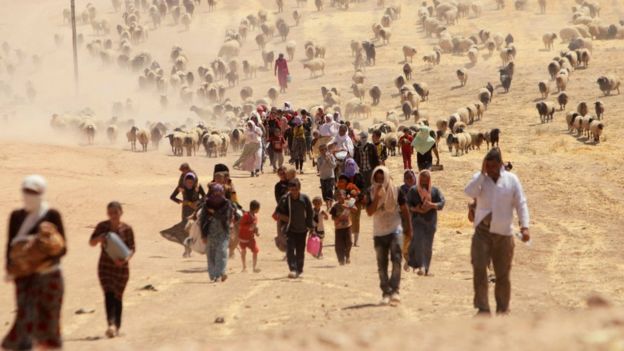
Most people prefer to keep referring to the self-proclaimed Islamic State by the acronym of its previous name: ISIS, the Islamic State in Iraq and Syria (or, more accurately ‘al-Sham’—Greater Syria—approximately translated by some as ‘the Levant’, with the acronym hence turned into ISIL). On this thus-named ISIS, close to forty books and counting have been hitherto published in English, of which the three reviewed here are the best-selling in the UK.
Of these, Patrick Cockburn’s was one of the very first books written on ISIS. It came out in 2014 under the title The Jihadis Return. The one reviewed here is an updated edition with a new title. It recapitulates the views that the author developed in his coverage of events in Iraq and Syria for The Independent. It is written in a most readable journalistic style by an author who is well acquainted with this part of the world, having covered it for many years (especially Iraq). However, the book contains hardly any references to substantiate its numerous assertions other than Cockburn’s personal testimony, often quite anecdotal.
Since September 30, 2015 Russia has been carrying out air strikes in Syria in support of its ally President Bashar al-Assad. The campaign has been relentless and growing in intensity, with Russian jets flying 444 combat sorties against more than 1,500 targets between February 10 and 16 alone.
Moscow insists these attacks have only been aimed at fighters from ISIL and other “terrorist groups” such as al-Nusra Front. But monitoring groups, including the Violations Documentation Center and the Syrian Observatory for Human Rights, say thousands of non-combatants have also been killed or wounded. Amnesty International and others have said the bombings may be war crimes. Indeed, Amnesty has also cited consistent reports of second bombardments from planes returning to kill and injure rescue workers, paramedics and civilians attempting to evacuate the wounded and the dead from earlier raids.
So are civilians being deliberately targeted – and could Russia be guilty as charged? In this exclusive report for People & Power, Danish born filmmaker and journalist Nagieb Khaja went to investigate. His remarkable film, shot in Aleppo, Idlib and other rebel-held areas of Syria at the end of last year, is a harrowing, tense and at times breathtaking portrayal of life underneath the Kremlin’s bombs.

This is my latest article for al-Araby al-Jadeed/ the New Arab.
The first fact is this: the Kurds have suffered a terrible historical injustice. The Arabs were rightly enraged when Britain and France carved bilad al-Sham (the Levant) into mini-states, then gave one of them to Zionism. But the post-Ottoman dispensation allowed the Kurds no state at all – and this in an age when the Middle East was ill with nationalist fever. Everywhere the Kurds became minorities in hyper-nationalist states.
Over the years an estimated 40,000 people have been killed in Turkish-Kurdish fighting, most of them Kurds. In the late 1980s, Saddam Hussain’s genocidal Anfal campaign murdered somewhere between 50 and 200,000 Iraqi Kurds. In Syria, where Kurds formed about 10% of the population, or around two million people, it was illegal to teach in Kurdish. Approximately 300,000 Kurds (by 2011) were denied citizenship by the state, and were therefore excluded from education and health care, barred from owning land or setting up businesses.
While oppressing Kurds at home, President Hafez al-Assad (Bashaar’s father) cultivated good relations with Kurdish groups abroad. This fitted into his regional strategy of backing spoilers and irritants as pawns against his rivals.
Continue reading “‘Democratic Confederalism’ or Counter-Revolution?”
I was talking alongside journalists Anne Barnard and Borzou Daragahi, and aid worker Dalia al-Awqati, on KCRW, a Californian radio station. The discussion concerns the Munich theatre and the effects of the military onslaught on Syrian civilians. If you follow this link you’ll hear it. I come in between 20.40 and 27.15.
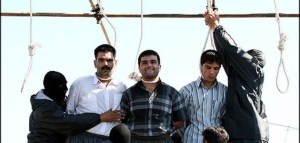
This was published at al-Araby al-Jadeed/ the New Arab.
I recently gave a talk in a radical bookshop in Scotland. The talk was about my and Leila al-Shami’s “Burning Country: Syrians in Revolution and War”, a book which aims to amplify grassroots Syrian revolutionary voices and perspectives. My talk was of course critical of the Iranian and Russian interventions to rescue the Assad regime.
During the question and answer session afterwards, a young man declared: “You’ve spoken against Iran. You’ve made a good case. But the fact remains, Iran is the protector of Shia Muslims throughout the region.”
In reply I asked him to consider the Syrian town of al-Qusayr at two different moments: summer 2006 and summer 2013.
During the July 2006 war between Israel and Hizbullah, hundreds of thousands of Lebanese fled south Lebanon and south Beirut – the Hizbullah heartlands where Israeli strikes were fiercest – and sought refuge inside Syria. Syrians welcomed them into their homes, schools and mosques. Several thousand were sheltered in Qusayr, a Sunni agricultural town between Homs and the Lebanese border.
It made no difference that most of these refugees were Shia Muslims. They were just Muslims, and Arabs, and they were paying the price of a resistance war against Israeli occupation and assault. That’s how they were seen.
There’s an urgent need for discussion between revolutionary Syrians and Syrians who are scared of the revolution. The two sides need to hear each other. Alawis and others have good reason to fear aggressive forms of Islamism and the possibility of generalised ‘revenge’ against their community when the regime falls.
The TV argument below, of course, is not the discussion required. On the revolution’s side, for a start, there’s me, resident in Scotland and not at all a ‘proper’ Syrian revolutionary. And on the other side is an outright propagandist called Ammar Waqqaf, a deliberate purveyor of misinformation and a slanderer of the Syrian people.
Where are the serious representatives of anti-revolution Syrians? The ones who are able to recognise the genocidal slaughter and displacement suffered by their Sunni neighbours? The ones who don’t (pretend to) consider an imperialist invasion of the country to be an expression of sovereignty? The sad truth is that such people are silenced and eliminated by the regime, which has silenced and eliminated oppositional or just independent Alawis over decades.
The shouting starts at 4.37.
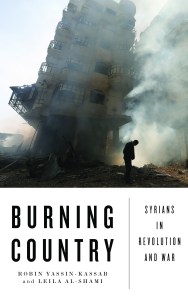 The excellent Books pages at the National have published an extract from our book “Burning Country: Syrians in Revolution and War” (now available in the US too). Before the extract comes an introduction to the book and the situation.
The revolution, counter-revolutions and wars in Syria are terribly misunderstood, particularly in the English-speaking West, by policy makers and publics alike. There are many shining exceptions, but in general poor media coverage, ideological blinkers and orientalist assumptions have produced a discourse which focuses on symptoms rather than causes, and which is usually unencumbered by grassroots Syrian voices or any information at all on Syrian political and cultural achievements under fire.
The consequent incomprehension is disastrous for two reasons – one negative, one positive.
First, the exponentially escalating crisis in Syria is a danger to everybody – Syrians and their neighbours first, but Europe immediately after. Russia’s terror-bombing is creating hundreds of thousands of new refugees. Meanwhile there’s good reason to believe President Putin is funding far-right anti-immigrant parties across Europe. It is very possible that this year’s flood of refugees will re-establish Europe’s internal borders, destroying the ‘Schengen’ free movement area, seen by some as Europe’s key political achievement since World War Two. With eleven million homeless, traumatised people on the eastern Mediterranean, terrorism is sure to increase. And the long-term geopolitical consequences of allowing, even facilitating, Russia, Iran and Assad to crush the last hopes of democracy and self-determination in Syria will create a still more dangerous world for our children. Yet European heads are being buried in the sand. Some still imagine a peace process is underfoot.
And the positive reason. Amidst the depravities of war, Syrians are organising themselves in brave and creative ways. The country now boasts over 400 local councils, most democratically elected, as well as tens of free newspapers, radio stations, women’s centres, and an explosion in artistic production. We shouldn’t just be feeling sorry for Syrians, but learning from them too. Their democratic experiments are currently under full-scale international military assault. They may be stamped out before most non-Syrians have even heard of them.
Continue reading “‘Burning Country’ Extract: On Islamisation”
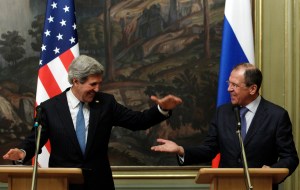 I’m very happy to be published at al-Araby al-Jadeed, or the New Arab, which has attracted some very on-point political and cultural voices, in both languages.
Syria is entering its darkest stage yet. Intense Russian bombardment and Iranian-backed militias have almost encircled rebel-held Aleppo. The city’s last hospital has been hit by a Russian airstrike. In the liberated south too – where provincial elections were recently held – the revolution is being driven back. Hundreds of thousands of new refugees are fleeing, seeking shelter in caves or under trees. Several refugee camps have also been bombed.
Russia is winning the country back for Assad, supposedly for the sake of stability. But the notion that the revolutionary areas of the Arab world can return to stability under the old security states is every bit as a-historically nostalgic and supernatural as the Islamist idea that the Muslims can return to peace and justice under a medieval caliphate.
The Arab revolutions erupted for a reason – because, over decades, the regimes had failed their people economically, politically, socially and culturally. The regimes collapsed inevitably – are still collapsing – under the the weight of this historical failure.
Faced with a democratic uprising and incapable of genuine reform, Syria’s Assad regime provoked a civil war. Five years later it has lost four-fifths of the country, a reality which massive imperialist intervention – the Iranian-organised trans-national Shia jihadists on the frontlines and the Russian bombers overhead – is only now changing.
Even within regime-held territory, the old ‘national’ regime has already fallen, replaced by a condominium of foreign states and local warlords. The army, bled by casualties, desertions and defections, is a shell of its former self.
If you follow this link, I’m speaking between 6 minutes and 10.30 minutes on the international assault on Syria, the complicity of the United States, and the demographic realities which mean this is far from over.
 P U L S E