In this inaugural lecture, Professor Roger Mac Ginty focuses on the conflict avoiding and reconciliation practices used in everyday life in deeply divided societies. Offering an alternative to the emphasis on top-down interventions by professional conflict resolution ‘experts’, Professor Mac Ginty considers how everyday peace skills can help prevent a divided society from tipping over into civil war. This lecture was delivered on 23rd October, 2013.
Category: Uncategorized
Daniel Ortega Recruits the Head of Donald Trump’s Bible Study
The move reflects both the social conservatism of the Nicaraguan government and its desire for relief from U.S. sanctions.

Amid thousands decked out in the red-and-black bandanas of a ruling party that once espoused the virtues of Marx and Lenin, a towering, evangelical gringo — the head of a weekly bible study at Donald Trump’s White House — took centerstage. Ralph Drollinger, a professional basketball player turned pastor, donning a suit in the muggy capital of Nicaragua, then sermonized on what it means to be “a Christian nation.”
The target of this July 19 mission trip was not the poor in this country of some 6 million, but the country’s ruling class: a U.S.-sanctioned government that invited him down to celebrate 40 years since the overthrow of a U.S.-backed dictator, following a popular uprising last year that nearly toppled it too.
“In the United States of America, we have found amongst our political leaders that it is essential they have a Bible teacher in their midst,” Drollinger said, his remarks airing on state-controlled TV. “And we are so blessed, Mr. President and Mrs. Vice President, about the opportunity that you see to do the same here in Managua.”
Continue reading “Daniel Ortega Recruits the Head of Donald Trump’s Bible Study”
Nothing to Envy: Ordinary Lives in North Korea
As part of the Baugh Center Free Enterprise Forum, guest speaker Barbara Demick spoke on the topic of “Nothing to Envy: Ordinary Lives in North Korea.”
Barbara Demick’s book Nothing to Envy: Ordinary Lives in North Korea is listed in the 100 Best Chinese, Japanese and Korean History Books
For Sama, Documentary Film Screenings
FOR SAMA was awarded the Prix L’Œil d’Or for Best Documentary at the 2019 Cannes Film Festival. It also won the Grand Jury Award for Best Documentary at the SXSW Film Festival, and the Special Jury Prize for International Feature Documentary at the Hot Docs Festival.
Resources
- Syria: A woman’s view of the world’s most brutal war
- Waad and Hamza al-Kateab on surviving the siege on Syria, resisting a regime and ‘For Sama’
- For Sama documentary official website
- For Sama facebook page
SCREENINGS + Q&A
New York, US: 20 September – Photoville
London, UK: 14 September – Bertha Dochouse
Dublin, Ireland: 13-19 September 2019 – Irish Film Institute
London, UK: 13 September – Picturehouse Central, including Q&A with directors.
Bristol, UK: 12 September – Watershed, including Q&A with directors.
London, UK: 11 September – Ritzy Picturehouse Brixton, including Q&A with directors.
London, UK: 11 September – Barbican, including Q&A with directors.
Connecticut, US: 10 September – University of Connecticut
London, UK: 10 September – NFT1, BFI , including Q&A with directors.
Cambridge, UK: 9 September – Arts Picturehouse, including Q&A with directors.
London, UK: 5 September – Ciné Lumière, including Q&A with directors.
Glasgow, UK: 4 September – GFT, including Q&A with directors.
Manchester, UK: 3 September – H.O.M.E, including Q&A with directors.
Helsinki: 2 September – Helsinki Int Film Festival
London, UK: 2 September – Curzon Soho, London, including Q&A with directors.
Samar Yazbek: My Journey to the Shattered Heart of Syria (2015)
Samar Yazbek was a well-known journalist, a presenter on Syrian television and a celebrated novelist when she fell foul of the Assad regime, leaving her no choice but to flee. She was forced to watch from afar as a peaceful uprising turned into violent conflict and her country burned. This is from 2015.
Julian Assange Reveals: Holocaust Denier Is a Trusted ‘Friend’

Julian Assange barely even knows the far-right, Holocaust-denying Russian kook with six different names, the latest being “Israel Shamir.” That was the line in March 2011, per a statement from WikiLeaks, released amid what the head of the former transparency organization reportedly claimed was a Jewish-orchestrated campaign to smear him.
Israel Shamir has never worked or volunteered for WikiLeaks, in any manner, whatsoever. He has never written for WikiLeaks or any associated organization, under any name and we have no plan that he do so. He is not an ‘agent’ of WikiLeaks. He has never been an employee of WikiLeaks and has never received monies from WikiLeaks or given monies to WikiLeaks or any related organization or individual. However, he has worked for the BBC, Haaretz, and many other reputable organizations.
It is false that Shamir is ‘an Assange intimate’.
Months before, Julian Assange himself disputed this. In a letter from November 2010, just obtained by the Associated Press, the WikiLeaks founder wrote:
I, Julian Assange, hereby grant full authority to my friend, Israel Shamir, to both drop off and collect my passport, in order to get a visa, at the Russian Consulate, London.
A month later, Shamir would travel to Belarus, handing the pro-Russian dictator, Alexander Lukashenko, U.S. diplomatic cables, obtained by WikiLeaks detailing America, interactions with Belarusian opposition figures, some of whom would end up arrested, or dead.
But we already knew Assange was intimately familiar with the odious Shamir; all one needed to do was read what those slandered as MSM smear-artists were reporting, credibly, at the time. For example, as former WikiLeaks staffer James Ball noted in a piece for The Guardian back in November 2011:
Shamir has a years-long friendship with Assange, and was privy to the contents of tens of thousands of US diplomatic cables months before WikiLeaks made public the full cache. Such was Shamir’s controversial nature that Assange introduced him to WikiLeaks staffers under a false name. Known for views held by many to be antisemitic, Shamir aroused the suspicion of several WikiLeaks staffers – myself included – when he asked for access to all cable material concerning “the Jews”, a request which was refused.
When questions were asked about Shamir’s involvement with WikiLeaks, given his controversial background and unorthodox requests, we were told in no uncertain terms that Assange would not condone criticism of his friend.
Assange would subsequently accuse his former colleague of making “libelous” accusations about him. But, despite electing to reside in Britain, rather than defend himself in Sweden from allegations of sexual assault, Assange did not take advantage of the country’s liberal defamation laws.
Thanks to a leak, we have a better idea why — and further evidence that one should not blindly trust the public statements of political celebrities. The question now is not whether Assange is a serial liar prone to bouts of defamatory projection, but whether his friend, Israel Shamir, had an ulterior motive for providing U.S. cables to an ally of the Kremlin just weeks after the WikiLeaks founder had used him to request assistance from Russian officials.
Despite the Violence, Trump Keeps on Deporting Nicaraguans
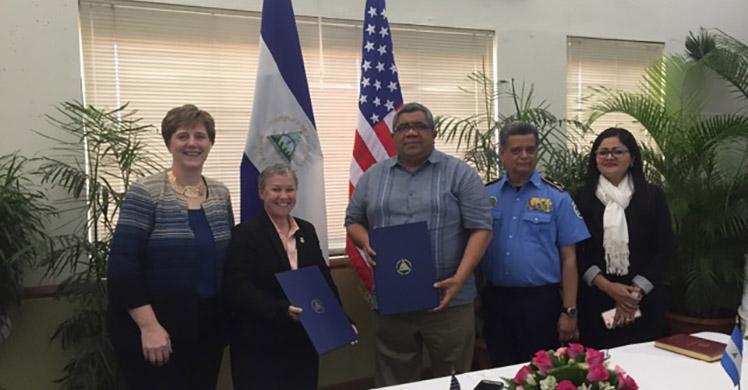
More than 200 Nicaraguans are in U.S. custody and facing imminent deportation back to a country where the White House, the United Nations and human rights organizations say the government of President Daniel Ortega is killing its own people. The Ortega government, in fact, will be assisting in the process as one of a handful of formal, authorized partners of U.S. Immigration and Customs Enforcement.
More than 300 Nicaraguans have been killed, a large majority at the hands of the state and pro-government paramilitaries, since anti-Ortega protests began in April. The Trump administration has responded to the violence by recently demanding the return of vehicles it had donated to the Nicaraguan police, claiming they were used to put down protests. It has not stopped deporting Nicaraguan nationals back to the violence, however, and despite casting protesters as tools of the U.S. government, Managua continues to assist in expediting the removal of its citizens.
Between October 2017 and August 2018, the U.S. deported at least 719 Nicaraguan nationals, according to ICE spokesperson Brendan Raedy. The agency deported 832 Nicaraguans in the prior fiscal year, and 795 the year before.
“With approximately a month left in the current fiscal year,” Raedy said, “you can clearly see removal numbers are very much in line with years prior.”
That is indeed true. However, other officials claims regarding the deportation of Nicaraguans have proven misleading.
“As you may be aware,” Raedy told me, “the most common manner in which illegal aliens come to the attention of ICE is when they break another law in addition to being in the United States without lawful status.”
But the statistics he provided show that the majority of Nicaraguans deported by ICE are not what the agency refers to as “convicted criminals” — a term that can conjure up images of murderers and rapists but which encompasses those guilty of no more than traffic violations. Of the 219 Nicaraguans in ICE detention with a final order of removal, just 97 had convictions on their record.
Charles Davis is a journalist in Los Angeles. His work has aired on public radio and been published by The Daily Beast, The Guardian and The New Republic.
Woodward’s Book Should Kill the Myth of a Pro-War Coup Against an Antiwar President
The unhinged, racist demagogue with a non-interventionist mindset is being undermined by the liberal-neoconservative Deep State because he refuses to to let the CIA kill Bashar al-Assad, the Syrian dictator with a massive body count that is none of our business.
It’s a popular notion among those with a soft spot for reactionary isolationists, the notion, popularized by a founding editor of The Intercept, that Donald J. Trump is engaged in an internal war with the U.S. empire. The U.S. president, of course, campaigned on escalating every conflict he would inherit, but he had nice things to say about a once and future CIA partner and his bloody war on terror; confusingly, this meant he was — relative to those looking to start WWIII by saying Russian imperialism is bad — an antiwar lesser evil
In power, Trump has bombed a couple empty Syrian regime targets, sure, but as his ambassador to the United Nations, Nikki Haley, recently suggested, those strikes were, in effect, an effort to make U.S. condonation, if not de facto U.S. support, of the Assad regime’s scorched-earth total war more palatable. “If they want to continue to go the route of taking over Syria, they can do that,” Haley remarked, “but they can not do it with chemical weapons.”
Trump’s unwillingness to deep-six Bashar purportedly stood in stark contrast to Hillary Clinton, who campaigned, let us suppose, on bunker-busting Damascus and Moscow in order to achieve regime change for Syrian al-Qaeda. As The Intercept’s Glenn Greenwald explained on Democracy Now! a few weeks after Trump took office:
The CIA and the intelligence community were vehemently in support of Clinton and vehemently opposed to Trump, from the beginning. And the reason was, was because they liked Hillary Clinton’s policies better than they liked Donald Trump’s. One of the main priorities of the CIA for the last five years has been a proxy war in Syria, designed to achieve regime change with the Assad regime. Hillary Clinton was not only for that, she was critical of Obama for not allowing it to go further, and wanted to impose a no-fly zone in Syria and confront the Russians. Donald Trump took exactly the opposite view. He said we shouldn’t care who rules Syria; we should allow the Russians, and even help the Russians, kill ISIS and al-Qaeda and other people in Syria. So, Trump’s agenda that he ran on was completely antithetical to what the CIA wanted. Clinton’s was exactly what the CIA wanted, and so they were behind her. And so, they’ve been trying to undermine Trump for many months throughout the election. And now that he won, they are not just undermining him with leaks, but actively subverting him.
That Trump’s “agenda” was a) coherent, and b) “completely antithetical to what the CIA wanted” was, at the time, a bizarre thing to argue. Some CIA officials, like many others, have surely recognized that the president of the United States is a reckless buffoon, but it is not because he is at war with the agenda of an intelligence community that he has gifted a record-high budget and a blessing to largely do as it pleases. In Syria, the alleged inspiration for an unprecedented deep-state coup d’état, Trump has been killing loads of Syrians — has been bombing mosques — with about as many objections from the deep state as from the anti-imperialists who learned to love the war on terror, which is to say: none at all.
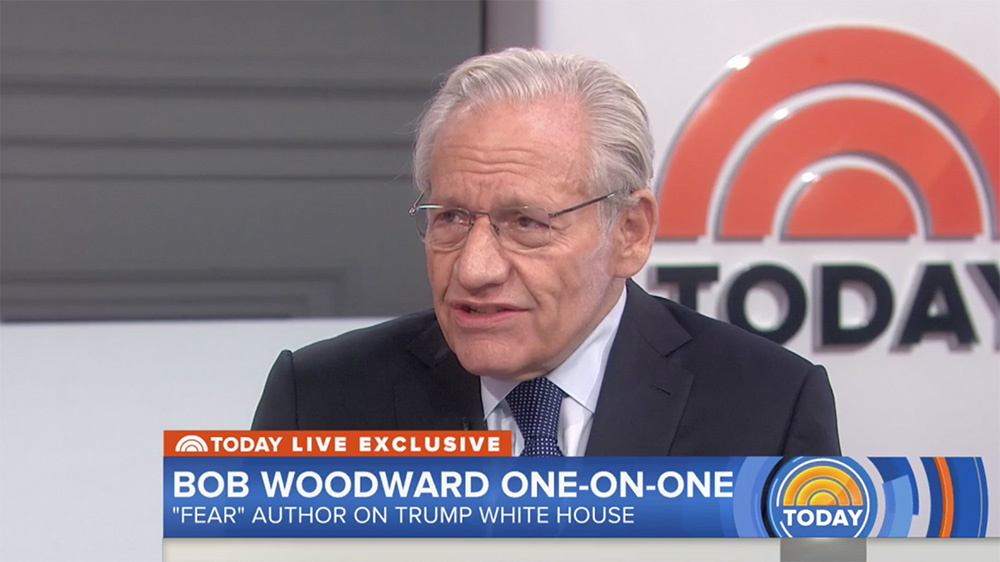
When U.S. munitions have fallen on the regime of Bashar al-Assad (popularly shortened to “Syria”), the strikes have been, from the perspective of those who don’t support Assad or Trump but hate their critics more, blessedly cosmetic. But that is not, according to a new book from veteran journalist Bob Woodward, because Trump is instinctively opposed to Iraq 2.0 (not to be confused with the ongoing U.S. air war, in Iraq).
Per The Washington Post:
After Syrian President Bashar al-Assad launched a chemical attack on civilians in April 2017, Trump called Mattis and said he wanted to assassinate the dictator. “Let’s fucking kill him! Let’s go in. Let’s kill the fucking lot of them,” Trump said, according to Woodward.
Mattis told the president that he would get right on it. But after hanging up the phone, he told a senior aide: “We’re not going to do any of that. We’re going to be much more measured.” The national security team developed options for the more conventional airstrike that Trump ultimately ordered.
The takeaway here is not that Trump is committed to regime change, but rather that he is constitutionally militaristic, impulsive and, as recognized by everyone around him, an idiot child — one who would soon forget why he wanted to kill the fellow head of a pathetic but deadly personality cult, likely by the time of his next Fox News-induced, white nationalist temper tantrum.
The U.S. president, an adult man, is no doubt aware that Bashar al-Assad is still alive, having just sent a delegation of U.S. intelligence officials, who purportedly want to overthrow them both, to meet with their regime counterparts in Damascus. General Mattis, it seems, correctly gauged that the president was simply mad and raving on the toilet, as is his wont.
It is not the first time, however, that generals have undermined a whimsical urge to steal the day’s headlines by starting another war: the U.S. president earlier floated the idea of invading Venezuela, to the chagrin of all the beribboned figures with whom he has chosen to surround himself. These are neither heroes nor coup-plotters, those natsec establishment types who challenge or on occasion ignore a mentally unfit president’s impulsive desire to kill, but people who have freely chosen to associate with Trump because they are generally pleased by his agenda, including a willingness to let the military and intelligence community manage their own affair; his outbursts are an unpleasant cost of what is by and large business as usual.
Deranged, it always was, to believe a U.S. “deep state” would seek to regime-change such a compliant U.S. president as Donald J. Trump because he wouldn’t given them Assad’s head on a platter. It is poetic justice, if not all that funny, for it to be revealed that it was Trump himself who wanted to knock off, however briefly, Clinton’s “reformer.”
Those who have spent years now arguing for the existence of a deep divide between Trump and the military-industrial complex, so large as to spur a coup — over Syria, incredibly, where the preservation of the regime in Damascus has long been the establishment consensus, with varying degrees of transparency — ought to be seen as no less dangerously clownish than the president they compulsively defend, from enemies real and imagined.
Charles Davis is a journalist in Los Angeles whose work has aired on public radio and been published by outlets such as The Daily Beast, The Guardian and The New Republic.
Left-Wing Orientalism: The Curious Case of Patrick Cockburn
 The following is an excerpt from an interview with me and my collaborator Nader Hashemi that will be published soon by the excellent online magazine Qantara.de. The interviewer is Emran Feroz, a journalist based in Germany, founder of the Drone Memorial, a virtual memorial for civilian drone strike victims, and author of a book on drone warfare. The interview revolves around our recent book Sectarianization: Mapping the New Politics of the Middle East, in which we challenge the new conventional wisdom in Western media and policy circles that attributes the violence engulfing the Middle East today to “ancient hatreds”. We call this sectarian essentialism a new form of Orientalism. In this section of the interview we’re responding to a question about the pervasiveness of this sectarian narrative across the ideological spectrum.
<><><><><><><><>
Versions of the sectarian narrative can be found on the right, in the center, and on the left. The New York Times columnist and establishment sage Thomas Friedman, for instance, claims that in Yemen today “the main issue is the 7th century struggle over who is the rightful heir to the Prophet Muhammad — Shiites or Sunnis”. Barack Obama asserted that the issues plaguing the Middle East today are “rooted in conflicts that date back millennia”. A more vulgar version of this view prevails among right-wing commentators. The former cable television host Bill O’Reilly has remarked that “the Sunni and Shia want to kill each other. They want to blow each other up. They want to torture each other. They have fun. … This is what Allah tells them to do, and that’s what they do”.
This is hardly surprising, given the anti-Muslim prejudice so pervasive on the right. What is surprising is to find people on the left trafficking in the sectarian narrative. Take the case of Patrick Cockburn, the influential Middle East reporter for The Independent. Cockburn has consistently framed the Syrian conflict in sectarian terms — using language like “sectarian blood-letting” and “demons” — and even criticized others for downplaying sectarianism. He did this from very early on, seeing sectarianism as immanent even during the nonviolent popular demonstrations of 2011, which were notably devoid of sectarian slogans and involved Syrians of multiple religious backgrounds/identities. The Syrian conflict became sectarian, but it didn’t start that way and, contra Cockburn, its sectarianization was by no means inevitable. In his chapter in our book, the anthropologist Paulo Gabriel Hilu Pinto demonstrates how the Assad regime pursued a deliberate strategy of sectarianizing the conflict through the use of sectarian pro-regime militias and the “selective distribution of violence” to punish specific sub-groups of protesters; and by releasing various jihadis from Syria’s prisons, to poison the well and produce a “preferred enemy”. Continue reading “Left-Wing Orientalism: The Curious Case of Patrick Cockburn”
Eulogy for a Formative Influence
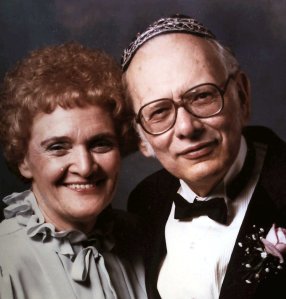
Twenty years ago today, on August 9, 1998, I delivered this eulogy at the dedication ceremony, or unveiling, of Eugene Zucker, my next-door neighbor growing up and a formative influence on my life. I was, and remain, deeply honored that the Zucker family asked me to deliver these reflections on that profound occasion. It has never been published or appeared anywhere until now.
<><><><><><><><><><><><>
Growing up next door to the Zuckers, Eugene (or Professor Zucker, as I preferred to call him) was my lifeline to another world. The world I inhabited as a child and as a young man in the Chicago suburb of Skokie in the 1970s and 1980s was light years removed from the one I discovered in Professor Zucker’s study, listening to him talk about his days as a young radical in New York in the heady 1930s and 1940s.
It was in that study that I first learned about Marx and Engels, and about Lenin and Trotsky. It wasn’t through books or documentaries that I came to understand these figures and their ideas and their roles in shaping history. Rather, it was through hearing the first-person accounts of my next-door neighbor, a man who participated in struggles begun by these revolutionaries. Professor Zucker actually knew the leaders of the radical movement and witnessed the historic discussions in which the fate of the movement was decided. He listened as the insurgents of the era debated whether their faction of the Left had the correct interpretation of Lenin’s formulation of this, that, or the other question. As bizarre as it seems to us now — and as bizarre as it seemed to me hearing about it then — Professor Zucker came from a world in which ideas mattered a great deal. It literally felt to the radicals of his time like the future of mankind depended on how you made sense of the world and, given that worldview, how you planned to act on it.

