The Agronomist

This superb documentary by Oscar-winning director John Demme (Philadelphia, BelovedMan from Plains, The Manchurian Candidate) uses  the story of legendary Haitian journalist and broadcaster Jean Dominique as a focus to present the larger history of the country’s political struggles. The film features excellent archival footage and interviews, and a briliant soundtrack (although Wyclef Jean I have just learned is a poseur who actually echoed the Bush State Department line in laying the blame for the 2004 coup and kidnapping of Jean Bertrand Aristide on the president himself).

(Don’t miss Democracy Now!‘s excellent, in-depth coverage of the tragedy in Haiti)

Brzezinski on the Soviet occupation of Afghanistan

Zbigniew Brzezinski has always ranked high in leftist demonology for allegedly luring the Soviets into Afghanistan and ‘creating’ the Mujahideen thereby destroying a government which was bringing womens’ rights and education to the benighted, medieval people. Typically, this analysis accords no agency to the Afghans themselves: the natives can only be manipulated, they have no will of their own. It is always the outsider that knows what’s best for the native: for the neoconservatives it is Uncle Sam, for leftists it as Kremlin. As Brzezinski correctly notes here, however, the Soviets were already deeply engaged in Afghanistan long before the invasion. The arms supplies only started after the invasion, and escalated around 1982. The war was a popular liberation struggle. The US support only hastened the Soviet exit, it wasn’t indispensable to it. The Afghans would have fought anyway.

Leaving aside his dubious views in other areas, on Afghanistan Brzezinski is right. And the interviewer’s attempt to impose a teleological narrative on developments in Afghanistan is rather frivolous. There was no inevitability to all that has happened in Afghanistan. Much like the neoconservatives, leftists seem predisposed to accept the Enlightnement belief in the linear progress of history. They fail to appreciate the  contingency of it all.

(The first part of this interview is here)

Afghanistan: The Kashmir Connection

It is a mark of how far right things have moved in the past 30 years that even a Cold War hawk such as Zbigniew Brzezinski can come across sounding more reasonable than the putatively ‘liberal’ US president. The following is an interesting interview in which Brzezinski explicates his oft-misrepresented position on Central Asia. It also marks the clear split between the realist and neoconservative worldviews. Though both are marinated in American exceptionalism, unlike the neoconservatives, the realists have a sense of the limits of US power. That’s the main reason why all of them opposed the Iraq war. Brezinski’s comments about Afghanistan toward the end of the interview are notable: as he points out, the US cannot resolve the conflict unless it addresses the issue of Kashmir first. This same opinion was forwarded by Graham Usher earlier in the London Review of Books, and most recently by Pankaj Mishra in the New York Review of Books. I have excerpted at length Mishra’s must-read article below.

Obama’s long speech on Afghanistan on December 1 did not refer even once to India or Kashmir. Yet India has a large and growing presence in Afghanistan, and impoverished young Pakistanis, such as those who led the terrorist attack against Mumbai last November, continue to be indoctrinated by watching videos of Indian atrocities against Muslims in Kashmir. (Not much exaggeration is needed here: in late November an Indian hu-man rights group offered evidence of mass graves of nearly three thousand Muslims allegedly executed over the last decade by Indian security forces near the border with Pakistan.) Another terrorist assault on India is very likely; it will further stoke tensions between India and Pakistan, enfeebling America’s already faltering campaign against the Taliban and al-Qaeda.

Continue reading “Afghanistan: The Kashmir Connection”

Tony Judt’s remarkable journey

Tony Judt

UPDATE: the Guardian has a good piece by Ed Pilkington and a video of Judt speaking about his condition. He calls it ‘one of the worst diseases on the Earth’.

Tony Judt, the acclaimed English historian and author, has made a remarkable journey from his days as a volunteer for the IDF during the 1967 war to his recent transformation into one of the staunchest critics of Israel and its lobby. He outraged many old associates from his Zionist days when in 2003 he penned an eloquent call for a bi-national state in 2003. (His friendship with the late Edward Said must have likely played a part in this transformation.) He was dropped from The New Republic‘s editorial board shortly afterwards. Shortly after the Iraq war, he wrote a scathing attack on what he called Bush’s Useful Idiots — the liberal interventionists who argued for war using the language of humanitarianism and liberal values.

In 2006, when John Mearsheimer and Stephen Walt wrote their ground-breaking essay on the Israel lobby, he was one of the very few progressive Jewish voices to come to their defence, even as self-proclaimed ‘radicals’ demurred. Shortly afterwards he wrote a brilliant essay for Ha’aretz calling Israel ‘the country that wouldn’t grow up‘. He later joined John Mearsheimer in a debate organized by the London Review of Books in which they argued against apologists for the lobby. In the same year an event organized by Network 20/20 at which Judt was slated to speak was cancelled following pressure from the ADL and AJC. This prompted Mark Lilla and 114 writers and intellectuals to write a letter of protest to the ADL. Judt later recounted this incident in his appearance in an excellent Dutch documentary on the lobby. All his writings and his reflections on his journey from Zionism to universalism are collected in his 2008 book Reappraisals: Reflections on the Forgotten Twentieth Century.

Continue reading “Tony Judt’s remarkable journey”

Israeli Exceptionalism: A Grim Prognosis

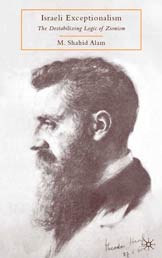
Cover Image GIFIn the coming weeks we’ll be publishing reviews and responses to M. Shahid Alam’s new book Israeli Exceptionalism: The Destabilizing Logic of Zionism (New York: Palgrave Macmillan, 2009). Following is the first from political scientist Ahrar Ahmad.

Dr. Shahid Alam is primarily an economist and an educator.  But, he is also a public intellectual, and often a lively polemicist, who writes with insight and conviction on issues dealing with culture, identity, religion, globalization, imperialism, and terrorism.  But nothing stirs his passions as intensely as the issue of the Palestinians – their dispossession, marginalization, despair.  His feelings are ardent, his language combative, his intellectual engagement prickly and zealous.  It is largely this pre-occupation that has earned him a place in David Horowitz’s book on the Hundred Most Dangerous Academics in the US (an ignominy that he probably wears as a badge of honor).  His latest book distills, clarifies and deepens much of his previous thinking on Zionism, the creation of the state of Israel, and the injustices inflicted on the Palestinians.

The trope along which this book is organized is the concept of “Exceptionalism” that is often claimed by the state of Israel, and sometimes by Jews themselves.  To Alam this is nothing other than a rhetorical device, and a moral posture, to ensure the West’s indulgence and support, to protect Israelis from any criticism, and exempt them from standards and behavioral norms that apply to other peoples.  This “exceptionalism” is derived from their Biblical covenants and the belief in their inherent “chosen-ness”, their wrenching history of suffering and persecution, their considerable achievements in science, philosophy and philanthropy, and their current status as a people allegedly besieged by Islamic fundamentalists, anti-Semitic bigots, and the barbaric and self-destructive Arabs.  To question anything about Israel is tantamount to denigrating every aspect of its special status.

Continue reading “Israeli Exceptionalism: A Grim Prognosis”

Speaking Truth to Power

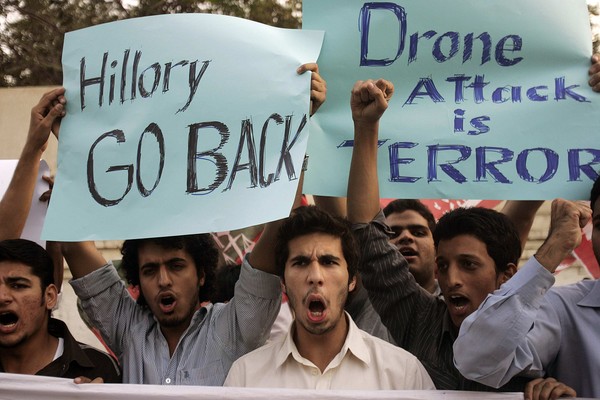
Students in Lahore, Pakistan, protest against the visit of U.S. Secretary of State Hillary Clinton. (K.M. Chaudary/AP Photo/October 29, 2009)

by Kathy Kelly

There’s a phrase originating with the peace activism of the American Quaker movement: “Speak Truth to Power.”  One can hardly speak more directly to power than addressing the Presidential Administration of the United States. This past October, students at Islamabad’s Islamic International University had a message for Secretary of State Hillary Clinton.  One student summed up many of her colleagues’ frustration. “We don’t need America,” she said. “Things were better before they came here.”

The students were mourning loss of life at their University where, a week earlier, two suicide bombers walked onto the campus wearing explosive devices and left seven students dead and dozens of others seriously injured. Since the spring of 2009, under pressure from U.S. leaders to “do more” to dislodge militant Taliban groups, the Pakistani government has been waging military offensives throughout the northwest of the country.  These bombing attacks have displaced millions and the Pakistani government has apparently given open permission for similar attacks by unmanned U.S. aerial drones.   Every week, Pakistani militant groups have launched a new retaliatory atrocity in Pakistan, killing hundreds more civilians in markets, schools, government buildings, mosques and sports facilities.  Who can blame the student who believed that her family and friends were better off before the U.S. began insisting that Pakistan cooperate with U.S. military goals in the region?

Continue reading “Speaking Truth to Power”

Stephen Walt chooses five books on US-Israel relations

A few weeks back The Browser interviewed British author Ziauddin Sardar for its Five Books section. Among the books he selected on the theme of Travel in the Muslim World was one, The Road from Damascus, by PULSE editor Robin Yassin-Kassab. When Robin was in turn asked to choose his five on the theme of the Israel-Palestine Conflict, he chose among others John Mearsheimer and Stephen Walt’s The Israel Lobby and the US Foreign Policy. In its current interview The Browser turned to Stephen Walt — one of PULSE’s 20 top global thinkers for 2009 — to present his selection of the five most important books on the US-Israel relationship. In the following interview Walt presents his selection and explains why he chose these particular books.

Stephen M. Walt

So, we’re trying to understand how the US has come to identify so closely with Israel in recent decades, and your first book is The Israel Lobby and US Foreign Policy, which you wrote along with John Mearsheimer. Why is that on the top of your list?

The only way to understand the special relationship that now exists between the United States and Israel is to understand the critical role that a number of organisations have played in actively promoting that relationship over the last 60 years. The US has supported Israel since its founding in 1948, but it did not have the same sort of special relationship for the first 20 or so years after Israel’s creation. The US backed it in certain ways, but was also willing to put lots of pressure on it in other circumstances and didn’t provide a lot of economic or military assistance until after 1967. But today the US backs Israel no matter what it does and American politicians are careful never to say anything that is very critical of Israel, even when it is acting in ways that are contrary to US interests and values. The key to understanding this ‘special relationship’ is the operation of various groups in the Israel lobby, and our book lays out in great detail how that works, and why it’s not good for the US or Israel.

Continue reading “Stephen Walt chooses five books on US-Israel relations”

Chomsky on Empire and Ideology

Hostility and Hospitality in Contemporary World Politics

This is Chomsky at his best, highlighting the exceptionalism that characterizes US political discourse, and the ideological memes that have accompanied US imperialism with few modulations over the years. The follow-up speaker Stephen Pfohl is also very good. (thanks Doug)

Obama kills over 700 Pakistanis in 44 drone strikes in 2009

Victims of Obama's drone attacks

The Pakistani daily Dawn — a pro-US paper not known for its antiwar stance — reports that US drones killed over 700 civilians in 44 bombings since Obama took office in January 2009. Of the 44 attacks, only five succeeded in hitting their target. In other words, Obama has surpassed his predecessor’s murderous record in Pakistan. (Of course these attacks are carried out with the complicity of Pakistan’s ruling elites — as Jane Mayer reported, and as Pervez Musharraf confessed — and are cheered on by native informers such as Ahmed Rashid).

PESHAWAR: Of the 44 predator strikes carried out by US drones in the tribal areas of Pakistan over the past 12 months, only five were able to hit their actual targets, killing five key Al-Qaeda and Taliban leaders, but at the cost of over 700 innocent civilians.

Continue reading “Obama kills over 700 Pakistanis in 44 drone strikes in 2009”

PULSE: 20 Top Global Media Figures of 2009

After we published our list of 20 Top Global Thinkers, we thought we would be remiss if we did not also honor those who bring these voices to us in the first place. With the goal of recognizing those individuals and institutions responsible for exemplary reportage and awareness-raising in 2009, we asked our editors and writers to name their choices for the top 20 media figures, be they journalists, publications or publishers.  We aggregated these nominations into the following list. Like our 20 Top Global Thinkers, our criteria for choosing media figures included individuals/publications/publishers who have shown a commitment to challenging power, holding it to account, highlighting issues pertaining to social justice and producing output that bucks conventional wisdom and encourages critical thinking.

Amy Goodman

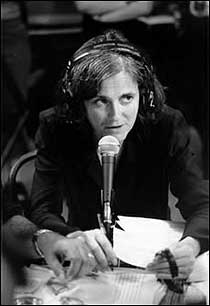
A media institution in her own right, Amy Goodman has shown the true potential of independent media over the past 12 years by turning Democracy Now! into the largest public media collaboration in the US and around the world. Free of corporate sponsorship, DN’s hard-hitting daily broadcast rejects the soundbite format of mainstream media to provide in-depth coverage of the world’s most important issues. Unlike the MSM, Democracy Now! gives less emphasis to official voices than to those affected by the abuses of their offices. Goodman relentlessly pursues her stories, and often follows them long after the mainstream media has moved on to chase new headlines. Iraq and Afghanistan have therefore remained part of DN’s coverage for all the years that they were absent in the MSM. Policy-makers may have lost interest in the story, but for Goodman, the people on the receiving end continue to live the story. Her interviewees include voices that the MSM frequently excludes, including scholars, activists, heads of states out of favor with the United States, opposition leaders, and organizers. Through her journalism, writings and lectures, Goodman continues to set the bar for what every journalist should be aspiring to.

Sherine Tadros/Ayman Mohyeldin

Al Jazeera has long set the bar for war reporting; Sherine Tadros and Ayman Mohyeldin have raised it even higher with their coverage of the conflict in Gaza in 2008- 2009. Tadros and Mohyeldin were the only two journalists working for an international English-language television network reporting from inside Gaza. They braved the dangers of Israel’s indiscriminate assault to bring hour-by-hour reporting the tragedy as it unfolded. Their courage was matched by the quality of their journalism. In 2009, Tadros continued to report from the region, covering the creeping ethnic cleansing of occupied Palestine.  Mohyeldin, likewise, continues to report on issues such as the network of tunnels between Egypt and Gaza which are vital for the transfer of food, medicine and fuel supplies into Gaza.

Continue reading “PULSE: 20 Top Global Media Figures of 2009”