Robert Naiman: US plans $53 million arms sale as suppression of democracy movement gets a “seal of approval”.
Category: Water
Syria’s injured seek treatment in Jordan
Dozens of people have been killed in the ongoing military assault on the central Syrian city of Homs, according to activists. Opposition groups say at least 6,000 people have died since the anti-government uprising began 11 months ago. With Syria’s makeshift hospitals unable to keep up with the growing rate of casualties, many of the wounded are left with little choice other than to travel to Jordan.
Al Jazeera’s Nisreen el-Shamayleh reports from the Jordanian capital, Amman, on those Syrians seeking treatment across the border, including a one-time Olympian.
Military assault on Homs intensifies
Torture inside Homs
Courageous reporting from inside Syria by Al Jazeera’s Jane Ferguson.
The Syrian government has been blamed by opposition groups for imprisoning tens of thousands of protesters calling for reform since the uprising began in March 2011.
Rights groups beleive many of the prisoners have been tortured, some until death. Outside the prisons, the government has continued its military crackdowns protests, killing thousands of people across the country.
In the third part of a series of exclusive reports, Jane Ferguson goes inside Homs, one of the main targets of President Bashar al-Assad’s security forces.
The Right, The Left, and The Silent
Guatemala, El Salvador, and the United States all stake different positions concerning the Latin American massacres.

by John Washington
On this past 14th of January an ex-general of the Guatemalan Army, Otto Pérez Molina, took office as the right-wing, self-proclaimed strong-arm (mano dura) President of Guatemala, promising to get tough on organized crime and drug-trafficking. The new President’s message, however, comes with baggage: Guatemalan Army’s recent and sordid history. The 36-year Civil War in the country, in which the Army committed systematic and ethnically-targeted massacres and razing, ended only fifteen years ago, in 1996. But the distaste in some for the new President comes not only from implication by association, that is, that he was simply part of an organization responsible for atrocities. Pérez himself has been openly and repeatedly accused of direct involvement in tortures and massacres. It has also been repeatedly claimed that Pérez Molina was on the CIA payroll and, according to the website, SOA Watch, that he was a graduate of the infamous School of Americas. Though Pérez claims to support “a military deactivation” in the country, how can Guatemalan citizens, especially those who suffered 36-plus years of abuse at the hands of the military, trust an ex-general who also proclaims to be willing to “use all the necessary military force” to ensure internal security? The message that Pérez sends is contradictory and, despite his dubious proclamation of “military deactivation,” undeniably militant, threatening to Calderón (President of Mexico whose drug-war crackdown has driven the country to the precipice of what some are calling a failed state) an already torn social fabric.
On the ‘Precision’ of Language: Why the Term ‘Genocide’ is So Wrong, or Who Can Use the Term
This essay is a response to the emerging discussions over the ‘appropriateness’ of the use of the word ‘genocide’ in the context of the Indian military occupation in Kashmir on PulseMedia and elsewhere on Facebook.
by Mohamad Junaid
[This essay is a response to the emerging discussions over the ‘appropriateness’ of the use of the word ‘genocide’ in the context of the Indian military occupation in Kashmir on PulseMedia and elsewhere on Facebook.]
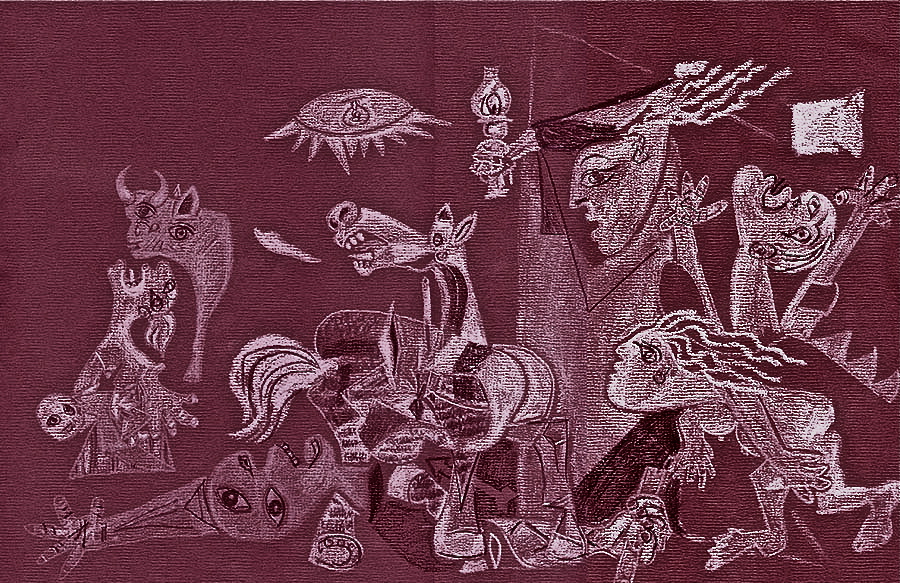
But, which language? Which one language expresses all joyous, exhilarating, or traumatic experiences?
When Kashmiris are told to be precise in their language there are largely two positions involved: one, a sympathetic (if inadequate and self-censorious) one, which suggests that following ‘the convention’ will allow for legalistic interpretation and some form of retributive or ‘restorative’ justice. Often such a position traps itself in legal discourse, and by seeking to bottle people’s experiences into tight categories, fetishizes those categories, and in the end reduces the depth of traumatic experiences to mere data points on the grid of classification. This compliant and self-disciplining position forgets the origins of law in violence (and the inverse), and how ‘law’ serves to maintain ‘order’—which is, in other words, the systematized, legally endorsed structure of oppression. The peculiar claim to universalism (to create a universal system of law) that drives this position pays no heed to where, and for whom, these supposedly ‘universal’ categories of law are created, and what connection law has with power or ‘international’ law with the empire. Continue reading “On the ‘Precision’ of Language: Why the Term ‘Genocide’ is So Wrong, or Who Can Use the Term”
“America’s Chickens Are Coming Home to Roost.”
An end of the year lament.
by William A. Cook

“Violence begets violence. Hatred begets hatred. And terrorism begets terrorism. A white ambassador said that y’all, not a black militant (Ambassador to Iraq, Edward Peck). Not a reverend who preaches about racism. An ambassador whose eyes are wide open and who is trying to get us to wake up and move away from this dangerous precipice upon which we are now poised…” — Jeremiah Wright, September 16, 2001.
Prophets fare poorly in their own country, yet countries would do well to hearken to their prophets. Scorn, ridicule, and innuendo attend their pronouncements as the righteous defend their actions as logical, existential and necessary. Jeremiah Wright suffered such scorn and mockery because he understood the consequences of revenge on the innocent and the defenceless, justified by whatever inane discourse. Wright spoke truth to power that Sunday after 9/11 and the righteous cried to heaven condemning him to perdition for defaming America, for even suggesting that revenge for the sake of revenge is the motivation of the arch fiend against the Almighty, the foulest, most ignorant, most amoral rational for action.
Prophets anticipate truth; they review a nation’s past history and can predict its future. Witness America’s past as the Reverend Wright did that Sunday morning, and what America is doing now repeats its ugliness. Wright said this about America’s past:
Continue reading ““America’s Chickens Are Coming Home to Roost.””
Bombing Savages in Law, in Fact, in Fiction
 Professor Paul Gilroy chairs this event with Sven Lindqvist, the great Swedish author of over 30 widely translated books including A History of Bombing.
This lecture marks the centenary of aerial bombardment. More than just a military revolution, this development redrew the legal and moral boundaries between civilians and combatants and spread the theatre of war into cities and domestic spaces.
The lecture is part of a joint initiative of LSE Sociology and the Sociology Department at Goldsmiths, University of London.
UPDATE: In case you are having trouble listening to the whole lecture, you can hear it on the LSE website instead.
Hearts and Minds
Armed US drones have been blamed for more than 300 missile attacks in seven years in Pakistan’s tribal areas. Residents of Pakistan’s tribal areas say that they feel terrorised by the strikes, and doctors say that those who survive them often suffer from post-traumatic stress disorder (PTSD). Al Jazeera’s Kamal Hyder met with the survivors of one such strike at a hospital in the Pakistani city of Peshawar.
Cairo Protests “To Save The Revolution”
Jihan Hafiz reports that dozens killed as Egyptians demand a civilian government.
 P U L S E