by Kurt Fernández
“All history was a palimpsest, scraped clean and re-inscribed exactly as often as was necessary.” George Orwell, 1984
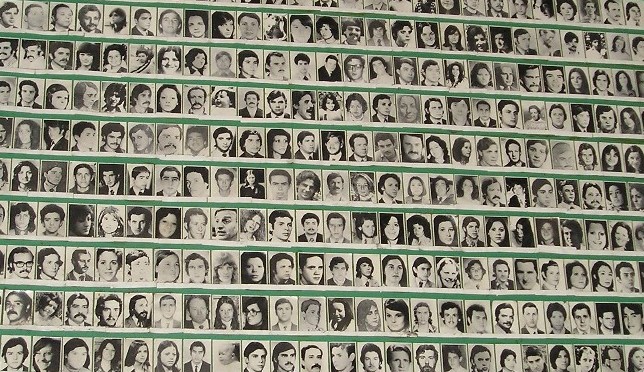
In her effort to whitewash the history of Argentina’s dirty war, Mary Anastasia O’Grady makes up a lot of stuff. The reader need go no further than the bold lie in her lead to dismiss her so-called op-ed as right wing propaganda.
O’Grady writes that “in Argentina today it is off limits to even mention in public the victims of the country’s left-wing terrorism of the 1970s”.
I’ve lived in Buenos Aires for the last three years and have spoken about the dirty war with Argentines from all walks of life. They are apparently unaware of the taboo O’Grady has fabricated. In fact, everyone talks about the victims of left-wing trade unions and political groups of the 1960s and 1970s. The subject is discussed ad nauseam in the ongoing human rights trials of military and police officials who carried out the state’s clandestine war against opponents. It is written about almost daily in newspapers. It is aired on television programs. Cab drivers, friends, anyone who talks about the days of the dirty war can be expected to mention the victims of O’Grady’s “band of Castro-inspired guerillas who sought to take power by terrorizing the nation”. Sympathy is sometimes expressed, but few stoop to using these victims to justify the atrocities of the military junta. There are exceptions. The dictator himself, Jorge Rafael Videla – who is serving a life sentence in prison for kidnapping, torture, murder, and trafficking in newborns – has an extremely soft spot in his heart for the victims of the guerillas. And he never fails to publicly defend his attempt to rid Argentina of the scourge.
Continue reading “Once Upon a Time in Argentina: O’Grady’s Latest Fairy Tale”
 Here’s another suicide bomber novel. We’ve had Amis and Updike’s uninformed attempts, plus variations on the theme from Sebastian Faulks. This time, though not of Muslim background, our author is a British-Asian and he does have some important insights on the anguished inbetweenness suffered by so many second-generation immigrants, which in some rare cases may constitute part of the psychological background to political radicalisation.


