They can’t buy her silence

by Tariq Ali

Arundhati Roy

Arundhati Roy is both loathed and feared by the Indian elite. Loathed because she speaks her mind. Feared because her voice reaches the world outside India and damages the myths perpetrated by New Delhi regardless of which party holds power. She often annoys the official Indian Left because she writes and speaks of events for which they are either responsible or of which they dare not speak. Roy will not allow her life to be subjugated by lies. She never affects a courage or contempt she does not feel. Her campaigns against injustice are undertaken with no view to either fame or profit. Hence the respect awarded her by the poor, ordinary citizens, who know the truth but are not allowed a voice in the public sphere. The authorities can’t buy her silence. One of the few voices in India who has spoken loudly against the continuing Indian atrocities in Kashmir, she is now being threatened. If she doesn’t shut up they’ll charge her with sedition, aping their colonial masters of yesteryear. Her response to those who would charge and imprison her is a model of clarity, conviction and refusal to compromise.

Editor’s note: Also see Democracy Now’s interview with Arundhati Roy. This post first appeared on the London Review Blog.

The Women’s Harvest

by Jerica Arents

Editor’s Note: American peace activists Kathy Kelly, Jerica Arents and David Smith-Ferri are part of a 3 person delegation currently travelling in Afghanistan. Find more entries from their travelogues on PULSE.

Autumn in Bamiyan

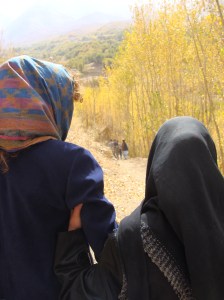
Kabul, Afghanistan – After a week visiting Bamiyan, a rural Afghan Province, one thing has been made abundantly clear to me: the experience of being a woman in this country is much different than being a woman in the United States. Here, the inescapable and indelible fact of gender colors social interactions, far more so than back home. But being a woman has also created safe spaces of inclusion within the village’s maternal system, from which I would have otherwise been kept at a distance.

Time and time again, after meeting with the men in the family, I was led into a separate room to visit with the women, who had gathered there and were waiting eagerly for us with their children. Immediately, an exchange began, a series of greetings, smiles, thanksgivings, and comments about the style of my clothes, quality of my hands, or strangeness of my backpack. Daughters and granddaughters would join us, children at their feet, each little face more beautiful than the last.

When we met with women and men together, the men tended to be the focal point, dominating the conversation. In the absence of their male counterparts, the women, adorned in vibrant cloths, filled the sparsely furnished rooms with stories and laughter. In this conservative Afghan village, one woman shared with us the heartbreaking experience of having her husband kidnapped and killed by the Taliban – and raising her kids, now teenagers, without the breadwinner of the house. She looked down at her wrinkled hands and paused before telling us of her struggles with depression. “We age so quickly here” she reflected, looking up at me, circles under her eyes. Her skin was weathered and worn, bearing the years of harsh living conditions and inadequate nutrition. I would have guessed she was in her late 50s – she is in fact only 38.

Continue reading “The Women’s Harvest”

An Apartheid Distinction

I was at the border, a British national with an Arab name on my way into Palestine-Israel. The Jordanians were suspicious but not at all intimidating. It felt more like an unexpected cup of tea with an avuncular officer (which it was) than an interrogation. I learnt about Abu Tariq’s children and he learned about my reasons for crossing, my travels, and my career. He noted everything down before shaking my hand.

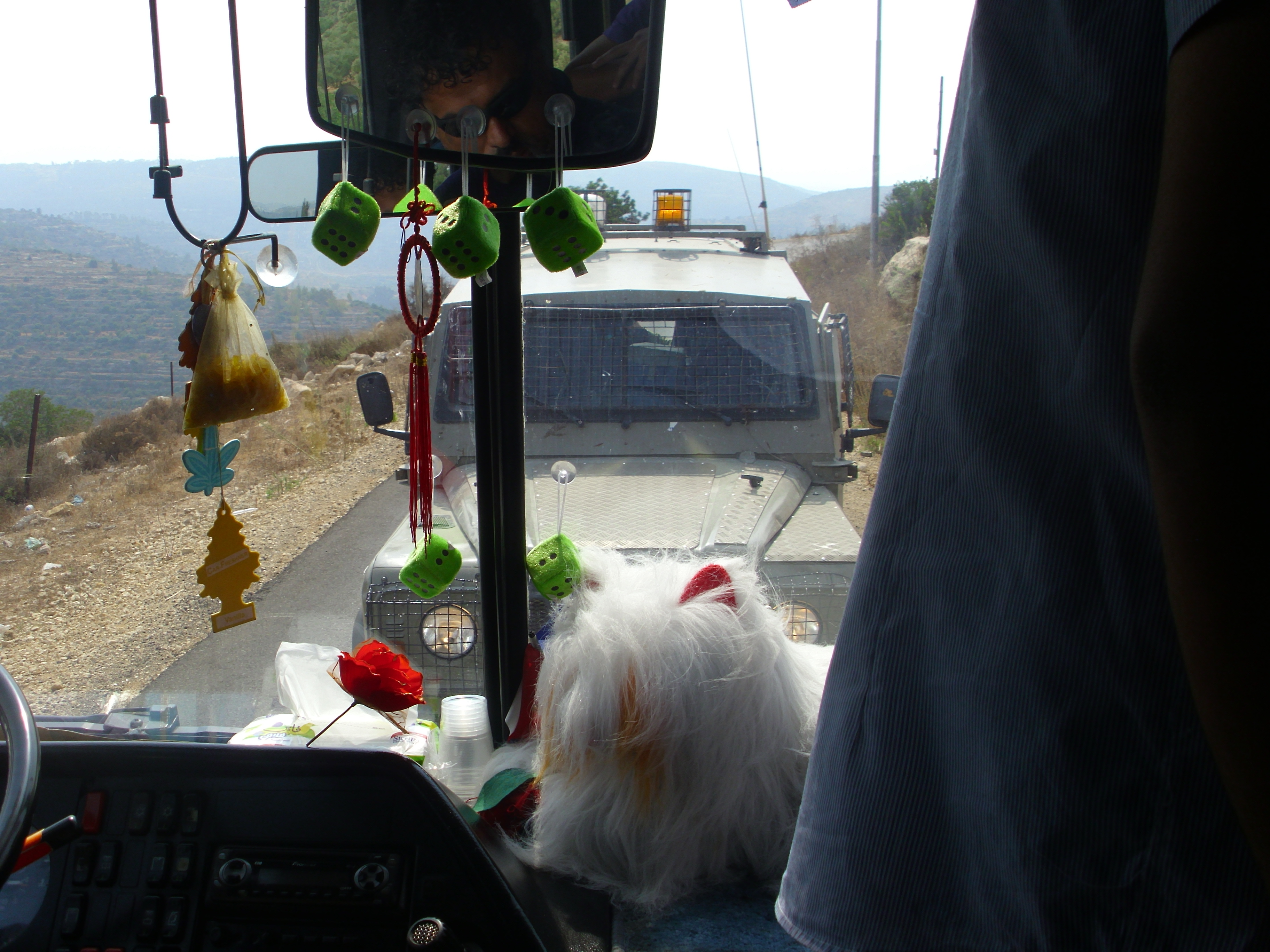
The bus through no-man’s land was full of Palestinian-Israelis, descendants of the remnant not driven out in 1948 – those the Israelis call ‘Arab-Israelis’, as if they were recent immigrants from Kuwait or Algeria. The sun bubbled the box of our bus. It was airless and sweaty inside.

Israeli border control is staffed by teenaged girls in low-slung military trousers backed up by men with sunglasses and enormous guns. The girls clocked my (Arabic) name, and my bags were searched. Then I was closely questioned. Then I had to wait. Fortunately it was Yom Kippur: they let me through an hour later when they closed up early.

Then by car through the the ethnically-cleansed city of Beesan (signposted in Arabic script with the Hebrew name – Beit She’an), and into the West Bank. The roadsigns here are very democratically scripted in Hebrew, English and Arabic, except for those in Hebrew only. But Palestinian towns and villages are never posted. A visitor travelling a Jews-only road wouldn’t realise that such places exist. Jerusalem is written in Arabic as “Urushaleem,” and then between brackets “al-Quds”, which is the actual, ancient and contemporary Arab name. In such ways the attempt is made to occupy the land’s abstract Arab qualities, to control history and memory, the past as well as the present and future.

Continue reading “An Apartheid Distinction”

John Mearsheimer on WikiLeaks Iraq logs

John Mearsheimer debates the WikiLeaks war logs with Patrick Mansoor, a former Petraeus aide.

JOHN MEARSHEIMER, University of Chicago:
[I]t does make it very clear how horrible the violence has been in Iraq since we invaded in 2003. And it also is quite clear from the documents that the United States has played an important role in making that violence happen.

Not only do the documents show that American soldiers and airmen have killed large numbers of civilians. It’s also clear that we didn’t do much at all to stop the Iraqis from torturing and murdering prisoners. This was a huge mistake on our part. […]

Continue reading “John Mearsheimer on WikiLeaks Iraq logs”

Things that Happened While I was There

A large demonstration was held in central Nablus calling for the release of the thousands of prisoners held in the Israeli gulag.

Israeli forces shelled Gaza.

The Palestinian Authority arrested 53 men in overnight raids.

I passed a settlement built during Netanyahu’s ten-month settlement freeze.

Two settlers were shot in the legs by Palestinian fighters while driving near Hebron.

PA president Mahmoud Abbas let slip that he might not pull out of peace talks when the settlement freeze lapses.

The Palestinian Authority arrested 20 men in overnight raids.

Dana wrote a story about a girl raped by a relative.

Hamas forces closed down a Gaza restaurant because a woman had publicly smoked the argileh there.

Continue reading “Things that Happened While I was There”

Arundhati Roy Responds to Threat of Arrest for Sedition

Pity the nation that has to silence its writers for speaking their minds. Pity the nation that needs to jail those who ask for justice.

Arundhati Roy

Kashmir, Oct. 26—I write this from Srinagar, Kashmir. This morning’s papers say that I may be arrested on charges of sedition for what I have said at recent public meetings on Kashmir. I said what millions of people here say every day. I said what I, as well as other commentators have written and said for years. Anybody who cares to read the transcripts of my speeches will see that they were fundamentally a call for justice. I spoke about justice for the people of Kashmir who live under one of the most brutal military occupations in the world; for Kashmiri Pandits who live out the tragedy of having been driven out of their homeland; for Dalit soldiers killed in Kashmir whose graves I visited on garbage heaps in their villages in Cuddalore; for the Indian poor who pay the price of this occupation in material ways and who are now learning to live in the terror of what is becoming a police state.

Yesterday I traveled to Shopian, the apple-town in South Kashmir which had remained closed for 47 days last year in protest against the brutal rape and murder of Asiya and Nilofer, the young women whose bodies were found in a shallow stream near their homes and whose murderers have still not been brought to justice. I met Shakeel, who is Nilofer’s husband and Asiya’s brother. We sat in a circle of people crazed with grief and anger who had lost hope that they would ever get insaf-justice-from India, and now believed that Azadi-freedom-was their only hope. I met young stone pelters who had been shot through their eyes. I traveled with a young man who told me how three of his friends, teenagers in Anantnag district, had been taken into custody and had their finger-nails pulled out as punishment for throwing stones.

Continue reading “Arundhati Roy Responds to Threat of Arrest for Sedition”

A History of Significant Moments

How many Britons are aware of the British-Iraq war of May 1941? Not many. Yet such past wars are the producers of today’s reality. People in Iraq remember. If Westerners don’t remember the past they will inevitably fail to understand the present moment.

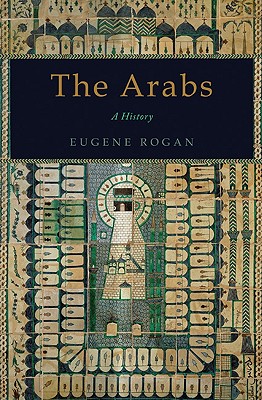
The urge to remind the reader so as to better contextualise the present is the laudable motive energising Eugene Rogan’s “The Arabs. A History,” which covers the last five hundred years.

The history starts in 1516 with the Ottoman defeat of the Mamluk slave-elite, the regime which in previous centuries had repelled Mongols and Crusaders from the Arab heartlands. The Mamluks weren’t Arabs, but they’d ruled from Arab capitals. Now power moved to Istanbul, which makes the moment a good place to begin. From the 1516 collapse in Cairo until the present day, many key decisions governing Arab life have been made in foreign cities. Rogan calls the process “the cycle of subordination to other people’s rules.”

In the early years, Ottoman rule “in the Arab provinces was marked by great diversity and extensive autonomy.” Sulayman’s perspicacious laws, public building projects and reasonable prosperity followed. But the global centre of gravity was shifting, and the long decline set in.

Continue reading “A History of Significant Moments”

The Secret Iraq Files

UPDATE: See part II of Al Jazeera’s Secret Iraq Files below. Also see Part 1 and Part 2 of Democracy Now‘s interview with Julian Assange, and Daniel Ellsberg on why he supports Wikileaks.

The Wikileaks war logs present irrefutable evidence of the murder, torture and rape which has been occuring for the past seven years in Iraq. However, it is not clear why it has chosen to collaborate with the dubious Iraq Body Count which for years has been providing a convenient underestimate of Iraqi casualties to war supporters.

Continue reading “The Secret Iraq Files”

“Tell them to come to Afghanistan and make friends”

by David Smith-Ferri

Editor’s Note: American peace activists Kathy Kelly, Jerica Arents and David Smith-Ferri are part of a 3 person delegation currently travelling in Afghanistan. Find more entries from their travelogues on PULSE.

Again and again in this isolated Afghan province, when visiting Afghan people in their homes or when talking with members of the Afghan Youth Peace Volunteers (AYPV), we have heard this message: “We want to know the people of the world, and we want the world to know that we are human beings, not animals.”

On our first night in Bamiyan, we joined the AYPV at a restaurant on the main street in town. The restaurant, unlike those I am accustomed to visiting, served groups of customers in separate, rooms. So we walked down an alley, around the back of the restaurant, up a steep flight of metal stairs to a narrow landing which opened onto several small, windowless rooms. Inside one of them we arranged ourselves as comfortably as possible on the floor and along the walls, eleven Afghan youth and three Americans.

At the outset of the conversation, fourteen-year-old Ali asked us, “How do Americans know we are bad?” The question burst out of him, without preamble, as though he’d been carrying it for years, waiting for this opportunity. He followed it with a statement: “We want Americans to know we are not animals.” Later, while he held my arm and walked me home in the dark, I asked Ali about this belief regarding American perceptions of Afghan people. “Why else would they bomb us?” he said. There wasn’t anything more to say.

Today, two days later, we again gathered for a shared meal, this time in twenty-year-old Moh’d (short for Mohammad) Jan’s home, in a village outside Bamiyan. We piled into a van, and drove out over rocky, pitted, unpaved mountain roads, following the fickle course of a narrow river. High, red-rock cliffs loomed above us, and wherever there was flat land, it was cultivated. “Would you like to leave the car here and walk to my home along the river?” Moh’d Jan asked. We readily agreed.

Stenciled on nearby rocks in the Dari language were words warning people that the hills above are laced with landmines. We left the road and followed a creek lined with willow and cottonwood trees, along the edge of cultivated plots – apple orchards, potato fields being harvested, swaths of thickly-sown, bright green pea plants – the autumn sun pouring into the valley with sweet abundance, as though time had stopped and it would always be like this.

Continue reading ““Tell them to come to Afghanistan and make friends””